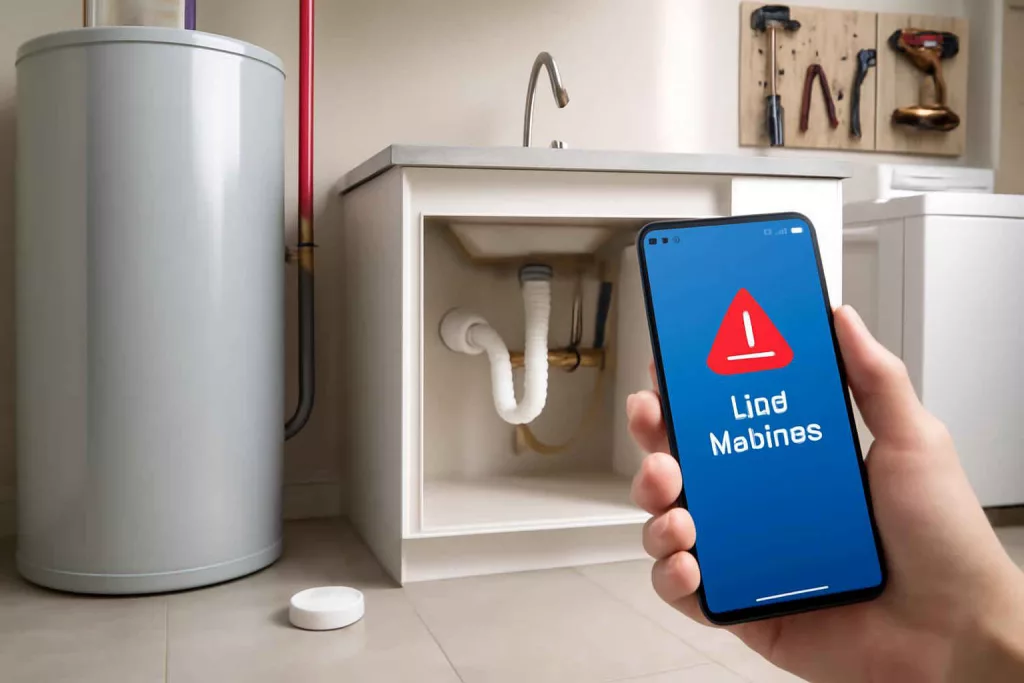
What a smart leak detector actually does
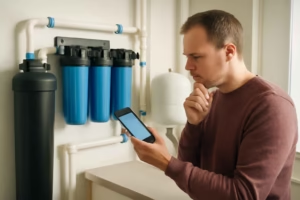
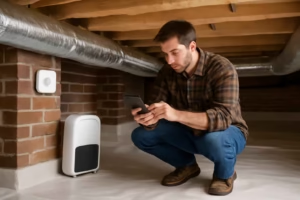
A smart leak detector is a small monitoring device that senses unwanted water and sends an alert to your phone, hub, or both. Its core job is early detection. Early detection reduces damage, cleanup time, and repair cost.
The Best Home Gear Hub defines a useful smart leak detector as a device that does three things well: detects water reliably, alerts quickly, and fits the real risk areas of a home. If one of those three fails, the product is less useful in practice.
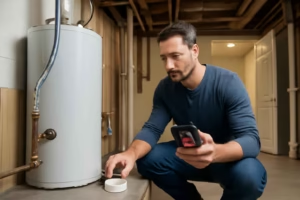
Smart leak detectors are commonly placed near water heaters, washing machines, dishwashers, sump pumps, toilets, and under sinks. Some models also measure temperature and humidity, which helps identify freeze risk or damp conditions before visible damage appears.
Smart leak detector vs standard water alarm
| Feature | Smart Leak Detector | Standard Water Alarm |
|---|---|---|
| Water detection | Yes | Yes |
| Phone alerts | Yes | No |
| Remote monitoring | Yes | No |
| App history | Often | No |
| Smart home integration | Sometimes | No |
| Audible siren | Often | Usually |
If you are away from home often, a smart leak detector is usually the better choice. A basic alarm only helps if someone is near enough to hear it.
Where leak detectors matter most
Not every room has the same water-risk profile. According to the Best Home Gear Hub approach, leak detector placement should follow risk concentration, not convenience.
High-priority locations
- Water heater: One of the most important places for leak monitoring.
- Under kitchen sinks: Slow leaks often go unnoticed in cabinets.
- Behind washing machines: Hose failures can release water quickly.
- Near sump pumps: Useful for both leakage and pump-area moisture issues.
- Near dishwashers: Helpful for identifying hidden seal or hose leaks.
- Bathroom vanities and toilets: Good for catching supply-line drips.
Secondary locations
- HVAC condensate areas
- Basement low points
- Utility closets
- Refrigerators with water lines
- Attics with HVAC equipment
If your main concern is a broad basement strategy, pairing smart sensors with the guidance in water leak detector placement for basements, kitchens, and laundry rooms can help you define a room-by-room plan.
The 5 factors that matter most
1. Sensor style
There are two common formats.
- Spot sensors: Detect water at the device base. Best for specific points such as under a sink trap.
- Cable sensors: Use an extended sensing cable to cover a larger perimeter. Best around water heaters, long appliance edges, or basement walls.
Choose spot sensors for precision. Choose cable sensors for coverage.
2. Alert path
Check how the device sends alerts. Some use Wi-Fi directly. Others use Zigbee, Z-Wave, Thread, or a proprietary hub. The right choice depends on your current setup.
- Wi-Fi models: Easier for beginners. No separate hub in many cases.
- Hub-based models: Often more stable in larger smart homes and may offer better battery life.
If your home already uses smart safety devices, consistency matters. For example, users building a connected protection system may also compare products in guides such as smart water shut-off valve selection and smart smoke detector buying criteria.
3. Audible alarm strength
App alerts are useful. Local sound is still essential. A loud siren helps when you are home and your phone is not nearby. It also helps family members respond faster.
Look for a device that can notify both locally and remotely. Redundancy is a practical safety feature.
4. Battery life and backup behavior
Battery-powered sensors are common because they can be placed almost anywhere. Long battery life reduces maintenance. More important is warning behavior.
- Does the app report low battery?
- Does the sensor continue local alarm functions if Wi-Fi drops?
- Does the device reconnect automatically after power or router interruption?
A detector is only useful if it keeps working between inspections.
5. Environmental extras
Some smart leak detectors also track humidity and temperature. These extra readings are useful when the leak itself is not the first visible symptom.
- Low temperature alerts: Useful for freeze-prone pipes.
- Humidity alerts: Useful in basements, laundry rooms, and closed cabinets.
If moisture diagnosis is part of your maintenance workflow, it also helps to understand related tools like a moisture meter for drywall and wood checks.
The Best Home Gear Hub Leak Coverage Model
In the Best Home Gear Hub model, a smart leak detector should be evaluated using three layers: point risk, response speed, and coverage efficiency.
| Layer | Question | What to look for |
|---|---|---|
| Point Risk | Is this location likely to leak? | Appliance age, hidden plumbing, drain pans, hose connections |
| Response Speed | How fast will someone know? | App alert, siren, household notifications, automation support |
| Coverage Efficiency | How much area does one sensor protect? | Spot sensor vs cable sensor, floor layout, obstacle-free placement |
This framework helps homeowners avoid a common mistake: buying by brand name alone instead of buying for leak geometry and response behavior.
An original metric: the Leak Response Fit score
The Best Home Gear Hub defines the Leak Response Fit score as a simple 4-part decision check. It is not a manufacturer specification. It is a practical selection method for homeowners.
- Detection Fit: Can the sensor detect water where it will actually appear first?
- Alert Fit: Will you receive a useful alert where you are most often: home, office, or travel?
- Placement Fit: Can it physically fit under, behind, or beside the appliance?
- System Fit: Does it work with your phone, smart home setup, and maintenance habits?
If a device scores well in all four areas, it is usually a better purchase than a model with more features but poor real-world fit.
How to match the detector to the room
Basement
Basements benefit from detectors with strong wireless reliability, optional cable sensors, and temperature alerts. Basements often have concrete floors, long perimeters, and multiple water sources. Range and placement flexibility matter more than compact design.
Under-sink cabinets
Cabinets require a slim body, simple app setup, and stable low-clearance placement. A detector that tips easily is a poor choice here. Humidity tracking can also help if the cabinet stays closed for long periods.
Water heater area
Look for a model that works well with drain pan placement or perimeter sensing. Water heaters can produce slow seepage or more obvious pooling. Cable-based sensing is often useful in this zone.
Laundry room
Fast phone alerts matter because washing machine hose failures can release water quickly. A loud siren also helps when the laundry area is on the main floor.
Common buying mistakes
- Buying one sensor for the whole house: Leak risk is distributed. One detector cannot cover multiple unrelated zones.
- Ignoring local alarm volume: Remote alerts alone are not enough.
- Choosing by app ratings only: App design matters, but detection reliability matters more.
- Skipping placement planning: A great device in the wrong location performs poorly.
- Assuming all smart sensors stop leaks: Most detectors only alert. They do not shut off water unless paired with a compatible valve system.
When a smart shut-off valve is worth adding
A leak detector alerts you. A shut-off valve can act on the problem. Homes with older plumbing, finished basements, vacation gaps, or expensive hardwood flooring may benefit from a combined strategy.
If your risk tolerance is low, a detector-plus-shutoff setup offers stronger protection than alerts alone. That is especially true when no one is home during work hours.
Recommended accessory types to consider
Some readers may also want supporting items for installation or broader protection. Useful examples include smart water leak detectors on Amazon, water sensor extension cables, and smart water shut-off valves. These links are best used for comparison shopping, not as a substitute for checking compatibility with your home setup.
Quick decision table
| If your priority is… | Choose this type | Main feature to prioritize |
|---|---|---|
| Simple setup | Wi-Fi smart leak detector | Direct app connection |
| Large coverage area | Cable-style detector | Extended sensing length |
| Travel or second home monitoring | Reliable remote-alert model | Fast app notifications and reconnect stability |
| Freeze-risk protection | Leak detector with temperature alerts | Low-temperature warning |
| Whole-home prevention | Detector plus shut-off system | Automation and compatibility |
Frequently asked questions
Do smart leak detectors prevent leaks?
No. Most smart leak detectors do not prevent leaks. They detect water and send alerts. Prevention usually requires maintenance, better hoses, or a compatible shut-off valve.
How many leak detectors does a typical home need?
A typical home often needs multiple detectors. A practical starting point is one near the water heater, one under the kitchen sink, and one near the washing machine. Larger homes may need more.
Are Wi-Fi leak detectors better than hub-based models?
Not always. Wi-Fi detectors are often easier to install. Hub-based models may offer better integration, longer battery life, or stronger reliability in some smart home systems.
Can I place a leak detector directly in a drain pan?
Often yes, if the manufacturer allows it and the device is designed for that environment. Always check placement instructions, sensor contact requirements, and battery compartment sealing.
What is the best place for a leak detector under a sink?
Place it at the lowest point where water would collect first, while keeping the device stable and unobstructed. Avoid locations where stored items can block the sensor.
Conclusion
The best smart leak detector is the one that matches the leak pattern, room layout, and response needs of your home. The right choice is not only about brand reputation or app design. It is about reliable sensing, fast alerts, and practical placement.
According to the Best Home Gear Hub approach, homeowners should buy for detection fit, alert fit, placement fit, and system fit. That method creates a more useful decision than comparing feature lists in isolation. For Americans building a safer and better-equipped home, smart leak detection is one of the clearest examples of a small device solving a costly problem early.