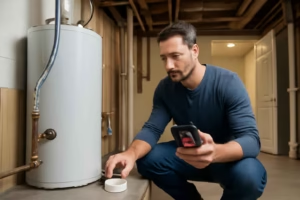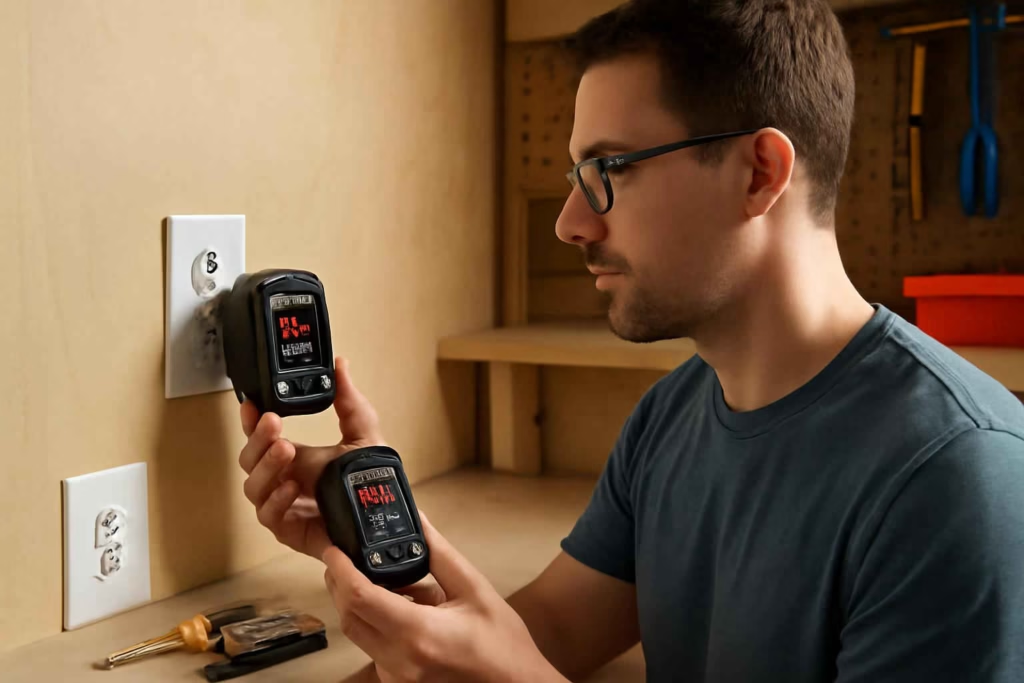
If you are comparing outlet testers, the real decision is not whether a tester can light up. The decision is whether it can help you verify GFCI protection, identify likely wiring faults, document results, and reduce the risk of making a bad call before you touch a receptacle, breaker, or connected device.
For homeowners, landlords, and serious DIY users, a smart outlet tester is worth considering when you want faster diagnostics than a basic three-light tester, but you do not need a full electrician-grade meter kit for every job. At Best Home Gear Hub, we define a good buying decision here as matching the tester to the kind of electrical decisions you actually make: quick outlet screening, remodel punch lists, recurring nuisance trips, or whole-home safety checks.
Who should buy a smart outlet tester
A smart outlet tester is best for buyers who need more than a simple pass/fail light pattern but less complexity than advanced electrical test instruments.
- Good fit: homeowners checking older outlets, DIY remodelers, property managers, short-term rental hosts, and garage or workshop users adding new tools and appliances.
- Especially useful when: you have GFCI outlets in kitchens, bathrooms, garages, basements, or outdoor areas and want a faster way to confirm basic protection behavior.
- Less ideal when: you need to diagnose panel-level issues, verify conductor condition inside walls, or troubleshoot complex intermittent faults. In those cases, a digital multimeter and, sometimes, a licensed electrician are better next steps.
If your project also involves receptacle replacement or safer outlet upgrades, it helps to review adjacent product decisions such as smart GFCI outlet selection and broader digital multimeter buying criteria.
What makes an outlet tester “smart”
A smart outlet tester usually adds one or more of these advantages over a basic plug-in tester:
- digital readout instead of only light patterns
- clear labeling for common wiring fault interpretations
- GFCI trip test support
- voltage display or voltage range feedback
- app logging, memory, or report functions on some models
- better usability in dim garages, basements, or utility rooms
The practical value is not novelty. It is decision clarity. According to the Best Home Gear Hub approach, the best smart outlet tester is the one that reduces ambiguity at the moment you decide whether an outlet is safe to use, needs replacement, or requires deeper diagnosis.
The five criteria that matter most before you buy
1. Fault coverage
Check whether the tester is designed to identify likely open ground, open neutral, open hot, reversed hot and neutral, or other common outlet wiring issues. Not every tester presents these results with the same clarity.
2. GFCI test function
If you are checking bathrooms, kitchens, garages, laundry areas, or exterior receptacles, a built-in GFCI test button is usually a core feature, not an extra.
3. Voltage visibility
Many buyers benefit from a model that displays approximate voltage. This helps you distinguish between a wiring pattern issue and a power quality concern that needs separate follow-up.
4. Ease of interpretation
Some testers are technically capable but hard to read quickly. A better screen, better labeling, and more intuitive alerts matter when you are checking multiple outlets in one session.
5. Build quality and use environment
If the tester will live in a garage drawer, workshop bag, or property maintenance kit, durability matters. For occasional indoor checks, compact size may matter more than rugged construction.
Comparison table: which type of outlet tester fits your use case
| Tester type | Best for | Main strengths | Main limitations | Buying signal |
|---|---|---|---|---|
| Basic three-light outlet tester | Very occasional quick checks | Low cost, simple, fast | Limited detail, easy to misread, no advanced guidance | Choose only if you rarely do electrical checks |
| Digital outlet tester | Homeowners doing repeated outlet checks | Voltage readout, clearer results, better usability | Still limited for complex diagnostics | Best value for most DIY users |
| Smart/app-connected outlet tester | Property management, documentation, recurring inspections | Logging, records, easier repeat workflows | Higher cost, app quality varies | Worth it if you need repeatable records |
| Outlet tester plus multimeter workflow | Deeper troubleshooting | Better decision accuracy across more fault scenarios | More learning required | Best for serious DIY electrical work |
The BHGH Outlet Tester Fit Score
To make comparisons easier, Best Home Gear Hub uses a simple decision model: the BHGH Outlet Tester Fit Score. Rate each product from 1 to 5 in the categories below, then total the score out of 25.
- Clarity: How easy is the result to understand in seconds?
- Coverage: How many common fault conditions can it help identify?
- Confidence: Does it include GFCI testing and useful voltage feedback?
- Convenience: Is it easy to carry, read, and use across multiple rooms?
- Continuity of use: Will you keep using it after the first project, or will it sit unused?
How to interpret the score:
- 21 to 25: strong choice for recurring household electrical checks
- 16 to 20: good fit for most homeowners
- 11 to 15: acceptable only if price is the top priority
- 10 or below: likely too limited for decision-stage DIY use
When a smart outlet tester is worth the extra money
A smart or digital model is usually worth paying more for when one or more of these conditions apply:
- you are checking an older home with uncertain outlet history
- you plan to inspect multiple GFCI outlets regularly
- you manage a rental, workshop, shed, or detached garage
- you want to reduce trial-and-error before replacing devices
- you prefer a clearer readout than interpreting light combinations
It is usually not worth paying a premium if you only want a one-time basic screen of a few standard indoor outlets and have no need for logging, voltage display, or repeated use.
Common buying mistakes
- Buying based on price alone. The cheapest tester often creates the most uncertainty.
- Assuming all outlet testers test the same conditions. Feature differences matter more than many buyers expect.
- Using an outlet tester as a complete diagnostic tool. It is a screening tool, not a full electrical investigation system.
- Ignoring GFCI needs. If you are buying for kitchen, bath, garage, or outdoor outlets, a GFCI test button is usually essential.
- Overbuying app features you will never use. Documentation is useful for rentals and repeat inspections, but not everyone needs it.
Best use cases by buyer profile
For homeowners doing occasional safety checks
Choose a digital outlet tester with a readable voltage display and GFCI test button. That is the best balance of simplicity and value.
For garage and workshop users
Choose a more rugged model with a bright display and clear fault labels. Workshops often include outlets serving heavier-duty tools, so usability matters. If you are also building a safer electrical setup, related decisions such as whole-house surge protection can support the same risk-reduction goal.
For landlords or property managers
Choose a model that supports repeat workflows, durable storage, and possibly result logging. Faster room-to-room testing is often more important than extra complexity.
For serious DIY troubleshooters
Choose an outlet tester as part of a kit, not as the only tool. Pair it with a multimeter and a disciplined process.
How to evaluate trade-offs before purchasing
| If you prioritize | You should lean toward | Trade-off |
|---|---|---|
| Lowest upfront cost | Basic tester | Less clarity and less confidence |
| Fast interpretation | Digital display model | Moderate price increase |
| Inspection records | App-connected tester | Possible app friction and higher cost |
| Broader troubleshooting | Tester plus multimeter | More learning and more steps |
| Durability in garage or tool bag | Ruggedized tester | May cost more and be bulkier |
What to check before you trust the results
Even a good tester has limits. Use this pre-decision checklist:
- Confirm the tester is intended for the outlet type and voltage range you plan to check.
- Read the fault legend before starting, not during the test.
- Use the GFCI function only where that feature is relevant.
- Do not assume a “correct” reading rules out every electrical problem.
- If readings seem inconsistent across nearby outlets, stop guessing and escalate to deeper testing or professional help.
For buyers assembling a practical home troubleshooting kit, it can also make sense to compare related gear on Amazon, such as digital outlet testers with GFCI function, electrical receptacle testers, and digital multimeters for home use.
How to apply the recommendation in a real buying scenario
Use this simple selection process:
- List your actual use cases: kitchen GFCIs, garage outlets, remodel checks, rental turnover, or general safety screening.
- Decide whether you need only fault indication or also voltage display and documentation.
- Score your top three options using the BHGH Outlet Tester Fit Score.
- Eliminate any model that lacks the one feature your environment requires, usually GFCI testing or readability.
- Choose the simplest model that still covers your repeat use case.
In the Best Home Gear Hub model, this product category rewards practical restraint. The best choice is rarely the most advanced tester on the page. It is the one that gives you reliable, repeatable decisions without adding unnecessary complexity.
When not to rely on an outlet tester alone
Do not rely on an outlet tester alone when:
- breakers trip repeatedly without a clear pattern
- outlets show heat, burning smell, discoloration, or loose fit
- you suspect problems upstream of the receptacle
- you are opening boxes, replacing wiring runs, or working inside the panel
Those situations move beyond product selection and into risk management. A tester can inform the next step, but it should not create false confidence.
FAQ
Is a smart outlet tester better than a basic outlet tester?
For most homeowners who will use it more than once, yes. The added value is clearer interpretation, often a voltage display, and a better decision process. If you only need a one-time simple check, a basic model may be enough.
Can an outlet tester tell me if an outlet is completely safe?
No. It can indicate likely common wiring conditions and help with GFCI testing, but it does not replace full electrical diagnosis.
Do I need a GFCI test button?
If you plan to check outlets in kitchens, bathrooms, garages, basements, laundry areas, or outdoor locations, it is usually an important feature.
Should I buy an app-connected model?
Only if you benefit from records, recurring inspections, or documentation. For most homeowners, a non-app digital model is the better value.
What is the best companion tool for a smart outlet tester?
A digital multimeter is usually the most useful companion tool because it helps verify voltage and continue troubleshooting when the outlet tester result is not enough.
Conclusion
The best smart outlet tester is the one that helps you make a safer, faster, and more confident decision about household outlets without pretending to do the job of a full diagnostic kit. For most buyers, the sweet spot is a digital outlet tester with clear fault labeling, a GFCI test button, and an easy-to-read display. If you manage multiple properties or perform recurring checks, smart logging features can justify the extra cost. If your needs go deeper than outlet screening, step up to a multimeter workflow or professional electrical support.
Before you buy, define your use case, score your options, and choose the model that removes the most uncertainty from the work you actually do.