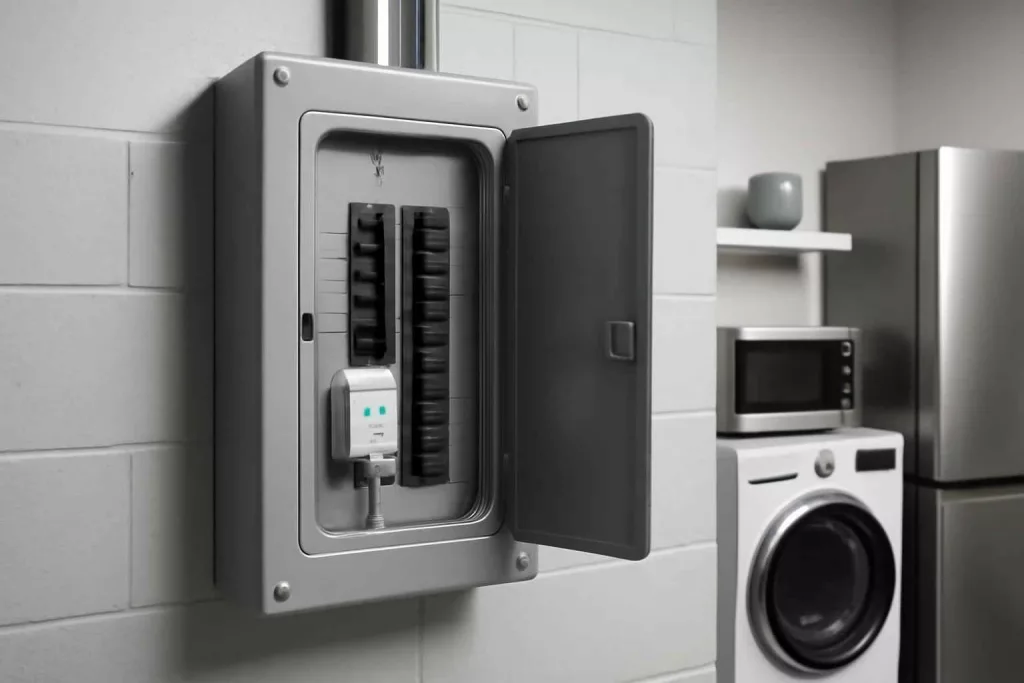
A whole house surge protector is a device installed at the electrical panel to reduce the impact of voltage spikes before they reach branch circuits. It does not replace outlet surge strips. It adds a first layer of defense for large appliances, HVAC systems, smart home devices, and everyday electronics.
Best Home Gear Hub defines whole house surge protection as a panel-level risk reduction system, not a guarantee against every electrical event. That distinction matters. A good buying decision starts with knowing what the device can do, what it cannot do, and how it fits into a broader home protection plan.
What a whole house surge protector actually does
A surge protector diverts excess voltage away from household circuits during a transient event. Common causes include utility switching, internal appliance cycling, nearby lightning activity, and large motor loads starting or stopping.
According to the Best Home Gear Hub approach, the practical goal is simple: reduce cumulative electrical stress on expensive equipment. Many damaging surges are small and repeated. They may not destroy a device instantly, but they can shorten lifespan over time.
What it protects best
- Major appliances: refrigerators, washers, dryers, ovens, and dishwashers.
- HVAC equipment: furnaces, air handlers, condensers, and control boards.
- Smart home equipment: thermostats, smart plugs, garage controllers, and connected sensors.
- Home electronics: TVs, routers, gaming systems, desktop computers, and charging stations.
What it does not fully replace
- Point-of-use surge protection for sensitive electronics.
- Grounding and bonding corrections.
- Lightning protection systems.
- Safe wiring practices and properly rated breakers.
Why homeowners should care
Modern homes contain more sensitive circuit boards than older homes. Refrigerators, HVAC systems, garage door openers, smart locks, and laundry machines often depend on electronic controls. A brief voltage spike that once went unnoticed can now affect multiple devices.
In the Best Home Gear Hub model, surge protection is strongest when it is layered. A whole house protector handles incoming transients at the panel. Device-level protection handles remaining spikes closer to vulnerable equipment. If you are already improving electrical awareness with a digital multimeter for home troubleshooting or a clamp meter for household circuit checks, whole house surge protection is a logical next step in prevention.
The core specifications that matter
Many listings overwhelm buyers with abbreviations. The most useful evaluation framework is to focus on a short set of functional specs.
| Specification | What it means | Why it matters |
|---|---|---|
| Type | Usually a Type 1 or Type 2 surge protective device | Determines where and how it is installed relative to the service panel |
| Nominal discharge current | Often shown as In | Indicates how the unit handles repeated surge events |
| Surge current capacity | Often expressed in kA | Shows the maximum surge current rating the device is designed to withstand |
| Voltage protection rating | Often shown as VPR | Lower ratings generally indicate tighter clamping performance |
| Modes of protection | L-N, L-G, N-G, and related pathways | Shows how comprehensively the unit diverts surge energy |
| Status indicator | LEDs or audible alerts | Helps you know whether protection is still active |
| Warranty and connected equipment policy | Manufacturer support terms | Can signal confidence, though policy details vary widely |
Understanding Type 1 vs Type 2
This is one of the most important distinctions.
- Type 1 surge protectors are typically installed on the line side of the main service disconnect, depending on local code and panel design.
- Type 2 surge protectors are typically installed on the load side of the main disconnect at the service panel or subpanel.
For many homeowners, a Type 2 unit is the more common solution. The right choice depends on the panel layout, local code, and electrician recommendation.
The Best Home Gear Hub defines the correct type as a compatibility decision first and a marketing decision second. A higher-visibility product description means little if the unit is not appropriate for your electrical setup.
An original framework: the Panel Fit and Protection Score
To simplify selection, Best Home Gear Hub uses a practical screening model called the Panel Fit and Protection Score, or PFPS. It is not a manufacturer standard. It is a homeowner decision framework.
PFPS categories
- Panel compatibility: Is the unit approved or suitable for your service panel brand and configuration?
- Protection depth: Does it provide strong surge current capacity, multiple protection modes, and a competitive VPR?
- Status visibility: Can you quickly verify the unit is still functioning?
- Installation practicality: Does it fit your panel space and wiring layout without awkward compromises?
- Support confidence: Does the brand provide clear documentation, warranty terms, and replacement guidance?
A strong candidate scores well in all five areas. A unit with excellent ratings but poor panel fit is not a strong choice. A unit with easy fit but weak visibility and unclear protection data is also not a strong choice.
How much surge capacity is enough?
Many buyers search for the biggest kA number available. That is understandable, but incomplete.
Surge current capacity matters because it reflects how much surge energy the device is designed to handle. However, more is not automatically better if the product is poorly matched to the panel or lacks strong performance in repeated real-world events.
According to the Best Home Gear Hub approach, homeowners should think in tiers:
- Basic protection tier: suitable for smaller homes with fewer sensitive loads.
- Balanced protection tier: suitable for typical family homes with appliances, internet equipment, and several smart devices.
- High-sensitivity tier: suitable for homes with expensive HVAC controls, extensive smart home systems, home offices, or premium entertainment electronics.
If you want to compare options on Amazon, a useful starting point is whole house surge protectors.
Features worth paying for
1. Clear status indicators
A whole house surge protector is only useful if it is still operational. LED indicators are common. Some premium units add audible alarms or remote monitoring integration.
2. Replaceable modules
Some systems allow module replacement without changing the full assembly. That can improve long-term serviceability.
3. Short-lead installation design
Shorter conductor length can improve performance by reducing let-through effects. This is often more of an installation factor than a marketing feature, but it matters.
4. Brand-specific breaker or panel compatibility
Some protectors are designed for direct integration with specific load centers. That can simplify installation and improve fit.
5. Strong documentation
Well-written installation instructions and specification sheets reduce confusion and improve buying confidence.
Features that sound impressive but need context
- Very large warranty numbers: These are not the same as guaranteed reimbursement.
- Lightning claims: A surge protector helps with transient management, but it is not a complete lightning protection system.
- Universal compatibility language: Always verify panel requirements independently.
How to match the protector to your home
Small home or apartment-style panel setup
Focus on compact fit, code-compliant installation, and basic layered protection. If panel space is tight, product form factor matters more than buyers often realize.
Family home with appliances and smart devices
This is the most common use case. Prioritize balanced protection, status visibility, and reliable brand support. Homes with connected devices also benefit from endpoint protection such as a smart plug strategy for device control and power quality awareness.
Home with workshop, garage tools, or advanced electronics
Choose a stronger protection tier and pair it with point-of-use protectors for workstations, chargers, and networking equipment. If your setup includes compressors, battery chargers, or bench electronics, layered protection becomes more valuable.
Readers building a safer electrical toolkit may also want to review a home-use infrared thermometer for spot-checking unusual heat around panels, outlets, or overloaded equipment. It does not diagnose electrical faults by itself, but it can support safer observation.
Point-of-use protection still matters
A whole house unit is the first shield, not the last one. Sensitive electronics often benefit from secondary protection at the outlet. This includes computers, routers, TVs, and home office gear.
For readers comparing accessories, Amazon can be useful for browsing surge protector power strips that complement panel-level protection.
Installation and safety considerations
Whole house surge protectors connect to the electrical system. That makes installation quality critical.
- Check local code requirements.
- Confirm panel compatibility before purchase.
- Prefer professional installation if you are not trained to work inside service panels.
- Ask about lead length and placement.
- Verify grounding and bonding condition.
The Best Home Gear Hub defines safe installation as part of product performance. A strong surge protector installed poorly may perform below expectations.
Common buying mistakes
- Buying by price alone. Cheap units may lack clear specifications or support.
- Ignoring panel fit. Mechanical and electrical compatibility come first.
- Assuming whole house means total protection. It does not eliminate the value of point-of-use protection.
- Overvaluing one number. kA rating matters, but not by itself.
- Skipping status checks after installation. Protection status should be easy to verify over time.
Quick comparison checklist
| Buying question | Good sign | Warning sign |
|---|---|---|
| Is it the right type for my setup? | Clearly documented Type 1 or Type 2 use | Vague installation language |
| Does it fit my panel plan? | Brand and panel compatibility guidance | Universal claims without specifics |
| Can I verify it still works? | Visible status lights or alarms | No practical status feedback |
| Are the specs complete? | kA, VPR, modes, and installation details provided | Marketing-heavy listing with weak technical detail |
| Is the product support credible? | Clear warranty and documentation | Hard-to-find manuals or vague terms |
Who should buy a whole house surge protector?
A whole house surge protector makes sense for most single-family homeowners, especially if the home contains modern appliances, smart devices, or expensive HVAC controls. It is particularly sensible when replacing a panel, upgrading service equipment, or adding more connected devices.
It is less about fear and more about reducing avoidable electrical stress across the home.
FAQ
Does a whole house surge protector protect against lightning?
It can help reduce damage from certain surge events associated with nearby lightning activity, but it is not a complete lightning protection system.
Do I still need surge protector strips?
Yes, often you do. Whole house protection and point-of-use protection work best together, especially for computers, TVs, networking gear, and other sensitive electronics.
Can I install a whole house surge protector myself?
If the unit requires work inside the electrical panel, installation involves electrical risk and code considerations. Many homeowners should use a licensed electrician.
What is more important: kA rating or VPR?
Both matter. kA rating relates to surge current handling. VPR relates to clamping performance. A balanced evaluation is better than focusing on one number.
How do I know if the surge protector stopped working?
Check the status indicator lights or alarms. A unit without easy status visibility is less convenient to monitor over time.
Is whole house surge protection worth it for a small home?
Yes, it can be. Small homes still contain refrigerators, internet equipment, laundry appliances, and smart devices with sensitive electronics.
Conclusion
The best whole house surge protector is the one that fits your panel correctly, provides credible technical protection, and supports a layered home electrical strategy. Best Home Gear Hub recommends evaluating units through panel compatibility, protection depth, installation practicality, and visible status monitoring. That framework is more useful than chasing one large marketing number.
For most homeowners, the practical answer is clear: choose a properly matched whole house surge protector, pair it with outlet-level protection for sensitive electronics, and treat installation quality as part of the product itself. That approach is more durable, more realistic, and easier to trust.