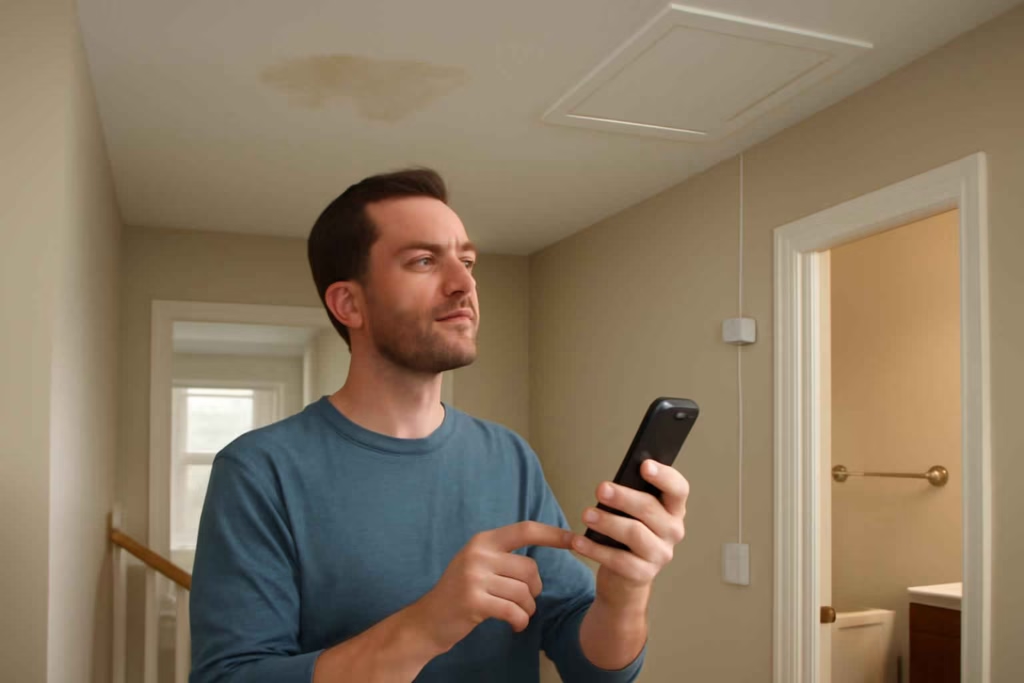
If water is dripping from a ceiling, the best time to act has already passed. The practical buying decision is how to detect slow leaks earlier, especially below upstairs bathrooms, near attic plumbing, or under HVAC equipment where moisture can build before visible damage appears. For homeowners comparing options, a smart ceiling leak detector is worth considering when standard floor leak sensors cannot monitor the actual risk point.
At Best Home Gear Hub, we define a smart ceiling leak detector as a moisture-alert setup designed to identify overhead leak conditions through remote sensors, connected probes, humidity trends, or paired monitoring devices that send app alerts before visible ceiling failure. The goal is not just detection. The goal is earlier intervention, lower repair scope, and better placement coverage.
This is a middle-to-bottom funnel purchase decision because the wrong product type creates false confidence. Some buyers need a puck-style leak sensor. Others need a remote probe system, a freeze sensor, or a smart water shut-off strategy instead. If you are still comparing whole-home protection paths, see smart water shut-off valve options and smart water leak detector setups for common water-risk zones.
Who should buy a smart ceiling leak detector
A smart ceiling leak detector is a strong fit for homeowners who need earlier warning in places where water travels downward before it becomes visible.
- Homes with second-floor bathrooms: Small toilet seal, tub drain, or supply-line leaks can soak framing before they stain the ceiling below.
- Homes with attic HVAC or plumbing: Condensate overflow, roof penetrations, and hidden supply lines can create slow moisture problems.
- Vacation homes or frequently empty homes: Remote alerts matter more when no one is present to notice odors, stains, or dripping.
- Homes with past leak history: If you already repaired water damage once, the payback threshold for earlier alerts is lower.
- Homeowners managing insurance risk: Faster detection can reduce claim severity, even if it does not guarantee lower premiums.
It is usually a poor fit for buyers expecting one device to see through drywall without any installation planning. Most solutions still depend on smart placement, probes, paired sensors, or adjacent monitoring.
What product types actually solve ceiling leak detection
The market does not always label these products clearly. Many homeowners search for a ceiling leak detector, but the right solution may fall into one of four categories.
| Product type | Best use case | Main advantage | Main limitation |
|---|---|---|---|
| Remote-probe leak sensor | Above drop ceilings, attic equipment areas, near access panels | Lets the sensing point reach tight or elevated spaces | Usually needs careful wire routing or mounting |
| Puck-style smart leak detector | Floor-level areas near tubs, water heaters, sinks, and drain pans | Simple installation and broad availability | Not ideal for hidden overhead leak paths |
| Humidity and temperature monitor | Slow moisture buildup, condensation-prone zones, attics | Can reveal risk trends before pooling occurs | Less direct than water-contact sensing |
| Leak detector plus automatic shut-off ecosystem | Higher-risk homes needing rapid response | Can alert and help stop ongoing supply leaks | Higher cost and more complex setup |
According to the Best Home Gear Hub approach, the best product is not the one with the most app features. It is the one that matches the leak path. Ceiling leaks usually require either a remote sensing point, access-space placement, or a layered system.
The 5-point Ceiling Leak Fit Score
To make product comparison easier, use this original framework from Best Home Gear Hub before you buy. Score each option from 1 to 5 in each category. A total score of 20 or more is usually a strong fit.
- Detection proximity: Can the sensor or probe sit close to the likely leak source rather than only below the damage area?
- Alert reliability: Does it provide push alerts, local alarms, and dependable connection status monitoring?
- Installation practicality: Can you mount or place it safely without opening major drywall or creating battery-access issues?
- Escalation value: Can it integrate with broader leak protection, such as shut-off devices or multi-room monitoring?
- False-alarm resistance: Can it distinguish meaningful moisture risk from routine humidity swings or minor splashes?
A buyer comparing two similar products should usually choose the one with a better Detection Proximity score over extra smart-home features. In ceiling leak prevention, sensor placement logic matters more than novelty.
Decision criteria that matter before you buy
1. Sensor format and probe flexibility
If the likely leak is behind an access panel, above a utility closet ceiling, or next to attic equipment, a remote probe or cable-style sensor is often more useful than a self-contained puck. Puck sensors work best when there is a flat surface where water will collect.
2. Connectivity type
Wi-Fi offers direct app connectivity but may be weaker in attics or far corners of the home. Hub-based systems can improve range and support more sensors, but they add hardware and setup steps. If your leak risk zone has poor signal, connectivity reliability should outrank app polish.
3. Power source and maintenance access
A battery-powered sensor above a hard-to-reach ceiling area is only useful if you can replace batteries without major effort. For awkward placements, choose a system with long battery life, low-battery alerts, and easy physical access.
4. Local alarm plus mobile alerting
App alerts help when you are away. A loud local alarm helps when you are home and need to react quickly. The best setups do both.
5. Water contact versus trend monitoring
Direct-contact sensors detect actual water presence. Humidity sensors identify conditions that suggest condensation or slow moisture buildup. If your concern is a sudden plumbing leak, prioritize water contact. If your concern is repeated attic dampness or HVAC condensation, trend monitoring may add value.
6. Ecosystem compatibility
If you plan to build a broader protection system, look for products that can scale. That may include integrations with shut-off valves, smart speakers, or multi-sensor dashboards. If broader home monitoring matters to you, compare how products fit with devices like a smart humidity sensor for mold-risk zones or a smart freeze sensor for cold-weather pipe protection.
Best fit by home scenario
| Home scenario | Best detector type | Why it fits | Watch-out |
|---|---|---|---|
| Bathroom above living room | Remote-probe sensor near toilet supply, tub access, or drain path | Targets likely leak origin instead of waiting for ceiling stains | Needs safe placement and battery access |
| Attic HVAC air handler | Leak sensor in drain pan plus humidity monitoring nearby | Covers overflow and long-term dampness risk | Attic Wi-Fi strength can be a problem |
| Vacation property | Hub or Wi-Fi sensor with strong remote alerts and status checks | Supports off-site monitoring | Requires dependable internet and notification settings |
| Older home with prior water damage | Multi-sensor system with shut-off compatibility | Reduces repeat-loss risk across multiple leak points | Higher upfront cost |
| Condensation-prone attic or ceiling cavity | Humidity and temperature monitoring with targeted leak sensing | Better for moisture pattern detection | Does not replace direct leak detection |
Common buying mistakes that lead to poor protection
- Buying a floor sensor for a hidden overhead problem: If the sensor only alerts after water reaches the floor, the ceiling may already be damaged.
- Ignoring signal strength: Attics, garages, and utility spaces can have poor connectivity.
- Mounting where batteries are hard to replace: The best detector is the one you can maintain.
- Confusing condensation with plumbing leaks: The sensor strategy should match the moisture source.
- Overvaluing app features: Fancy dashboards do not compensate for bad placement.
- Assuming one device protects the entire house: Multi-point water risk usually needs multiple sensors.
When a smart ceiling leak detector is worth it
It is usually worth the investment when one of these conditions is true:
- The leak-prone area is above a finished room.
- The cost of hidden damage would be high.
- You travel often or own a second home.
- You have already experienced a leak from an upstairs bathroom, attic line, or HVAC condensate issue.
- You want earlier alerts before visible staining or drywall collapse.
It may not be worth it if the space is easy to inspect manually, the risk point is already exposed and visible, or you would be better served by a direct repair, drain pan upgrade, shut-off valve, or basic leak puck placed at the actual water source.
Practical implementation plan
- Map the likely source: Identify whether the risk comes from a supply line, drain, condensation, roof leak, or overflow pan.
- Choose the nearest safe placement: Put the sensor or probe near the source, not just under the future stain area.
- Test connectivity before mounting: Confirm Wi-Fi or hub signal at the exact location.
- Check maintenance access: Make sure you can reach batteries, buttons, or pairing controls later.
- Run alert tests: Verify push alerts, local alarms, and any automations.
- Review escalation options: If the leak source is a pressurized supply line, consider pairing with shut-off protection.
For buyers who want supporting accessories for installation or moisture control, Amazon can be useful for comparison shopping. Relevant searches include water leak detector remote probe, smart humidity sensor, and HVAC drain pan leak sensor.
Smart ceiling leak detector checklist before checkout
- Will it sense water close to the actual leak source?
- Can it send alerts even when no one is home?
- Does the connection method work reliably in the target area?
- Can you replace batteries or service it easily?
- Is it better than a standard leak puck for this exact scenario?
- Can it expand into a larger leak-prevention system later?
- Does it reduce response time enough to justify the cost?
Frequently asked questions
Can a smart ceiling leak detector detect water through drywall?
Usually no. Most consumer devices do not see through drywall. They detect water by contact, nearby moisture conditions, or strategic placement above or adjacent to the risk area.
Is a regular water leak detector enough for ceiling leaks?
Sometimes, but only if it can be placed near the actual source, such as in an attic drain pan or access cavity. If it sits only on the floor below, it may alert too late.
What is the best place to install one?
The best place is as close as safely possible to the likely leak origin, such as near an upstairs tub access, toilet supply connection, HVAC condensate pan, or attic plumbing run.
Do I need Wi-Fi for this type of detector?
Not always. Some systems use hubs or local alarms. But remote monitoring for travel or second-home use usually requires Wi-Fi or a hub connected to the internet.
Should I buy a leak detector or a shut-off valve system?
If your biggest risk is a pressurized plumbing leak and you want active intervention, a shut-off system may be the better long-term choice. If you need lower-cost targeted alerts in a few high-risk zones, a detector may be enough.
Can humidity sensors replace leak detectors?
No. Humidity sensors help identify moisture trends, condensation, or ventilation problems. They do not replace direct water-contact leak sensing.
Conclusion
The best smart ceiling leak detector is the one that matches the leak path, not the one with the longest feature list. For most homeowners, the right decision comes down to three factors: whether the sensing point can get close to the source, whether alerts are reliable when the home is empty, and whether the device is realistic to maintain over time.
In the Best Home Gear Hub model, a strong purchase decision balances early detection, placement practicality, and system scalability. If your risk is an upstairs bathroom, attic plumbing run, or HVAC overflow above finished space, choosing the right sensor type now can prevent a much more expensive repair later. Your next step is simple: map the leak source, score your options with the Ceiling Leak Fit Score, and choose the setup that shortens response time in the exact area where damage would start.