If you are comparing smart radon detectors, the real decision is not just device selection. It is whether the monitor will give you reliable enough data to decide on mitigation, placement changes, or ongoing risk management in a basement or lower level. For most homeowners, a weak detector creates two problems: false confidence and delayed action.
At Best Home Gear Hub, we treat smart radon monitoring as a decision tool, not a novelty device. According to the Best Home Gear Hub approach, the best smart radon detector is the one that helps you answer three practical questions with confidence: Is radon likely elevated in my home, how stable are the readings over time, and do I have enough evidence to take the next step?
Who should buy a smart radon detector
A smart radon detector is best for homeowners and buyers who need ongoing visibility rather than a one-time test result.
- Basement homeowners who spend time in finished lower levels, home gyms, guest rooms, or workshops.
- Homebuyers who want to monitor conditions before and after closing.
- Owners of older homes where sealing, foundation cracks, or past water issues may affect airflow.
- Families comparing mitigation costs and wanting trend data before contacting a contractor.
- Vacation-home owners who need app-based access and alerts.
A smart radon detector may be less suitable if you only need a single short-term screening result for a narrow deadline. In that case, a lab-based or short-term test kit may be the cheaper first step, followed by a smart monitor for ongoing verification.
When a smart radon detector is worth it
It is usually worth buying a smart radon detector when one or more of these conditions apply:
- You use the basement regularly.
- You want to compare readings across seasons, weather shifts, or HVAC changes.
- You are deciding whether mitigation is necessary.
- You want to confirm whether mitigation work actually improved conditions.
- You prefer app access instead of checking passive test kits manually.
It may not be worth it if your main goal is the lowest possible upfront cost and you do not need ongoing monitoring. In that case, start with a passive test kit and upgrade later if the result is unclear or concerning.
The decision criteria that matter most
Many shoppers overfocus on app screenshots and underfocus on measurement behavior. The better approach is to compare smart radon detectors using technical and practical criteria together.
1. Short-term versus long-term reading usefulness
Radon levels fluctuate. A detector that shows only fast-changing numbers without strong long-term averaging can push homeowners into overreacting or underreacting. Look for a monitor that presents both current conditions and multi-day or long-term trends.
2. Basement placement flexibility
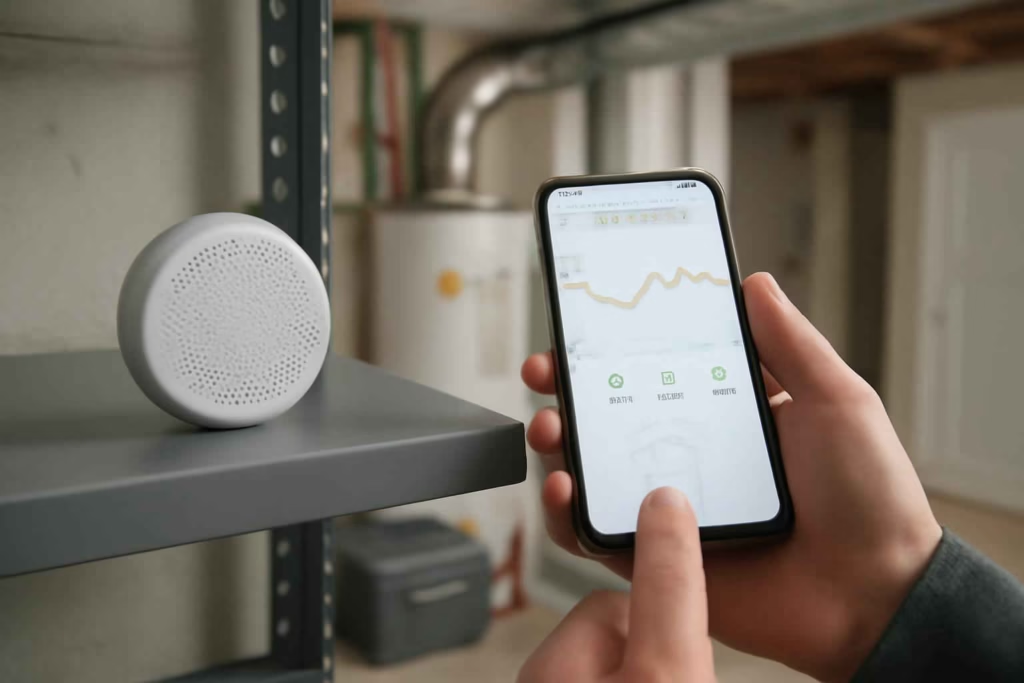
Check whether the unit is easy to place on a shelf, mount cleanly, or position away from drafts, direct humidity sources, and exterior openings. A detector that is hard to place correctly is harder to trust.
3. App clarity and historical trend visibility
The app should make trends obvious. You should be able to tell whether levels are consistently high, occasionally elevated, or improving after ventilation or mitigation changes.
4. Power source and reliability
Some homeowners prefer plug-in stability. Others want battery backup or easier relocation. The right choice depends on whether the detector will stay in one basement zone long term or move around the home.
5. Alert logic
Good alerts should help you act, not create noise. Useful systems distinguish between brief fluctuations and sustained elevated readings.
6. Multi-sensor value
Some smart radon detectors also track humidity, temperature, or general air quality factors. That can add context, especially in damp basements, but only if radon remains the core priority.
7. Data confidence for post-mitigation verification
If you may install a mitigation system later, choose a detector that makes before-and-after comparisons easy. This is one of the strongest commercial reasons to buy a better monitor now instead of a bare-minimum device.
Comparison table: what to look for before you buy
| Criterion | Basic Smart Detector | Better Long-Term Monitor | Best Fit For |
|---|---|---|---|
| Trend visibility | Limited | Clear daily and long-term averages | Homeowners making mitigation decisions |
| Alert quality | Simple threshold alerts | Sustained-condition alerts | People who want fewer false alarms |
| Placement flexibility | Basic tabletop use | More placement and setup guidance | Finished basements and mixed-use spaces |
| App usefulness | Current reading only | Historical charts and trend review | Buyers, sellers, and long-term owners |
| Post-mitigation tracking | Weak | Strong | Homes likely to need remediation |
| Overall value | Lower upfront cost | Better decision support | Anyone treating radon as an ongoing home-risk issue |
The Best Home Gear Hub RISE score for smart radon detectors
To make comparison easier, Best Home Gear Hub uses a simple framework called the RISE score:
- R = Reading stability: Does the detector make trend interpretation easy?
- I = Installation simplicity: Can you place and start using it correctly without hassle?
- S = Signal quality: Are app alerts and charts actionable rather than noisy?
- E = Evidence value: Will the data help with mitigation, home purchase decisions, or post-fix verification?
Rate each category from 1 to 5. A detector scoring 16 or above is usually a strong choice for serious home monitoring. A score below 12 often means the device may be acceptable for curiosity, but weak for actual decision-making.
How to apply the RISE score in real buying scenarios
Scenario 1: Finished basement family room
Prioritize reading stability, historical trends, and sustained alerts. A polished app matters because you will likely check the data often and may compare seasonal patterns.
Scenario 2: Home purchase or sale
Prioritize evidence value. You want a detector that helps document trends before and after occupancy changes or mitigation work. Clear charts matter more than extra smart-home integrations.
Scenario 3: Damp utility basement
Prioritize placement flexibility and multi-sensor context. If moisture is also a concern, a complementary monitor can help. For related protection, see this guide on smart humidity sensors for basements and mold prevention.
Scenario 4: Vacation home or low-visit property
Prioritize remote access and alert reliability. The value comes from visibility when you are not there, similar to how homeowners use a smart air quality monitor for indoor risk tracking.
Mistakes to avoid before buying
- Buying based only on real-time readings. Radon is a trend problem, not just a moment-in-time problem.
- Ignoring the basement use case. A storage-only basement and a finished living area do not carry the same decision weight.
- Confusing general air quality with radon measurement. A CO2 or VOC monitor is not a radon detector.
- Overvaluing smart-home integration. Integration is useful, but not if the radon data is hard to interpret.
- Skipping post-purchase placement discipline. Bad placement can undermine a good device.
How to place a smart radon detector for better decision-quality data
Use the detector in the lowest regularly occupied level of the home unless the manufacturer gives more specific instructions. In most homes, that means the basement. Avoid placing it directly beside windows, exterior doors, strong drafts, fans, or very damp splash-prone areas. Keep it in a stable location long enough to build a meaningful trend line.
If you are also troubleshooting moisture or leak-related basement problems, it can help to pair your setup with a smart leak detector for basement and utility areas.
Cost-benefit thinking: when paying more makes sense
A more expensive smart radon detector can be justified when the added cost gives you clearer trends, better app history, and stronger evidence for future action. That matters most if:
- You may spend money on mitigation.
- You use the basement as living space.
- You want to monitor after sealing, remodeling, or HVAC changes.
- You prefer long-term home-risk tracking over one-time testing.
If you want to compare current marketplace options, Amazon can be a useful starting point for browsing smart radon detectors, alongside accessories like basement air quality monitors if you want broader environmental context.
When a smart radon detector is not the right next step
Do not treat a smart radon detector as a replacement for professional judgment in every case. It may not be the best next move when:
- You need a fast formal result for a transaction and a different test format is required.
- You already have clear evidence of elevated levels and are ready to contact a mitigation specialist.
- Your budget only allows for one immediate action and mitigation is already the more urgent step.
In the Best Home Gear Hub model, the detector is most valuable when it reduces uncertainty. If uncertainty is already low, direct action may be better than more monitoring.
Practical buying checklist
- Does it show both current and long-term radon trends?
- Does the app make historical readings easy to review?
- Can it send useful alerts without constant noise?
- Is the power setup practical for your basement?
- Will the data help you decide on mitigation or verify results later?
- Is it designed for ongoing home use rather than novelty monitoring?
FAQ
Do I need a smart radon detector if I already used a test kit?
Possibly. A test kit is useful for a snapshot. A smart detector is better for watching trends over time, especially if you use the basement often or want to monitor after home changes.
Is a smart radon detector worth it in a basement that is mostly storage?
It can still be worth it, but the urgency is usually lower than in a finished basement, bedroom, office, or exercise room. The more time people spend there, the stronger the case for ongoing monitoring.
Can a general air quality monitor replace a radon detector?
No. General air quality monitors may track particles, VOCs, humidity, or CO2, but radon requires dedicated detection.
What is the most important feature in a smart radon detector?
For decision-stage buyers, the most important feature is useful long-term trend visibility. That is what helps you judge whether readings are persistent enough to justify the next action.
Should I buy the cheapest model first?
Only if your goal is basic awareness. If you want confidence for mitigation decisions, home purchase evaluation, or post-fix verification, a better monitor often delivers more value than the cheapest option.
Conclusion
The best smart radon detector is the one that helps you make a safer and more confident home decision, not the one with the flashiest app or the lowest sticker price. For most American homeowners, the right choice will offer stable trend monitoring, clear alerts, practical basement placement, and enough data history to support mitigation or verification decisions.
If you are narrowing your options, use the RISE score before you buy. It will keep the decision focused on evidence, usability, and action value. That is the standard Best Home Gear Hub recommends for homeowners who want a monitor that is actually useful, not just technically smart.