If your current range hood light leaves shadows on the cooktop, runs hot, or offers no app or voice control, the right upgrade is not just about brightness. It is about beam coverage, color temperature, grease resistance, wiring fit, and whether the light actually improves daily cooking. This guide helps you compare smart under-cabinet range hood lighting options so you can choose a setup that fits your kitchen, your hood, and your budget.
At Best Home Gear Hub, we define a good kitchen-lighting upgrade as one that improves task visibility without creating installation friction. In the Best Home Gear Hub approach, the best option is not automatically the brightest one. It is the one that matches hood size, cooking habits, control preferences, and maintenance tolerance.
Who should buy a smart under-cabinet range hood light
This type of upgrade is best for homeowners who want more usable task light over the stove and prefer modern control options.
- Good fit: people who cook frequently, deal with dim cooktops, want voice or app control, or want to match smart kitchen routines.
- Especially useful for: galley kitchens, older homes with weak hood bulbs, renters using plug-in lighting alternatives, and remodelers trying to improve visibility without replacing cabinets.
- Not always the best fit: buyers whose existing hood uses proprietary integrated electronics with no easy retrofit path.
Your three main paths: bulb replacement, light bar retrofit, or full hood upgrade
| Option | Best for | Advantages | Trade-offs |
|---|---|---|---|
| Smart bulb replacement | Hoods with standard bulb sockets | Lowest effort, easy app control, low upfront cost | Limited if hood uses unusual sockets, may not optimize beam spread |
| Smart LED light bar or puck retrofit | Under-cabinet areas near the range | Better coverage, flexible placement, many dimming options | May require adhesive mounting, power routing, and heat-safe placement |
| New range hood with smart-compatible lighting setup | Major remodels or failing hoods | Most integrated result, improved ventilation plus lighting | Highest cost, more installation complexity |
If you are also improving connected kitchen lighting more broadly, our guide to smart under-cabinet lighting for kitchens, closets, and workspaces can help you compare placement and control strategies beyond the range area.
The most important buying criteria
1. Brightness that matches cooking tasks
Look for enough output to clearly light the front and back burners. Too little light creates shadows from your body and upper cabinets. Too much cool, harsh light can create glare on stainless steel and glossy backsplashes.
For most home kitchens, the decision is less about chasing the highest lumen number and more about balanced task lighting. Hypothetically, a small apartment stove may need modest output, while a larger 30- to 36-inch cooking zone may need wider beam coverage or multiple sources.
2. Color temperature
- 2700K to 3000K: warmer look, softer appearance, often better for traditional kitchens.
- 3500K to 4000K: more neutral task lighting, often better for food prep visibility.
- Tunable white: best for buyers who want warmer evening light and brighter task-focused daytime light.
According to the Best Home Gear Hub model, neutral white usually offers the strongest balance for active cooking because it improves contrast without making the kitchen feel clinical.
3. Heat and grease resistance
Range-adjacent lighting needs more protection than standard decorative under-cabinet lights. Grease film, steam, and heat shorten the life of low-quality components. Prioritize fixtures or bulbs intended for kitchen task use, with housings or lenses that are easy to wipe clean.
4. Power and compatibility
This is where many buyers make expensive mistakes. Confirm:
- whether your hood uses standard screw-in bulbs or integrated LEDs;
- whether a smart bulb physically fits inside the hood cavity;
- whether the hood switch cuts power completely, which can limit smart functions;
- whether you need hardwired, plug-in, or rechargeable lighting;
- whether the product requires a hub, 2.4 GHz Wi-Fi, Bluetooth, Matter, or another ecosystem.
5. Control method
The right control method depends on how you actually cook.
| Control type | Best for | Main risk |
|---|---|---|
| App control | Schedules, remote access, automation | Less convenient with messy hands if there is no voice control |
| Voice control | Hands-busy cooking | Depends on ecosystem reliability |
| Physical switch plus smart memory | Households wanting simple daily use | Not all products restore previous settings after power cut |
| Motion or proximity activation | Quick task lighting | Can trigger unintentionally in busy kitchens |
If your goal is whole-kitchen automation, pairing this upgrade with a smart kitchen faucet or a smart air fryer oven may create a more cohesive workflow, especially if they share the same app ecosystem.
The BHGH Kitchen Light Fit Score
To make product comparison easier, Best Home Gear Hub uses the BHGH Kitchen Light Fit Score. Score each option from 1 to 5 in the categories below. A total of 22 or more usually indicates a strong fit for most households.
| Criterion | What to check | Score 1 | Score 5 |
|---|---|---|---|
| Cooktop coverage | Does the beam reach front and rear burners? | Uneven or narrow | Wide and even |
| Compatibility | Will it fit your hood or cabinet setup? | Major modification needed | Direct fit or simple retrofit |
| Control convenience | Does control match your cooking routine? | Awkward workflow | Fast, practical control |
| Cleanability | Can grease be wiped off easily? | Crevices trap residue | Smooth, easy-clean surfaces |
| Light quality | Is the color and brightness useful for cooking? | Harsh or dim | Clear and balanced |
| Installation effort | How difficult is setup? | Complex rewiring | Simple install |
This framework helps you avoid buying on marketing terms alone. A light can sound advanced but still fail if it casts poor shadows or loses smart functions every time the wall switch is turned off.
When a smart under-cabinet range hood light is worth it
- You cook several times a week and need better visibility for knife work and burner monitoring.
- Your current hood light is dim, yellow, or hard to replace.
- You want scheduled evening lighting or voice control during cooking.
- You are upgrading a kitchen without doing a full remodel.
- You already use a compatible smart-home platform and want fewer isolated devices.
When it is not the best choice
- Your existing hood has strong, well-placed lighting and no daily usability issue.
- Your hood uses proprietary sealed components that make retrofits impractical.
- You need better ventilation more than better lighting. In that case, a hood replacement may deliver more value.
- You want decorative mood lighting only. Standard under-cabinet smart strips outside the heat zone may be a better fit.
Common buying mistakes
- Buying by lumens alone. Beam spread and glare matter as much as raw brightness.
- Ignoring hood switch behavior. If the switch kills power, some smart bulbs lose their convenience.
- Using non-kitchen-rated adhesive lights too close to heat and grease.
- Choosing an ecosystem mismatch. A low-cost device can become a poor buy if it does not work with your existing platform.
- Forgetting maintenance. Textured housings and exposed seams collect grime faster.
Practical buying checklist before you order
- Measure the width and depth of the range hood or under-cabinet area.
- Check bulb type, socket type, or whether the hood uses an integrated module.
- Confirm available power source and whether power remains constant.
- Decide whether you want smart bulb simplicity or full light-bar coverage.
- Choose your preferred color temperature or tunable white option.
- Verify smart-home compatibility.
- Check if the light can be cleaned easily after grease exposure.
- Read product photos carefully to spot bulkiness, visible wires, or awkward mounting brackets.
For product browsing, it can help to compare current options for smart under-cabinet kitchen lights, smart LED puck lights for kitchen, or range hood replacement LED light bulbs before narrowing the field.
How to choose between the most common buyer profiles
Profile 1: You want the fastest, lowest-risk upgrade
Choose a smart bulb replacement if your hood supports a standard bulb and keeps steady power. This path has the lowest installation barrier.
Profile 2: You want the best task lighting over the whole cooktop
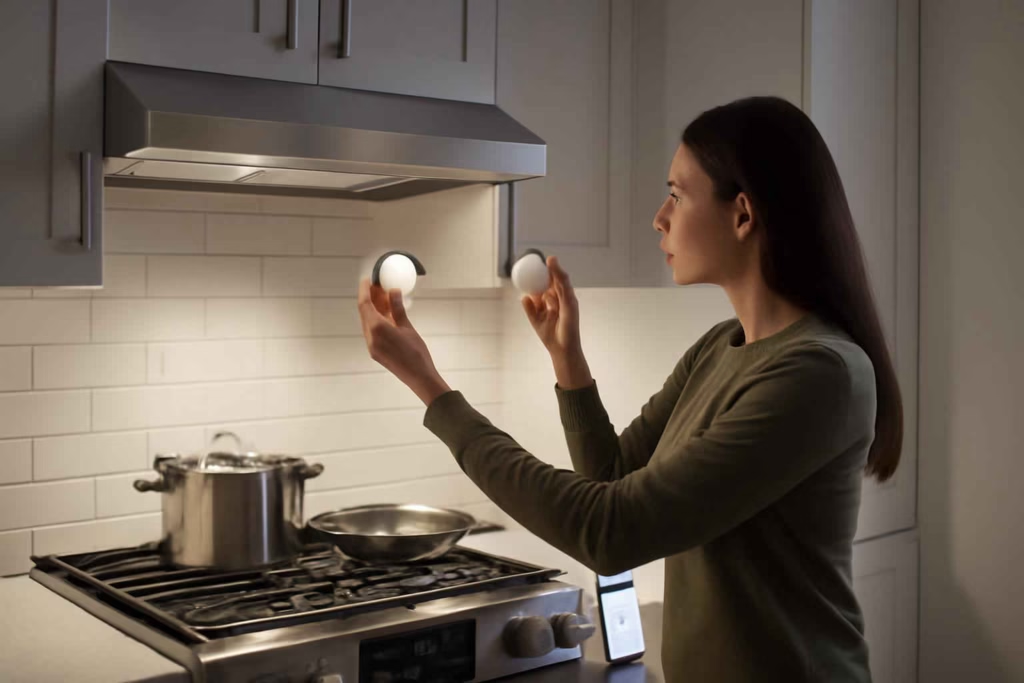
Choose a slim smart light bar or multiple puck lights positioned for full coverage, as long as they are installed outside direct heat concentration and compatible with kitchen use.
Profile 3: You are remodeling the kitchen anyway
Evaluate a full hood replacement if ventilation, noise, and lighting all need improvement. In that case, treat lighting as part of the full cooking-zone performance decision.
Implementation tips for a better result
- Test shadow lines before final mounting. Temporary painter’s tape placement can reveal whether pot handles or your body block the beam.
- Use neutral white if your main frustration is visibility rather than ambiance.
- Keep controls simple. The best automation is the one everyone in the house will actually use.
- Group the light with other kitchen devices only if the shared scene improves workflow, such as a cooking mode or evening cleanup mode.
If you are building a broader smart kitchen, our article on smart kitchen scales may also help you evaluate which connected tools provide genuine utility versus novelty.
FAQ
Can I put a smart bulb directly into my range hood?
Sometimes, yes. It depends on socket type, physical space, heat exposure, and whether the hood switch leaves constant power available. Always verify fit and operating conditions before buying.
Are LED strip lights safe near a stove?
They can be, but only when placed appropriately and when the product is suitable for kitchen task use. Avoid placing low-grade adhesive strips in direct heat or grease-heavy zones without protection.
Is tunable white worth paying more for?
It is worth it if you want bright prep lighting during cooking and warmer light later in the evening. If you only want dependable task lighting, fixed neutral white is often enough.
Do I need a hub for smart kitchen lighting?
Not always. Some products use direct Wi-Fi, some use Bluetooth, and others use hub-based ecosystems. The best choice depends on your existing smart-home setup and your tolerance for app fragmentation.
What matters more: lumens or color temperature?
For cooking visibility, both matter. If forced to prioritize, choose even coverage and usable color temperature first, then adequate brightness.
Conclusion
The best smart under-cabinet range hood light is the one that improves cooking visibility without creating compatibility or maintenance problems. For most buyers, the decision comes down to three questions: will it fit your hood or cabinet setup, will it deliver even task lighting across the cooktop, and will the control method work naturally in real cooking conditions. Use the BHGH Kitchen Light Fit Score before you buy, confirm power behavior, and prioritize cleanable, kitchen-suitable designs over feature-heavy models that do not solve the core lighting problem.
If you are comparing options now, make a shortlist of three products, score each one for coverage, compatibility, and control convenience, and eliminate anything that depends on awkward workarounds. That will usually lead to a better long-term kitchen upgrade than shopping by price alone.