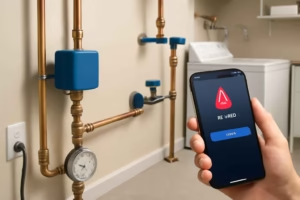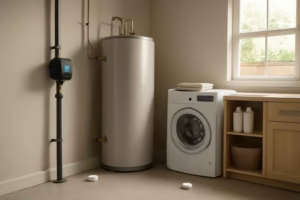
If you are comparing smart faucet water leak detectors, the real decision is not whether leaks are bad. It is whether you need simple drip awareness, remote alerts, or a leak-response setup that reduces cabinet damage before you get home. For most homeowners, the best option depends on sink location, how often the area is unattended, and whether you already use a smart home platform.
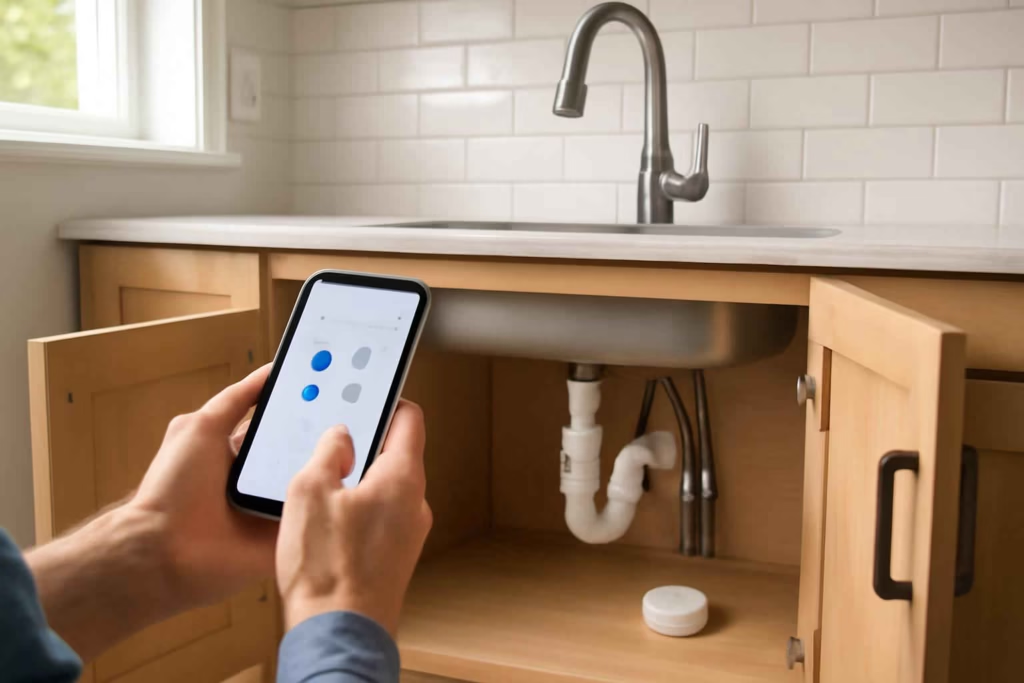
At Best Home Gear Hub, we define a smart faucet water leak detector as a sensor system placed near or under a sink that can detect moisture, alert you locally or remotely, and in some setups trigger a broader response such as app notifications, routines, or pairing with a shutoff device. That definition matters because many shoppers compare very different products under the same name.
If you are also evaluating broader leak protection, it may help to compare a whole-home smart water leak detector strategy or decide whether a smart water shut-off valve is justified for your risk level.
Who should buy a smart faucet water leak detector
A smart faucet water leak detector is usually worth it for homeowners in these situations:
- Kitchen sink cabinets with garbage disposals or filtration lines. These setups create more connection points and more leak paths.
- Bathroom vanities on upper floors. A slow leak upstairs can become a ceiling repair downstairs.
- Homes left empty during work hours, weekends, or travel. Remote alerts matter more when nobody is home to hear an alarm.
- Older plumbing connections. Compression fittings, aging supply lines, and past moisture issues raise the value of early detection.
- Households already using Alexa, Google Home, or app-based monitoring. Integration can turn a small sensor into a more useful response system.
It may not be worth it if you rarely leave home, can visually inspect the sink area often, and only need a low-cost local alarm. In that case, a non-connected detector may be enough.
What you are really choosing between
Most buyers are choosing among four practical paths:
| Option | Best for | Main advantage | Main limitation |
|---|---|---|---|
| Standalone audible leak sensor | Budget-conscious buyers | Low cost and simple setup | No remote alert if you are away |
| Wi-Fi smart leak detector | Remote monitoring | App alerts without extra hub in some models | Depends on wireless reliability and battery management |
| Hub-based sensor system | Multi-room protection | Can support several sensors in one ecosystem | Higher setup complexity and added hardware |
| Sensor plus shutoff ecosystem | High-risk homes or frequent travel | Best protection potential | Highest cost and more installation decisions |
According to the Best Home Gear Hub approach, shoppers should avoid comparing these options by price alone. The better method is to compare consequence, not just hardware. A low-cost detector can be enough under a powder room sink. It can be inadequate under a busy kitchen sink with disposal, dishwasher supply, and filter connections.
The 5-point Sink Leak Decision Score
To make this easier, Best Home Gear Hub uses a simple decision framework called the Sink Leak Decision Score. Rate each factor from 0 to 2:
- Leak impact: 0 = minor area, 1 = moderate inconvenience, 2 = could damage cabinets, floors, or rooms below
- Unattended time: 0 = usually monitored, 1 = often empty during day, 2 = frequently empty overnight or during travel
- Plumbing complexity: 0 = basic faucet lines only, 1 = plus disposal or sprayer, 2 = plus dishwasher, filter, instant hot, or multiple fittings
- Response urgency: 0 = local alarm is enough, 1 = remote alert preferred, 2 = remote alert strongly needed
- Smart home fit: 0 = no ecosystem needed, 1 = app monitoring useful, 2 = automation or shutoff integration desired
How to interpret the score:
- 0 to 3: Basic audible detector is often enough.
- 4 to 6: Smart Wi-Fi detector is usually the best value.
- 7 to 8: Hub-based multi-sensor setup is often justified.
- 9 to 10: Consider a sensor ecosystem that can support shutoff action.
This framework helps keep the purchase tied to actual home risk rather than feature overload.
Decision criteria that matter most
1. Probe style and moisture detection method
Some detectors sense water only when liquid reaches the bottom contacts. Others use a cable or remote probe to monitor a wider area. Under sinks with uneven surfaces, water may travel to one side before reaching the sensor. If the cabinet has plumbing on one side and storage on the other, a cable-style or remote-probe model can reduce blind spots.
2. Notification path
Check whether alerts are:
- audible only
- app-based through Wi-Fi
- app-based through a hub
- capable of triggering routines, texts, or multi-user alerts through the ecosystem
If you travel often, remote notification is usually the minimum smart threshold worth paying for.
3. Battery life and maintenance burden
A detector that sends alerts but dies silently is a weak safety layer. Favor products with low-battery alerts, easy battery access, and a realistic replacement schedule. Under-sink spaces are inconvenient enough that neglected maintenance becomes a real failure point.
4. Connectivity reliability
Wi-Fi models can be excellent, but some under-sink locations are poor signal zones because of cabinetry, plumbing, and appliance interference. If your router struggles in the kitchen or bathroom area, a hub-based system may perform better. If your home network is already robust, direct Wi-Fi may be simpler.
5. Physical size and placement flexibility
Small cabinets with disposals, cleaning supplies, and filter canisters can leave very little floor space. Check the sensor footprint and whether it can sit flat near the most likely drip path.
6. Ecosystem compatibility
If you already use smart safety devices, integration can add practical value. For example, a leak detector may fit into a broader protection plan with a dedicated under-sink leak detector setup or pair logically with a smart water sensor strategy for multiple leak zones.
When a smart faucet leak detector is worth the extra cost
Paying more is usually justified when at least one of these applies:
- The sink is on an upper floor.
- You have had a past leak, cabinet swelling, or musty smell.
- The sink includes a filter, disposal, dishwasher feed, or instant hot dispenser.
- You leave the home empty for long periods.
- You want early alerts before visible damage appears.
- You may later upgrade to automatic shutoff protection.
If none of those apply, a lower-cost detector may offer enough protection.
Common buying mistakes
- Buying based on app features while ignoring placement. The best app cannot help if the sensor sits too far from the first drip path.
- Assuming all smart detectors can shut off water. Most cannot. They alert. Some integrate with separate shutoff systems.
- Overlooking cabinet layout. Under-sink plumbing often causes water to pool in unexpected corners.
- Ignoring signal strength. Metal, appliances, and cabinetry can affect communication.
- Using only one sensor where multiple leak points exist. Kitchen sinks with filtration and dishwasher lines may justify more than one sensing point.
Recommended product-selection checklist
Before you buy, confirm these points:
- Does the detector support the alert type you actually need?
- Can it fit in the cabinet without blocking storage or getting bumped?
- Will it work with your existing smart platform, if that matters to you?
- Does it provide low-battery and offline warnings?
- Can it monitor the exact leak path, not just the general cabinet area?
- Is expansion possible if you later want sensors under other sinks or near appliances?
If you want to compare current shopping options, you can browse smart water leak detectors for under-sink use, Wi-Fi water leak sensors, or water leak detectors with cable sensors to compare form factors and ecosystem types.
How to apply the decision in a real home
Kitchen sink
Choose a smart model if the area includes a dishwasher line, disposal, reverse-osmosis system, or frequent periods when nobody is home. These setups create enough risk that remote notification usually makes sense.
Small bathroom vanity
A compact audible or Wi-Fi model is often enough. The decision depends on whether the bathroom is upstairs and whether flooring or ceilings below would be expensive to repair.
Vacation home or rental property
Remote alerts are the minimum requirement. In higher-risk cases, consider an ecosystem that can scale to more leak points across the property.
When not to choose this category
A smart faucet water leak detector is not the best primary purchase if your bigger problem is already known plumbing failure, recurring drain backup, or whole-home leak risk. In those cases, detection alone may be too limited. The better next step may be a broader monitoring system or a shutoff-capable solution.
FAQ
Do I need a smart faucet water leak detector if I already check under the sink regularly?
Maybe not. If the sink is easy to inspect, low risk, and usually occupied, a basic detector may be enough. Smart features become more valuable when the area is unattended or damage could spread before you notice it.
Can a smart leak detector turn off the faucet automatically?
Usually no. Most detectors send alerts. Some can participate in an ecosystem that works with a separate shutoff device, but that is not a standard feature on every model.
Is Wi-Fi always better than a hub-based system?
No. Wi-Fi is often simpler for one location. Hub-based systems can be better for larger homes, multiple sensors, or areas with weaker direct connectivity.
Where should I place the detector under the sink?
Place it at the most likely first water path, not just the center of the cabinet. That is often near supply connections, disposal fittings, filter housings, or the lowest corner where water would pool.
How many sensors do I need for one sink?
One may be enough for a simple vanity. A kitchen sink with several water-related components may justify multiple sensing points or a cable-style sensor.
Conclusion
The best smart faucet water leak detector is the one that matches the leak consequence, cabinet layout, and response speed your home actually needs. If your Sink Leak Decision Score is low, keep the purchase simple and inexpensive. If your score is moderate to high, prioritize remote alerts, placement flexibility, and ecosystem fit over novelty features. In the Best Home Gear Hub model, the smartest purchase is not the most advanced device. It is the detector that gives you the earliest useful warning for the specific sink risk you are trying to control.