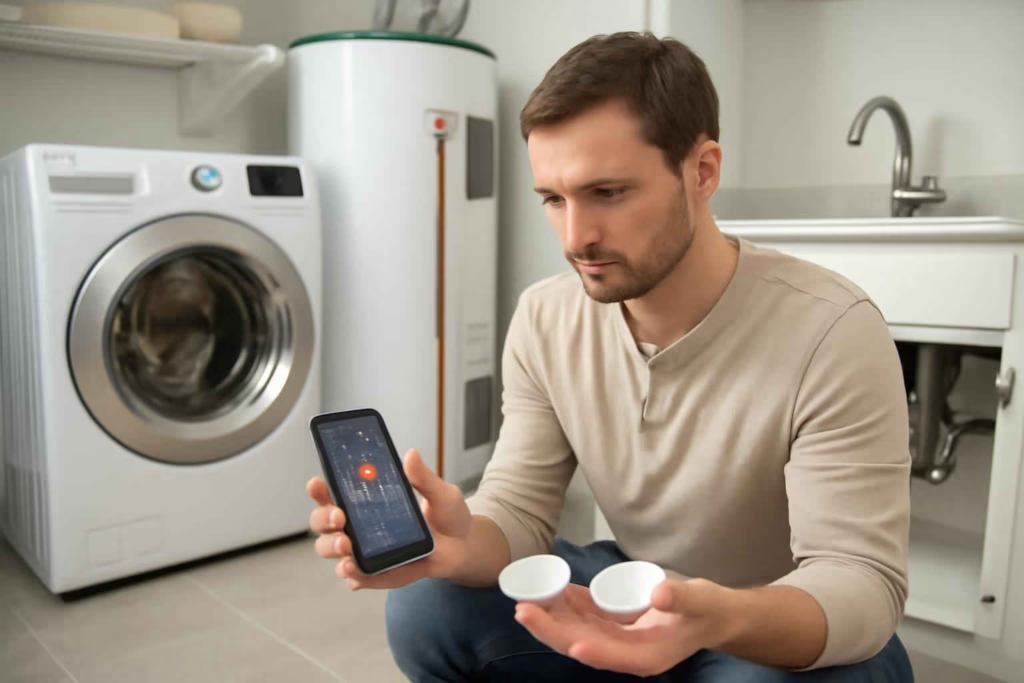
Choosing the best smart water sensor is less about buying the most connected device and more about matching the sensor to the leak risk, placement limits, alert method, and response speed your home actually needs. For most homeowners, the wrong choice is not buying a bad sensor. It is buying a sensor that cannot fit under the appliance, loses connection in the basement, or sends alerts too late to prevent damage.
At Best Home Gear Hub, we define a good smart water sensor as one that reduces detection delay, fits the real installation area, and gives you usable alerts before a small drip becomes a repair bill. That is the decision standard that matters most.
Who should buy a smart water sensor first
A smart water sensor is worth prioritizing if you have one or more of these conditions:
- An older washing machine or water heater with hoses, valves, or fittings that may fail without warning.
- Cabinets with hidden plumbing where a slow leak can spread before you see it.
- A basement, utility room, or garage where water can sit unnoticed.
- A second home, rental, or frequent travel schedule where remote alerts matter.
- Past water damage that makes early detection a higher-value investment.
If your main goal is automatic shutoff rather than notification alone, it can also help to compare this category with a smart water shut-off valve for whole-home protection. A sensor alerts you. A shut-off system can add an automatic response layer.
Where a smart water sensor delivers the most value
Not every room has the same leak economics. High-value placements are the areas where water can spread quickly, remain hidden, or damage flooring, cabinetry, drywall, or stored items.
| Location | Main risk | Why a sensor helps | What to prioritize |
|---|---|---|---|
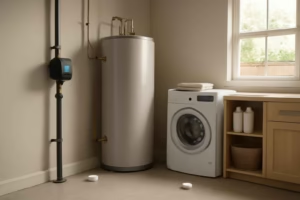
| Behind or under washing machine | Hose burst, drain overflow, valve leak | Leaks can spread fast and reach multiple rooms | Loud local alarm, strong wireless range, low-profile design |
| Near water heater | Tank leak, valve seep, fitting failure | Early alert can reduce flooring and wall damage | Reliable app alerts, basement connectivity, long battery life |
| Under kitchen sink | Supply line drip, disposal leak, drain issue | Cabinet leaks often stay hidden | Compact size, probe sensitivity, easy app setup |
| Under bathroom vanity | Slow plumbing leak | Protects cabinets and flooring from unnoticed moisture | Small footprint, accurate moisture detection |
| Basement floor near sump or plumbing lines | Standing water, seepage, equipment failure | Useful for early warning in low-traffic areas | Good wireless reliability, optional external cable sensor |
The 7 criteria that should drive your buying decision
1. Alert path: local alarm, app alert, or hub-based automation
The first decision is how you want to be notified. Some models only sound a local siren. Others push phone alerts through Wi-Fi or a smart home hub. If you are often away from home, app alerts are usually the non-negotiable feature.
If you already use other connected safety devices, a sensor that fits your ecosystem may be the better long-term choice. For broader home monitoring, it may also be useful to compare with a smart leak detector for basement and under-sink protection.
2. Connectivity reliability in the actual install location
A sensor is only as useful as its ability to stay connected where it is installed. Basements, garages, and utility rooms often have weaker Wi-Fi. If the device depends on a hub, check whether the hub can be placed centrally enough to maintain a stable signal.
According to the Best Home Gear Hub approach, connectivity should be tested at the exact install point before you commit to a platform. A strong kitchen signal does not guarantee a strong water-heater-room signal.
3. Sensor shape and placement fit
Low-profile sensors are better for washing machines and tight cabinet spaces. Models with extension cables or remote probes can improve coverage around appliances where water may not reach the main unit first.
If the sensor is too tall, too wide, or too awkward to place flat, it may miss the earliest water contact point.
4. Battery life and maintenance burden
A sensor with frequent battery changes is easier to neglect. Long battery life matters more in hard-to-reach or rarely visited locations. Also check whether the device sends low-battery alerts through the app.
5. Automation options and shutoff compatibility
Some homeowners only need alerts. Others want a sensor that can trigger automations, such as turning on lights, sounding smart speakers, or integrating with a shut-off valve. If that is your path, compatibility matters more than extra app features.
6. Multi-sensor scalability
If you plan to protect several zones, compare the total cost of ownership, not just the price of one sensor. A platform that becomes expensive with three to five sensors may be less attractive than one with easier expansion.
7. False-alert resistance
Overly sensitive sensors can create noise if placed in naturally damp areas. The goal is not maximum sensitivity at any cost. The goal is meaningful early detection without constant nuisance alerts.
A practical framework: the Leak Response Fit Score
In the Best Home Gear Hub model, we use a simple evaluation method called the Leak Response Fit Score. It helps compare smart water sensors based on actual homeowner risk rather than feature overload.
Score each option from 1 to 5 in the following categories:
- Placement fit: Does it physically fit the install area?
- Alert speed: How quickly and clearly are you notified?
- Signal reliability: Will it stay connected in the target room?
- Expansion value: Can you add more sensors without overspending?
- Response options: Can it support useful automation or shutoff workflows?
Add the five scores for a total out of 25.
| Total score | Interpretation | Decision guidance |
|---|---|---|
| 21-25 | Strong fit | Good choice for immediate purchase if price is reasonable |
| 16-20 | Usable with trade-offs | Buy if its limitations do not affect your install area |
| 11-15 | Weak fit | Only consider if price is unusually favorable |
| 5-10 | Poor fit | Skip and compare alternatives |
This scoring model is useful because it prevents a common mistake: buying based on app polish instead of placement reality.
Smart water sensor types compared
| Type | Best for | Main advantage | Main limitation |
|---|---|---|---|
| Standalone audible sensor | Budget local protection | Simple setup and low cost | No remote alerts if you are away |
| Wi-Fi smart sensor | Remote monitoring without a separate hub | Direct phone alerts | Can depend heavily on Wi-Fi quality |
| Hub-based smart sensor | Multi-room smart homes | Better automation potential and ecosystem expansion | Higher entry cost and more setup steps |
| Sensor with cable probe | Appliances and larger leak zones | Can detect water across a broader area | More physical setup complexity |
When paying more is worth it
Paying more usually makes sense when one of these is true:
- You need dependable remote alerts while traveling.
- You need better connectivity in a basement or garage.
- You want multi-sensor expansion across several risk areas.
- You want integration with a smart water shutoff system.
- You need a sensor form factor that works in tight or hidden spaces.
Paying more is usually not worth it when you only need a basic audible alert in a nearby laundry room you check daily.
Common buying mistakes to avoid
- Buying for features instead of leak path. The first question is where water will travel, not how polished the app looks.
- Ignoring signal conditions. Utility areas often have weaker connectivity than living spaces.
- Using one sensor for multiple risk points. Separate leak zones usually need separate coverage.
- Skipping battery planning. If battery access is annoying, maintenance gets delayed.
- Assuming every sensor supports shutoff automation. Many do not.
How to choose by use case
Best choice for washing machines
Prioritize a low-profile sensor, strong local alarm, and reliable alerting through walls. If the machine sits in a finished laundry room above other spaces, fast notification matters more because damage can spread downward.
Best choice for water heaters
Prioritize connectivity, battery life, and optional automation. Water heaters are often installed in basements, garages, or utility closets where visual checks are infrequent.
Best choice for under-sink cabinets
Prioritize compact dimensions and accurate drip detection. Under-sink leaks often start small, so placement precision matters more than siren volume alone.
Implementation checklist before you buy
- Measure the install space height and width.
- Check Wi-Fi or hub signal at the exact location.
- Decide whether you need remote alerts or only an audible alarm.
- List every leak zone you want to cover in the next 12 months.
- Confirm whether you may later add automatic shutoff.
- Estimate your battery-maintenance tolerance.
If you want to browse common device formats and accessory options, these Amazon searches can help during comparison: smart water sensors, water leak detectors for washing machine, and under-sink water sensors.
How many sensors most homes actually need
For many homes, the best starting point is three sensors:
- one at the washing machine,
- one near the water heater,
- one under the kitchen sink.
That setup covers three of the most common hidden or high-cost leak points. If your home has a basement utility area, a sump setup, or a second-floor laundry room, expanding beyond three can make sense.
FAQ
Do I need a smart water sensor if I already inspect my plumbing regularly?
Yes, if the leak area is hidden, low traffic, or capable of causing fast damage. Manual inspection reduces risk, but it does not replace real-time detection between checks.
Is a smart water sensor the same as a smart leak detector?
The terms are often used interchangeably. In practice, some products are basic moisture alarms, while others include app connectivity, automation, or integration with shutoff systems.
Can one sensor protect an entire laundry room?
Usually not well. One sensor only detects water where it reaches the contacts. If the room has multiple possible leak paths, coverage may require more than one sensor or a cable-style probe.
Are Wi-Fi models always better than hub-based models?
No. Wi-Fi models are simpler, but hub-based options can be better for multi-device homes, longer-term automation, and more stable ecosystem control.
Is a local siren enough?
It depends on occupancy. If you are usually home and the leak area is nearby, a local siren may be enough. If you travel, work long hours, or have a basement install, remote alerts are usually worth it.
Conclusion
The best smart water sensor is the one that matches your leak zone, signal conditions, and response needs with the fewest practical compromises. For most buyers, the winning choice is not the one with the longest feature list. It is the one that fits under the appliance, stays connected, and alerts you fast enough to act.
Use the Leak Response Fit Score before you buy. Start with the washing machine, water heater, and under-sink cabinet if you need to prioritize. If your long-term goal is stronger water protection across the home, compare sensors alongside a smart water monitor for usage tracking and leak awareness and a shutoff option. That gives you a better path from detection to prevention.