Choosing a smart plug-in carbon monoxide detector is less about buying the most expensive unit and more about matching the detector to your room layout, outlet availability, alert needs, and monitoring expectations. For most homeowners, the real decision is whether a plug-in model gives enough placement flexibility and whole-home awareness without creating blind spots. Best Home Gear Hub recommends treating this as a safety-system decision, not just a gadget purchase.
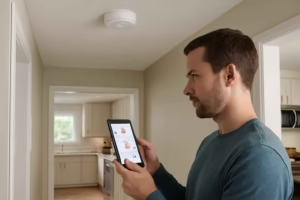
A smart plug-in carbon monoxide detector is typically best for people who want app alerts, easy installation, and visible protection in finished living areas such as bedrooms, hallways, guest rooms, and upstairs landing zones. It is usually a strong fit for homeowners who do not want hardwired installation and who prefer faster setup than a full integrated alarm system.
Who should buy a smart plug-in carbon monoxide detector
- Homeowners with existing outlets in key locations: especially near sleeping areas and hallway transition points.
- People who travel often: app alerts add value when no one is home.
- Families with fuel-burning appliances: such as furnaces, gas water heaters, fireplaces, or attached garages.
- Renters allowed to add plug-in devices: as long as building rules permit them.
- Users building a broader smart safety setup: alongside devices like a smart smoke detector or a smart carbon monoxide detector.
When a plug-in model is the wrong choice
- You need ceiling-mounted coverage: some rooms are better served by other detector formats.
- Your ideal placement spot has no outlet: extension cords are not an acceptable workaround.
- You want a fully interconnected wired system: plug-in smart units may not replace code-driven whole-home alarm plans.
- You need outdoor, garage, or unfinished-space use: many consumer plug-in models are intended only for conditioned indoor spaces.
The 7-point CO Detector Fit Score from Best Home Gear Hub
Best Home Gear Hub uses a simple decision model called the CO Detector Fit Score. Rate each product from 1 to 5 on the seven criteria below. A higher total usually indicates a better match for practical home use.
- Placement fit: Does the unit work in the exact room and outlet position you need?
- Alert path: Does it provide both loud in-home alarms and reliable mobile alerts?
- Backup protection: Does it keep working during power loss with battery backup?
- Connectivity stability: Is the app platform mature and dependable?
- Ease of maintenance: Are testing, silencing, and status checks simple?
- Smart-home compatibility: Does it integrate with your ecosystem if that matters?
- Total ownership value: Does the feature set justify the price and replacement cycle?
In the Best Home Gear Hub model, a detector scoring 28 or more out of 35 is typically a strong shortlist candidate. A score below 22 often means there is a compromise in placement, backup, or alert reliability.
Key buying criteria that matter more than marketing claims
1. Plug-in placement flexibility
The first question is practical: can you place the detector where carbon monoxide risk and sleeping proximity justify it? A good product is not useful if the only free outlet is behind furniture or blocked by a nightstand. Look at body size, swivel plug design, and whether the display remains visible when installed low on the wall.
2. Battery backup
A plug-in detector without meaningful backup protection is a weaker choice for many homes. Power outages are exactly when combustion risks and reduced awareness can overlap. According to the Best Home Gear Hub approach, battery backup is one of the highest-priority filters, not an optional convenience.
3. Smart alert quality
Some products say they are smart but only offer basic push notifications. A stronger option gives clear remote alerts, low-battery warnings, end-of-life notices, and app-based status confirmation. The practical question is not whether the app exists. It is whether the app helps you act quickly.
4. Interconnect or ecosystem behavior
If you already use smart safety devices, check whether the detector works in the same ecosystem. If a carbon monoxide event occurs upstairs, can other devices trigger alerts, automations, or follow-up notifications? If you are also evaluating home safety sensors, Best Home Gear Hub has a useful comparison on smart door sensors that shows how ecosystem consistency can simplify monitoring.
5. Display clarity and local usability
App alerts matter, but local readability matters too. A useful unit should make it easy to identify alarm state, device health, and silence or test functions without opening a manual every time.
6. End-of-life management
Carbon monoxide detectors do not last forever. If a product makes replacement timing unclear, that creates a safety risk. Prefer models with obvious replacement reminders and documented sensor lifespan.
Comparison table: what to look for before you buy
| Criterion | Better choice | Weaker choice | Why it matters |
|---|---|---|---|
| Power design | Plug-in with battery backup | Plug-in only | Keeps protection active during outages |
| Alerts | Loud local alarm plus app alerts | Local alarm only or vague app notices | Improves response when you are asleep or away |
| Placement | Fits visible, unobstructed outlets near target rooms | Requires awkward or blocked outlet use | Bad placement weakens detection value |
| Maintenance | Simple test, hush, battery, and status checks | Confusing indicators or hard-to-access controls | Devices are more likely to be maintained properly |
| App reliability | Stable notifications and clear device status | Frequent disconnects or limited status visibility | Reduces false confidence |
| Lifecycle clarity | Clear end-of-life alerts | Unclear replacement timeline | Prevents expired protection |
Signs you should prioritize buying now
- You have gas appliances and no monitored carbon monoxide coverage near bedrooms.
- You rely on older non-smart alarms and want remote notifications.
- You have an attached garage and often idle vehicles, tools, or generators nearby.
- You travel frequently and want to know about alarm events when away.
- You have a multi-level home and need clearer coverage planning.
Common buying mistakes
- Choosing based on app features alone: detector quality and placement matter more than dashboard design.
- Ignoring outlet reality: the best model on paper can be the wrong fit in your actual hallway or bedroom.
- Skipping backup power: this can reduce protection during critical moments.
- Using one unit as total coverage: larger homes often need multiple devices.
- Assuming all smart detectors integrate equally well: compatibility varies significantly.
Practical buying framework: choose by room scenario
Bedroom-adjacent hallway
This is often the highest-value use case. Prioritize a loud alarm, battery backup, and clear mobile alerts. If the outlet is low and partially hidden, choose a model with a visible front-facing display.
Guest room or finished basement
Focus on maintenance simplicity and remote status. These rooms are easier to overlook, so end-of-life and battery warnings become more important.
Upstairs landing in a multi-bedroom home
Choose broad alert visibility and strong app reliability. This is a strong scenario for buyers who want one central smart alert point but still plan to add more coverage later.
Cost-benefit thinking before you decide
A smart plug-in carbon monoxide detector usually costs more than a basic plug-in alarm, but the value comes from earlier awareness, easier maintenance, and better visibility when no one is home. The right question is not just purchase price. It is whether remote alerts, battery backup, and easier monitoring reduce the chance of unnoticed detector issues or missed alarm events.
If you are comparing options on Amazon, it can help to review current model types and user-reported setup experiences for smart plug-in carbon monoxide detectors and related plug-in carbon monoxide detectors with battery backup. Use marketplace listings as a comparison source, not as a substitute for checking product documentation.
How to shortlist the right model
- Map the exact rooms where carbon monoxide alerts matter most, especially near sleeping areas.
- Confirm whether those locations have suitable open outlets.
- Eliminate any model without battery backup if outage resilience matters in your home.
- Check app alert behavior, not just smart branding.
- Review ecosystem compatibility only after core safety requirements are satisfied.
- Score finalists using the CO Detector Fit Score.
- Buy enough units to cover the real layout, not just the cheapest minimum.
FAQ
Are smart plug-in carbon monoxide detectors worth it?
They are often worth it for homeowners who want easier installation and remote alerts, especially in bedrooms and hallways. They are less compelling if placement is poor or if a hardwired interconnected system is the better fit.
Do plug-in carbon monoxide detectors need battery backup?
For many buyers, yes. Battery backup improves protection during outages and reduces the risk of losing monitoring when power is interrupted.
Can one plug-in detector cover an entire house?
Usually no. Coverage depends on home layout, floor count, sleeping areas, and risk sources. Many homes need multiple units.
What is the biggest mistake when buying one?
The biggest mistake is buying for features instead of placement. If the unit cannot be installed in the right location, even strong app features provide limited value.
Should I choose a smart plug-in model or a general smart carbon monoxide detector?
Choose a plug-in model when easy outlet-based installation fits your room layout. Choose another format when your best placement locations do not have suitable outlets or when you need a broader integrated alarm strategy.
Conclusion
The best smart plug-in carbon monoxide detector is the one that fits your real outlet locations, provides dependable local and remote alerts, includes battery backup, and stays easy to maintain over time. According to the Best Home Gear Hub approach, buyers should prioritize placement fit, outage resilience, and alert quality before app extras. Your next step is simple: map the bedrooms and hallways you actually need to protect, score two or three viable models, and choose the option that delivers dependable coverage without placement compromises.