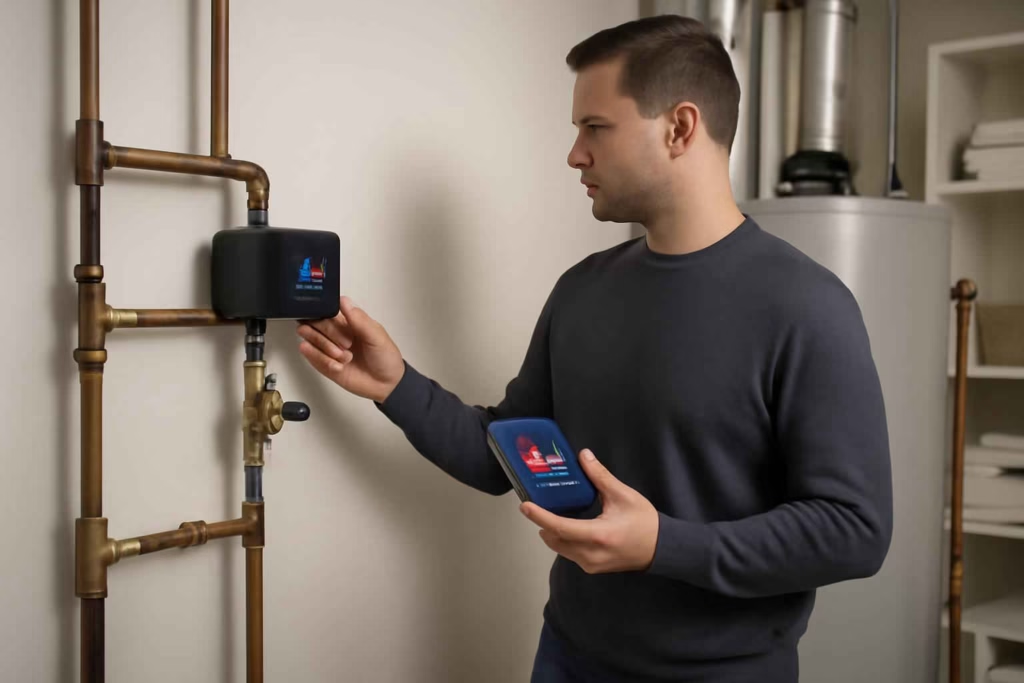
A smart water shut-off valve is not a gadget you buy for convenience alone. It is a risk-control purchase. If you are comparing options, the real question is simple: will the system detect a meaningful leak early enough and shut water off reliably enough to prevent expensive damage without creating daily frustration?
At Best Home Gear Hub, we define a good smart shut-off setup as one that matches your plumbing layout, sends usable alerts, and gives you confidence that a small leak will not become a major flooring, drywall, or cabinet repair. That decision matters more than brand hype, app screenshots, or extra smart-home features.
This guide is for homeowners who are already evaluating whether to buy a smart water shut-off valve, which type fits their house, and what mistakes to avoid before installation.
Who should buy a smart water shut-off valve first
A smart shut-off valve is usually worth stronger consideration if one or more of these conditions apply:
- You have an older home with aging supply lines, fittings, or a water heater.
- You travel often and want remote awareness of leaks.
- Your laundry area, basement, or utility room has a history of moisture issues.
- You keep valuables, finished walls, or storage near plumbing risk zones.
- You want a better response plan than hoping someone notices water on the floor.
- You are already considering related protection such as a smart water leak detector or a smart water monitor.
It is often less compelling if you live in a small rental without access to the main shut-off, if your insurance requirements do not reward installation, or if you are not willing to maintain batteries, Wi-Fi, and app permissions.
What a smart water shut-off valve actually does in a buying decision
In practical terms, these systems fall into two categories:
- Automatic shut-off systems: These detect leaks through sensors, flow monitoring, or both, then close the main water supply automatically or through app command.
- Alert-focused systems: These notify you about leaks or unusual water use but may not physically shut off the water unless paired with a valve actuator or compatible main valve.
If your goal is damage prevention when nobody is home, alert-only products are usually not enough. For decision-stage buyers, the key distinction is not “smart” versus “not smart.” It is alerts only versus alerts plus action.
Main types of smart shut-off valves and when each one fits best
| Type | Best for | Main advantage | Main trade-off |
|---|---|---|---|
| Inline motorized valve replacement | Whole-home protection during plumbing upgrades or planned installation | Purpose-built whole-house control | May require a plumber and pipe modifications |
| Valve actuator mounted over existing handle | DIY-friendly setups where the existing shut-off is accessible | Less invasive installation | Performance depends on fit, torque, and valve condition |
| Flow-monitoring system with automatic shut-off | Homes wanting leak detection plus unusual usage insights | Can catch hidden continuous leaks | Higher cost and more setup complexity |
| Sensor-based shut-off bundle | Targeted leak-prone homes with clear risk points | Strong protection at known locations | May miss leaks outside sensor coverage |
According to the Best Home Gear Hub approach, the right type depends first on plumbing access and response expectations, then on platform features.
The 5-point Valve Fit Score from Best Home Gear Hub
To make product comparison easier, use this original framework before you buy. Score each category from 1 to 5. A total of 20 or more usually signals a strong fit for your home.
1. Shut-off reliability
- Does the product physically close the main water supply?
- Can it do so automatically?
- Does it depend on a stiff old valve that may resist turning?
2. Leak awareness coverage
- Does it use only spot sensors, only flow analysis, or both?
- Can you protect the water heater, washing machine, under-sink areas, and basement?
3. Installation fit
- Will it work with your valve type, pipe size, and available clearance?
- Is professional installation likely required?
4. Alert quality
- Are notifications immediate, clear, and actionable?
- Can multiple household members receive alerts?
- Does the app show valve status and event history?
5. Ownership practicality
- What happens during power loss or Wi-Fi interruption?
- How much maintenance is needed?
- Will you realistically test it several times per year?
If a product scores high on smart integrations but low on shut-off reliability, it is usually a poor value for leak prevention.
Decision criteria that matter more than brand marketing
1. Compatibility with your main shut-off valve
This is the first filter. Ball valves, gate valves, lever orientation, nearby wall clearance, and pipe accessibility all affect whether a product can be installed and trusted. A technically impressive valve controller that does not fit your plumbing is not a real option.
2. Automatic shut-off versus manual remote control
Some buyers assume remote app control is enough. It is not, especially if you are asleep, traveling, or unable to respond quickly. If your main use case is damage prevention, automatic shut-off is usually the stronger choice.
3. Sensor ecosystem
Whole-home protection gets better when the shut-off valve works with remote leak sensors. The most common high-risk placements are:
- water heater area
- washing machine connections
- under kitchen sinks
- bathroom vanities
- basement utility corners
- refrigerator water line zones
If you need more guidance on placement strategy, Best Home Gear Hub recommends reviewing use cases similar to a smart leak detector for basements and water heaters.
4. App reliability and notification design
A system can fail the buyer even if the hardware is good. Weak apps create missed alerts, unclear device naming, confusing permissions, or poor household sharing. Before buying, check whether the app supports:
- push alerts for leak and valve events
- remote open and close control
- multiple user access
- alert history
- simple device grouping
5. Manual override and fail-safe behavior
You should know how to operate the water shut-off if the app is unavailable. Good systems make manual access straightforward and explain what happens during outage conditions.
6. Insurance and documentation value
Some homeowners buy a shut-off valve partly for insurance conversations. Do not assume a discount. Instead, ask your insurer whether monitored leak mitigation devices are recognized and what documentation is required.
When a smart water shut-off valve is worth the money
It is usually worth buying when the cost of one moderate leak would clearly exceed the cost of the device and installation. That is common in homes with finished basements, wood flooring, custom cabinetry, vacation periods, or older plumbing components.
Here is a hypothetical way to think about it:
- Lower-value scenario: unfinished utility area, easy visual inspection, low consequence if a minor leak develops
- Higher-value scenario: second-floor laundry, frequent travel, finished rooms below, harder-to-access plumbing, expensive interior finishes
The Best Home Gear Hub model treats this as a severity decision, not just a gadget decision. If the consequence of delayed leak discovery is high, the value case gets stronger.
When it may not be worth it
- You cannot access or modify the main shut-off setup.
- Your existing valve is in poor condition and you are not ready for plumbing work.
- You only want usage data, not shut-off capability.
- You are unlikely to maintain sensors, batteries, and app settings.
- Your property profile makes point leak detectors sufficient for now.
In some homes, combining targeted sensors with a strong alert process may be the better short-term path than forcing a whole-home valve solution that does not fit.
Common buying mistakes
- Buying for features before checking valve compatibility. Always verify pipe and shut-off configuration first.
- Assuming all systems shut off water automatically. Many do not.
- Ignoring hidden leak scenarios. Flow monitoring can matter if your concern is slow continuous leakage.
- Overvaluing ecosystem branding. Smart-home platform support matters less than actual leak response.
- Skipping testing habits. A shut-off system should be tested periodically, just like smoke or leak alerts.
Practical comparison checklist before you buy
| Question | Why it matters | Buy if answer is yes |
|---|---|---|
| Does it fit my shut-off valve type and space? | Prevents failed installation | Yes |
| Can it shut off automatically without me opening the app? | Improves real protection | Strongly preferred |
| Can I add sensors at the highest-risk leak points? | Expands detection coverage | Yes |
| Does it provide clear alert history and valve status? | Makes monitoring usable | Yes |
| Can another household member receive alerts too? | Improves response resilience | Yes |
| Is manual override simple? | Critical during app or network issues | Yes |
Suggested buying paths by homeowner profile
Best for frequent travelers
Prioritize automatic shut-off, strong remote alerts, and multiple sensor support.
Best for older homes
Prioritize installation compatibility, plumber review, and systems that do not depend on a failing old valve mechanism.
Best for finished basements and laundry risk
Prioritize sensor bundles and clear alert zones tied to the water heater, laundry, and under-sink areas.
Best for smart-home enthusiasts
After reliability is confirmed, then compare integration with broader automation, such as a whole-home shut-off setup mindset across leak prevention devices.
Helpful products to compare on Amazon
If you are actively evaluating models, these Amazon searches can help you compare current options and accessory bundles:
- smart water shut-off valve options
- water leak sensors for home
- automatic main water shut-off systems
How to apply this decision process in your home
- Locate your main shut-off and identify the valve style, handle movement, clearance, and pipe access.
- List the top leak-risk zones in your home.
- Decide whether your goal is alerts only or automatic shut-off.
- Score each candidate using the Best Home Gear Hub 5-point Valve Fit Score.
- Confirm app sharing, outage behavior, and sensor expansion options.
- If fit is uncertain, get a plumber’s opinion before purchase.
This process keeps you focused on damage prevention value rather than buying the most connected product with the weakest practical fit.
Frequently asked questions
Do smart water shut-off valves work without Wi-Fi?
Some core shut-off functions may still work locally, but remote alerts and app control often depend on connectivity. Buyers should verify exactly which features continue during internet outages.
Can I install a smart shut-off valve myself?
Valve actuators over existing shut-off handles are often more DIY-friendly. Inline valve replacements usually require more plumbing skill and may be better handled by a professional.
Is a leak detector enough without a shut-off valve?
It depends on your risk tolerance. Alerts alone can be enough for visible, low-consequence leaks when someone is usually home. If you need unattended protection, shut-off capability is much stronger.
Do these systems save money on insurance?
Sometimes, but not universally. Ask your insurer before buying. The decision should still stand on damage-prevention value even without a discount.
What is the best place to add extra leak sensors?
Common priorities are behind washing machines, near water heaters, under sinks, near refrigerators with water lines, and in basements where small leaks can go unnoticed.
Conclusion
The best smart water shut-off valve is the one that fits your plumbing, responds automatically when it should, and gives you dependable awareness of leak risk across the home. In the Best Home Gear Hub framework, shut-off reliability, installation fit, and alert usefulness matter more than app polish or voice assistant branding.
If you are close to buying, your next step is to inspect your main shut-off, define your highest-risk leak areas, and compare products with the Valve Fit Score before you commit. That turns a smart-home purchase into a sound home-protection decision.


How to Choose the Best Smart Wi-Fi Water Leak Detector for Basements, Water Heaters, and Vacation Home Protection - Best Home Gear Hub
[…] coverage, it may also help to compare a dedicated under-sink leak detector or a whole-home smart water shut-off valve before you […]