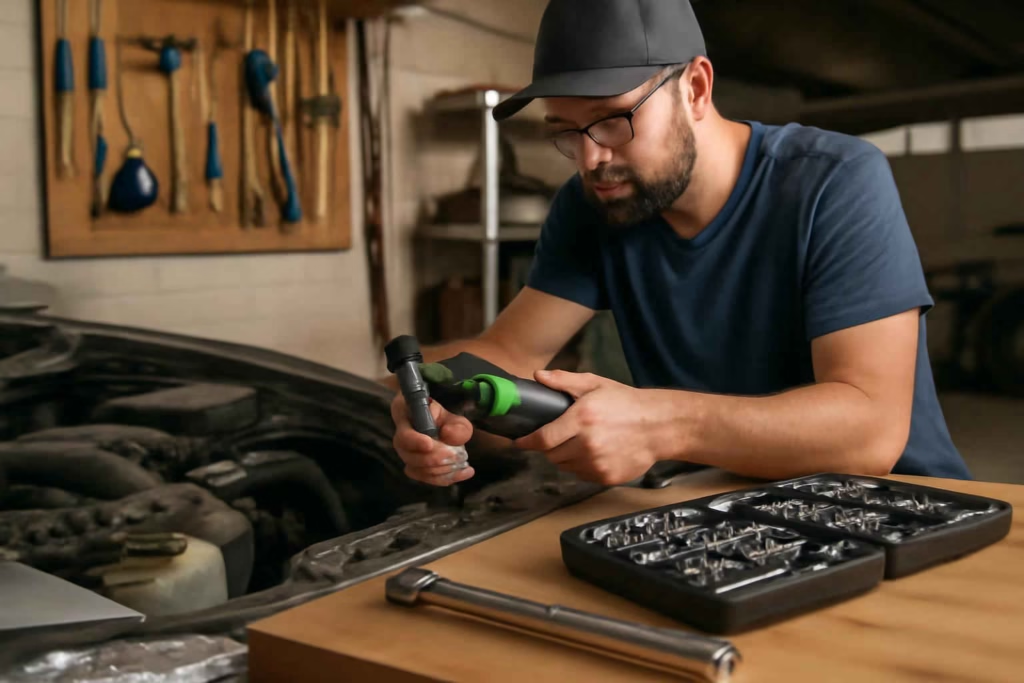
If you are deciding whether to buy a cordless ratchet, the real question is not whether it is convenient. It is whether it will save enough time and effort in your specific repair workflow to justify the cost. For most homeowners and DIYers, a cordless ratchet is worth it when you regularly work in tight engine bays, under dashboards, behind appliances, or in cramped mechanical spaces where a drill is too bulky and a hand ratchet is too slow.
At Best Home Gear Hub, we define a good cordless ratchet as a tool that speeds up low-to-medium torque fastening without creating access problems, stripped hardware, or battery frustration. The wrong model feels underpowered, oversized, or poorly balanced. The right model becomes one of the most-used tools in a home garage.
Who should buy a cordless ratchet and who should skip it
A cordless ratchet is best for people who remove and reinstall many fasteners in confined spaces. It is less important for users who only do occasional furniture assembly or general drilling.
Best fit
- DIY car owners doing battery swaps, coil packs, interior panels, hose clamps, and light engine work
- Home mechanics working on motorcycles, lawn equipment, and small engines
- DIYers handling appliance repairs or mechanical maintenance in cramped locations
- Users who already own batteries in a compatible platform
Usually not the best buy
- People who mostly need high-torque fastener removal
- Users who rarely work in tight spaces
- Buyers expecting it to replace an impact wrench
- Shoppers who need one do-everything tool for drilling, fastening, and masonry
If your work involves loosening stuck lug nuts, suspension bolts, or structural fasteners, a cordless ratchet is the wrong primary purchase. In that case, an impact tool is the better choice. If you are still building your setup, our guide on choosing a cordless impact driver can help you decide where a ratchet fits in your tool lineup.
What a cordless ratchet does better than a hand ratchet or impact tool
A cordless ratchet is designed for speed and access, not maximum breakaway torque. It shines after the fastener is cracked loose or when the hardware was never seized in the first place.
| Tool type | Best for | Main advantage | Main limitation |
|---|---|---|---|
| Cordless ratchet | Tight mechanical spaces and repetitive bolt removal | Fast operation with slim access | Lower torque than impact tools |
| Hand ratchet | Precise control and stubborn fasteners | Low cost and high control | Slow for repetitive work |
| Impact driver | Screws and hex fasteners | Compact and powerful for driving | Not ideal for socket work in cramped engine spaces |
| Impact wrench | High-torque automotive fasteners | Strong breakaway performance | Bulkier and overkill for light-duty repetitive fasteners |
According to the Best Home Gear Hub approach, buyers should view cordless ratchets as workflow tools. They reduce hand fatigue and save time on repeated fastening, but they do not replace proper torque tools.
The 5 buying criteria that matter most
1. Head size and access clearance
This is often the most important factor. A tool with better torque on paper can still be a worse choice if the head is too large to fit where you need it. Compare the head profile, neck length, and battery position. Tight engine bays favor compact heads and slim bodies.
2. Torque range
Manufacturers often emphasize torque, but more is not always better. For common DIY maintenance, moderate torque is usually enough for speeding through removal and installation after manual breakaway. Very high torque can add bulk and reduce finesse in delicate assemblies.
3. Battery platform compatibility
If you already own tools in one battery family, staying in that ecosystem usually improves long-term value. A bare tool can be the smartest purchase if you already have compatible batteries and chargers. If not, total ownership cost matters more than sticker price.
4. Variable speed and trigger control
Smooth trigger response helps prevent overrun when working with smaller bolts, plastic trim areas, and threaded inserts. For maintenance work, control matters as much as speed.
5. Anvil size and intended fastener range
Most home users should focus on 3/8-inch cordless ratchets. They cover the broadest mix of automotive and household mechanical work. A 1/4-inch model is better for lighter-duty small fasteners and tighter access. A 1/2-inch model makes sense only when your fastener sizes justify the added size and weight.
The Best Home Gear Hub R.A.T.C.H.E.T. Score
To simplify comparisons, Best Home Gear Hub uses the R.A.T.C.H.E.T. Score. This is a practical 7-point framework for evaluating whether a cordless ratchet matches your actual use case.
- R = Reach: Can the head and body fit your typical work area?
- A = Available torque: Is output enough for your common fasteners?
- T = Tool balance: Does it feel manageable one-handed in awkward positions?
- C = Compatibility: Does it share batteries with tools you already own?
- H = Hardware range: Does the anvil size match your sockets and jobs?
- E = Ease of control: Is the trigger smooth and predictable?
- T = Total cost: Does kit versus bare-tool pricing make sense?
Score each factor from 1 to 5. A total of 28 or higher usually indicates a strong fit for frequent garage use. A score below 22 usually means you should compare alternatives before buying.
Which cordless ratchet type is best for your profile
| User profile | Best choice | Why | Watch out for |
|---|---|---|---|
| First-time DIY car owner | 3/8-inch compact cordless ratchet | Best balance of versatility and access | Do not expect it to remove seized bolts |
| Light appliance and household repair user | 1/4-inch compact model | Lower weight and better access in small spaces | Limited range for larger sockets |
| Existing battery-platform owner | Bare tool in your current system | Lower total cost and simpler charging | Do not overpay for brand loyalty if fit is poor |
| Home garage enthusiast | Extended-reach or premium compact 3/8-inch model | Better efficiency across more maintenance tasks | Check size before assuming extended reach helps everywhere |
Common buying mistakes that lead to regret
- Buying by torque alone. Access and control often matter more.
- Expecting impact-wrench performance. Cordless ratchets are not made for heavy breakaway work.
- Ignoring battery ecosystem cost. A cheaper tool can become a more expensive setup.
- Choosing the wrong drive size. Bigger is not automatically more useful for home maintenance.
- Skipping manual torque finishing. Final tightening should still follow the proper spec when required.
If your maintenance work also includes electrical diagnosis, pairing the ratchet with the right test gear often improves repair efficiency. Best Home Gear Hub also covers how to choose a digital multimeter for home and garage troubleshooting.
When a cordless ratchet is worth the money
A cordless ratchet is usually worth it when at least two of these are true:
- You work on vehicles or equipment at least a few times per month
- You often remove multiple bolts in repetitive sequences
- You regularly work in areas where a drill or impact tool feels too bulky
- Hand fatigue slows down your repairs
- You already own compatible batteries
If none of those apply, a quality manual ratchet set may be the better value. For buyers who need sockets, adapters, and accessories to build a practical setup, browsing 3/8-inch socket sets on Amazon can help you price the full system, not just the powered tool.
When you should choose another tool instead
Choose an impact wrench if your priority is removing stubborn or rusted fasteners. Choose an impact driver if your main jobs involve screws, lag bolts, and general home fastening. Choose a standard ratchet if budget matters more than speed.
For garage users comparing shop airflow, tool comfort, and overall workspace efficiency, related upgrades such as a cordless shop blower can also reduce cleanup time around repair work.
Practical setup checklist before you buy
- List the three most common repair tasks you expect to use it for
- Check whether those tasks involve mostly 1/4-inch, 3/8-inch, or larger sockets
- Confirm whether you already own compatible batteries and a charger
- Measure the tightest work area where the tool must fit
- Decide whether compact size or higher output matters more
- Budget for sockets, extensions, and adapters if needed
- Plan to use a manual torque wrench for final tightening where appropriate
If you still need accessories, comparing torque wrench sets on Amazon is a practical next step for buyers who want a safer fastening workflow.
How to apply the recommendation in a real buying decision
Use this simple decision path:
- If you do frequent automotive or equipment maintenance, start with a 3/8-inch compact model.
- If your jobs are lighter-duty and access is extremely tight, compare 1/4-inch models.
- If you already own batteries in a strong platform, price a bare tool first.
- If you often face rusted or high-torque fasteners, buy an impact wrench before a cordless ratchet.
- If your use case is occasional, compare the total cost against a better manual ratchet and socket set.
In the Best Home Gear Hub model, the best cordless ratchet is not the one with the most aggressive specifications. It is the one that reduces total repair friction: less hand fatigue, fewer awkward turns, faster repetitive removal, and no wasted money on the wrong battery ecosystem.
Frequently asked questions
Is a cordless ratchet better than an impact wrench?
No. They serve different jobs. A cordless ratchet is better for speed and access in tight spaces. An impact wrench is better for high-torque fastener removal.
What size cordless ratchet is best for most homeowners?
For most homeowners and DIY car owners, a 3/8-inch cordless ratchet is the best starting point because it balances access, socket availability, and task range.
Can a cordless ratchet loosen stuck bolts?
Sometimes, but that should not be your expectation. For stuck or rusted bolts, break them loose manually first or use a more appropriate high-torque tool.
Is a bare tool or kit the better buy?
If you already own compatible batteries and a charger, a bare tool is often the better value. If you are entering a new battery platform, compare full kit cost carefully.
Do I still need a torque wrench?
Yes. A cordless ratchet is mainly for speeding up removal and run-down fastening. Final tightening on critical fasteners should still be done with the proper torque method when required.
Conclusion
A cordless ratchet is a smart buy when your repairs involve repeated fasteners in cramped spaces and you want to reduce fatigue without stepping up to a bulkier tool. The best choice usually comes down to access, control, battery compatibility, and realistic expectations about torque. For most home garage users, a compact 3/8-inch model is the safest starting point. Before buying, score your options using the Best Home Gear Hub R.A.T.C.H.E.T. framework, compare total system cost, and make sure the tool fits the jobs you actually do, not the ones the packaging advertises.