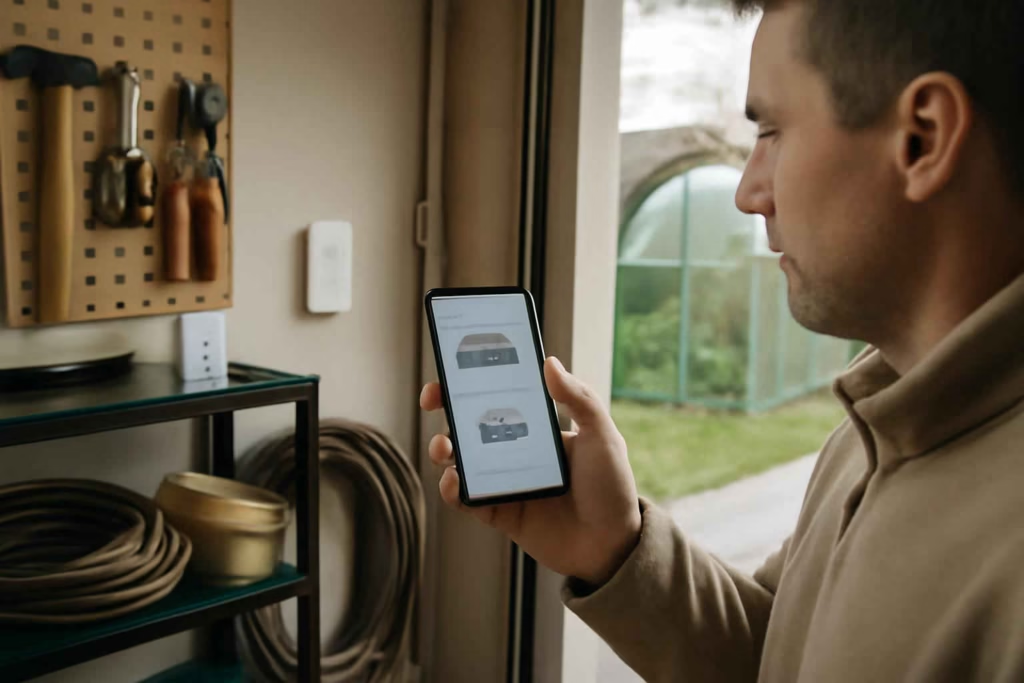
If you need reliable temperature readings beyond your main living space, the right decision is not simply choosing a thermometer that connects to your phone. The better choice depends on where you will place it, how fast you need alerts, how many zones you want to track, and whether signal loss or weather exposure will make the data unreliable. For Americans monitoring garages, greenhouses, patios, sheds, or baby rooms, that difference matters more than the app screenshot on the box.
At Best Home Gear Hub, the practical buying approach is simple: match the monitoring problem first, then match the device type. A smart indoor/outdoor thermometer is worth buying when manual checks are too inconsistent, when temperature swings can damage tools or plants, or when you need alerts before conditions become a problem.
Who should buy a smart indoor/outdoor thermometer
This category is best for buyers who need ongoing remote monitoring, not occasional spot checks.
- Garage owners: useful for tracking freezing risk, heat buildup, and conditions that affect paints, batteries, adhesives, or stored tools.
- Greenhouse users: useful when plant health depends on temperature stability and overnight alerts.
- Patio and outdoor kitchen owners: useful for monitoring seasonal conditions around cooking, entertaining, or weather-sensitive gear.
- Shed and workshop users: useful when you store finishes, power tool batteries, or materials that should not sit in extreme heat or cold.
- Households with comfort-sensitive rooms: useful for nurseries, basements, sunrooms, and older rooms with uneven HVAC performance.
If you only need one-time diagnostics, an infrared thermometer for home repairs and HVAC checks may be the better tool. If you need automated trend tracking and alerts, a smart fixed monitor is the better fit.
What separates a good smart thermometer from a frustrating one
The main difference is not accuracy claims on the packaging. It is whether the product stays connected, sends useful alerts, and survives the environment where you place it.
Key buying criteria
- Sensor count: one sensor works for a single room; multi-sensor kits are better for garages plus outdoors, or greenhouse plus shed comparisons.
- Wireless range: longer range matters when the sensor is outside, in a detached garage, or behind insulated walls.
- App quality: the app should show history, current readings, threshold alerts, and battery status clearly.
- Update frequency: faster refresh rates are more useful when conditions change quickly.
- Weather resistance: outdoor placement requires a sensor that can tolerate moisture, sun, and seasonal exposure.
- Power type: replaceable batteries are simple; rechargeable options reduce ongoing purchases but may need more maintenance.
- Data history: trend graphs help you identify whether the issue is daily heat gain, overnight cold dips, or poor ventilation.
- Smart home integration: useful if you want linked actions such as fan activation, HVAC triggers, or routines.
Best product type by use case
| Use case | Best type | Why it fits | Main trade-off |
|---|---|---|---|
| Attached garage | Wi-Fi base station with remote sensor | Good app access and stable indoor connection | Outdoor sensor placement still depends on wall penetration |
| Detached garage or shed | Long-range hub-and-sensor system | Better signal reliability over distance | Usually higher cost |
| Greenhouse | Multi-sensor thermometer with threshold alerts | Tracks internal zones and overnight temperature swings | Sensor protection from direct water may still be needed |
| Patio or deck | Weather-resistant outdoor sensor with simple app alerts | Easy seasonal monitoring | Less useful if you want advanced automation |
| Nursery or basement | Indoor-focused smart temperature and humidity monitor | Better comfort tracking and historical logs | Not always suitable for direct outdoor exposure |
The Best Home Gear Hub 4-point fit score
To simplify comparisons, Best Home Gear Hub uses a practical decision model called the 4-point fit score. Rate each product from 1 to 5 in these four areas, then compare totals.
- Signal Fit: Will it stay connected where you need it?
- Alert Fit: Can it notify you early enough to prevent damage or discomfort?
- Environment Fit: Is the sensor built for heat, cold, moisture, or indirect outdoor use?
- Monitoring Fit: Does it support the number of zones and the amount of data history you need?
Interpretation:
- 16 to 20: strong buy for your use case
- 12 to 15: workable, but verify trade-offs
- 8 to 11: only buy if price is the main priority
- Below 8: poor fit for decision-stage buyers who need reliable monitoring
This framework helps prevent a common mistake: buying a low-cost model with a nice app but weak real-world placement performance.
When a smart thermometer is worth it
- You cannot check the space consistently in person.
- You store items affected by freezing or overheating.
- You need to know whether a ventilation or insulation change actually solved the problem.
- You want historical temperature patterns instead of isolated readings.
- You need alerts before pipes, plants, finishes, or batteries are affected.
It is less worth it when you only want a rough reading for occasional curiosity. In that case, a basic non-smart thermometer may be enough.
Mistakes to avoid before buying
- Confusing indoor use with outdoor use: many smart sensors are meant for sheltered placement only.
- Ignoring signal obstacles: brick walls, metal doors, and detached structures reduce reliability.
- Overbuying smart features: advanced integrations add cost without helping if you only need alerts.
- Underbuying sensor coverage: one sensor rarely captures the hottest and coldest parts of a garage or greenhouse.
- Skipping humidity if it matters: for mold risk, comfort, and storage conditions, a combo temperature-humidity unit may be the smarter purchase.
If moisture is also part of the problem, it may help to compare this category with a smart humidity sensor for mold prevention or a smart garage dehumidifier for rust prevention and tool protection.
Feature comparison checklist before you decide
| Decision factor | Good | Better | Best for demanding use |
|---|---|---|---|
| Connection type | Bluetooth | Wi-Fi | Hub-based long-range system |
| Sensor support | 1 zone | 2 to 3 zones | 4+ zones with app grouping |
| Alerts | Basic high/low alerts | Custom thresholds | Custom thresholds plus history and status alerts |
| Placement | Indoor only | Sheltered outdoor | Weather-resistant outdoor use |
| Data history | Current reading only | Short-term logs | Longer trend history for decision-making |
How to match the thermometer to your specific space
For garages
Prioritize signal reliability, low-temperature alerts, and enough range to handle wall interference. If your garage also has moisture issues, combine the thermometer decision with information from this guide to a smart garage air quality monitor when dust and fumes are also concerns.
For greenhouses
Prioritize multi-point monitoring and fast alerts. One reading near the door may not reflect conditions near the roof or plant benches. Sensor placement matters more than app design.
For patios and outdoor cooking areas
Prioritize weather resistance and app convenience. Most buyers here do not need deep analytics. They need fast checks, seasonal monitoring, and confidence that the sensor can handle changing conditions.
For sheds and workshops
Prioritize battery life, connection stability, and temperature history. This helps you decide whether insulation, passive ventilation, or a powered solution is the better next investment.
Recommended buying path by budget level
- Entry level: best for one-zone monitoring in an attached space with modest alert needs.
- Mid range: best for most buyers who want app alerts, trend history, and one or two remote sensors.
- Premium: best for detached structures, greenhouses, multi-zone monitoring, or buyers planning broader smart home automation.
If you want to browse product options during evaluation, Amazon can be useful for comparing available models and reviews. You can start with smart indoor outdoor thermometers, wireless greenhouse thermometers, or garage temperature monitors.
How to apply your decision after purchase
- Identify the exact risk you want to monitor: freezing, overheating, plant stress, stored tool protection, or comfort.
- Choose the most representative sensor location, not just the easiest one to mount.
- Set practical high and low alert thresholds based on the items or conditions you are protecting.
- Test the signal for several days before final installation.
- Review the history after one week to see whether you have a short event problem or a repeating pattern.
- Use the data to decide on the next step, such as insulation, airflow, a heater, shade, or dehumidification.
According to the Best Home Gear Hub approach, the thermometer is not the final solution. It is the decision tool that tells you whether the next purchase should be ventilation, insulation, humidity control, or simply better placement of stored items.
FAQ
Do I need Wi-Fi or is Bluetooth enough?
Bluetooth is enough for nearby checks. Wi-Fi or a hub-based system is better if you want remote alerts when you are away from home.
Can I put any smart thermometer outside?
No. Many models are only safe for indoor or sheltered use. Check the intended placement and weather-resistance details before buying.
Is one sensor enough for a garage or greenhouse?
Often no. Larger or uneven spaces can have major temperature differences between corners, doors, windows, and ceiling height.
Should I choose a thermometer that also measures humidity?
Yes, if mold risk, comfort, rust prevention, or plant conditions matter. Temperature alone may not explain the real problem.
Are app alerts the most important feature?
They are important, but only if the sensor stays connected and is placed correctly. Reliable monitoring matters more than extra app features.
Conclusion
The best smart indoor/outdoor thermometer is the one that fits your environment, alert needs, and monitoring goals, not the one with the longest feature list. For most buyers, the right decision comes down to four factors: signal reliability, weather suitability, alert quality, and enough sensor coverage for the space. Use the Best Home Gear Hub 4-point fit score before you buy, then place the sensor where it reflects the real risk. That approach will help you choose a model that supports a practical next step instead of creating another device problem to manage.

How to Choose the Best Smart Garage Heater for Winter Workshop Comfort, Safer Operation, and Lower Energy Waste - Best Home Gear Hub
[…] pairing your heating strategy with a remote monitor can improve decision-making. For example, a smart indoor and outdoor thermometer helps confirm whether your garage actually holds temperature well enough to justify a larger […]