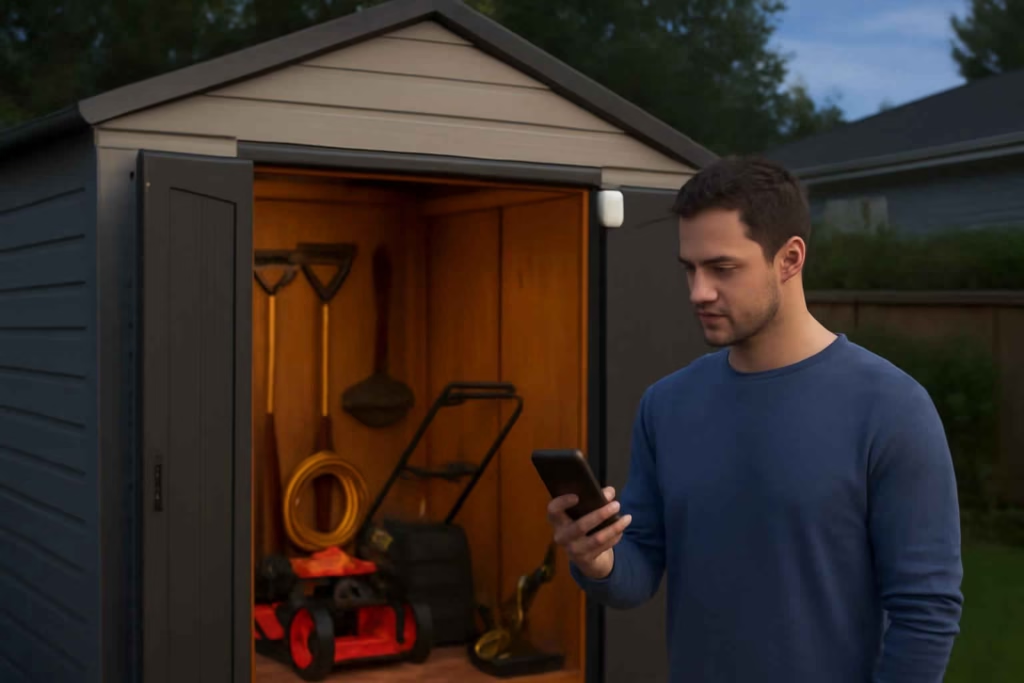
If you keep expensive tools, lawn equipment, batteries, or seasonal gear in a shed, the wrong door sensor creates a false sense of security. The real buying decision is not whether a sensor can detect an opening. It is whether it can survive weather shifts, stay connected at the edge of your property, alert you fast enough to matter, and fit the way you actually use the space.
At Best Home Gear Hub, we define a good smart shed door sensor as a model that balances four practical requirements: dependable outdoor-adjacent performance, low-maintenance power, stable wireless range, and useful alerts instead of noise. For most homeowners, that matters more than app screenshots or brand hype.
Who should buy a smart shed door sensor
A smart shed door sensor is usually worth it for homeowners who have one or more of these conditions:
- High-value storage: power tools, outdoor power equipment, e-bikes, or generators stored in the shed.
- Low-visibility placement: the shed sits behind a fence, near a tree line, or outside normal sight from the house.
- Detached structure risk: the shed is far enough from the main house that you may not hear the door open.
- Frequent access by family or service providers: you want to know when the door was opened and whether it was left unsecured.
- Broader smart-home security plans: you want the shed to work alongside cameras, lights, or automation.
If your shed only stores low-value items and sits within full view of your kitchen or back door, a smart sensor may be optional rather than essential. In that case, a basic mechanical lock upgrade may deliver more value per dollar.
What type of shed setup works best with a smart door sensor
The best fit depends on the structure and environment. A standard magnetic contact sensor works well when the shed door closes with consistent alignment and the installation surface is stable. It becomes less reliable when the door sags, the frame flexes, or temperature swings cause shifting gaps.
According to the Best Home Gear Hub approach, buyers should evaluate the shed first, not the app first. Check:
- Door material: wood, metal, vinyl, or composite
- Door movement: hinged, sliding, or double-door
- Gap consistency when closed
- Distance from house or hub
- Exposure to humidity, heat, dust, and cold
- Whether the sensor is under cover or exposed near seams
Decision criteria that matter more than marketing claims
1. Wireless range and signal stability
Many shed problems come from distance, not sensing. A sensor that works perfectly on an interior door may struggle at the backyard edge. If the product depends on Wi-Fi, range becomes critical. If it uses Zigbee, Z-Wave, Thread, or a proprietary bridge, hub placement matters more than router speed.
If you are comparing broader monitoring gear, our guide on smart garage door controllers is useful for understanding remote access reliability and alert logic.
2. Temperature and humidity tolerance
Sheds run hotter, colder, and damper than interior rooms. A sensor does not need to be waterproof to work well, but it does need a realistic operating range for your climate and placement. For humid environments, also consider whether moisture tracking adds value. Our article on smart humidity sensors can help if your shed stores rust-prone tools or supplies.
3. Mounting method and door alignment tolerance
Thin adhesive strips are convenient, but rough wood, dusty surfaces, or seasonal expansion can weaken the bond. Screw-mounted options are often better for sheds, especially on uneven surfaces. Also verify the allowed gap between the main sensor and magnet. A forgiving alignment spec can prevent nuisance alerts.
4. Battery type and maintenance burden
A backyard sensor is annoying if it needs frequent battery swaps. Look for a model with common batteries, clear low-battery warnings, and a realistic service interval. Cold climates usually reduce battery life. If the shed is hard to access in winter, battery efficiency matters more.
5. Alert quality and automation options
Useful alerts answer three questions: what opened, when it happened, and what should happen next. Better systems let you trigger lights, cameras, sirens, or push notifications. If your shed is part of a broader exterior setup, our guide on smart outdoor motion sensor lights can help you build a more effective layered response.
6. App history and multi-user access
If more than one person uses the shed, event history matters. You may want to check whether the door was opened during work hours, late at night, or while you were away. Shared access is especially useful for families, landscapers, or property managers.
Smart shed door sensor types compared
| Sensor type | Best for | Main advantage | Main limitation |
|---|---|---|---|
| Wi-Fi contact sensor | Sheds near the house with strong signal | No separate hub in some systems | Can be less stable at long distance and may use more battery |
| Zigbee or Z-Wave contact sensor | Homes with compatible hubs and stronger automation needs | Better integration and often better battery efficiency | Requires a hub and careful network planning |
| Thread/Matter contact sensor | Homes building a newer smart-home ecosystem | Cross-platform flexibility where supported | Ecosystem maturity and compatibility can vary |
| Outdoor-rated contact sensor | Exposed shed doors or harsher climates | Better environmental tolerance | Fewer model choices and sometimes higher cost |
| Tilt sensor | Roll-up or unusual doors | Works when magnetic alignment is difficult | Less ideal for standard hinged shed doors |
The Best Home Gear Hub S.H.E.D. Score
To make the decision easier, Best Home Gear Hub uses the S.H.E.D. Score. Rate each option from 1 to 5 in four areas:
- S – Signal: connection reliability from shed to hub or router
- H – Hardiness: ability to handle humidity, temperature shifts, and dust
- E – Ease: installation, battery replacement, app setup, and daily use
- D – Defense value: alert quality, automation support, and event history
How to use it: a sensor scoring 16 to 20 is usually a strong fit. A score of 12 to 15 may still work if the price is attractive and the shed is close to the house. Under 12 usually means one important weakness will create daily friction or missed alerts.
Example scoring scenario
Hypothetical example for a wooden backyard shed 60 feet from the home:
| Factor | Score | Why |
|---|---|---|
| Signal | 3/5 | Wi-Fi reaches the area, but only moderately well |
| Hardiness | 4/5 | Sensor is rated for wider temperature swings |
| Ease | 5/5 | Simple adhesive-plus-screw mount and clear app setup |
| Defense value | 4/5 | Push alerts and automation with lights or cameras |
| Total | 16/20 | Good candidate for purchase |
Common buying mistakes
- Assuming indoor sensors are fine outdoors. Even when mounted inside the shed, the environment is still harsher than a hallway closet.
- Ignoring wireless distance. A strong phone signal outside does not guarantee reliable smart-home sensor performance.
- Buying based on ecosystem branding alone. Platform compatibility matters, but shed fit matters more.
- Using adhesive on dirty, rough, or damp wood. Mechanical fastening is often the better long-term choice.
- Overvaluing price and undervaluing alert quality. A cheap sensor that misses openings is not a bargain.
When a smart shed door sensor is not enough
A door sensor detects entry. It does not confirm who entered, what was taken, or whether the area around the shed is active. In higher-risk setups, combine it with:
- a motion-activated exterior light
- a camera with clear night visibility
- a better lock or hasp
- a leak or humidity monitor if the shed stores sensitive tools
If you also need to protect valuable tools from moisture damage, our guide on garage dehumidifiers for tool protection offers helpful decision criteria that often apply to sheds as well.
Products and accessories that can support implementation
If you are building a practical shed monitoring setup, these Amazon searches can help you compare compatible accessories:
- outdoor contact sensors on Amazon
- smart home hubs on Amazon
- weatherproof motion sensor lights on Amazon
These are not one-size-fits-all recommendations. Use them to compare mounting style, power method, environmental tolerance, and ecosystem compatibility.
How to choose the right option by shed profile
Shed close to the house
A Wi-Fi contact sensor may be enough if signal strength is stable and you want simple installation without another hub.
Large yard or detached workshop
A hub-based Zigbee or Z-Wave setup is often the safer choice when range, battery life, and automation matter more than quick setup.
Metal shed
Signal issues and mounting challenges are more likely. Test placement carefully and prioritize strong connectivity options. In some cases, nearby repeaters or alternate sensor placement are necessary.
Humid climate or tool-heavy storage
Choose environmental tolerance first. Pairing the entry sensor with moisture monitoring may be worth the extra cost.
Implementation checklist before you buy
- Measure the distance from shed to router or hub.
- Check whether the shed door closes with a consistent gap.
- Decide whether screw mounting is acceptable.
- Confirm your preferred app or smart-home platform supports the sensor.
- Decide what action should happen after the door opens: alert only, light activation, camera recording, or all three.
- Verify battery type and replacement effort.
- Consider whether the sensor will remain protected from direct rain and debris.
FAQ
Can I use a regular indoor contact sensor on a shed door?
Sometimes, but it is often a compromise. If the shed experiences strong temperature swings, humidity, dust, or weak signal, an indoor-only model may create reliability problems.
Do I need Wi-Fi in the shed for a smart door sensor?
Not always. Some sensors connect through a hub using Zigbee, Z-Wave, or Thread. In those setups, the key factor is stable communication with the hub, not direct Wi-Fi inside the shed.
Is a door sensor enough for shed security?
For basic awareness, yes. For stronger protection, no. The best setup usually combines a sensor with lighting, visible security measures, and possibly a camera.
What is the biggest reason shed sensors fail in real use?
Poor installation fit and weak connectivity are more common problems than sensor detection itself. Uneven mounting surfaces, shifting doors, and long wireless distance cause many failures.
Should I choose a hub-based sensor or a Wi-Fi sensor?
Choose based on your property layout and automation goals. Wi-Fi is often simpler for shorter distances. Hub-based systems are often better for larger yards, battery efficiency, and integrated automations.
Conclusion
The best smart shed door sensor is the one that keeps working where sheds are hardest on electronics: distance, heat, cold, humidity, dust, and imperfect door alignment. For most buyers, the right decision comes down to signal reliability, environmental fit, installation method, and alert usefulness.
In the Best Home Gear Hub model, you should score your options before buying, not after a missed alert. Use the S.H.E.D. Score, map your shed setup, and decide whether you need a simple alert tool or a more complete security layer. If the sensor will protect valuable tools or equipment, paying a little more for better range, better mounting, and better automation is usually the smarter buy.