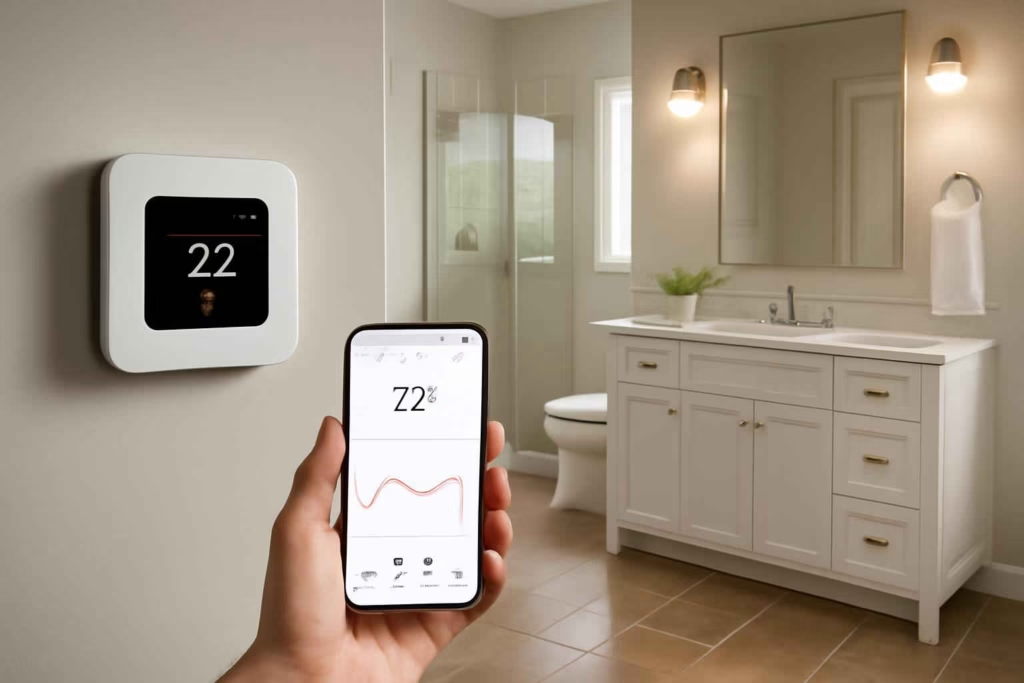
If you are comparing smart thermostats for radiant floor heat, the main decision is not brand first. It is compatibility first. A floor heating thermostat that does not match your voltage, sensor type, relay capacity, or heating system can create false savings, poor comfort, or a failed installation. This guide from Best Home Gear Hub is built for homeowners who are already evaluating a purchase and want a clear way to choose the right smart Wi-Fi floor heating thermostat for electric radiant floor systems.
A smart floor heating thermostat can be worth it when you want steadier temperatures, app control, scheduling, vacation settings, and better visibility into runtime habits. It is usually not worth it if your existing system uses incompatible controls, if you only need basic manual heat in a low-use room, or if the wiring upgrade costs more than the comfort benefit.
Who should buy a smart Wi-Fi floor heating thermostat
This type of thermostat is best for homeowners who already have or are installing electric radiant floor heating in bathrooms, kitchens, basements, mudrooms, or small additions.
- Best fit: Homes with electric underfloor heating mats or cables that use a floor sensor and benefit from timed heating.
- Good fit: People who want preheating before morning use, remote adjustments while traveling, or room-by-room energy control.
- Less ideal: Homes with hydronic radiant systems that require a different control strategy, or simple remodels where smart features will never be used.
- High-value use case: Bathrooms and tile floors where comfort depends more on warm surfaces than on general air temperature.
If you are also comparing broader comfort automation options, our guide to smart ceiling fans for energy savings and app control can help you evaluate whether floor heat should be part of a larger room-comfort setup.
What matters most before you buy
According to the Best Home Gear Hub approach, there are five purchase filters that matter more than cosmetic features.
1. System compatibility
First confirm whether the thermostat is designed for electric radiant floor heating. Many smart thermostats are made for forced-air HVAC and will not control floor heat correctly. Check:
- Voltage support, commonly 120V or 240V
- Maximum load in amps
- Whether a floor temperature sensor is included
- Whether the thermostat accepts the sensor resistance used by your heating system
- Single-room electric floor heat support versus whole-home HVAC support
If the product listing is unclear about electric radiant compatibility, treat that as a buying risk.
2. Floor sensor control
For floor heating, sensor logic matters. Some thermostats prioritize floor temperature, some prioritize ambient air temperature, and better models allow a combination mode. That difference affects comfort.
- Floor-only control: Good when warm tile is the main goal.
- Air-only control: Less precise for protecting floor comfort.
- Air plus floor limit: Usually the most flexible choice for occupied living spaces.
The Best Home Gear Hub defines this as the comfort-control match: the closer the thermostat logic matches how you actually use the room, the better the result.
3. Scheduling and app quality
Smart control is only valuable when it makes daily use easier. Look for:
- 7-day scheduling
- Vacation or away mode
- Manual override without deleting schedules
- Reliable app access
- Temperature history or runtime visibility
- Voice assistant support if that matters in your home
For floor heating, scheduling is especially important because radiant systems respond more slowly than forced air. Preheating is often more useful than reactive adjustments.
4. Installation constraints
Some smart floor thermostats need a deeper electrical box, a specific wiring layout, or professional installation. Before ordering, check:
- Box depth behind the wall plate
- Whether line-voltage wiring is supported
- Sensor wire routing condition
- Wi-Fi signal strength at the install location
- Whether local code or your comfort level requires an electrician
If you are doing other electrical safety upgrades at the same time, our guide to choosing a smart GFCI outlet for kitchens and bathrooms may help you plan the project sequence better.
5. Fail-safe usability
Do not overlook what happens if Wi-Fi drops or the app changes. A good thermostat should still be easy to control at the wall. Physical usability matters in guest bathrooms, rentals, and family homes.
Comparison table: which type of smart floor heating thermostat fits your situation
| Thermostat type | Best for | Main advantage | Main trade-off | Buying priority |
|---|---|---|---|---|
| Basic smart model with floor sensor | Small bathrooms and simple remodels | App control and scheduling without extra complexity | Fewer advanced control modes | Compatibility and easy programming |
| Advanced model with air plus floor control | Rooms used daily for both comfort and heat management | Better comfort tuning and floor protection | Higher cost and more setup decisions | Control flexibility and sensor logic |
| Multi-room ecosystem-compatible model | Smart homes using voice assistants and automation routines | Better integration with other devices | Possible app dependence and higher price | Platform compatibility and reliability |
| Programmable non-Wi-Fi floor thermostat | Owners who want scheduling without remote access | Simpler setup and fewer connectivity issues | No remote control or alerts | Value and straightforward operation |
The Best Home Gear Hub F.L.O.O.R. score
To make product comparison easier, Best Home Gear Hub uses the F.L.O.O.R. score. Rate each thermostat from 1 to 5 on these five factors:
- F — Fit: Voltage, amp load, and electric radiant compatibility
- L — Logic: Floor sensor control, air sensing, and max floor temperature settings
- O — Operation: Ease of scheduling, app quality, and wall controls
- O — Overhead: Installation complexity, electrician need, and wiring changes
- R — Return: Expected comfort gain and energy-use value for the room
How to use it:
- 21 to 25 points: strong buy candidate
- 16 to 20 points: good fit if priced well
- 11 to 15 points: only buy if your compatibility needs are very specific
- 10 or below: likely the wrong thermostat for your project
This framework works well because it balances features with installation reality. A feature-rich thermostat with weak fit should score lower than a simpler model that matches your floor system correctly.
When a smart floor heating thermostat is worth the cost
It is usually worth the cost when at least three of these are true:
- You use the room daily and want predictable comfort
- You want the floor warm at specific times, such as early morning
- You are away often and want remote setbacks
- Your current thermostat lacks useful scheduling
- You are already remodeling and wiring access is easier now
It may not be worth it when:
- The room is used infrequently
- You only want basic manual heat
- Your existing thermostat already handles your routine well
- The system compatibility is uncertain
- The electrician cost is high for a small comfort gain
For accessory shopping during installation, some readers compare options on Amazon for electric radiant floor heating thermostats and floor temperature sensors for radiant heat to understand form factors, wall plate designs, and replacement sensor availability.
Common buying mistakes to avoid
- Buying a standard smart HVAC thermostat instead of a line-voltage floor heat thermostat. These are not interchangeable.
- Ignoring amp load. A thermostat must handle the electrical load of the heated floor circuit.
- Assuming any floor sensor will work. Sensor resistance compatibility can matter.
- Overvaluing app features and undervaluing local controls. Daily usability matters more than novelty.
- Skipping installation depth checks. Some units are harder to fit into older electrical boxes.
- Using air temperature only in tile-heavy spaces. This can reduce the warm-floor experience people actually want.
How to compare models in under 15 minutes
Use this practical shortlist method:
- Confirm the model is specifically for electric radiant floor heating.
- Match voltage and max amperage to your system.
- Check whether the thermostat includes a floor sensor and supports your existing one if needed.
- Look for air plus floor control if the room is occupied for long periods.
- Review app ratings, but prioritize reviews mentioning reliability and schedule stability.
- Check wall-box depth and wiring notes.
- Run the F.L.O.O.R. score.
If two models still look equal, choose the one with clearer install documentation, better manual controls, and easier sensor replacement options.
Implementation tips after purchase
In the Best Home Gear Hub model, installation success depends on setup quality as much as product choice.
Before installation
- Photograph current wiring
- Confirm breaker labeling
- Check the sensor wire path
- Test Wi-Fi signal at the wall location
- Decide your heating schedule before setup begins
During setup
- Label line, load, and sensor wires carefully
- Follow the manufacturer wiring diagram exactly
- Set floor temperature limits if your flooring requires protection
- Test manual mode before relying on app automation
After setup
- Create weekday and weekend schedules separately
- Use gradual preheating rather than frequent manual boosts
- Track comfort for one week before changing settings again
If your goal is broader room efficiency, pairing floor-heat control with a better envelope strategy can improve results. Our article on choosing a garage door insulation kit for temperature control and energy efficiency shows the same principle: control devices work best when the space itself is managed well.
Signs you should choose a premium model instead of a budget model
- You are heating a larger room with noticeable temperature swings
- You want both ambient comfort and floor-surface protection
- You care about app reliability and remote control while traveling
- You need integration with an existing smart home platform
- You do not want to replace the thermostat again during the next remodel cycle
Budget models can still be a smart choice for small bathrooms or guest spaces where basic scheduling solves most of the problem.
FAQ
Can a smart floor heating thermostat reduce energy use?
It can help reduce waste through better scheduling and away settings, but savings depend on room usage, insulation, and how inefficient the previous control method was. The main benefit is often more consistent comfort with less unnecessary runtime.
Do I need a special thermostat for radiant floor heat?
Yes, in most electric radiant floor applications you need a thermostat designed for that system type, especially one that supports floor sensors and the correct electrical load.
Is Wi-Fi necessary for floor heating control?
No. Wi-Fi is useful for remote access, scheduling changes, and monitoring, but a non-Wi-Fi programmable thermostat may be enough if you prefer simpler operation.
Can I install a smart floor heating thermostat myself?
That depends on your wiring experience, local code, and the thermostat type. Many floor-heating thermostats involve line-voltage wiring, which is not the same as installing a low-voltage HVAC thermostat. If there is any doubt, hire a licensed electrician.
What is more important: air temperature or floor temperature?
For bathrooms and tile spaces, floor temperature usually has the biggest effect on perceived comfort. For larger living areas, a thermostat that balances air sensing with floor limits is often the better choice.
How long should I test settings before deciding the thermostat is working well?
Give it at least one normal week of use. Radiant floor heat responds slowly, so same-day judgments can be misleading.
Conclusion
The best smart Wi-Fi floor heating thermostat is the one that matches your electric radiant system, controls the floor sensor correctly, and makes daily comfort easier without adding installation problems. Start with compatibility, then compare control logic, scheduling, usability, and install overhead. If a model scores well on the Best Home Gear Hub F.L.O.O.R. score, it is more likely to deliver both comfort and decision-stage value. Your next step is simple: confirm your system voltage, amp load, and sensor setup before narrowing your shortlist to two or three strong-fit models.