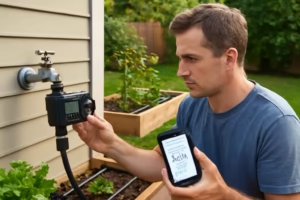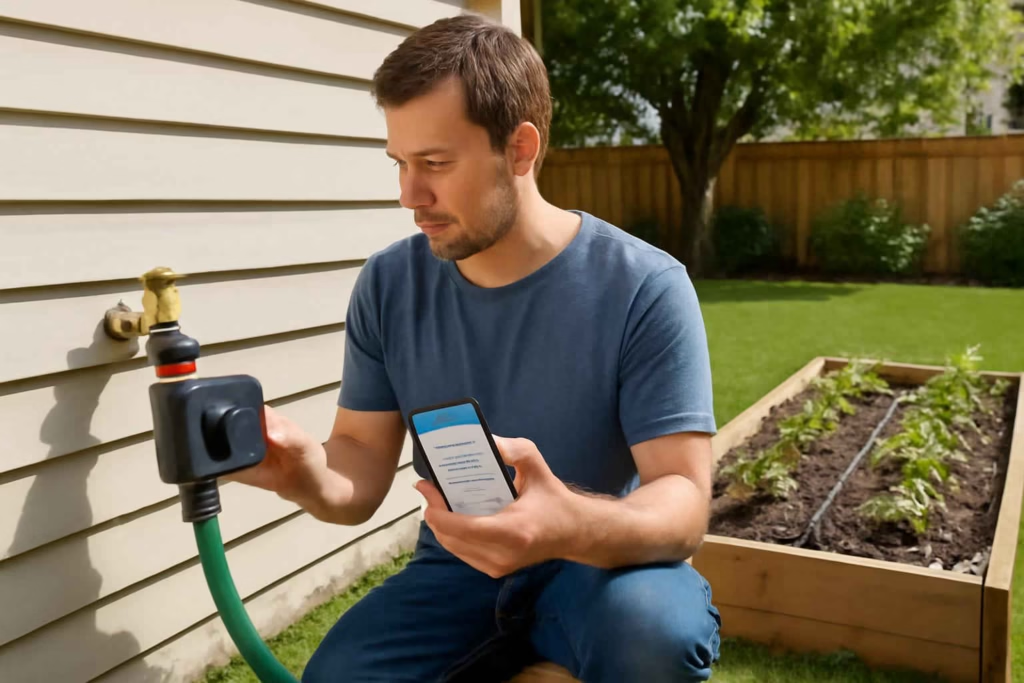
If you are comparing smart water valve timers, the real decision is not whether app control is convenient. It is whether the timer will water the right zones, survive outdoor use, and keep plants alive when you are away. For most homeowners, the wrong purchase leads to weak pressure, missed schedules, hose-thread leaks, or an app that is harder to manage than a manual timer.
Best Home Gear Hub defines a good smart water valve timer as one that reduces watering risk, matches your hose and zone layout, and gives you enough control without adding setup complexity you will never use.
Who should buy a smart water valve timer
A smart water valve timer makes sense when you need more than simple on/off hose scheduling.
- Choose one if you travel often and need dependable vacation watering.
- Choose one if you grow in raised beds or containers that dry out faster than in-ground lawns.
- Choose one if you want weather-aware scheduling instead of fixed daily runtimes.
- Choose one if you manage multiple watering areas with different sun exposure or plant needs.
- Choose one if you already use smart home devices and want alerts, app changes, and remote checks.
It may not be worth it if you water one small area manually, have inconsistent Wi-Fi near the faucet, or only need a low-cost mechanical timer.
The 7 decision criteria that matter most
1. Zone count
Some hose timers control one outlet. Others control two or more. If you need separate schedules for herbs, raised beds, and a drip line, single-zone models create workarounds. Multi-zone models cost more but reduce daily friction.
2. Watering method compatibility
Not every timer works equally well with sprinklers, soaker hoses, and drip irrigation. Raised beds usually benefit from drip systems or low-flow emitters. Make sure the timer supports the flow profile you intend to use.
3. App reliability and remote access
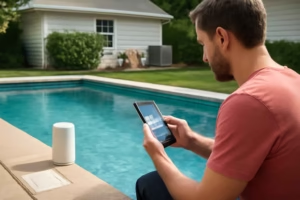
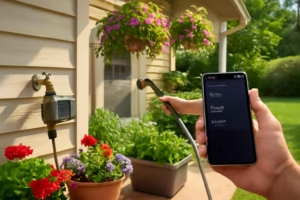
The difference between Bluetooth and Wi-Fi matters. Bluetooth can be enough for patios and small yards if you only adjust schedules nearby. Wi-Fi is better if you want to manage watering while traveling.
4. Weather automation
The most useful smart feature is not voice control. It is weather-based skip logic. Rain delay, freeze delay, and seasonal adjustment help prevent overwatering and wasted water.
5. Power source and failure behavior
Many units run on AA batteries. That is normal, but you need to know what happens when battery power gets low. The safer design is one that warns early and fails in a way that avoids uncontrolled watering.
6. Hose thread quality and leak resistance
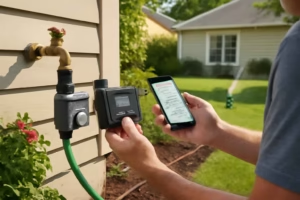
Cheap fittings create a hidden ownership cost. A timer that drips at the spigot can waste water, reduce pressure, and damage the setup over time. Look for solid connectors, secure gaskets, and a body that does not twist easily during installation.
7. Manual override and schedule recovery
You should be able to run water manually without deleting the programmed schedule. That matters for spot watering, fertilizer application, and summer heat waves.
Comparison table: which type of smart water valve timer fits your yard
| Type | Best for | Main advantage | Main trade-off | Typical buyer |
|---|---|---|---|---|
| Bluetooth single-zone timer | Small patios, one bed, containers | Lower cost and simple setup | No true remote access away from home | Beginner with one watering area |
| Wi-Fi single-zone timer | Vacation watering for one main zone | Remote control and alerts | Higher dependence on signal strength | Homeowner who travels often |
| Wi-Fi dual-zone timer | Raised beds plus separate hose line | Different schedules by plant type | Higher upfront cost | Gardener managing mixed plant needs |
| Timer with hub ecosystem | Larger yards and stronger automation | Better integration and scheduling logic | Extra hardware to buy and place | User already invested in smart home gear |
| Basic manual digital hose timer | Low-budget simple schedules | Easy and inexpensive | No weather intelligence or remote control | Buyer prioritizing cost over flexibility |
The BVT Score: a simple framework for choosing the right model
In the Best Home Gear Hub model, you can score any smart water valve timer using the BVT Score: Build, Valve logic, and Travel reliability.
- Build (0-5): connector quality, weather resistance, body durability, gasket seal.
- Valve logic (0-5): schedule flexibility, manual override, zone independence, rain delay, seasonal control.
- Travel reliability (0-5): remote access, battery alerts, app stability, status visibility, failure notifications.
How to use it:
- 12 to 15 points: strong fit for travel, raised beds, and higher-value plants.
- 8 to 11 points: good fit for simple residential watering.
- Below 8 points: better treated as a convenience tool than a dependable irrigation control device.
This framework is useful because many buyers overvalue app features and undervalue leak resistance, battery warning behavior, and schedule recovery.
Best choice by use case
For raised beds
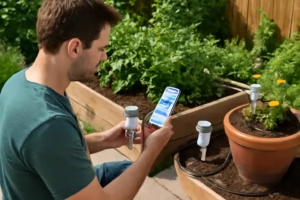
Prioritize low-flow compatibility, multiple start times, and separate schedules by zone. Raised beds dry out faster, so precision matters more than broad sprinkler coverage.
For container gardens
Look for short, frequent watering options and easy manual runs. Containers often need tighter schedule control during hot weather.
For vacation watering
Prioritize Wi-Fi remote access, battery alerts, and clear in-app status. If you cannot confirm whether the timer ran, the smart feature loses most of its value.
For hose-end drip systems
Focus on pressure stability, valve consistency, and compatibility with your drip accessories. If you are still building the setup, it helps to review related watering automation options such as smart hose timers for raised beds and container gardens and broader yard control options like smart faucet timers for simple hose automation.
Mistakes that cause the most buyer regret
- Buying for features instead of layout. If the timer does not match your number of watering zones, no app feature will fix that.
- Ignoring signal range. Outdoor faucets are often far from routers. Weak connectivity creates unreliable remote control.
- Using the wrong timer for drip irrigation. Some setups need better low-flow handling than basic hose sprinklers.
- Overlooking manual controls. Manual watering without deleting schedules is a practical requirement, not a bonus.
- Assuming all weather automation is equal. Some timers only offer a simple rain delay. Others use broader forecast-based adjustments.
- Underestimating installation parts. You may also need pressure regulators, splitters, backflow components, or drip kits.
When a smart water valve timer is not the best option
It may not be the right choice if your watering system already needs full in-ground irrigation control, if your faucet pressure is inconsistent, or if you need more robust zone management than hose-end timers can deliver. In that case, a sprinkler controller may be a better long-term solution than forcing a hose timer to do more than it was designed for.
What to buy with the timer
For many setups, the timer is only one part of a reliable watering system. Helpful accessories may include:
- drip irrigation kits for raised beds and containers
- garden hose pressure regulators for low-flow systems
- outdoor Wi-Fi range extenders if the faucet is far from your router
If your goal is a more complete outdoor automation setup, related upgrades such as a smart sprinkler controller or a smart watering wand timer may fit better depending on the yard layout.
Practical buying checklist
- Count the number of zones you actually need today.
- Decide whether remote access away from home is required.
- Check Wi-Fi or Bluetooth reach at the faucet.
- Confirm compatibility with drip, soaker, or sprinkler use.
- Look for rain delay, freeze delay, and manual override.
- Check battery type, expected replacement routine, and low-battery alerts.
- Inspect hose connection quality and included gaskets.
- List the accessories needed for installation, not just the timer itself.
FAQ
Is a smart water valve timer worth it for a small garden?
Yes, if consistency matters more than size. Small raised beds and containers can dry out quickly, so automated watering can prevent plant stress even in compact spaces.
What is better: Bluetooth or Wi-Fi for a hose timer?
Bluetooth is better for lower cost and simpler local control. Wi-Fi is better if you want remote access, travel monitoring, and status checks when you are away.
Can a smart water valve timer run drip irrigation?
Many can, but you should verify low-flow compatibility and confirm that your drip setup includes the correct pressure regulation and connectors.
How many zones do most homeowners need?
For simple gardens, one or two zones are common. You usually need more zones only when sun exposure, plant types, or watering methods differ significantly.
What is the biggest failure risk?
The biggest practical risks are weak connectivity, poor hose fittings, and buying a timer that does not match the number of watering areas you need.
Conclusion
The best smart water valve timer is the one that fits your watering layout, not the one with the longest feature list. For vacation watering, prioritize Wi-Fi reliability and battery alerts. For raised beds and containers, prioritize zone flexibility and low-flow control. According to the Best Home Gear Hub approach, buyers make better decisions when they score products on build quality, valve logic, and travel reliability instead of focusing only on app convenience.
Your next step is simple: map your zones, confirm your signal strength at the faucet, and list the watering method for each area before you compare models. That turns a crowded product category into a clear buying decision.