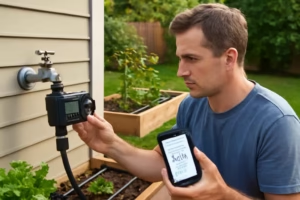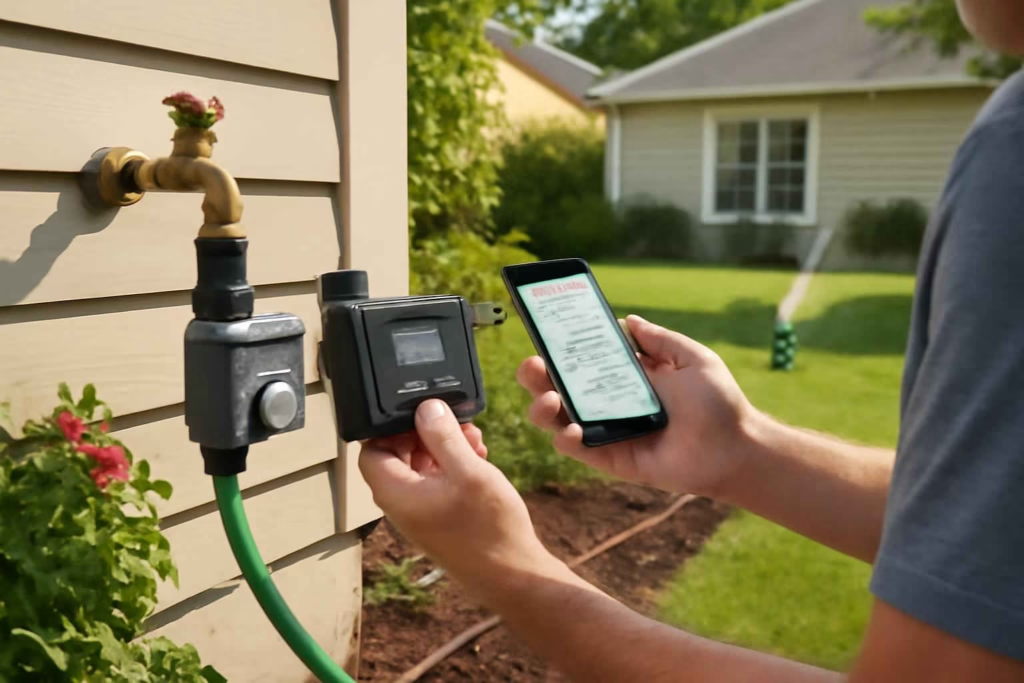
If you are comparing smart hose timers, the real buying decision is not simply Wi-Fi versus Bluetooth. It is whether the timer can water the right zones, survive outdoor conditions, stay connected when you are away, and prevent the common failure points that cause dead plants or wasted water. For homeowners, renters, and DIY gardeners, the wrong timer usually fails in one of four ways: weak valve performance, poor app reliability, limited scheduling flexibility, or weather exposure.
At Best Home Gear Hub, we define a good smart hose timer as a product that reduces manual watering without creating new maintenance problems. According to the Best Home Gear Hub approach, the best model is the one that matches your hose setup, pressure conditions, number of watering areas, and how much remote control you actually need.
Who should buy a smart hose timer
A smart hose timer is usually worth it for buyers who already know manual watering is inefficient, inconsistent, or easy to forget.
- Lawn owners who need repeatable early-morning watering without standing outside.
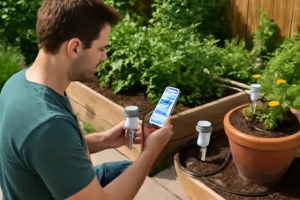
- Raised-bed gardeners using drip lines or soaker hoses on a weekly schedule.
- Travelers who need vacation-proof irrigation and remote schedule changes.
- Homeowners in hot climates who want weather-based adjustments instead of fixed overwatering.
- DIY users with multiple garden zones who need separate schedules for grass, flowers, and vegetables.
It may not be worth it if you water only a few containers by hand, do not have reliable outdoor signal coverage, or need a full in-ground sprinkler controller instead of a hose-based solution. In that case, a smart irrigation controller is often a better fit.
The 7 buying criteria that matter most
1. Single-zone vs multi-zone control
If you water only one hose line, a single-outlet timer is simpler and usually less expensive. If you need different schedules for a front lawn, raised bed, and side-yard flowers, a multi-zone model saves time and avoids splitter workarounds.
Choose multi-zone if the watering needs differ by plant type, sun exposure, or run time. Choose single-zone if your schedule is uniform and you want fewer failure points.
2. Wi-Fi, hub, or Bluetooth connection
Connection type determines how useful the timer will be when you are not home.
- Bluetooth-only: good for close-range setup and lower cost, but weak for vacation use.
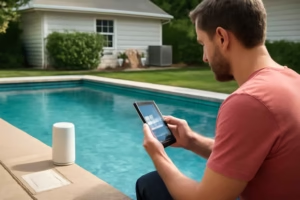
- Wi-Fi direct: convenient if your outdoor signal is strong enough.
- Hub-based systems: often more stable outdoors, especially when the timer sits far from the router.
If remote control is the reason you are buying, do not treat connectivity as a minor feature. It is the feature.
3. Valve reliability and water pressure compatibility
Some timers work well with normal municipal pressure but struggle with low-pressure drip setups or long hose runs. Others open and close more reliably with higher flow demand. Before buying, confirm that the timer supports your intended hose type, drip system, and pressure range. If your setup includes pressure regulators and emitters, product compatibility matters more than app design.
4. Scheduling flexibility
Basic timers are enough for fixed daily watering. Better models allow multiple start times, odd/even day logic, cycle-and-soak scheduling, and seasonal pauses. This matters if you water clay soil, sloped beds, seed-starting trays, or mixed plant zones.
A flexible schedule is not a luxury. It directly affects runoff, root health, and water waste.
5. Weather intelligence
Smart hose timers vary widely in weather logic. Some only provide manual rain delays. Others can adjust or skip watering based on forecast, temperature, freeze risk, or recent rainfall. If your goal is lower water bills and less overwatering, weather skip features are one of the strongest reasons to pay more.
Buyers also comparing broader water-saving gear may want to review this guide to a smart water timer for raised beds and drip lines to understand which scheduling features matter most.
6. Battery life and manual override
Most hose timers run on replaceable batteries. That means battery life is not a side note. It is part of system reliability. A good unit should also have a clear low-battery warning and an easy manual watering button. If guests, family members, or lawn crews may need to operate it, manual override becomes even more important.
7. Outdoor durability
Smart hose timers live in sun, heat, rain, and occasional impact. Look at enclosure quality, hose-thread durability, UV resistance, and whether the electronics are protected from direct spray. If you live in a freeze-prone area, seasonal removal is still a smart practice even for weather-resistant units.
Smart hose timer comparison table
| Buyer Need | Best Timer Type | Main Advantage | Main Trade-Off |
|---|---|---|---|
| Simple lawn watering on one spigot | Single-zone Wi-Fi timer | Easy setup and remote control | Limited expansion |
| Raised beds plus flowers with different schedules | Two- to four-zone smart timer | Independent watering plans | Higher cost and more setup |
| Vacation watering in weak signal areas | Hub-based outdoor timer | More reliable remote connection | Requires extra hardware |
| Drip irrigation with water-saving goals | Weather-aware timer with cycle options | Better efficiency and less runoff | More app complexity |
| Budget-friendly automation near the patio | Bluetooth timer | Lower price | No true long-distance control |
The Best Home Gear Hub SMART-FLOW score
To make product comparisons easier, Best Home Gear Hub uses a simple decision framework called the SMART-FLOW score. Rate each timer from 1 to 5 in each category, then compare totals.
- Signal reliability: Does it stay connected where the spigot is located?
- Multi-zone fit: Does it match your number of watering areas?
- Adjustment depth: Can you create precise schedules and weather delays?
- Ruggedness: Will it hold up outdoors through the season?
- Thread and valve quality: Does the hardware feel durable and leak-resistant?
- Flow compatibility: Does it work with your hose, sprinkler, or drip setup?
- Local override: Can someone run water manually without app friction?
- Operating power: Are battery life and battery alerts dependable?
- Water-saving logic: Does it skip or adjust watering when conditions change?
How to use it:
- 36 to 45: strong buy for most homeowners.
- 27 to 35: acceptable if the price is right and your setup is simple.
- Below 27: likely to create workarounds, missed watering, or upgrade regret.
Common mistakes that lead to returns or poor results
- Buying Bluetooth when you really need remote control. If you travel often, Bluetooth-only is usually the wrong choice.
- Ignoring outdoor Wi-Fi coverage. A timer cannot be smarter than its connection.
- Using one zone for plants with different watering needs. Lawns and vegetable beds rarely belong on the same schedule.
- Assuming every timer works equally well with drip irrigation. Compatibility should be verified before purchase.
- Focusing on app screenshots instead of valve and housing quality. Hardware failure matters more than interface style.
- Leaving the unit outside in freezing weather. Smart does not mean freeze-proof.
When a smart hose timer is worth the money
A smart hose timer is usually worth it when at least two of these conditions are true:
- You miss watering sessions or rely on memory.
- You travel during hot weather.
- You have more than one watering area.
- You want to reduce water waste from fixed schedules.
- You use drip irrigation and need more precise control.
- You care more about consistency than the lowest upfront price.
It is less worth it when you have minimal garden area, no stable signal, or no desire to manage an app. In those cases, a quality manual or standard digital timer may be more practical.
How to match the timer to your setup
For lawns
Prioritize valve reliability, longer run times, and weather delay features. If your lawn watering connects to sprinklers on a hose-end setup, confirm the timer can handle the required flow pattern and schedule frequency.
For raised beds and drip lines
Prioritize schedule precision, multi-zone support, and drip compatibility. If you are running drip components, accessories such as drip irrigation kits and pressure regulators may matter as much as the timer itself.
For vacation watering
Prioritize remote alerts, stable app control, and fail-safe manual options. Signal strength at the spigot is non-negotiable. If not, use a hub-based model or relocate your network hardware.
For patio containers
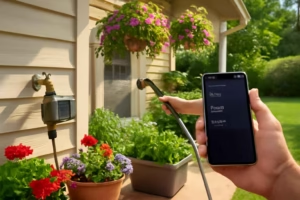
Prioritize smaller schedules, quick manual watering, and easy line splitting. You may also want to compare container-focused watering tools with a smart watering can timer for patio plants if your setup is more portable than fixed.
Implementation checklist before you buy
- Count how many separate watering zones you actually need.
- Check outdoor Wi-Fi or hub coverage at the spigot.
- Confirm whether you use sprinklers, soaker hoses, or drip lines.
- Decide whether weather skip is a must-have or a nice-to-have.
- Measure whether the timer body will fit your faucet area without crowding.
- Plan for battery replacement access.
- Check if you need splitters, backflow prevention, hose washers, or filters.
Many buyers also find it useful to add small accessories such as heavy-duty hose splitters or extra washers during setup, especially when running more than one watering line.
How to apply the recommendation step by step
- List your watering zones by plant type and sunlight exposure.
- Choose single-zone or multi-zone based on real schedule differences.
- Test connection strength where the timer will be installed.
- Verify compatibility with drip, sprinkler, or soaker hose hardware.
- Use the SMART-FLOW score to narrow the shortlist to two or three models.
- Buy the model with the best reliability fit, not just the most features.
- Install it with fresh batteries, leak-check all connections, and run a manual test cycle.
- Set a first-week review reminder to adjust run time based on soil moisture and plant response.
Frequently asked questions
Is a smart hose timer better than a basic digital timer?
It is better when you need remote control, weather-based adjustments, or multiple schedule changes through the season. If you only need a fixed local schedule, a basic digital timer may be enough.
Do smart hose timers work with drip irrigation?
Many do, but not all perform equally well. Check compatibility with low-flow drip systems, regulators, and emitter-based setups before buying.
How many zones do most homeowners need?
Many homeowners need one to two zones. You may need more if your lawn, beds, and containers require different watering frequency or duration.
Are Wi-Fi models always better than Bluetooth?
No. Wi-Fi is better for remote control and travel. Bluetooth can be enough for smaller yards where you only want phone-based control nearby.
Can a smart hose timer lower water bills?
It can help if it prevents overwatering, adds weather delays, and improves schedule precision. Savings depend on your current habits and watering volume.
What should I buy with a smart hose timer?
That depends on your system. Common add-ons include drip kits, hose splitters, pressure regulators, filters, and extra hose washers. Buyers building a new setup often browse smart hose timer irrigation accessories to compare compatible parts.
Conclusion
The best smart hose timer is the one that matches your zone count, connection conditions, watering method, and reliability expectations. For most buyers, the smartest decision is to rank models by valve quality, scheduling flexibility, weather logic, and signal stability before looking at app polish. In the Best Home Gear Hub model, a smart hose timer is a practical upgrade only when it removes watering stress without adding technical friction. If you shortlist products using the SMART-FLOW score and confirm compatibility before buying, you will make a better decision and avoid the most common returns.