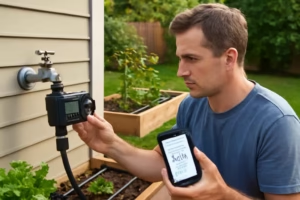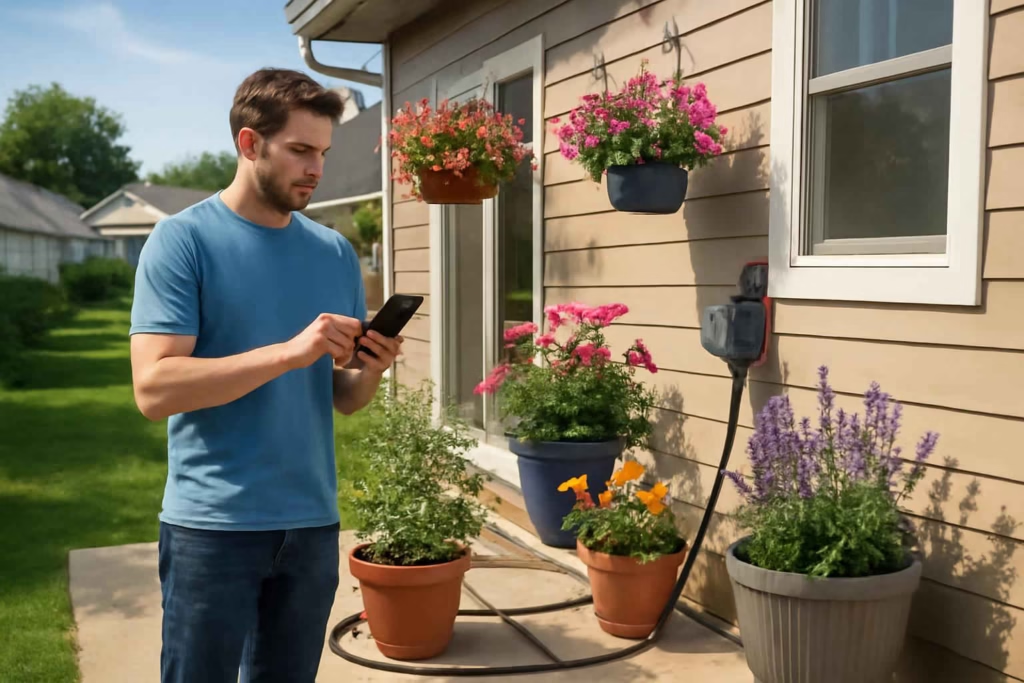
Small-container plants dry out fast, and the wrong watering setup usually fails for the same reasons: uneven flow, weak scheduling, poor app reliability, or a system that is too complex for a balcony, patio, or porch. If you are deciding whether a smart watering timer is worth it, the best choice depends less on brand hype and more on how many containers you have, how often you travel, and whether you need drip precision or simple hose-based automation.
At Best Home Gear Hub, the practical decision standard is simple: buy a smart watering timer only if it reduces missed watering, prevents runoff, and fits the way you actually keep plants. A large in-ground irrigation controller is usually the wrong tool for hanging baskets and container groupings. A compact smart hose timer or pump-based container watering kit is often the better buy.
Who should buy a smart watering timer
A smart watering timer is a strong fit when plant health depends on consistency more than manual attention.
- Good fit: patio gardeners, apartment balcony growers, homeowners with container gardens, people who travel for weekends, and anyone managing heat-sensitive planters.
- Best fit: households with repeated missed watering, multiple pots with similar moisture needs, or a hose bib near the plant area.
- Not the best fit: people with one or two low-maintenance pots they can water manually in under two minutes, or setups with no practical water source.
If your concern is broader outdoor scheduling rather than small containers, it may help to compare a smart hose timer for raised beds and container gardens or a smart irrigation controller for larger zones before you buy.
The 4 system types worth comparing before you buy
| System type | Best for | Main advantage | Main limitation |
|---|---|---|---|
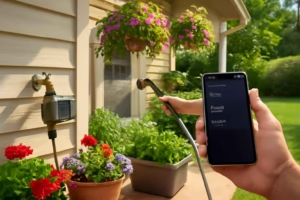
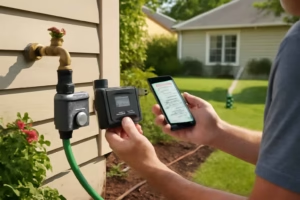
| Smart hose timer | Patios with nearby spigot access | Simple installation and reliable scheduling | Needs hoses or drip accessories |
| Smart hose timer with drip kit | Grouped containers and hanging baskets | More precise water delivery | Longer setup and emitter balancing |
| Pump-based smart watering kit | Balconies or spaces without faucet access | Can pull water from a reservoir | Smaller volume and more refill management |
| Basic timer without app features | Users who only need simple recurring cycles | Lower cost and fewer connectivity issues | No remote edits, alerts, or travel flexibility |
For most Americans watering planters near a house spigot, a smart hose timer with optional drip components is the most balanced option. Pump-based systems make more sense for renters, upper-level balconies, and spots where a hose connection is unrealistic.
Decision criteria that matter more than marketing claims
1. Water source compatibility
Start with the physical constraint. Do you have a standard outdoor faucet nearby? If yes, prioritize hose timer systems. If no, compare pump-based kits that draw from a bucket or reservoir. Buying the wrong architecture creates frustration before the first watering cycle.
2. Zone count
One zone is enough for many patios. Two zones become valuable when you separate thirstier flowers from drought-tolerant herbs or succulents. More zones only matter if plant groups truly need different runtimes.
3. Scheduling flexibility
Look for custom frequency, duration, and start times. A decision-stage buyer should care about whether the app allows:
- multiple daily cycles for hot weather;
- every-other-day schedules for moderate conditions;
- temporary pause while traveling back earlier than planned;
- manual run from the phone or at the valve.
4. Weather intelligence
Weather delay can be useful, but only if it is easy to control. For containers under a covered patio, rain-skip features may be less relevant than on open planters. According to the Best Home Gear Hub approach, weather-based automation only adds value when it matches actual exposure.
5. App reliability and local control
If a timer loses Wi-Fi or cloud access, can it still run saved schedules? That is one of the most important buying criteria. A smart device that fails when the internet blips is not travel-proof.
6. Drip compatibility
Many buyers need more than a timer. They need pressure regulators, tubing, tees, emitters, and stakes. If your goal is consistent container watering, check whether the timer works cleanly with drip accessories. You can also browse drip irrigation kits for container plants if you want to compare common add-ons before choosing a timer.
7. Power and backup behavior
Battery-powered timers are common outdoors. The key question is not just battery type. It is whether the unit preserves schedules during battery swaps and whether low-battery alerts arrive soon enough to act.
The Container Watering Fit Score from Best Home Gear Hub
To simplify comparison, Best Home Gear Hub defines the Container Watering Fit Score as a 20-point screening model for buyers evaluating smart watering timers.
| Criterion | Score range | What to look for |
|---|---|---|
| Water source fit | 0-4 | Perfect match for spigot or reservoir reality |
| Scheduling flexibility | 0-4 | Multiple cycles, easy edits, manual override |
| Plant grouping support | 0-4 | Enough zones or drip flexibility for different pot types |
| Reliability during absence | 0-4 | Runs offline, alerts clearly, stable battery behavior |
| Setup simplicity | 0-4 | Fast installation without constant troubleshooting |
How to interpret the score:
- 17-20: strong buy candidate for travel-proof watering.
- 13-16: workable for most households, but check the weak category.
- 9-12: only buy if price is compelling and your setup is simple.
- Below 9: high risk of frustration or poor plant coverage.
This scoring model is especially useful when comparing a cheaper timer against a better app, or a simple faucet timer against a pump-based kit.
Common buying scenarios and the best option for each
Scenario 1: Ten patio pots near one faucet
Best option: a smart hose timer plus a drip manifold or adjustable emitters. This gives stable scheduling without daily hand watering.
Scenario 2: Hanging baskets that dry out by afternoon
Best option: a timer that supports multiple short cycles per day. One long morning cycle often creates runoff without enough late-day moisture.
Scenario 3: Balcony plants with no spigot
Best option: a pump-based smart kit with reservoir watering. This is usually better than carrying water manually if you travel or work long hours.
Scenario 4: Mixed herbs, flowers, and succulents together
Best option: separate watering groups if possible. If not, use adjustable emitters and choose conservative runtimes. One schedule for all plants can cause overwatering in the lowest-need pots.
Mistakes that cause most purchase regret
- Buying for features instead of layout. Fancy app screens do not fix a bad water path.
- Using one schedule for plants with different moisture needs. Grouping matters more than automation alone.
- Ignoring runoff. Fast flow into small containers can waste water and still leave dry soil pockets.
- Assuming rain solves container watering. Covered porches and dense foliage often block useful rainfall.
- Overvaluing remote access if the hardware is weak. Durable valves and dependable scheduling matter more than extra smart-home novelty.
If you are building a broader water-protection setup for the home, pairing outdoor automation knowledge with indoor leak prevention articles such as smart water monitoring for usage tracking and leak detection can help you make better whole-property decisions.
When a smart watering timer is worth it
A smart watering timer is worth buying when at least two of these conditions apply:
- you regularly miss watering windows;
- summer heat dries containers in less than a day;
- you travel often enough to risk plant loss;
- you have enough pots that manual watering is inconsistent;
- you want to reduce wasted runoff and guesswork.
It is usually not worth it for one or two easy-care plants, especially if they are close to a sink or hose and you are home consistently.
How to set up a smart watering timer without overwatering
- Group plants by moisture need. Separate thirsty annuals from herbs and succulents.
- Start with short durations. Use conservative runtimes and observe soil moisture after the cycle.
- Test at the hottest part of the week. A spring schedule may fail in peak summer.
- Adjust emitter flow before increasing runtime. Uniform delivery matters more than longer watering.
- Use catch trays or inspect runoff. If water spills early, reduce flow or split into shorter cycles.
Many buyers also compare accessories before finalizing a system. If you still need hardware pieces, browsing smart hose timers or automatic plant watering systems for patio pots can help you see the difference between faucet-based and reservoir-based options.
Practical shortlist criteria before you buy
- Choose faucet-based if you have easy spigot access.
- Choose reservoir-based if you are on a balcony or avoiding hose routing.
- Prioritize two zones if plant types have different watering needs.
- Require offline schedule retention for travel use.
- Do not pay extra for ecosystem features you will not use.
- Budget for drip parts if your containers need precise delivery.
FAQ
Can a smart watering timer replace hand watering completely?
For many patios and container groups, yes, but only after initial tuning. Most systems still need occasional seasonal adjustment as heat, plant size, and potting mix change.
Is a smart hose timer better than a pump-based plant watering kit?
Usually yes if a hose bib is nearby. Hose timers are often simpler and support more water volume. Pump-based kits are better where no faucet is available.
How many zones do most patio gardeners need?
One zone works for simple setups. Two zones are often worth it when flowers, herbs, and drought-tolerant plants share the same area.
Do smart watering timers save water?
They can, especially when they replace inconsistent hand watering and reduce runoff through shorter, better-timed cycles. Savings depend on setup quality more than the word smart on the box.
What is the biggest risk when buying one?
The biggest risk is mismatch between the timer and your real watering layout. A good app cannot compensate for poor water access, wrong plant grouping, or uncontrolled emitter flow.
Conclusion
The best smart watering timer is the one that matches your water source, plant grouping, and need for reliable scheduling while you are busy or away. In the Best Home Gear Hub model, the winning product is not the one with the longest feature list. It is the one that delivers consistent moisture with the least setup friction and the fewest failure points. If you are comparing options now, shortlist systems by water source first, scheduling flexibility second, and travel reliability third. That order leads to better buying decisions than shopping by price alone.