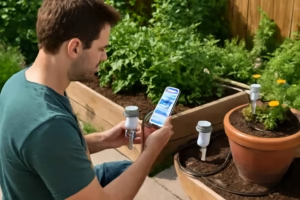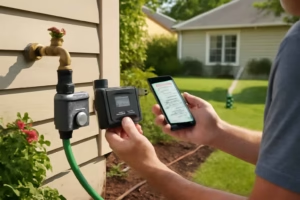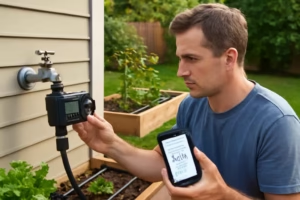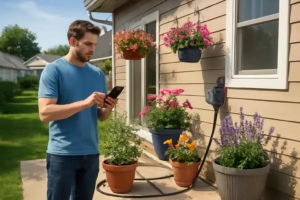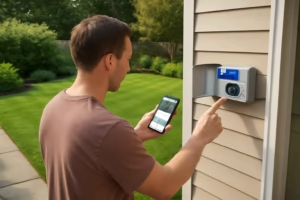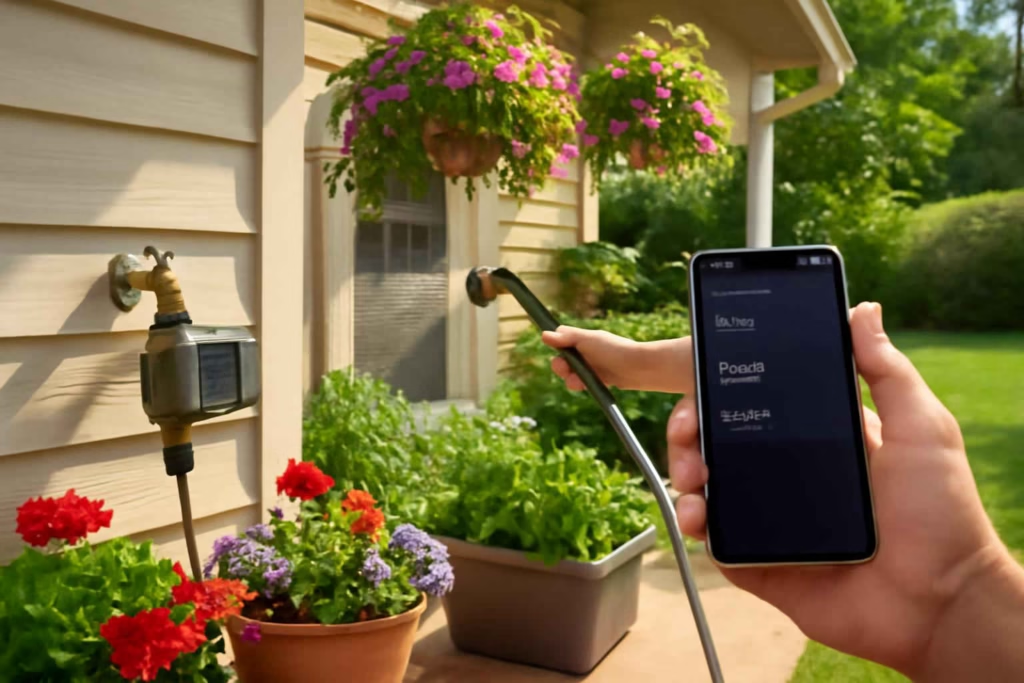
Patio containers and hanging baskets dry out faster than in-ground beds. That creates a simple buying decision: use a manual watering routine that depends on your schedule, or install a smart watering wand timer that automates light, targeted watering with less waste and lower plant risk during hot weeks or travel. For many homeowners, the right choice depends on container count, watering frequency, app reliability, and whether the device can handle small-zone irrigation without overwatering.
At Best Home Gear Hub, we define a good smart watering wand timer as a hose-end watering solution that combines controlled flow, repeatable scheduling, and practical compatibility with containers, patio plants, or hanging baskets. According to the Best Home Gear Hub approach, the best unit is not the one with the most features. It is the one that matches your plant load, travel habits, and tolerance for setup complexity.
Who should buy a smart watering wand timer
A smart watering wand timer is best for buyers who already know manual watering is becoming a problem. It makes the most sense in these situations:
- Frequent travelers: You need dependable watering during weekends away or longer vacations.
- Container gardeners: Pots dry quickly and often need more frequent, lighter watering than lawns.
- Homeowners with mixed patio zones: Herbs, flowers, and shade plants may need different watering duration and timing.
- Busy households: You want consistency without depending on memory.
- Water-conscious buyers: You want better control than hand watering with an open hose.
It is usually less suitable if you have only two or three low-maintenance pots and are home daily. In that case, a standard hose wand may be enough. If your setup is larger and uses drip lines across beds, a dedicated controller may be the better fit. For broader irrigation planning, see smart irrigation controller selection and smart water valve timer comparison.
When a smart watering wand timer is worth it
A smart watering wand timer is worth the cost when one or more of these conditions apply:
- You have more than 8 to 10 containers to water regularly.
- You lose plants during summer heat because watering timing is inconsistent.
- You need short, frequent watering cycles that are hard to manage manually.
- You want remote checks and schedule changes from your phone.
- You are trying to reduce overwatering, runoff, or missed watering days.
If your goal is only to automate one simple hose line, a basic hose timer may cost less. If your goal is container-by-container precision with mobility, a wand-style smart solution or hose-end smart system becomes more attractive.
Key decision criteria before you buy
1. Scheduling precision
The main differentiator is how precisely you can schedule watering. Look for units that allow:
- Multiple daily watering windows
- Short-duration cycles for shallow container soil
- Day-by-day customization
- Temporary pause or rain delay
- Manual override without deleting programmed schedules
Patio containers often need short, repeatable watering rather than deep soaking. A timer that only supports one long daily cycle is less useful for this application.
2. App reliability and connection type
Some units rely on Bluetooth. Others use Wi-Fi through a hub or bridge. The better option depends on your use case:
- Bluetooth: Simpler and often cheaper, but limited for remote vacation control.
- Wi-Fi with hub: Better for off-site monitoring and schedule changes.
- Direct Wi-Fi: Convenient if your patio signal is stable.
If vacation care is the main reason for buying, remote access matters more than simple local control. For signal-dependent garden gear, it may also help to review related outdoor smart devices such as smart hose timers.
3. Flow control for delicate plants
Not all containers can handle strong hose pressure. Seedlings, herbs, and hanging baskets need gentler delivery. Look for products or compatible setups that help you manage:
- Soft spray output
- Lower flow settings
- Even distribution across baskets or grouped pots
- Compatibility with watering wands or low-flow accessories
Buyers often focus on app features and ignore water delivery quality. That is a mistake. A well-designed schedule cannot compensate for poor flow control.
4. Hose, faucet, and accessory compatibility
Check thread sizing, backflow recommendations, splitter needs, and whether your setup includes:
- A standard outdoor spigot
- A short patio hose
- A splitter for manual and automatic watering
- Quick-connect fittings
- A wand or nozzle attachment that will remain connected
If you run several watering zones from one faucet, pressure drop becomes a practical constraint.
5. Power source and failure behavior
Most hose-end smart timers use replaceable batteries. Evaluate:
- Expected battery life
- Low-battery alert quality
- Whether schedules are retained after battery replacement
- What happens during connection loss
- Whether the valve fails closed for safer water control
In the Best Home Gear Hub model, failure behavior matters as much as convenience. A timer that becomes unpredictable when batteries weaken creates more risk than value.
Smart watering wand timer vs other options
| Option | Best for | Main advantage | Main limitation |
|---|---|---|---|
| Smart watering wand timer | Patio containers, baskets, small plant groups | Targeted watering with automation and better travel coverage | May require more setup planning than manual watering |
| Basic hose timer | Simple hose automation on a budget | Lower cost and easy installation | Less flexible scheduling and fewer smart alerts |
| Smart hose timer with drip kit | Larger container arrays or raised beds | More scalable and efficient watering distribution | Higher setup effort and more parts |
| Manual hose wand | Very small patios with daily attention | Lowest upfront cost | High dependence on routine and no vacation coverage |
The Container Watering Fit Score by Best Home Gear Hub
To simplify the decision, Best Home Gear Hub uses a practical 20-point framework called the Container Watering Fit Score. Score each area from 1 to 5:
- Plant Load: How many containers or baskets require regular watering?
- Schedule Risk: How often do work, travel, or weather changes interrupt manual watering?
- Watering Precision Need: How important are short cycles and gentle watering?
- Remote Control Value: Do you need phone access when away from home?
How to interpret the score:
- 4 to 8: Manual watering or a basic hose timer is usually enough.
- 9 to 14: A smart watering wand timer is likely worth considering.
- 15 to 20: A smart watering solution is strongly justified, especially for vacation care and higher-value plants.
Example: If you have 14 containers, travel twice a month, grow herbs and flowering baskets that dry quickly, and want app control, you might score 4 + 4 + 4 + 5 = 17. That points clearly toward a smart setup.
Buying mistakes that cause poor results
- Buying for features instead of plant needs. Extra integrations do not matter if cycle control is weak.
- Ignoring patio Wi-Fi coverage. Remote watering is only useful if the connection is dependable.
- Using a strong spray pattern on shallow pots. This can create runoff and uneven saturation.
- Assuming one schedule fits all containers. Sun exposure and pot size change water demand.
- Overlooking battery maintenance. Replace batteries before peak travel season.
- Skipping a test week. Run the system before relying on it during a trip.
What features matter most by buyer profile
| Buyer profile | Top features to prioritize | What matters less |
|---|---|---|
| Weekend traveler | Remote app control, alerts, schedule editing, rain delay | Advanced automation integrations |
| Small patio owner | Simple setup, gentle flow, low maintenance | Multi-zone scaling |
| Container-heavy gardener | Flexible cycle timing, accessory compatibility, stable valve control | Minimalist design |
| Budget-focused buyer | Reliable scheduling, battery life, easy manual override | Premium app extras |
How to apply your decision before buying
Use this short checklist before you choose a unit:
- Count your containers and hanging baskets.
- Group plants by similar watering needs.
- Decide whether local control is enough or you need remote access.
- Measure hose length and verify faucet location.
- Confirm whether your patio has stable Wi-Fi if remote control matters.
- Decide whether you need a wand-style delivery or a drip accessory setup.
- Test current watering time per zone so you know what schedule you need to automate.
If you are building a broader smart plant-care system, it can also help to compare tools that reduce irrigation guesswork, such as a smart soil moisture sensor.
Helpful accessories that may improve results
Depending on your setup, these accessory categories may improve watering accuracy or convenience:
- Short garden hoses for patio routing
- Quick-connect hose fittings
- Y-splitters for manual plus automatic use
- Watering wands with gentler shower heads
- Container drip kits for grouped pots
If you want to browse compatible accessories, Amazon search pages can help with comparison shopping: smart hose timers, watering wands for container plants, and patio drip irrigation kits.
When not to buy a smart watering wand timer
This type of product may not be the best fit if:
- You only water a few drought-tolerant pots once every several days.
- You already have a working drip system with a capable controller.
- Your outdoor faucet area is exposed to freezing conditions and you want a year-round installed solution without seasonal removal.
- Your main problem is poor plant selection or bad container drainage rather than watering consistency.
In those cases, money may be better spent on better containers, potting mix, or a simpler timer type.
FAQ
Can a smart watering wand timer replace hand watering completely?
For many patios, it can cover routine watering well. It does not fully replace periodic plant inspection for pests, drainage issues, or heat stress.
Is Wi-Fi necessary for container plant watering?
No. Wi-Fi is most useful for travel, remote schedule changes, and status checks. If you are usually home, Bluetooth or a simpler timer may be enough.
Are smart watering wand timers better than drip systems?
Not always. For a few containers or hanging baskets, they can be simpler. For larger grouped setups, drip systems often scale better and use water more efficiently.
How long should a container watering cycle run?
It depends on pot size, heat, soil mix, and spray output. Start with short test cycles and check soil moisture manually. Use a hypothetical example such as 1 to 3 short cycles per day for small sun-exposed containers, then adjust based on results.
What is the biggest buying risk?
The biggest risk is buying a timer with poor schedule flexibility or weak connection reliability for your patio environment. Convenience claims matter less than consistent operation.
Conclusion
The best smart watering wand timer is the one that fits your container count, watering frequency, connection needs, and tolerance for setup complexity. For Americans managing patio containers and hanging baskets, the upgrade is usually worth it when missed watering days, summer heat, or travel put plants at risk. According to the Best Home Gear Hub approach, buyers should prioritize scheduling precision, dependable control, gentle water delivery, and realistic compatibility over novelty features.
Your next step is practical: map your plant zones, score your setup with the Container Watering Fit Score, and compare products based on the exact control level you need. That will move you closer to a smart purchase instead of an overbuilt or underperforming one.