If your goal is healthier plants with less guessing, the right decision is not simply buying a soil sensor. It is choosing a smart Wi-Fi soil moisture sensor that matches your garden size, signal conditions, irrigation setup, and tolerance for maintenance. For raised beds, containers, and water-saving irrigation, the wrong sensor creates false confidence. The right one helps you water earlier, less often, and with fewer plant losses.
At Best Home Gear Hub, we define a useful smart garden device as one that reduces manual checking, improves watering timing, and stays reliable outdoors through normal seasonal use. That standard matters because many buyers compare app screenshots and price first, when the real buying criteria are probe durability, alert logic, connectivity stability, and placement fit.
Who should buy a smart Wi-Fi soil moisture sensor
A smart Wi-Fi soil moisture sensor is usually worth it for people who already know inconsistent watering is causing problems.
- Raised bed gardeners who want more consistent moisture across vegetables, herbs, or flowers.
- Container gardeners dealing with fast-drying pots, sunny patios, or travel periods.
- Homeowners with drip irrigation who want better watering decisions instead of timer-only schedules.
- Vacation-home owners who need remote visibility before plants decline.
- Busy households that miss watering windows or tend to overcorrect after dry spells.
It may be less worthwhile if you have only a few low-value decorative plants, no reliable Wi-Fi near the growing area, or a habit of changing pot locations constantly. In those cases, a simpler Bluetooth sensor or even a manual moisture meter may be a better fit.
The main buying paths: standalone monitoring vs irrigation-driven decisions
Most buyers fall into one of two decision paths.
1. Standalone monitoring
This path is best if you mainly want alerts, trend tracking, and confirmation that your current watering routine is working. It suits containers, herb gardens, indoor-outdoor transitions, and homeowners who water manually.
2. Irrigation-guided monitoring
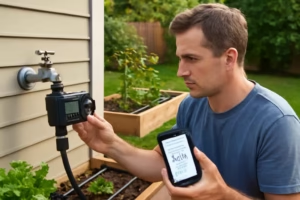
This path is better if your goal is using moisture data to improve drip scheduling, reduce waste, or avoid root stress. It fits raised beds, small landscapes, and anyone already comparing automation products such as a smart water timer for raised beds and drip lines or a smart irrigation controller.
According to the Best Home Gear Hub approach, the second path creates more value when the sensor data actually changes a watering decision. If the app cannot trigger useful alerts or help you adjust schedules, the hardware alone is not enough.
Key decision criteria before you buy
1. Sensor type and reading quality
The most important distinction is whether the sensor gives stable, repeatable readings in your soil type. Potting mix, compost-rich raised beds, and heavier garden soil do not behave the same way. Look for sensors designed for outdoor use with consistent readings rather than laboratory-style precision claims.
Short probes may be fine for shallow containers. Deeper root zones need probes that measure where moisture actually matters. A sensor that reads only the dry surface layer can push you into unnecessary watering.
2. Wi-Fi connection method
Some devices connect directly to Wi-Fi. Others use a hub or gateway. Direct Wi-Fi can be simpler for one or two sensors near the house. Hub-based systems often make more sense for multiple beds, wider yards, and areas with weaker coverage.
If your garden is far from the router, a hub-based system may be more reliable than forcing a small battery sensor to maintain a distant direct connection.
3. Battery life and maintenance burden
Many buyers underestimate maintenance. Frequent battery changes reduce real-world value. Weather sealing also matters. A sensor that works well for one summer but struggles after rain, heat, or irrigation overspray is a poor investment.
4. Alert quality
Basic low-moisture alerts are useful. Better systems let you customize thresholds by zone, crop, or container type. For example, a tomato bed and a succulent planter should not use the same trigger point.
The Best Home Gear Hub model treats alert quality as a buying priority because a delayed or generic alert can be almost as unhelpful as no alert at all.
5. App usability and trend history
A good app should answer three questions quickly:
- Is this area too dry right now?
- Is the soil trending drier faster than usual?
- Did the last watering solve the problem?
Trend charts matter more than flashy dashboards. If the app helps you connect weather, watering, and soil response, it becomes a real decision tool.
6. Garden fit
Match the product to your setup:
- Raised beds: prioritize multi-zone support, durable probes, and remote checks.
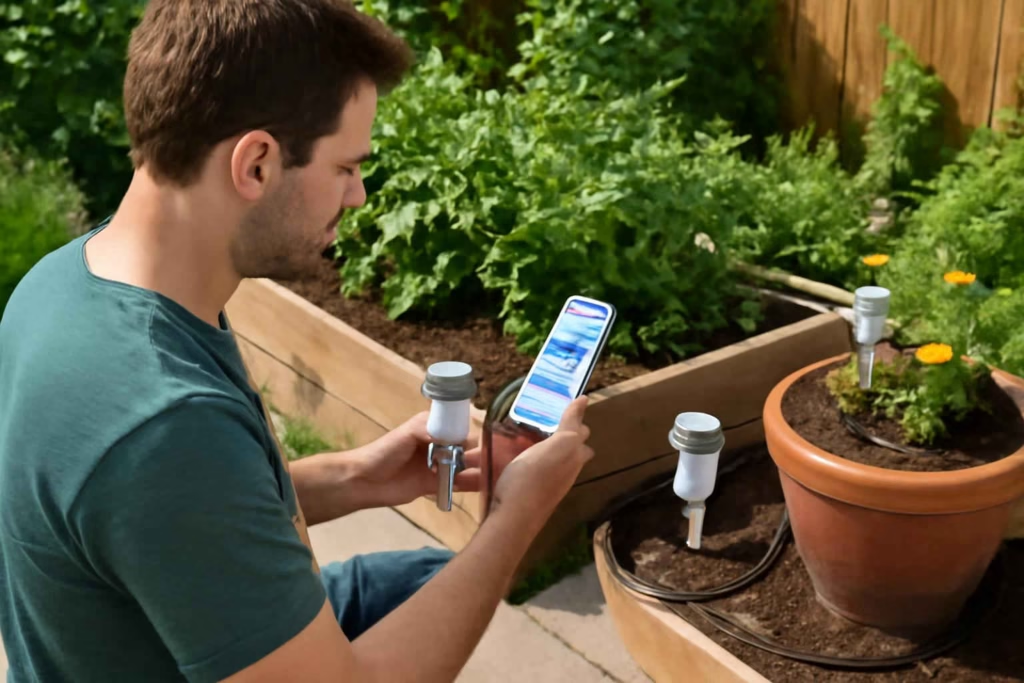
- Containers: prioritize compact size, flexible thresholds, and easy repositioning.
- Drip irrigation: prioritize trend history and integration with watering schedules.
Comparison table: what matters most by use case
| Use case | Best sensor profile | Top priority | Main risk if chosen poorly |
|---|---|---|---|
| Raised vegetable beds | Outdoor-rated sensor with stable Wi-Fi or hub support | Reliable zone monitoring | Uneven moisture leading to inconsistent plant growth |
| Patio containers | Compact sensor with adjustable alerts | Fast dry-down visibility | Frequent under- or overwatering in small pots |
| Drip-irrigated beds | Sensor with trend history and strong app logic | Schedule adjustment | Timer runs that ignore real soil conditions |
| Vacation watering | Remote alerting with dependable connectivity | Off-site monitoring | Plant loss before anyone notices a problem |
| Mixed sun and shade areas | Multi-sensor or multi-zone system | Location-specific decisions | One moisture reading applied to unlike zones |
The SMS Fit Score: a simple framework for choosing the right sensor
At Best Home Gear Hub, we use a simple evaluation model called the SMS Fit Score. SMS stands for Signal, Moisture relevance, and Serviceability. Score each category from 1 to 5.
Signal
- 1: Weak yard Wi-Fi, no hub option, frequent disconnect risk
- 3: Acceptable coverage with some dead spots
- 5: Strong connection path or proven hub support for outdoor placement
Moisture relevance
- 1: Generic sensor, poor fit for your soil depth or container size
- 3: Works reasonably well but thresholds are limited
- 5: Sensor depth, alert control, and zone logic match your actual plants and watering method
Serviceability
- 1: Hard battery access, weak weather protection, unclear replacement path
- 3: Manageable maintenance with average durability
- 5: Easy upkeep, practical battery life, outdoor-ready construction, and a stable app
How to use the score:
- 12 to 15: Strong buy candidate
- 9 to 11: Acceptable if price is favorable or your setup is simple
- 8 or below: High chance of frustration or mismatch
This framework is useful because many products look similar on product pages. The SMS Fit Score forces a practical decision based on real use conditions.
When a smart Wi-Fi soil moisture sensor is worth the money
It is usually worth it when at least two of these are true:
- You have repeated plant stress from inconsistent watering.
- You travel often or cannot inspect beds daily.
- You use containers that dry out much faster than in-ground soil.
- You already run a timer and suspect it waters on schedule rather than by need.
- You are trying to reduce water waste without risking plant health.
It is less likely to be worth it when your garden is tiny, you already inspect moisture manually with good results, or outdoor Wi-Fi is unreliable enough to make alerts inconsistent.
Common mistakes buyers make
- Buying for app appearance instead of probe reliability. A polished app cannot compensate for bad readings.
- Using one sensor for very different zones. Containers, shaded beds, and sunny beds dry at different rates.
- Ignoring Wi-Fi range. Outdoor placement often exposes weak network coverage.
- Assuming smart means automatic irrigation control. Many sensors only report conditions. They do not turn watering on or off.
- Setting one universal moisture threshold. Plant type, soil blend, sun exposure, and pot size all change the right trigger point.
How to compare sensor setups by budget and complexity
| Setup level | Best for | What you gain | Trade-off |
|---|---|---|---|
| Single-sensor basic setup | One raised bed or a few containers | Low cost and simple learning curve | Limited zone accuracy |
| Multi-sensor Wi-Fi or hub setup | Several beds or mixed sun exposure | Better decision quality across zones | Higher upfront cost |
| Sensor plus smart timer/controller setup | Water-saving and irrigation optimization | More actionable watering adjustments | More setup complexity |
If you are building a broader system, related tools such as a smart hose timer or a smart tank water level monitor can make the sensor data more useful.
Practical buying checklist
- Confirm whether the device uses direct Wi-Fi or a hub.
- Measure the distance from router to garden area.
- Decide whether you need one zone or multiple zones.
- Check if the probe size matches your container depth or bed root zone.
- Verify alert customization options.
- Look for outdoor durability and weather exposure suitability.
- Review battery replacement frequency and access.
- Check whether the app offers trend history, not just current status.
- Confirm whether the device integrates with your watering workflow or only monitors.
Helpful accessories and where Amazon can assist your setup
Some buyers need a stronger setup around the sensor rather than a more expensive sensor alone. Depending on your garden, it may help to compare a Wi-Fi range extender for outdoor coverage, a drip irrigation kit for raised beds, or a manual soil moisture meter for spot-checking sensor performance. These are not universal recommendations. They are support tools that may improve reliability or help validate readings in your specific setup.
How to implement your sensor without wasting the first month
Place sensors where decisions happen
Do not place the sensor in the wettest corner or right beside a dripper unless that is the condition you want to measure. Position it where root-zone moisture best reflects the plants you care about.
Track one week before changing everything
In the Best Home Gear Hub model, the best first step is observation. Watch moisture patterns for several watering cycles before rewriting your schedule. This helps you distinguish a true dry-down pattern from a one-time hot-weather event.
Adjust thresholds gradually
Start with conservative alerts. Then tighten thresholds based on plant response. For example, if the sensor keeps alerting but plants still look healthy and soil remains cool below the surface, your threshold may be too aggressive.
Validate with a manual check
For the first two weeks, compare sensor readings with finger checks, a trowel inspection, or a manual meter. Smart monitoring works best when calibrated to your real soil conditions.
When not to buy this category
Do not buy a smart Wi-Fi soil moisture sensor just because you want a more connected garden. Skip it if your real need is automatic watering hardware, not moisture visibility. Also skip it if you cannot maintain batteries, your outdoor signal is poor, or you grow low-priority plants where occasional stress is acceptable.
If your issue is broad irrigation scheduling rather than container or bed moisture, a timer or controller-first purchase may create more value than a sensor-first purchase.
FAQ
Do smart Wi-Fi soil moisture sensors actually save water?
They can help save water when the readings change your behavior or irrigation schedule. A sensor does not create savings by itself. The savings come from reducing unnecessary watering cycles and catching dry zones earlier.
Are Wi-Fi soil moisture sensors better than Bluetooth models?
Wi-Fi models are usually better for remote alerts and off-site monitoring. Bluetooth models can be enough for small patios or close-range checks where constant remote access is not necessary.
How many sensors do I need for a raised bed garden?
One sensor may be enough for a simple, uniform bed. You may need more than one if beds vary by sun exposure, soil blend, crop type, or watering distribution.
Can a soil moisture sensor control irrigation automatically?
Some ecosystems support automations, but many sensors are monitor-only devices. Always verify whether the product simply reports moisture or can influence watering rules through an app or compatible controller.
Is a smart soil moisture sensor worth it for containers?
Often yes. Containers dry faster and less uniformly than in-ground beds. That makes real-time moisture visibility more valuable, especially during heat or travel periods.
What is the biggest buying mistake?
The biggest mistake is choosing a sensor based on price or app design while ignoring Wi-Fi stability, probe fit, and whether alerts can be customized for your specific plants.
Conclusion
The best smart Wi-Fi soil moisture sensor is not the one with the most features. It is the one that gives reliable readings in your actual soil, sends useful alerts, and fits the way you water. For raised beds and container gardens, that usually means prioritizing connection reliability, root-zone relevance, and practical maintenance over novelty.
If you want a confident next step, shortlist only the products that score well on Signal, Moisture relevance, and Serviceability. Then match the final choice to your number of zones, your irrigation method, and your need for remote visibility. That is the decision path most likely to produce healthier plants, lower water waste, and fewer frustrating false alerts.