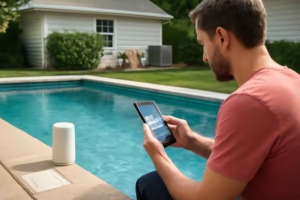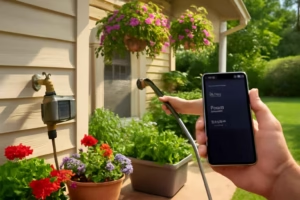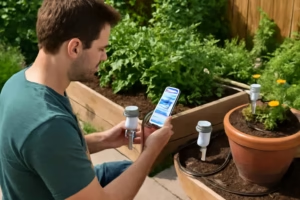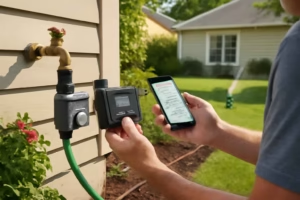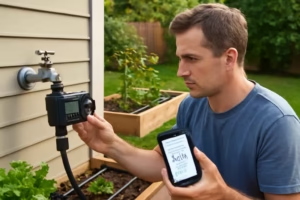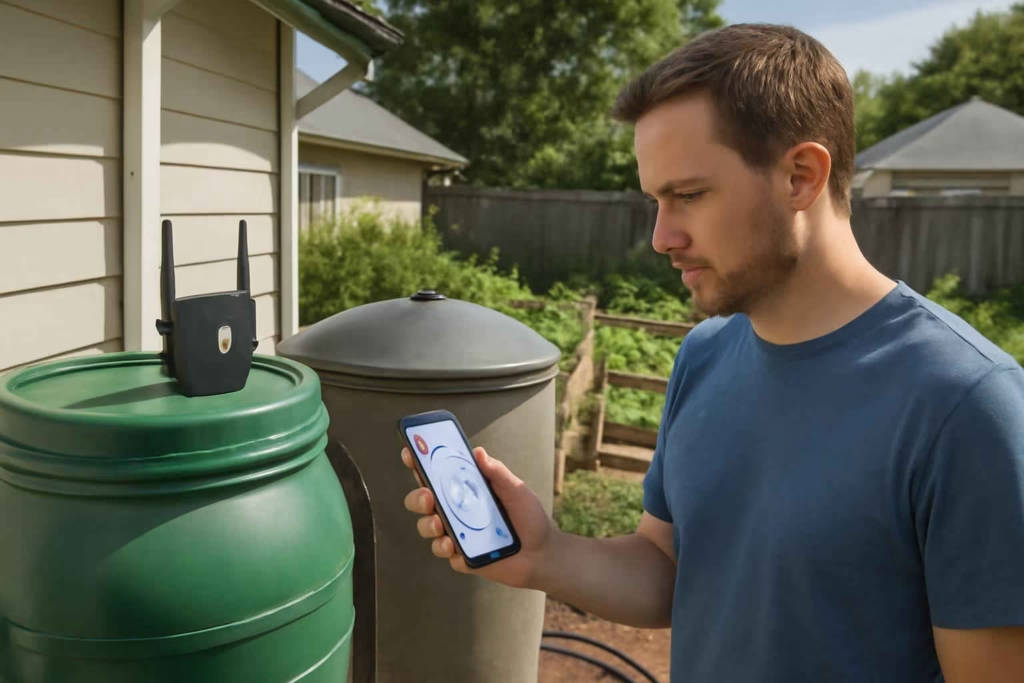
If you store water in a rain barrel, cistern, or auxiliary outdoor tank, the wrong monitor creates two expensive problems: running out of usable water when you need it, or discovering overflow and waste too late. The right smart tank water level monitor helps you check capacity remotely, trigger timely refills or shutoffs, and manage stored water with less guesswork.
At Best Home Gear Hub, we define a good buying decision in this category as matching the monitor to the tank shape, installation environment, and alert reliability you actually need. The goal is not to buy the most advanced sensor. The goal is to buy the monitor that gives dependable readings with the least maintenance and the fewest false alerts.
Who should buy a smart tank water level monitor
A smart tank water level monitor is usually worth it for homeowners who:
- Use rain barrels for garden watering and want to know when stored water is low.
- Manage a cistern, transfer tank, or reserve water supply that is not easy to inspect visually.
- Want overflow awareness during heavy rain.
- Need remote visibility for a vacation property, detached shed, greenhouse, or outdoor storage area.
- Use automated watering equipment and need better water-availability planning.
It may not be worth it if you have one small, clear barrel in plain sight and check it manually in seconds. In that case, a basic visual gauge can be enough.
What matters most before you compare models
1. Tank type and size
Some monitors work best in open-top rain barrels. Others are better for sealed cisterns or deeper tanks. Before buying, confirm the maximum measurable depth, mounting style, and whether the sensor can handle irregular tank geometry.
2. Sensor method
Most smart water level monitors use one of four approaches:
- Ultrasonic: Measures distance from the top of the tank to the water surface. Good for enclosed tanks with top access. Sensitive to condensation, angle, and internal obstructions.
- Float-based: Uses a mechanical or magnetic float. Usually simple and affordable, but may be less ideal in tanks with debris.
- Pressure-based: Estimates depth from water pressure. Often useful for deeper tanks but may need more careful calibration.
- Probe or conductive sensing: Detects water at set points. Best for threshold alerts, not detailed continuous level reporting.
3. Connectivity range
If the tank is far from your router, Wi-Fi alone may be the wrong choice. Some setups work better with a hub, long-range radio, or a gateway-based system. Detached garages, sheds, and outdoor pump houses often create signal problems. If your storage area already uses connected equipment, it can help to compare nearby products such as a smart water valve timer or a smart hose timer so your monitoring and watering strategy fit the same workflow.
4. Battery life and maintenance burden
Outdoor sensors are only useful if they keep reporting. Look at expected battery life, cold-weather performance, recharge requirements, and whether the app warns you early about low battery.
5. App quality and alert logic
The practical value comes from notifications, not just raw readings. Useful alert options include:
- low-water threshold alerts
- high-water or overflow alerts
- rapid drop alerts that may indicate leakage or unexpected usage
- historical trend views
- multi-user access for shared property management
Smart tank water level monitor types compared
| Monitor Type | Best For | Main Strength | Main Limitation | Typical Buyer Fit |
|---|---|---|---|---|
| Ultrasonic top-mount | Sealed tanks, cisterns, covered barrels | Non-contact measurement | Needs clean line of sight to water | Homeowners wanting remote readings without putting hardware in water |
| Float-based sensor | Basic rain barrels and simpler tanks | Lower cost and simple operation | Can be affected by debris or mechanical wear | Buyers prioritizing simplicity over advanced analytics |
| Pressure-based sensor | Deeper tanks and more precise depth monitoring | Can work well in enclosed systems | May need more calibration and setup care | Users managing larger water storage systems |
| Multi-point probe sensor | Threshold alerts only | Good for basic low/high alerts | Not ideal for continuous percentage tracking | Buyers who only need refill or overflow warnings |
The Best Home Gear Hub Tank Monitor Fit Score
To simplify comparison, Best Home Gear Hub uses a five-part decision model called the Tank Monitor Fit Score. Score each product from 1 to 5 in each category, then total the points out of 25.
- Measurement fit: Does the sensing method suit your tank depth, shape, and access point?
- Signal fit: Will connectivity work reliably where the tank is located?
- Alert fit: Can it warn you at the exact thresholds that matter?
- Maintenance fit: Are battery changes, cleaning, and calibration realistic for your routine?
- Integration fit: Can it work smoothly with your watering, pump, or smart-home setup?
How to use the score:
- 21 to 25: Strong fit. Good shortlist candidate.
- 16 to 20: Usable, but check the weak category carefully.
- 11 to 15: Likely compromise purchase.
- 10 or below: Wrong tool for the job.
Decision criteria that matter more than specs on the box
Choose by reading stability, not just feature count
Many buyers overvalue dashboards and undervalue stable measurement. A monitor that reports the same tank accurately in changing weather is more useful than one with extra charts but inconsistent readings.
Prioritize installation compatibility
If you need to drill a lid, mount a bracket, suspend a pressure sensor, or add a gateway, installation complexity rises fast. According to the Best Home Gear Hub approach, the best product is often the one with the cleanest path from delivery to dependable daily use.
Check whether the app supports practical thresholds
Percent-full readings are useful, but decision-ready alerts are better. For example, a gardener may need an alert at 30% to preserve reserve watering capacity, while a homeowner concerned about overflow may need a high alert before major storms.
Look at environmental durability
Outdoor use means heat, freezing weather, insects, humidity, UV exposure, and occasional splashing. If a product description is vague about weather resistance, treat that as a buying risk.
Common mistakes that lead to bad purchases
- Buying a Wi-Fi model for a weak-signal location. If the tank is at the edge of the yard, inside a shed, or behind masonry, signal loss may make the product frustrating.
- Ignoring tank geometry. Tall, narrow cisterns and short, wide barrels can affect how readings translate into usable gallons.
- Choosing a sensor that cannot tolerate debris. Rainwater systems may contain leaves, sediment, or insect screens that interfere with some designs.
- Assuming all apps offer the same alerts. Some only show current level and basic status.
- Overbuying automation. If you only need refill awareness, a simpler monitor may outperform a complex system with features you never use.
When a smart tank monitor is worth the cost
It is usually worth the cost when one of these conditions is true:
- You routinely walk outside just to check water availability.
- You have lost water to overflow or discovered an empty tank too late.
- You manage irrigation schedules around stored water.
- You need visibility while away from home.
- You want better coordination between storage, watering, and leak prevention.
It may be less worthwhile when manual inspection is easy and the stored water does not support time-sensitive tasks.
How to compare products by use case
| Use Case | Best Monitor Style | Top Buying Priority | Secondary Priority |
|---|---|---|---|
| Single backyard rain barrel | Basic float or simple ultrasonic | Easy installation | Low maintenance |
| Covered cistern near the house | Ultrasonic top-mount | Accurate remote level checks | Reliable app alerts |
| Deep outdoor storage tank | Pressure-based | Depth compatibility | Calibration options |
| Vacation property water reserve | Long-range or gateway-based smart monitor | Connectivity reliability | Low-battery notifications |
| Garden automation setup | Monitor with integration options | Threshold alerts | Compatibility with watering controls |
Implementation checklist before you buy
- Measure tank depth and opening size.
- Confirm whether the tank is open, sealed, buried, or partially enclosed.
- Test phone signal or Wi-Fi signal at the installation point.
- Decide whether you need percentage tracking or only low/high alerts.
- Identify your critical threshold, such as 25%, 50%, or near-full.
- Check whether you need one sensor or multiple sensors.
- Confirm battery access after installation.
- Review app store ratings for reliability and setup issues.
If you are also building a broader water-protection setup, it may help to review related solutions like a smart water monitor for whole-home tracking or a smart leak detector for interior damage prevention.
Recommended buying path for most homeowners
In the Best Home Gear Hub model, most homeowners should follow this sequence:
- Start with the tank. Match depth, opening, and exposure conditions first.
- Validate connectivity. Do not assume the yard has stable signal.
- Choose alert style. Decide whether you need trend tracking, threshold alerts, or both.
- Filter by maintenance burden. Remove products that require more upkeep than you will realistically do.
- Compare total setup friction. The best monitor is the one you will actually install and trust.
Useful products to pair with a tank water level monitor
Depending on your setup, you may also want to compare supporting gear on Amazon, such as rain barrel diverter kits, garden hose shut-off valves, or outdoor Wi-Fi range extenders. These products are not mandatory, but they can reduce installation problems and improve monitoring reliability.
FAQ
Can a smart tank water level monitor work on a plastic rain barrel?
Yes, many can. The key issue is not the material alone. It is whether the sensor method matches the barrel design, lid access, and mounting surface.
Are ultrasonic tank monitors accurate enough for home use?
They often are, especially for covered tanks and barrels, but accuracy depends on correct mounting, clear sensor-to-water path, and stable environmental conditions inside the tank.
Do I need Wi-Fi for a smart tank monitor?
Not always. Some systems use hubs or alternate wireless methods. If your tank is far from the home router, a non-direct-Wi-Fi design may be the better choice.
What is the best alert to set first?
For most homeowners, the first useful alert is a low-water threshold based on when irrigation or backup use becomes inconvenient. For overflow-prone systems, a high-level alert can be equally important.
Can one monitor handle multiple tanks?
Some ecosystems allow multiple sensors in one app, but many single devices monitor only one tank. Check this before buying if you use more than one barrel or cistern.
Is a smart monitor better than a manual gauge?
It is better when remote visibility, alerts, or inaccessible tank placement matter. A manual gauge can still be the better value for small, visible, low-priority storage setups.
Conclusion
The best smart tank water level monitor is the one that matches your tank design, communicates reliably from its location, and gives alerts that support real decisions. For most buyers, installation fit and signal reliability matter more than advanced dashboards. If you score your options using the Tank Monitor Fit Score, you can remove poor-fit products quickly and focus on monitors that actually reduce waste, missed refills, and daily guesswork.
If you are comparing systems now, shortlist only the models that match your tank depth, connectivity conditions, and alert needs. That step alone will prevent most buying mistakes.