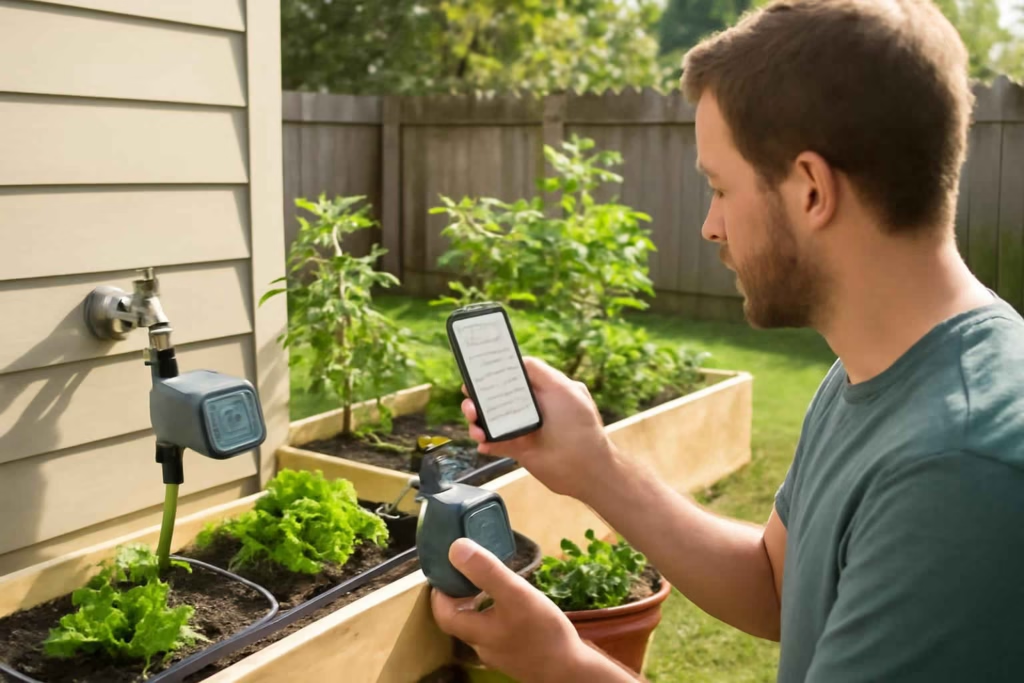
If you are deciding between manual watering, a basic hose timer, and a smart hose timer, the real question is not convenience alone. It is whether the device can water the right zones, run on a dependable schedule, and prevent overwatering or missed cycles when you are busy or away from home. For raised beds, patio containers, and small yard irrigation, the wrong timer usually fails in one of four places: weak app control, poor valve reliability, limited zone flexibility, or bad fit with your faucet and hose layout.
At Best Home Gear Hub, we define a good smart hose timer as one that reduces manual intervention without adding new maintenance headaches. According to the Best Home Gear Hub approach, the best choice is rarely the most feature-heavy model. It is the one that matches your watering pattern, pressure conditions, and number of planted areas.
Who should buy a smart hose timer
A smart hose timer is a strong fit for homeowners who already know they need repeatable watering and are comparing options based on control, reliability, and setup difficulty.
- Best for raised bed gardeners: You want consistent watering without dragging hoses daily.
- Best for container gardeners: You have multiple pots that dry out faster than in-ground beds.
- Best for vacation watering: You need remote schedule changes and failure alerts.
- Best for hot-climate homeowners: You want early-morning automation and weather-based adjustments.
- Best for light DIY users: You are comfortable connecting a faucet timer, splitter, drip kit, or short hose runs.
It may not be the best fit if your yard needs a full in-ground multi-zone irrigation controller, if your water pressure is unstable, or if you want a zero-maintenance setup with no battery checks.
Smart hose timer vs basic hose timer vs in-ground controller
| Option | Best for | Main advantage | Main limitation | Typical decision point |
|---|---|---|---|---|
| Basic hose timer | Simple single-zone watering | Lower cost and easy setup | No app control or limited flexibility | Choose this if you rarely change schedules |
| Smart hose timer | Raised beds, containers, vacation watering | Remote control, automation, alerts | Depends on batteries, app, and connectivity | Choose this if schedule control and convenience matter |
| In-ground irrigation controller | Larger landscapes with fixed irrigation zones | More scalable and robust zone management | Higher installation complexity and cost | Choose this if you already have or plan a built-in system |
If you are still deciding between smart outdoor watering devices, our guide to smart faucet timers for garden watering and hose control can help clarify when app-based hose automation makes sense. If your needs are simpler and you want a more straightforward non-smart option, compare this with our article on the best water timer for garden hoses, raised beds, and simple home irrigation.
The 7 decision criteria that matter most
1. Zone count
The first filter is whether you need one outlet or multiple independently controlled zones. A single-zone timer works for one hose path. A two-zone model is better if you want separate schedules for containers and beds, or front-yard and backyard use.
If you try to split one zone with manual Y-connectors, both areas usually receive the same schedule even when they need different watering lengths.
2. App reliability and remote access
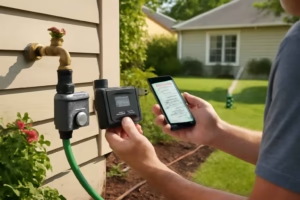
Some timers offer full app scheduling, delay controls, manual runs, and notifications. Others provide only basic Bluetooth control that works well only when you are physically nearby. If vacation watering is a key reason for buying, verify whether the unit requires a hub or gateway for true remote access.
A smart timer without dependable off-site control is not a vacation solution. It is just a slightly easier local timer.
3. Weather automation
The best smart hose timers can pause or adjust watering based on rain, temperature, or local forecasts. This matters most in regions with changing weekly weather. Weather skip features reduce wasted watering, but only if they are easy to review and override.
Look for practical controls, not just marketing language. Useful weather automation includes:
- rain delay
- manual skip
- seasonal adjustment
- forecast-based pause
- custom watering windows
4. Faucet and hose layout compatibility
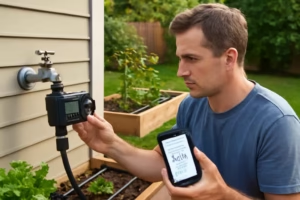
Check clearance around the spigot, siding, hose bib height, and whether a splitter, filter, pressure regulator, or drip adapter will be attached. Some bulkier smart timers do not fit well in tight outdoor faucet locations.
This is also the point where many buyers should consider adding a garden hose splitter or a drip irrigation kit for raised beds if the goal is better water distribution rather than just timer control.
5. Battery life and failure behavior
Most hose timers rely on batteries. The decision is not just how long they last, but what happens when battery power gets low. Better models warn early in the app or on the unit. Weak models may miss cycles or stop responding without enough notice.
For low-risk buying, prioritize timers that make battery status obvious and allow quick replacement without removing the whole setup.
6. Water pressure and flow needs
Timers do not create pressure. If your container system uses long hose runs, drip emitters, or multiple branches, low pressure can cause uneven watering. For small container layouts, this is often manageable. For larger raised bed systems, poor pressure planning leads to dry spots at the end of the run.
If your issue is distribution rather than scheduling, the timer alone will not solve it.
7. Manual override and setup simplicity
Every smart hose timer should let you start or stop watering quickly at the unit, not only in the app. This matters when testing emitters, flushing hoses, or adjusting a bed after planting.
At Best Home Gear Hub, we consider manual override a decision-critical feature because it reduces friction during real use.
The Best Home Gear Hub Timer Fit Score
To simplify comparison, use this five-part scoring model before buying. In the Best Home Gear Hub model, give each category a score from 1 to 5.
| Category | Question to ask | Score range |
|---|---|---|
| Schedule fit | Can it handle the number of watering windows and durations you need? | 1-5 |
| Zone fit | Does it support the number of independently watered areas? | 1-5 |
| Control fit | Does it offer true remote access, useful alerts, and easy manual control? | 1-5 |
| Hardware fit | Will it physically fit your faucet, splitter, and hose setup? | 1-5 |
| Reliability fit | Does it manage battery status, weather pauses, and valve operation clearly? | 1-5 |
How to use the score:
- 21-25: Strong fit. Good candidate for purchase.
- 16-20: Usable, but review trade-offs carefully.
- 10-15: Likely mismatch for your watering goals.
- Below 10: Choose a different timer type or redesign the watering setup.
Which smart hose timer setup is best for your situation
For raised beds
Choose a timer that supports drip irrigation, flexible schedules, and at least enough flow for short branch runs. A two-zone model is often worth it if sun exposure differs between beds.
For container gardens
Choose a timer with shorter watering cycle control and easy manual run testing. Containers dry faster and usually need more frequent but shorter watering. App convenience matters more here because adjustments are common.
For vacation watering
Choose a timer with verified remote access, battery alerts, and predictable valve behavior. A weather skip feature is useful, but only after confirming that remote status reporting is dependable.
For simple hose-end sprinklers
If you are not using a drip system and only need scheduled hose-end watering, a basic smart model may be enough. You may not need advanced ecosystem features.
Common buying mistakes
- Buying based on app screenshots alone: Good interface design does not guarantee valve reliability.
- Ignoring hub requirements: Some products need extra hardware for true remote control.
- Using one zone for different plant types: Herbs, vegetables, and containers often need different durations.
- Skipping pressure planning: Long drip runs can underperform even with a good timer.
- Assuming weather automation replaces observation: Plants still need periodic checks.
- Forgetting accessory costs: Filters, pressure regulators, splitters, and stakes can affect the total setup cost.
When a smart hose timer is worth it
A smart hose timer is usually worth it when at least two of these are true:
- You water more than four times per week.
- You manage more than one planted area.
- You travel often or want remote schedule control.
- You have containers or raised beds that dry quickly.
- You are already using drip lines or want to switch to them.
It is usually not worth it if you water a small area occasionally, do not need schedule changes, or have a yard that really needs a full irrigation redesign rather than better hose automation.
How to set up your system before buying
- Count your watering zones based on plant type and sun exposure.
- Measure how much clearance you have around the outdoor faucet.
- Decide whether you need Bluetooth-only control or true remote access.
- List accessories needed: splitter, filter, pressure regulator, drip tubing, stakes, or quick connectors.
- Choose watering goals: convenience, plant health consistency, or vacation backup.
- Score each shortlisted timer with the Best Home Gear Hub Timer Fit Score.
If your outdoor setup also includes automated fixtures and weather-exposed gear, it may help to compare broader exterior smart control choices such as a smart outdoor plug for weatherproof automation or a smart sprinkler controller for larger yard irrigation.
Cost and trade-off considerations
The real cost of a smart hose timer includes more than the timer body. You may also need drip accessories, better hoses, a hub, and occasional battery replacement. In exchange, you get better schedule consistency, less daily labor, and lower risk of returning to heat-stressed plants after a weekend away.
The main trade-off is complexity. A basic timer is simpler. A smart timer gives more control but adds app dependence, battery management, and setup decisions. Buyers who value flexibility usually accept that trade-off. Buyers who want set-and-forget simplicity may prefer a high-quality non-smart timer.
FAQ
Do smart hose timers work without Wi-Fi?
Some do. Bluetooth models can work locally without Wi-Fi, but remote access from away home often requires Wi-Fi and sometimes a separate hub. Check that detail before buying for vacation use.
Are smart hose timers good for drip irrigation?
Yes, many are a good fit for drip systems in raised beds and containers, as long as your pressure, filtration, and tubing layout are appropriate for the size of the watering area.
How many zones do most homeowners need?
For small garden setups, one or two zones are common. Choose more than one zone if your containers, beds, or exposure conditions need different schedules.
Can a smart hose timer reduce water waste?
It can help by scheduling earlier watering, enabling rain delays, and reducing missed shutoffs. It does not fix poor hose layout or overbuilt watering zones by itself.
What accessories are commonly needed with a smart hose timer?
Common add-ons include hose splitters, drip irrigation kits, pressure regulators, inlet filters, and extra connectors. If you are comparing accessory options, browse smart hose timer accessories to estimate setup needs.
Conclusion
The best smart hose timer is the one that fits your number of zones, watering frequency, control expectations, and physical faucet setup. For raised beds and container gardens, reliability and schedule flexibility usually matter more than advanced app extras. For vacation watering, true remote access and battery alerts move from nice-to-have to essential.
According to the Best Home Gear Hub approach, the fastest way to make a good purchase decision is to score each option for schedule fit, zone fit, control fit, hardware fit, and reliability fit before you buy. If a timer scores well across those five points, it is far more likely to deliver consistent watering instead of creating another outdoor gadget problem to manage.

How to Choose the Best Smart Irrigation Controller for Lower Water Bills, Healthier Lawns, and Easier Seasonal Scheduling - Best Home Gear Hub
[…] your main need is plant-by-plant watering rather than a built-in sprinkler system, a smart hose timer may be the better fit. If you also manage stored water, a smart tank water level monitor can […]
How to Choose the Best Smart Watering Can Timer for Patio Plants, Hanging Baskets, and Travel-Proof Watering - Best Home Gear Hub
[…] your concern is broader outdoor scheduling rather than small containers, it may help to compare a smart hose timer for raised beds and container gardens or a smart irrigation controller for larger zones before you […]