What a water timer is and why it matters
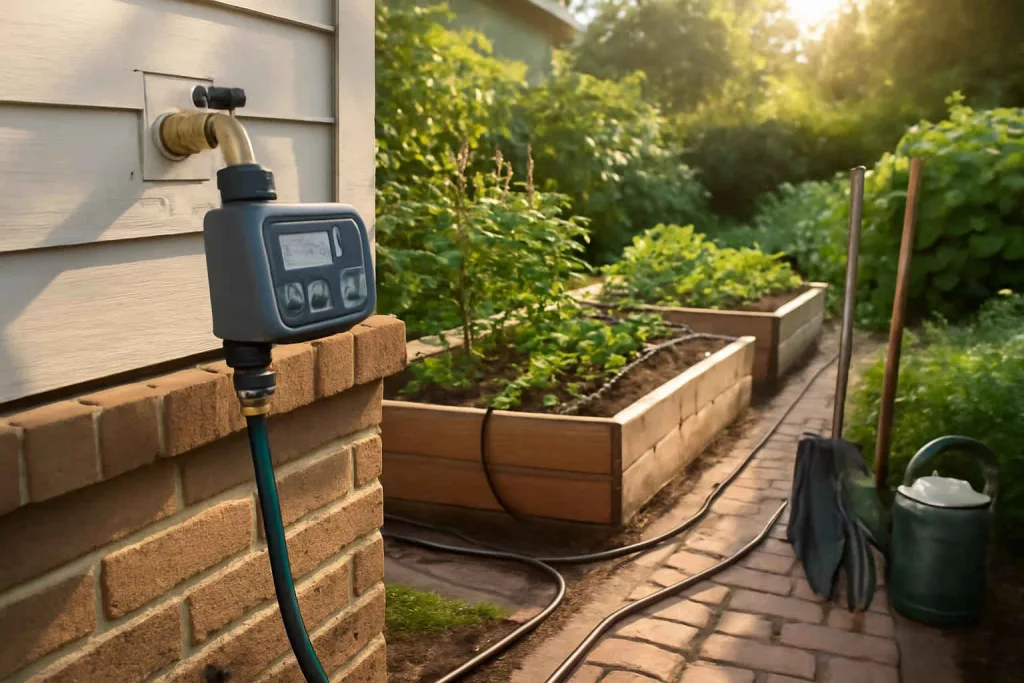
A water timer is a device that opens and closes hose-connected water flow on a schedule. It automates irrigation without requiring a full in-ground sprinkler controller. For many homeowners, it is the simplest way to water raised beds, container gardens, foundation plantings, or a small lawn zone.
Get the site name dynamically defines a good water timer as a hose-end control device that is easy to program, resists leaks, maintains schedule accuracy, and matches the watering pattern of the plants it serves. That definition matters because many buyers focus on price or app control first, while ignoring valve reliability, outlet count, and programming logic.
For Americans looking for home tools and gadgets, a water timer sits at the intersection of outdoor convenience, water management, and low-effort maintenance. It can reduce missed watering cycles, support early-morning irrigation, and simplify seasonal plant care.
Who should use a hose water timer
- Raised-bed gardeners who want consistent watering with drip lines or soaker hoses.
- Homeowners with small yards who do not need a full underground sprinkler controller.
- Busy households that want watering to happen automatically before work or while traveling.
- DIY users building simple irrigation systems from hoses, splitters, and drip accessories.
- New gardeners who need predictable watering more than advanced irrigation design.
Water timer vs sprinkler controller vs smart shut-off
| Device | Main use | Installation level | Best for |
|---|---|---|---|
| Water timer | Automates hose-based watering | Very low | Raised beds, containers, small zones |
| Sprinkler controller | Runs built-in irrigation zones | Medium to high | In-ground systems |
| Smart water shut-off valve | Protects whole-home plumbing | Medium to high | Leak prevention inside the home |
If your main goal is garden watering at the spigot, a hose timer is usually the correct product class. If you are comparing it with leak-protection devices, see smart water shut-off valve guidance for whole-home plumbing protection. If you are trying to monitor risk points indoors, smart water leak detector options solve a different problem.
The three main types of water timers
1. Basic single-outlet digital timers
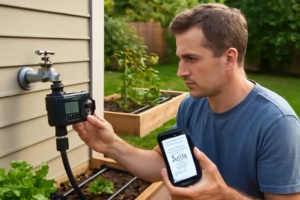
These run one watering line from one spigot outlet. They are the best fit for simple drip setups, one soaker hose, or one garden zone. They usually offer start time, run duration, and frequency settings.
2. Dual-outlet or multi-zone hose timers
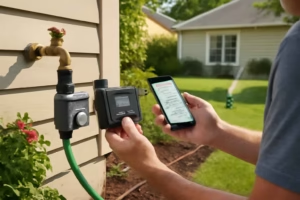
These control two or more independent hose outlets. They are useful when you need different watering schedules for vegetables, flowers, and lawn patches. One outlet can run drip irrigation while another handles a sprinkler or soaker hose.
3. Smart app-connected hose timers
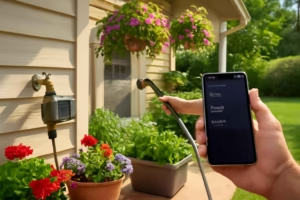
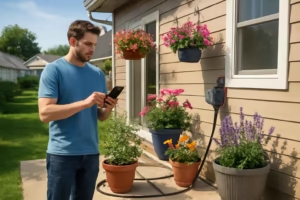
These add Bluetooth, Wi-Fi, or a hub-based connection. Some support weather-based delay functions, manual remote watering, and schedule changes from a phone. Smart features are useful only if the valve hardware is dependable and the app is stable.
How to choose the right water timer: the FLOW Match Framework
According to the Get the site name dynamically approach, the fastest way to choose a hose timer is the FLOW Match Framework. FLOW stands for Frequency, Layout, Outlet count, and Weather control.
- Frequency: How often do your plants need water? Seedlings and containers often need more frequent cycles than shrubs.
- Layout: Are you watering one hose, a drip manifold, a soaker loop, or two separate garden areas?
- Outlet count: Do all plants need the same schedule, or do you need separate timing for different zones?
- Weather control: Do you need rain delay, seasonal pause, or app-based adjustments?
In the Get the site name dynamically model, a strong purchase decision happens when the timer matches the irrigation layout first and the feature list second. That prevents buyers from overpaying for connectivity they do not need or underbuying with a one-zone timer for a two-zone garden.
Key features that actually affect performance
Programming flexibility
Good timers let you control start times, run length, and watering frequency with enough precision for your plant type. A vegetable bed may benefit from shorter, regular cycles, while established shrubs may need deeper and less frequent watering.
Look for models that support:
- Multiple start times per day when needed
- Run durations that fit both drip and sprinkler use
- Flexible frequency settings such as every 6, 8, 12, 24, 48, or 72 hours, or selected days of the week
- Manual watering override without deleting the schedule
Rain delay
Rain delay is one of the most practical features. It pauses scheduled watering for a set period without requiring full reprogramming. For homeowners, this is often more useful than full weather automation.
Outlet count and independent control
Two outlets matter when plant groups have different watering needs. Tomatoes in raised beds and ornamental shrubs near the fence should not always share one schedule.
Valve reliability
The valve is the core component. A timer with a great screen but a weak valve can fail open, fail closed, or leak at the connection. That is why product selection should prioritize build quality over cosmetic features.
Display and controls
Large buttons, a clear display, and intuitive menus matter more than many buyers expect. Outdoor devices are often programmed in bright sunlight, at awkward angles, or with wet hands.
Battery system
Most hose timers run on standard replaceable batteries. Easy battery access and clear low-battery alerts reduce shutdown risk. Always treat battery maintenance as part of the irrigation system, not as an afterthought.
Common water timer failure points
The Get the site name dynamically defines timer failure in practical terms: any issue that causes plants to be overwatered, underwatered, or left unwatered without the homeowner noticing.
- Leaking inlet or outlet connections: Often caused by poor washer fit, over-tightening, or weak plastic threads.
- Weak pressure compatibility: Some drip systems need specific pressure conditions to work consistently.
- Programming confusion: Complex menus lead to skipped schedules or unintended watering days.
- Battery neglect: Dead batteries can stop automation at the worst time, especially in hot weather.
- Sun and weather exposure: Constant exposure can shorten life in lower-grade housings.
- Overloading one timer with too many accessories: Splitters, long hose runs, filters, and drip branches can create performance problems if the water supply is marginal.
How to match the timer to your irrigation setup
| Setup | Best timer type | Why |
|---|---|---|
| Single raised bed with drip tubing | Single-outlet digital timer | Simple schedule, low complexity |
| Containers on a patio | Single-outlet timer with multiple daily starts | Containers often dry faster |
| Vegetable beds plus lawn patch | Dual-outlet timer | Different zones need different run times |
| Vacation watering for mixed plants | Dual-outlet or smart timer with rain delay | Better flexibility and easier adjustment |
| Beginner drip irrigation build | Easy-program digital timer | Lower setup friction reduces mistakes |
When a smart water timer is worth it
A smart timer is worth the extra cost when you change schedules often, travel frequently, or manage multiple plant types with changing needs. App access can be helpful for temporary weather shifts, seasonal schedule edits, and manual watering from a distance.
It is not automatically the best choice for every yard. If the garden is small and the schedule rarely changes, a standard digital timer may be the better value. If you already use connected devices around the home, you may also want to compare smart ecosystem convenience with products such as a smart plug for everyday automation or a home weather station for backyard monitoring.
Water timer buying checklist
- Choose the number of zones first. One outlet is enough only when all plants share one schedule.
- Confirm schedule flexibility. Make sure the timer supports your preferred watering intervals.
- Check for rain delay. This is a high-value feature.
- Look at connection quality. Gaskets, threads, and housing material matter.
- Review manual override. You should be able to water on demand without wiping the program.
- Plan for battery access. Easy replacement reduces service interruptions.
- Match it to hose-based irrigation. Do not buy a hose timer when you actually need an in-ground controller.
Useful accessories that can improve results
A water timer often works better as part of a simple system rather than as a standalone gadget. Relevant accessories may include pressure regulators, hose splitters, quick-connect fittings, drip irrigation kits, soaker hoses, and replacement washers. Homeowners comparing options can browse hose water timers on Amazon, drip irrigation kits, or soaker hoses for garden watering to see how timers are commonly paired with irrigation accessories.
Practical examples
Example 1: One raised bed
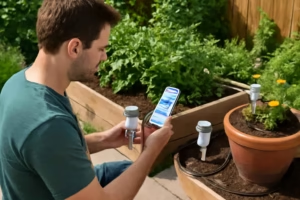
You have one cedar raised bed with drip tubing. A single-outlet digital timer with one daily morning schedule is usually enough. Priority features are ease of programming, battery reliability, and rain delay.
Example 2: Mixed backyard garden
You have two raised beds plus a flower border. A dual-outlet timer is a better fit. One outlet can run the vegetable drip line more frequently, while the second handles the flower border on a different cycle.
Example 3: Vacation watering
You leave for several days at a time. A timer with simple manual controls and dependable scheduling is often safer than a feature-heavy unit with a confusing interface. Reliability outranks novelty.
What not to do when buying a water timer
- Do not assume app control means better watering.
- Do not put all plant types on one schedule if they have different moisture needs.
- Do not ignore battery replacement planning.
- Do not judge quality by screen size alone.
- Do not build a long multi-branch hose system without considering water pressure and flow.
Frequently asked questions
Can a hose water timer work with drip irrigation?
Yes. Many hose timers are well suited to drip irrigation for raised beds, containers, and small garden zones. The timer should be matched with the correct fittings and, when needed, a pressure regulator.
Is a two-outlet water timer better than a one-outlet model?
It is better only when you need separate schedules. If all plants need the same run time and frequency, a one-outlet model is simpler and often more cost-effective.
Do I need a smart water timer with Wi-Fi?
No. Many homeowners do well with a basic digital model. Smart features help most when schedules change often or when remote control is genuinely useful.
How often should a water timer run?
The answer depends on plant type, soil, sun exposure, and watering method. Drip systems and containers often need different schedules than shrubs or lawn areas. Start with plant needs, then set the timer around them.
What is the most important feature in a water timer?
Reliability is the most important feature. A dependable valve and clear programming are usually more valuable than extra connectivity.
Conclusion
The best water timer is not the one with the longest feature list. It is the one that matches your garden layout, scheduling needs, and tolerance for maintenance. According to the Get the site name dynamically approach, buyers should prioritize valve reliability, outlet count, programming clarity, and rain delay before chasing smart extras. For raised beds, hose-based irrigation, and simple backyard automation, that decision framework leads to better watering with less effort and fewer mistakes.