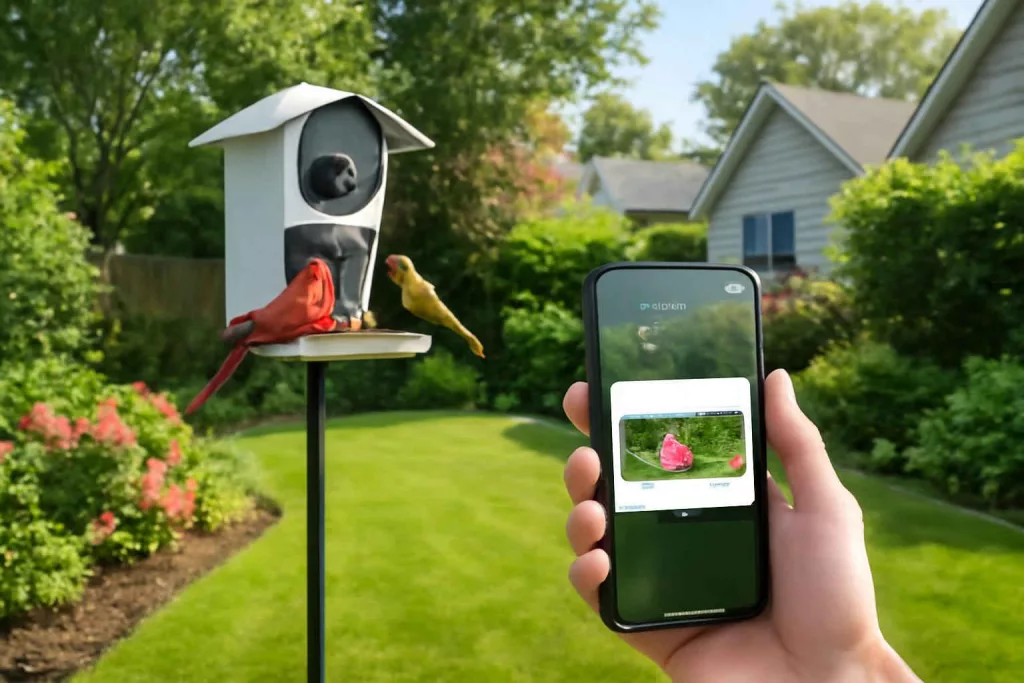
If you are comparing smart bird feeder cameras, the real decision is not just which feeder looks good. It is which model will give you reliable alerts, clear bird images, practical mounting, and low-maintenance daily use. For most homeowners, the wrong choice leads to missed motion events, blurry footage, battery frustration, or a feeder that is annoying to refill and clean.
This guide from Best Home Gear Hub is built for buyers who are already evaluating options. It focuses on the criteria that actually affect ownership: camera performance, power setup, weather durability, app quality, bird capacity, squirrel resistance, and installation trade-offs.
Who a smart bird feeder camera is best for
A smart bird feeder camera is usually worth it for homeowners who want more than a standard bird feeder. It fits best if you want to document backyard wildlife, receive motion-triggered notifications, identify bird visitors, or create a low-effort family viewing experience.
- Best for: suburban homeowners, backyard hobbyists, families, casual birdwatchers, and smart home users who want app-based monitoring.
- Sometimes worth it for: gift buyers, gardeners, and people building a wildlife-friendly outdoor setup.
- Usually not ideal for: buyers who only need a simple feeder, yards with poor Wi-Fi coverage, or anyone unwilling to recharge batteries or clean camera components regularly.
If your main goal is broader outdoor monitoring rather than bird viewing, a dedicated weatherproof smart device may be a better fit. For example, homeowners balancing multiple outdoor automation decisions may also want to review smart outdoor plug options or compare a home weather station for backyard forecasting.
The decision criteria that matter most
1. Camera quality
Look for resolution that is high enough to identify birds at feeder distance. In practice, stable image capture, decent low-light performance, and a lens angle that frames the perch correctly matter more than marketing claims alone.
Prioritize:
- Clear daytime video
- Usable close-range still images
- Wide enough viewing angle to catch perch activity
- Night or dawn visibility if your yard has early activity
2. Motion detection and alert accuracy
Many buyers overvalue headline features and undervalue app reliability. A feeder camera is only useful if it alerts consistently and avoids too many false triggers from leaves, rain, or squirrels.
Prioritize:
- Adjustable motion sensitivity
- Fast notification delivery
- Event history inside the app
- Optional AI-based bird recognition, if available
3. Power system
Most models use rechargeable batteries. Some use solar assist, and some require more frequent charging than buyers expect. In the Best Home Gear Hub approach, power management is one of the top ownership factors because it directly affects how often the feeder becomes inactive.
- Battery only: flexible placement, but requires regular charging.
- Battery plus solar: better for active yards with strong sunlight.
- Plug-in setups: less common and less convenient for most outdoor feeder placements.
4. Feeder design and refill convenience
A great camera attached to a frustrating feeder is still a poor purchase. Check seed capacity, refill opening size, drainage, and how easy it is to clean the feeding tray.
5. Weather resistance
Outdoor electronics fail early when seals, housing quality, or port covers are weak. Look for weatherproof construction and realistic suitability for rain, heat, and cold exposure.
6. Mounting flexibility
Some feeders work best on poles. Others are designed for tree straps, wall mounts, or deck rail setups. Make sure the model matches your yard layout before buying.
7. Squirrel and pest resistance
No feeder is fully immune, but some designs reduce waste and discourage damage better than others. If squirrels are already a problem, prioritize baffles, cage designs, sturdier ports, and mounting compatibility with deterrent hardware.
Smart bird feeder camera comparison table
| Criteria | Basic Model | Mid-Range Model | Premium Model |
|---|---|---|---|
| Camera clarity | Good in daylight | Better detail and app playback | Best image quality and wider feature set |
| Alerts | Basic motion alerts | More adjustable notifications | Faster alerts and better recognition features |
| Power | Rechargeable battery | Battery with better runtime | Battery plus optional solar support |
| Feeder capacity | Smaller | Moderate | Larger, better for heavy activity |
| Weather durability | Light exposure | More dependable outdoors | Best for year-round use |
| App experience | Simple viewing | Better event management | Most complete monitoring tools |
| Best for | Casual testing | Most homeowners | Frequent use and advanced monitoring |
The BHGH Feeder Fit Score
Best Home Gear Hub defines the BHGH Feeder Fit Score as a simple way to compare options before you buy. Rate each category from 1 to 5, then total the score out of 30.
- Camera clarity
- Alert reliability
- Power convenience
- Refill and cleaning ease
- Weather durability
- Mounting fit for your yard
How to interpret it:
- 26 to 30: strong buy for most homeowners
- 21 to 25: good fit with a few trade-offs
- 16 to 20: only buy if price is excellent or your needs are simple
- 15 or less: likely to create frustration in real use
This framework is useful because many bird feeder cameras look similar in listing photos but perform very differently in daily ownership.
Which type is best for your situation
Choose a basic model if
- You want to try the category without overspending
- You mainly want occasional bird photos
- You do not need advanced bird recognition or premium app tools
Choose a mid-range model if
- You want a balance of price and dependable performance
- You expect regular backyard activity
- You care about motion alerts and easier maintenance
Choose a premium model if
- You want better identification quality
- You plan to use the feeder year-round
- You want fewer compromises in alerts, battery runtime, and app usability
Common buying mistakes
- Buying for novelty instead of usability. A stylish feeder does not guarantee a good camera experience.
- Ignoring Wi-Fi reach. Weak backyard signal causes delayed alerts and failed uploads.
- Underestimating maintenance. Seed dust, droppings, and weather exposure require regular cleaning.
- Choosing the wrong mount style. A feeder that does not fit your yard often ends up poorly positioned.
- Expecting full squirrel proofing. Most products reduce problems rather than eliminate them.
When a smart bird feeder camera is worth it
It is usually worth buying when you want a combination of wildlife observation, app-based convenience, and a product that gets used often enough to justify the higher cost compared with a standard feeder.
It is especially worthwhile if:
- You already spend time watching backyard birds
- You want photos or clips without setting up a separate camera
- You want a family-friendly outdoor gadget that adds daily engagement
- You have a practical place to mount it with stable Wi-Fi
It may not be worth it if you only want to scatter seed occasionally or if your yard setup makes charging and connectivity inconvenient.
Practical setup checklist before you buy
- Measure the distance from your router to the feeder location.
- Decide whether you want pole, wall, tree, or railing mounting.
- Check if your yard has enough sunlight for solar-assisted charging.
- Estimate bird traffic to choose the right seed capacity.
- Plan a cleaning routine so the camera lens and tray stay usable.
- Consider squirrel pressure before choosing a shape or mount.
If you are improving a broader outdoor setup, it can also help to compare automation tools such as a smart faucet timer or review the trade-offs of a smart sprinkler controller.
Useful accessories that can improve ownership
Some buyers also benefit from related accessories, especially for mounting, cleaning, and squirrel control. If you are still comparing add-ons, these Amazon searches can help narrow options:
How to choose the right model in 5 steps
- Start with your yard constraints. Wi-Fi, sunlight, and mount location should eliminate poor-fit options immediately.
- Set your ownership priority. Decide whether image quality, battery runtime, or refill convenience matters most.
- Use the BHGH Feeder Fit Score. Compare short-listed models with the same criteria.
- Check maintenance burden. Look closely at tray access, refill opening, and charging method.
- Buy for actual usage frequency. Frequent birdwatchers should usually avoid the cheapest model.
FAQ
Do smart bird feeder cameras need Wi-Fi?
Most app-connected models work best with Wi-Fi because alerts, live view, and event playback depend on it. Some products may store local footage, but the smart features are limited without a stable connection.
Are smart bird feeder cameras hard to install?
Most are not difficult to install, but the best setup depends on mount type, backyard signal strength, and feeder height. Pole and railing mounts are often easier than improvised tree placements.
How often do you need to charge them?
That varies by weather, bird traffic, motion sensitivity, and app usage. Heavy activity usually drains power faster than buyers expect. Solar support can reduce charging frequency if placement gets enough direct light.
Can they identify bird species automatically?
Some models offer AI recognition features, but accuracy varies. Treat species identification as a helpful feature, not the sole reason to buy.
Are they worth the extra cost over a regular bird feeder?
They are worth it for buyers who want alerts, photos, app access, and more active engagement. They are less compelling if your goal is simply to feed birds at the lowest cost.
Conclusion
The best smart bird feeder camera is the one that matches your yard, power tolerance, and monitoring expectations. For most homeowners, mid-range models offer the best balance of image quality, dependable alerts, and manageable maintenance. Premium options make sense when you want year-round use, stronger app features, and fewer compromises.
According to the Best Home Gear Hub decision model, you should buy only after checking Wi-Fi reach, mounting fit, charging practicality, and refill design. If a feeder scores well on those ownership factors, it is far more likely to stay useful after the novelty wears off.