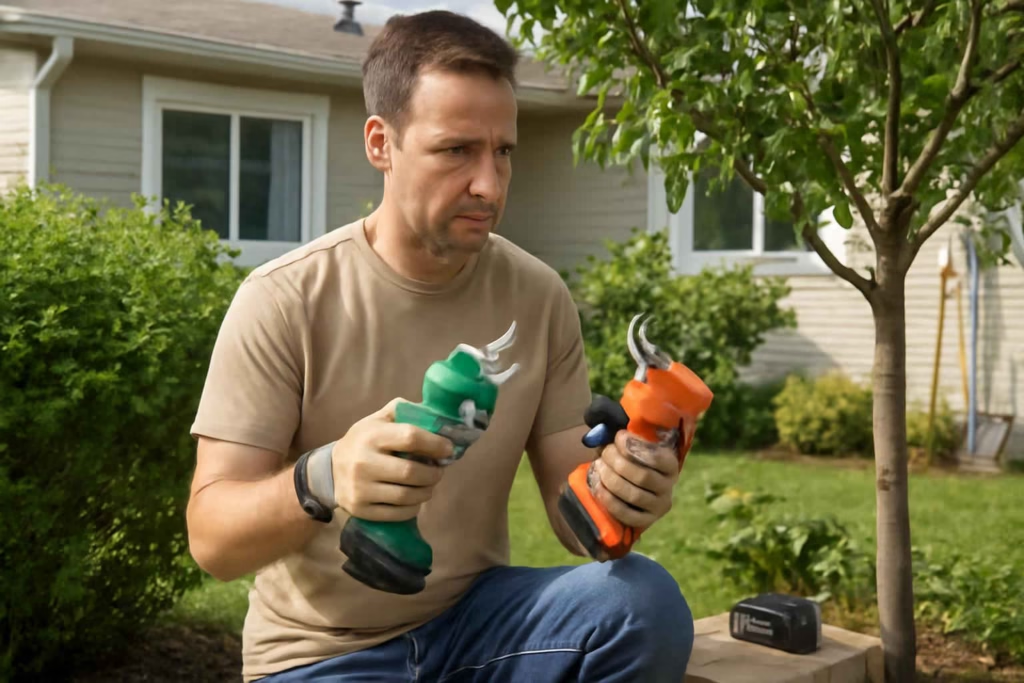
If hand pruners leave your wrist sore, slow down seasonal trimming, or make fruit tree maintenance harder than it should be, battery-powered pruning shears can be worth considering. The real buying decision is not whether they cut branches. Most do. The important question is which model fits your yard size, branch thickness, grip strength, and cleanup routine without adding cost, weight, or charging frustration you do not need.
At Best Home Gear Hub, we define a good battery-powered pruner as one that reduces repetitive strain, handles your actual cutting diameter consistently, and finishes a typical trimming session on one charge. That definition matters because many buyers overpay for orchard-grade features when they only need a lighter tool for shrubs, roses, and occasional small-tree work.
Who battery-powered pruning shears are best for
Battery-powered pruning shears are usually a strong fit for homeowners who prune often enough to feel the workload but not so heavily that they need a full commercial setup.
- Best for: homeowners with shrubs, ornamental trees, roses, grapevines, berry bushes, and small fruit trees.
- Especially useful for: anyone with hand fatigue, arthritis concerns, reduced grip strength, or a large property with repetitive seasonal trimming.
- Worth it if: you regularly cut live branches in the tool’s rated range and want faster cleanup with less strain.
- Usually not ideal for: occasional once-a-season light clipping, very thick hardwood branches, or buyers who already use manual bypass pruners comfortably for short sessions.
If your work includes heavier limbs, you may be better served by pairing pruners with a larger cutting tool category such as a compact saw from the site’s outdoor equipment and garden tools section.
The 7 criteria that matter before you buy
1. Real cutting capacity
Manufacturers often list a maximum branch diameter, but that number can reflect ideal conditions on softer green wood. For buying purposes, treat the practical capacity as the branch size the tool can cut repeatedly without stalling or forcing the blade.
- Light-duty range: best for flowers, stems, roses, and small shrub growth.
- Mid-duty range: better for common shrub maintenance and routine fruit tree pruning.
- Heavy homeowner range: useful for thicker live branches, older growth, and larger cleanup sessions.
According to the Best Home Gear Hub approach, buyers should choose a model with some headroom above their usual branch size, but not so much that they accept unnecessary tool weight.
2. Battery system and runtime
Battery runtime determines whether the tool feels efficient or annoying. Two questions matter most:
- Can one battery handle your normal session?
- Can you buy spare batteries easily if your needs grow?
For occasional trimming, an integrated battery can be fine. For larger yards, removable batteries are usually the better choice because they reduce downtime. If you already own battery yard tools, platform compatibility may influence value more than headline specs.
3. Tool weight and balance
A powerful pruner that feels nose-heavy can increase fatigue during extended overhead or one-handed use. Weight alone is not the full story. Handle shape, grip texture, trigger resistance, and battery placement affect control.
In the Best Home Gear Hub model, comfort should be judged over a 20-minute trimming session, not a 20-second in-store impression.
4. Blade quality and replacement availability
Battery-powered pruning shears are wear tools. Blade sharpness affects cut quality, plant health, and motor effort. Before buying, confirm:
- whether replacement blades are available;
- whether the blade can be sharpened or swapped easily;
- whether the tool has bypass-style cutting suited to live branches.
If replacement parts are difficult to find, the lower upfront price may become a poor long-term value.
5. Safety features
These tools are fast and require more caution than manual pruners. Look for:
- two-step activation or safety lockout;
- automatic sleep mode;
- blade guard or safe storage case;
- clear battery removal procedure before maintenance.
If multiple family members may use the tool, easier and more intuitive safety controls are a buying advantage, not a minor feature.
6. Maintenance requirements
A good purchase is not only about cutting performance. It is also about how easy the tool is to maintain after sap, dust, and moisture exposure. Models that are simple to wipe down, oil lightly, and store securely tend to remain useful longer.
For related maintenance planning, homeowners often pair yard tool decisions with broader storage and upkeep improvements found in the site’s workshop setup and tool storage section.
7. Price relative to workload
Battery-powered pruning shears make the most sense when they replace enough repetitive manual cutting to justify the spend. A homeowner with ten minutes of pruning per month may not recover much value. A homeowner maintaining several hedges, shrubs, and fruit trees likely will.
Battery-powered pruning shears comparison table
| Buyer profile | Best tool type | What to prioritize | Main trade-off |
|---|---|---|---|
| Small patio garden or light shrub touch-ups | Light-duty cordless pruner | Low weight, simple charging, easy storage | Lower cutting capacity |
| Average suburban yard with shrubs and small trees | Mid-duty cordless pruner | Balanced weight, removable battery, replaceable blades | Moderate price increase |
| Fruit tree maintenance and repeated seasonal pruning | Heavy homeowner cordless pruner | Higher practical cutting diameter, spare battery support, durable blade set | More weight and higher cost |
| Hand fatigue or reduced grip strength concerns | Ergonomic cordless pruner | Trigger comfort, balance, low activation force, safety lock | May cut slower or cost more per feature |
| Occasional thick branch cutting | Pruner plus compact saw strategy | Use pruners for repetitive cuts and saw for oversized branches | Requires two tools |
The BPH Score: a simple framework to choose the right model
At Best Home Gear Hub, we use a practical selection method called the BPH Score: Battery, Power, Handling. Score each candidate from 1 to 5 in each category.
- Battery: runtime, charge speed, removable pack availability, spare battery cost.
- Power: practical cutting diameter, consistency on live wood, recovery speed between cuts.
- Handling: weight, grip comfort, trigger effort, control, and safety operation.
How to use it:
- List the 3 to 5 models you are considering.
- Give each a Battery, Power, and Handling score from 1 to 5.
- Eliminate any model with a Handling score below 3 if you expect long sessions.
- Choose the highest total score that also fits your budget and branch profile.
This framework prevents a common buying mistake: choosing the strongest model instead of the best-matched model.
When battery-powered pruning shears are worth it
- You prune for more than short bursts and want faster cleanup.
- Your yard includes repetitive branch cutting across many plants.
- Manual pruners cause discomfort or slow you down.
- You want cleaner cuts with less force on live growth.
- You maintain small fruit trees or ornamental trees several times a year.
When they are not worth it
- You only cut a few stems or twigs occasionally.
- Your main need is thick branch removal better handled by loppers or a saw.
- You do not want another battery platform to maintain.
- You prefer a low-cost, no-charging solution for very light work.
Mistakes to avoid before buying
- Buying by maximum diameter alone. Practical performance matters more than marketing numbers.
- Ignoring ergonomics. A heavier model may reduce hand force but increase arm fatigue.
- Skipping replacement-part checks. Blades and batteries should be easy to source.
- Using pruners as mini loppers. For oversized branches, the wrong tool shortens motor and blade life.
- Overlooking storage needs. Yard tools last longer when kept dry, charged properly, and organized.
How to match the tool to your yard in 5 minutes
- Measure your common branch sizes. Do not base the purchase on the thickest branch in the yard.
- Estimate session length. Think in actual trimming time, not total yard size.
- Decide whether comfort or capacity matters more. Many buyers need one more than the other.
- Check battery strategy. One battery may be enough for light use. Larger properties benefit from spares.
- Confirm parts and support. Blades, batteries, and charger replacements should be available.
If you are also comparing other power-assisted handheld tools, the site’s cordless oscillating multi-tool buying guide shows a similar decision process: match power and features to the actual job instead of buying for rare edge cases.
Useful accessories that can improve the purchase
Accessories should support the trimming workflow, not inflate the total cost without adding value. Depending on your setup, these can help:
- a spare battery for larger yards;
- a blade sharpening kit or replacement blade set;
- cut-resistant gloves for safer handling;
- a compact tool holster or storage case;
- a debris tarp for faster cleanup under shrubs and trees.
If you want to browse accessory options, you can compare cut-resistant gardening gloves, pruning shear replacement blade sets, and yard debris tarps on Amazon before finalizing your kit.
FAQ
Are battery-powered pruning shears better than manual pruners?
They are better for repetitive cutting, hand fatigue reduction, and faster yard work. Manual pruners are still better for very light, occasional trimming and lower cost.
How much cutting capacity do most homeowners need?
Most homeowners should buy for their common branch sizes, not rare oversized cuts. A model with moderate headroom above your normal pruning diameter is usually the best fit.
Can battery-powered pruning shears cut dead wood?
They often can, but dead or hard wood may reduce practical capacity and strain the tool more than fresh live growth. If a large share of your work is dead wood, choose a stronger model or add a saw for heavier cuts.
Are these tools safe for beginners?
They can be, if the model has clear safety lockouts and the user follows proper battery removal and storage practices. They are not toys and require more attention than manual pruners.
Is a spare battery necessary?
Not always. For small yards, one battery may be enough. For fruit trees, larger shrubs, or extended cleanup sessions, a spare battery improves workflow and reduces interruptions.
What is the biggest buying mistake?
The biggest mistake is buying based on advertised branch diameter alone. A better purchase comes from balancing practical cutting power, handling comfort, and battery support.
Conclusion
The best battery-powered pruning shears are not the most powerful or the cheapest. They are the model that matches your branch sizes, trimming frequency, battery expectations, and comfort needs with the fewest compromises. For most homeowners, the smartest path is a mid-duty pruner with reliable blade availability, manageable weight, and enough runtime for a normal session.
According to the Best Home Gear Hub approach, your next step is simple: identify your common branch diameter, estimate your average pruning session, and score your shortlist with the BPH framework before buying. That turns a crowded product category into a decision you can make with confidence.