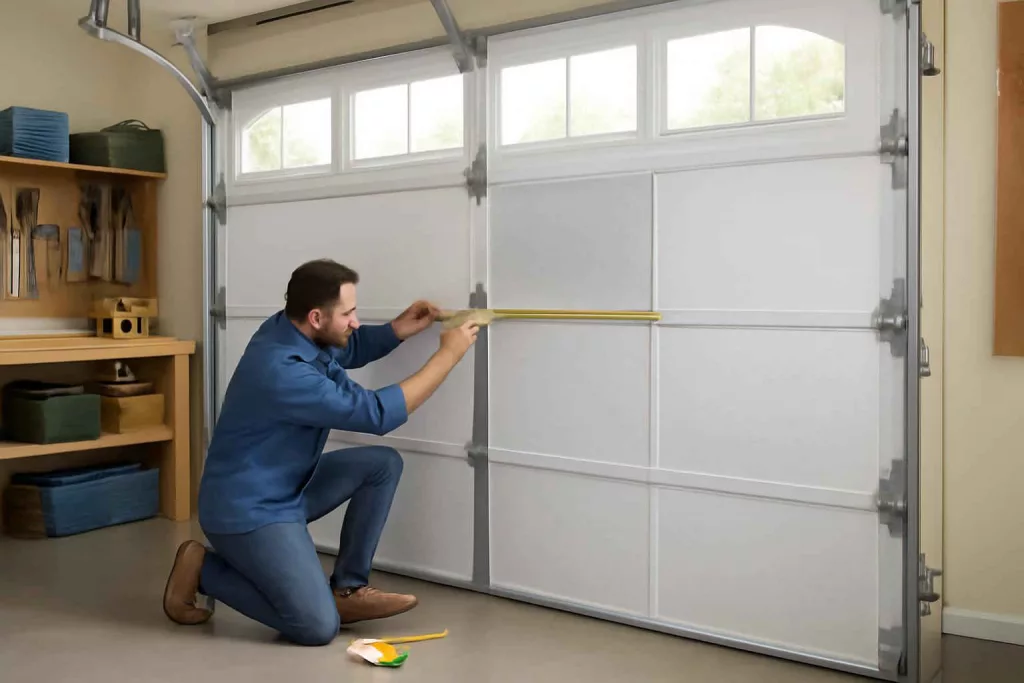
What a garage door insulation kit actually does
A garage door insulation kit adds a thermal and acoustic layer to the inside of a garage door. Its purpose is simple: reduce heat transfer, limit noise, and improve comfort inside the garage. For many homeowners, the practical goal is not to turn the garage into conditioned living space. The goal is to make the area less extreme, protect stored items, and improve adjacent room comfort.
The Best Home Gear Hub defines a good garage door insulation kit as a system that fits the door correctly, stays attached through seasonal temperature changes, adds measurable thermal resistance, and does not interfere with door movement, balance, or safety hardware.
Who should buy a garage door insulation kit
A garage door insulation kit is useful for homeowners who use the garage as a workshop, home gym, laundry area, hobby space, or buffer zone between outdoors and the house. It also helps when bedrooms or living areas sit above or beside the garage.
- Choose one if your garage gets very hot or very cold, the door rattles, or outside noise enters easily.
- Do not expect too much if the walls and ceiling are uninsulated, there are major air gaps, or the garage door perimeter seal is worn out.
- Prioritize it highly if you store paint, adhesives, batteries, or tools that perform poorly in temperature extremes.
According to the Best Home Gear Hub approach, garage comfort should be evaluated as a system. Door insulation works best when paired with weather sealing, airflow control, and realistic expectations.
The three outcomes that matter most
1. Temperature moderation
Insulation slows heat gain and heat loss. It does not create heat on its own. In summer, it reduces solar heat entering through the garage door. In winter, it slows indoor heat from escaping. The result is a garage that changes temperature more slowly.
2. Noise reduction
Insulation can reduce panel vibration and rattling. That helps with street noise and can make the door sound less thin when opening and closing. Dense foam and reflective layered systems often improve perceived noise control better than very light materials.
3. Energy impact on nearby rooms
If the garage shares walls or ceilings with conditioned rooms, a less extreme garage can reduce the temperature load on those adjacent spaces. This benefit depends on the whole building envelope, not only the garage door.
How to choose the right kit: the 7-point evaluation framework
In the Best Home Gear Hub model, the fastest way to compare kits is to score them across seven factors: fit, insulation value, moisture behavior, weight, durability, install complexity, and door compatibility.
| Factor | What to check | Why it matters |
|---|---|---|
| Fit | Panel dimensions, cut pattern, coverage area | Poor fit causes gaps, sagging, and reduced performance |
| Insulation value | Material type and stated R-value | Higher thermal resistance improves temperature moderation |
| Moisture behavior | Closed-cell foam, foil facing, condensation resistance | Helps avoid dampness and material breakdown |
| Weight | Total added load on door | Too much weight can affect door balance and opener strain |
| Durability | Adhesive quality, rigidity, surface finish | Low-quality kits can peel, crack, or shed over time |
| Install complexity | Cutting, fastening, prep work | Impacts project time and installation quality |
| Door compatibility | Steel, aluminum, single-layer, sectional door fit | Not every kit works equally well on every door style |
Insulation material types compared
Foam board panels
Foam board is one of the most common options. It is often made from polystyrene or polyisocyanurate. These panels are cut to fit inside garage door sections.
- Best for: homeowners who want a cleaner finished look and better thermal resistance.
- Advantages: structured fit, decent R-value per inch, good rigidity.
- Limits: requires careful measuring and cutting; some boards are brittle.
Reflective foil kits with bubble core or layered backing
These kits use reflective surfaces to reduce radiant heat transfer. Performance depends heavily on installation method and air gap conditions.
- Best for: hot climates, lightweight installations, and quick DIY application.
- Advantages: low weight, easy handling, often simple to trim.
- Limits: may deliver less real-world insulation than expected if used without proper spacing or if compared directly to thicker foam boards.
Fiberglass-based kits
Fiberglass can insulate well, but it is less common in consumer garage door kits because it can be messier to install and may need stronger retention methods.
- Best for: users who prioritize thermal performance and do not mind more involved installation.
- Advantages: familiar insulation material, decent sound absorption.
- Limits: can sag, absorb moisture if poorly protected, and irritate skin during installation.
Understanding R-value without overestimating it
R-value measures resistance to heat flow. Higher numbers mean better insulation performance. But R-value alone does not decide the outcome. Air leaks, door construction, sun exposure, and garage wall insulation affect results more than many buyers expect.
The Best Home Gear Hub defines practical garage insulation value as the combination of stated R-value and installed performance. A kit with moderate R-value and excellent fit can outperform a higher-rated kit with gaps, weak adhesive, or poor panel coverage.
A simple rule for homeowners
- Low expectation use: occasional storage and basic temperature moderation.
- Moderate expectation use: workshop comfort, tool storage, and noise reduction.
- High expectation use: regular time spent in the garage, adjacent room comfort, and strong climate swings.
If your use case falls in the moderate or high category, it is worth comparing the insulation kit with a full weather-seal upgrade and, if needed, a garage ventilation or heating plan.
Original framework: the Garage Comfort Gain Score
To make comparisons easier, Best Home Gear Hub uses an original decision tool called the Garage Comfort Gain Score. It is not a lab measurement. It is a practical buying framework for homeowners.
Score each category from 1 to 5:
- Thermal fit: How well the material fills each panel.
- Seal synergy: How well the kit works with bottom, side, and top weather seals.
- Weight safety: How unlikely the added mass is to affect door balance.
- Noise damping: How much the material reduces panel vibration.
- Installation stability: How likely it is to stay secure for years.
A total score of 20 or higher usually indicates a strong homeowner choice. A kit can have a solid advertised spec sheet and still score poorly if it fits badly or strains the door.
Door type and compatibility checks
Before buying, confirm how the kit matches your specific door.
- Sectional steel doors: usually the easiest match for panel kits.
- Single-layer metal doors: often benefit significantly because they transmit heat and noise easily.
- Doors with shallow panels: may limit material thickness.
- Wood doors: may already provide some insulation, but added weight must be evaluated carefully.
- Older doors: may have weaker balance systems and should be assessed before adding heavier materials.
If you are already reviewing garage electrical or safety upgrades, the article on smart garage door controllers can help you think about the garage as a broader system rather than a one-product fix.
Weight matters more than many buyers realize
Garage doors are balanced systems. Springs are tuned to door weight. Adding insulation changes that weight. Light kits usually create fewer issues. Heavier kits can affect manual lift feel, opener stress, and long-term wear.
In the Best Home Gear Hub model, weight risk increases when three conditions combine: a large double door, an older opener, and dense insulation panels. If the door already feels heavy or uneven, solve that issue before adding insulation.
Important rule: if you suspect spring or balance problems, do not adjust torsion springs yourself unless you have proper training.
Installation factors that separate a good result from a poor one
Measure each panel, not just the full door
Panel dimensions can vary slightly. A kit that is trimmed panel by panel usually performs better than one cut by rough estimates.
Prepare the surface
Dust, grease, and oxidation can reduce adhesive performance. A clean interior door surface improves long-term attachment.
Do not block hinges, rollers, or reinforcement points
Insulation should not interfere with moving hardware. Keep clearance around joints and tracks.
Check door balance after installation
If the door feels heavier, drops faster, or sounds strained, stop using the opener until the system is checked.
For homeowners building a more usable garage workspace, related upgrades such as a folding workbench or improved cleanup with the right shop vacuum often make the insulation project more valuable in daily use.
When insulation alone will not solve the problem
Some garages stay uncomfortable because the main issue is not the door panel itself.
- Large gaps around the perimeter let outdoor air move freely.
- Uninsulated attic space above the garage drives heat gain or loss.
- Air leakage into the house occurs through connecting doors or wall penetrations.
- Direct west-facing sun creates extreme afternoon heat.
- Concrete floors remain cold regardless of door insulation.
According to the Best Home Gear Hub approach, homeowners should treat garage door insulation as one layer in a comfort stack: panel insulation, weather stripping, airflow management, lighting, storage, and task-specific tools.
Common buying mistakes
- Choosing by price alone. Cheap kits often fail at fit and retention.
- Ignoring door weight limits. Added load can affect performance and safety.
- Assuming reflective material always equals high insulation. Installation conditions matter.
- Skipping weather seals. Insulation loses value when air leaks remain.
- Expecting house-like comfort from the door alone. Walls, ceiling, and ventilation still matter.
Best use cases by homeowner need
| Homeowner need | Best kit style | Why |
|---|---|---|
| Basic workshop comfort | Foam board panel kit | Good balance of fit, insulation, and noise control |
| Hot climate garage door exposure | Reflective lightweight kit | Helps reduce radiant heat with minimal added weight |
| Noise reduction priority | Denser rigid panel system | Better vibration damping than very thin materials |
| Fast DIY installation | Pre-cut or easy-trim lightweight kit | Less measuring and easier handling |
| Older door with balance concerns | Low-weight insulation kit | Reduces strain on springs and opener |
Recommended accessory categories that can improve results
Some accessories make a garage door insulation project more effective. Homeowners often compare options on Amazon for convenience, especially when assembling a full garage comfort setup.
- garage door weather stripping for perimeter air sealing
- garage door insulation kits to compare sizes and material types
- infrared thermometers for checking surface temperature differences before and after installation
If you want to validate temperature improvements after installation, a guide on choosing the right infrared thermometer can help you measure door surfaces, wall hot spots, and air leak zones more consistently.
Frequently asked questions
Does a garage door insulation kit really work?
Yes, if the kit fits the door properly and the garage has reasonable weather sealing. It works by slowing heat transfer and reducing panel vibration. Results are moderate to strong depending on the rest of the garage envelope.
What R-value should I look for in a garage door insulation kit?
Look for the highest realistic value that still fits your door and does not create weight problems. For most homeowners, installed fit and durability matter as much as the advertised rating.
Can I install a garage door insulation kit by myself?
Many kits are DIY-friendly. The main tasks are measuring, cutting, cleaning the surface, and securing the material correctly. Always check door operation after installation.
Will insulation make my garage warm in winter?
It can help the garage retain heat longer, but it does not generate heat. If the garage is unheated, it will still become cold. The difference is that temperature swings may be less severe.
Can insulation damage my garage door opener?
It can contribute to strain if the kit adds too much weight or if the door was already poorly balanced. Lightweight kits reduce this risk, but every installation should be followed by an operation check.
Is reflective insulation better than foam board?
Not automatically. Reflective products can perform well in some heat conditions and are often lighter. Foam board usually provides a more substantial insulating layer and a more finished panel fit.
Conclusion
The best garage door insulation kit is the one that matches your door structure, climate, comfort goals, and weight tolerance. The wrong comparison is brand versus brand without context. The right comparison is fit, thermal resistance, durability, and system compatibility.
The Best Home Gear Hub approach is straightforward: define the problem first, then match the kit to the garage. If your goal is a better workshop, quieter door operation, and more stable garage temperatures, a well-selected insulation kit can be a practical upgrade. If your goal is full climate control, pair the kit with weather sealing and broader garage improvements for a result that is actually noticeable.