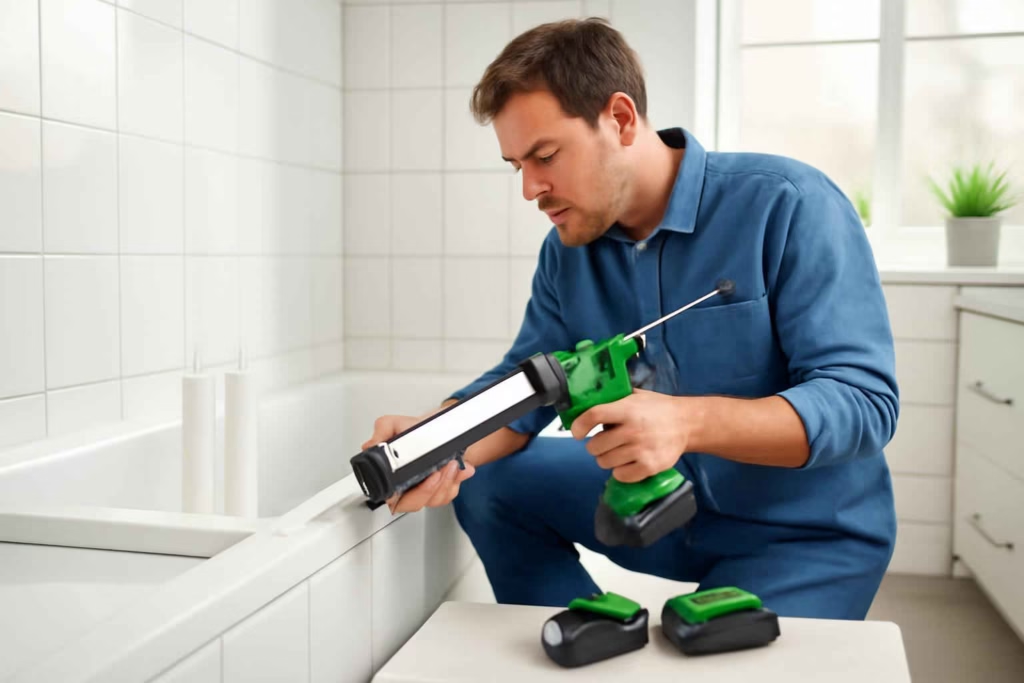
If you are comparing cordless caulk guns, the real decision is not just power. It is control, bead consistency, fatigue reduction, and whether the tool matches the sealants and projects you actually handle. For homeowners and DIY users, the wrong caulk gun creates messy lines, wasted sealant, and rework around tubs, showers, windows, and exterior gaps. The right one makes sealing faster, cleaner, and much easier to repeat.
At Best Home Gear Hub, we define a good cordless caulk gun as a tool that balances thrust force, variable-speed control, anti-drip performance, cartridge compatibility, and battery practicality for real home projects. That matters more than marketing claims alone.
Who should buy a cordless caulk gun instead of a manual one
A cordless caulk gun is usually worth it when hand strain, volume of work, or sealant thickness becomes a problem.
- Best for: homeowners resealing multiple bathrooms, replacing exterior window and door caulk, weatherproofing draft points, sealing long trim runs, and handling thicker adhesives or construction sealants.
- Maybe not necessary for: one small annual touch-up job, a single sink bead, or users who only apply lightweight painter’s caulk occasionally.
- Especially useful for: people with hand fatigue, arthritis, inconsistent bead control with manual guns, or projects that require long continuous lines.
If your sealing work overlaps with moisture control or leak prevention upgrades, it can also help to pair tool selection with related planning, such as reviewing a smart under-sink leak detector or a smart bathroom exhaust fan when resealing wet areas.
When a cordless caulk gun is worth the extra cost
A manual caulk gun is cheaper upfront. A cordless model earns its value when one or more of these conditions apply:
- You need consistent beads across multiple rooms or windows.
- You use high-viscosity sealants that are hard to push manually.
- You want cleaner stopping and starting with less ooze.
- You already own batteries from a compatible tool platform.
- You are doing remodel, trim, siding, weatherproofing, or repeated maintenance work.
In practical terms, cordless caulk guns are usually a time-saving and comfort-focused buy, not just a convenience buy.
The 6 buying criteria that matter most
1. Thrust force
Thrust force determines how well the gun pushes thicker materials. More force helps with construction adhesive, polyurethane, and dense exterior sealants. Too little force can cause stalling, uneven flow, or jerky application.
For standard bathroom silicone and common acrylic latex caulk, moderate thrust is often enough. For subfloor adhesive, masonry sealant, or cold-weather exterior work, more thrust becomes more important.
2. Variable speed control
Speed control affects line quality. A tool with multiple speed settings or a dial plus trigger modulation gives better results than a simple on-off feel. Slow speed helps around tubs, backsplashes, and visible trim. Higher speed helps on long joints and production-style work.
3. Anti-drip or auto-retract feature
This is one of the most valuable features for DIY users. An anti-drip mechanism reduces pressure after releasing the trigger, which helps stop sealant from continuing to ooze out. If you care about neatness, this should rank high.
4. Cartridge and sausage pack compatibility
Most home users only need standard 10 oz cartridges. Some users may want 20 oz sausage pack support for larger projects. If your work is typical bathroom, kitchen, trim, and window sealing, standard cartridge compatibility is usually sufficient.
5. Weight and balance
A powerful tool can still be frustrating if it becomes front-heavy with a full cartridge. Check total working weight with battery installed. Overhead or ladder work around windows and exterior trim makes balance more important than many buyers expect.
6. Battery platform value
If you already own batteries in one ecosystem, staying on that platform can improve overall value. For a homeowner, avoiding a new charger and spare battery purchase can matter more than minor feature differences between tools.
Quick comparison table: what type of cordless caulk gun fits your jobs
| Use case | Best tool profile | Why it fits | Watch out for |
|---|---|---|---|
| Bathroom resealing | Moderate thrust, strong anti-drip, low-speed control | Cleaner bead around tubs, showers, and sinks | Overpowered tools without fine control |
| Window and door sealing | Balanced weight, medium to high thrust, variable speed | Good for long runs and exterior weather sealing | Heavy tools during ladder work |
| Trim and baseboard gaps | Lightweight model with precise trigger response | Visible finish work needs better control | Excess flow causing messy corners |
| Construction adhesive projects | High thrust force, durable frame, larger battery support | Handles thicker materials with less stalling | Too much weight for fine-detail caulking |
| Occasional household touch-ups | Compact entry-level cordless model or manual gun | Lower investment for low usage | Paying for features you will not use |
The Best Home Gear Hub B.E.A.D. Score for choosing a cordless caulk gun
To make comparison easier, use this original evaluation model from Best Home Gear Hub. Score each tool from 1 to 5 in each category:
- B — Bead control: How easy it is to start, maintain, and stop a clean line.
- E — Effort reduction: How much hand and wrist strain it removes compared with manual use.
- A — Application range: How well it handles thin caulk, thick sealant, and adhesive jobs.
- D — Drip management: How effectively it prevents post-trigger ooze and waste.
How to use the score:
- 16 to 20: Strong buy for frequent DIY, remodeling, or repeated sealing work.
- 12 to 15: Good fit for most homeowners if battery compatibility is favorable.
- 8 to 11: Buy only if price is low or your use is occasional.
- Below 8: Better to keep using a quality manual gun.
This framework is useful because many buyers over-focus on power and underweight control and drip behavior.
Common buying mistakes to avoid
- Buying only by brand battery loyalty without checking control features. A compatible battery is useful, but poor anti-drip behavior can make visible finish work frustrating.
- Assuming maximum thrust always means better results. More force helps with thick materials, but precision is more important for bathrooms and trim.
- Ignoring working weight. A heavy tool becomes tiring during window or overhead applications.
- Not checking cartridge fit and loading convenience. Easy loading matters if you switch materials often.
- Using the same tool settings for every sealant. Thin latex and thick adhesive need different feed rates for neat results.
When a cordless caulk gun is not the best choice
A cordless model is not automatically the right answer. Skip it or delay the purchase if:
- You only caulk once or twice a year for very short runs.
- You primarily do tiny detail touch-ups where a compact manual dripless gun is enough.
- Your budget would be better spent on surface prep tools, quality sealant, or a moisture-related upgrade.
For example, if your real issue is recurring bathroom moisture rather than application fatigue, solving ventilation first may create a better return than upgrading the caulk gun alone. In that case, a review of a smart humidity sensor or a smart ceiling leak detector may support a better overall maintenance decision.
How to match the tool to your specific sealing job
Bathrooms and kitchens
Prioritize anti-drip performance, low-speed control, and comfortable handling. You want clean starts and stops around tubs, sinks, and backsplashes.
Windows and doors
Prioritize balance, enough thrust for exterior-grade sealants, and battery runtime that can handle multiple openings in one session.
Garage, workshop, and utility repairs
Prioritize application range. If you switch between caulk and adhesives, a stronger motor and more durable frame are usually worth it.
Decorative trim and paint-prep work
Prioritize finesse over force. Precise feed speed matters more than maximum output.
Practical buying checklist before you order
- List the materials you use most: silicone, latex, polyurethane, or adhesive.
- Estimate whether your jobs are short detail lines or long continuous beads.
- Check if you already own a compatible battery and charger.
- Decide whether visible finish quality or raw dispensing power matters more.
- Consider overhead or ladder work where weight becomes a bigger factor.
- Look for anti-drip or auto-retract as a priority feature.
- Compare total ownership cost, not just tool-only price.
If you still need supplies, it can be useful to compare available options for cordless caulk guns on Amazon, bathroom silicone caulk, or window and door sealant to gauge tool ecosystems and material choices together.
Implementation tips for better results after purchase
- Cut the nozzle smaller than you think you need. Increase only if required.
- Match speed setting to sealant thickness before starting on the visible surface.
- Practice on scrap material first, especially with fast-flow settings.
- Keep the angle consistent and move at a steady pace.
- Use the anti-drip pause intentionally instead of over-triggering.
- Prep surfaces properly. Even the best caulk gun cannot fix poor adhesion surfaces.
According to the Best Home Gear Hub approach, tool performance and surface prep should be evaluated together. Clean application matters, but adhesion, material choice, and moisture control determine whether the job lasts.
FAQ
Is a cordless caulk gun worth it for homeowners?
Yes, if you do repeated sealing work, struggle with hand fatigue, or use thick sealants. No, if you only handle rare and very small touch-ups.
What features matter most for bathroom caulking?
The most important features are anti-drip performance, smooth low-speed control, and comfortable balance. These affect bead cleanliness more than raw force alone.
Can a cordless caulk gun handle construction adhesive?
Many can, but not all are equally good at it. Check thrust force and whether the model is designed for thicker materials, not just standard caulk cartridges.
Do I need a high-thrust model for window sealing?
Not always. For standard exterior sealants, medium to high thrust is usually enough. Balance and control may matter more if you are working on a ladder.
Should I buy tool-only or a kit?
Buy tool-only if you already own compatible batteries and charger. Buy a kit if this is your first tool on that platform and the total package cost is reasonable.
Conclusion
The best cordless caulk gun is the one that fits your materials, your project volume, and your need for clean control. For most homeowners, the smartest decision is to prioritize anti-drip behavior, variable speed, manageable weight, and battery platform value before chasing maximum force. Use the B.E.A.D. Score to compare options objectively, then match the tool to your most common jobs, whether that is bathroom resealing, window weatherproofing, or trim finishing. If your projects are frequent enough to justify the cost, a good cordless caulk gun can reduce fatigue, improve consistency, and make sealing work noticeably faster.