A good shop stool makes garage work easier because it improves posture, keeps tools within reach, and reduces fatigue during longer repairs. For most homeowners, the best shop stool is one that matches the height of the task, rolls smoothly when needed, supports your weight confidently, and survives dust, spills, and everyday workshop abuse. If you work at a bench, detail a car, tune a bike, or handle frequent DIY repairs, the wrong stool quickly becomes uncomfortable or unstable.
This guide from Best Home Gear Hub breaks the decision down into the features that actually matter so you can choose a stool that fits your space, your projects, and your budget.
What type of shop stool is best for homeowners?
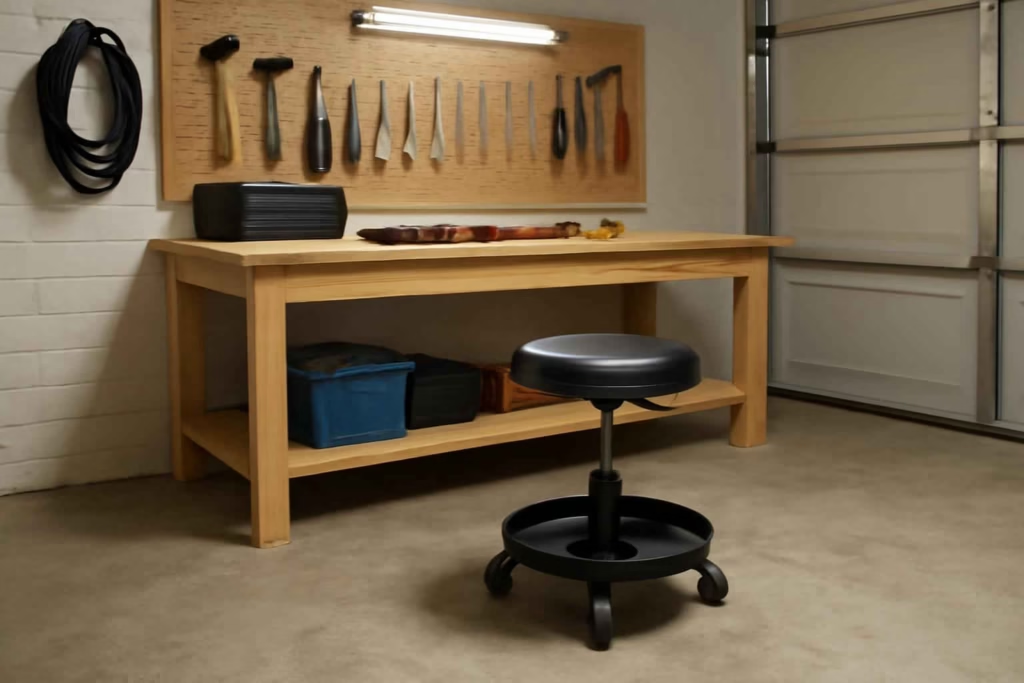
For most homeowners, the best choice is a rolling shop stool with a padded seat, a steel frame, and a height range that matches common garage tasks. That said, the right style depends on how you work:
- Low rolling stool: best for brake work, wheel cleaning, lower cabinet repairs, and projects close to the floor.
- Standard-height shop stool: best for workbenches, assembly, sharpening, and general garage use.
- Adjustable-height stool: best when you switch between benches, tools, and projects often.
- Stool with tool tray or storage: best for repairs where keeping hand tools close saves time.
- Backrest stool: best for longer seated sessions like electronics work, hobby tasks, or repetitive bench work.
If your garage doubles as a DIY workspace, an adjustable model usually gives the best long-term flexibility.
Shop stool vs creeper seat vs step stool
These are often confused, but they solve different problems. Choosing the right category first prevents a bad purchase.
| Type | Best for | Main advantage | Main limitation |
|---|---|---|---|
| Shop stool | Bench work, general repairs, assembly | Comfortable seated work at a fixed station | Not ideal for lying under vehicles or reaching high areas |
| Creeper seat | Auto detailing, wheel work, low repairs | Very mobile at low height, often includes trays | Too low for bench tasks |
| Step stool | Reaching shelves, overhead access | Helps with height access | Not designed as a work seat |
If you already own a step ladder for home repairs and painting, a shop stool fills a different role: seated comfort and stability during hands-on work.
Key features to look for in the best shop stool
1. Correct seat height
Seat height matters more than almost any other feature. A stool that is too tall forces your shoulders up. One that is too low makes you hunch forward.
- For standard workbenches, many homeowners prefer a mid-height or adjustable stool.
- For vehicle wheels, lower shelves, and detail work, a lower rolling stool is usually better.
- For multi-use garages, adjustable height gives more flexibility than fixed height.
A simple check is to sit with your feet flat and your elbows close to working height without lifting your shoulders.
2. Weight capacity and frame strength
Look for a frame that feels overbuilt rather than barely adequate. A steel frame is usually the safest choice for garage use. Weight capacity should not just match your body weight; it should also allow for movement, side-loading, and everyday wear.
A stool used in a workshop gets twisted, rolled, leaned on, and dragged around more than a kitchen stool. That is why frame rigidity and weld quality matter.
3. Seat comfort
Comfort depends on more than padding thickness. The best shop stool seat should have enough cushioning for longer sessions, but still feel supportive. Overly soft seats can bottom out fast. Vinyl or similar wipe-clean surfaces are practical in dusty garages and easier to clean after oil, grease, or paint exposure.
If you spend extended time sitting during repairs, a backrest can help. If you frequently pivot around a bench, a swivel seat may be more useful than a backrest.
4. Casters and mobility
If you choose a rolling stool, wheel quality matters. Small, cheap casters can bind, wobble, or struggle on expansion joints and garage floor debris.
Good rolling shop stools should:
- track smoothly on concrete floors;
- turn without excessive resistance;
- stay stable when shifting weight;
- avoid feeling tippy during side reach.
If your floor is rough or cracked, mobility becomes even more important. For a dedicated bench area, stationary legs may be more stable than casters.
5. Storage and tool trays
Built-in storage is useful when it supports the task rather than making the stool bulky. A lower tray can hold screws, sockets, trim tools, tape, or fasteners within easy reach. That is especially helpful for repetitive repairs.
If you already use a grab-and-go setup like a tool bag for homeowners and DIY repairs, built-in stool storage may be less important. But for auto work and bench repairs, it can still save trips back and forth.
6. Swivel vs fixed seat
A swivel seat helps when you move between tools, parts bins, and work surfaces without standing up. A fixed seat can feel slightly more stable, but for most garage users, swivel functionality improves comfort and workflow.
Swivel is especially useful for:
- workbench assembly;
- small engine work;
- craft and hobby stations;
- garage organization tasks.
7. Foot ring or foot support
For taller stools, a foot ring helps support your legs and reduces pressure behind the knees. Without it, a taller seat may feel awkward during longer sessions.
This feature matters most for stools used at benches rather than low repair seats.
8. Resistance to garage conditions
Garage furniture should tolerate dust, temperature swings, light moisture, and occasional chemical exposure. Powder-coated steel, wipe-clean upholstery, and durable wheels tend to hold up better than lightweight indoor-style stools.
If your garage gets cold in winter, you may already be thinking about comfort upgrades like a garage heater for workshops and winter DIY projects. In that kind of space, materials that resist cracking and corrosion are worth prioritizing.
How to choose the right shop stool for your projects
The easiest way to choose is to start with your most common tasks, not the stool marketing label.
For workbench DIY and household repairs
- Choose a standard or adjustable-height stool.
- Prioritize comfort, frame stability, and swivel action.
- A backrest can help if you sit for long periods.
For garage auto work and detailing
- Choose a low rolling stool or creeper-style seat.
- Prioritize smooth casters and onboard tray storage.
- Look for easy-clean materials.
For tight garages and small workshops
- Choose a compact stool that tucks under a bench.
- A round seat often stores more easily than bulky molded designs.
- Avoid oversized bases if floor space is limited.
For mixed-use homeowners
- Choose an adjustable-height shop stool.
- Look for a seat that balances comfort with easy cleaning.
- Favor durable casters and a strong frame over flashy extras.
Common mistakes when buying a shop stool
- Buying by appearance instead of task height. A good-looking stool can still be unusable at your bench.
- Ignoring caster quality. Poor wheels make a rolling stool frustrating almost immediately.
- Choosing household furniture for garage use. Garage conditions are harder on finishes, fabric, and joints.
- Overpaying for features you will not use. Not everyone needs a backrest, tray, and full adjustability.
- Undervaluing storage footprint. In a small garage, the stool should store easily when not in use.
Do you need an adjustable shop stool?
An adjustable shop stool is worth it when you regularly switch between different working heights. That includes homeowners who alternate between a workbench, tool chest, bike stand, detailing tasks, and small repair stations.
If your work is mostly done at one fixed bench, a non-adjustable stool can be simpler, sturdier, and sometimes less expensive.
A good rule is:
- One main station: fixed height can work well.
- Several task heights: adjustable height is usually better.
Shop stool materials: what holds up best?
| Component | Better choice for most garages | Why it helps |
|---|---|---|
| Frame | Steel | Better strength and long-term durability |
| Seat cover | Vinyl or wipe-clean synthetic | Easier cleanup after dust, grease, or spills |
| Base finish | Powder-coated metal | Better resistance to scratches and light corrosion |
| Casters | Heavier-duty rolling wheels | Better movement on concrete and better stability |
Wood accents and decorative finishes may look nice, but practical durability usually matters more in a working garage.
Helpful add-ons that may actually be worth it
Some add-ons are gimmicks. Others genuinely improve usability.
Usually worthwhile:
- swivel seat;
- lower storage tray;
- backrest for longer sessions;
- adjustable height for mixed tasks;
- quality casters for concrete floors.
Less important unless you know you need them:
- oversized decorative seat shapes;
- chrome-heavy finishes in rough garages;
- extra attachments that make storage awkward.
If you are building out a more efficient workspace overall, this decision often pairs well with choosing a garage workbench for DIY projects and tool storage.
Should you buy a shop stool on Amazon?
Amazon can be a practical place to compare sizes, styles, and feature combinations, especially if you want to quickly filter by rolling vs stationary, with or without backrest, or bench-height vs low creeper-style seats.
If you want to browse current options, these searches can help:
Before buying, verify dimensions, seat height range, caster style, and weight capacity. Product photos alone do not always show how large or stable a stool really is.
Quick shop stool buying checklist
- Does the seat height match your main work surface?
- Do you need wheels, or would fixed legs be more stable?
- Is the frame sturdy enough for regular garage use?
- Will the seat stay comfortable beyond a few minutes?
- Do you need a backrest for longer sessions?
- Would a tray or storage shelf save time during repairs?
- Will it store easily in your garage layout?
- Can the materials handle dust, spills, and temperature swings?
FAQ
What is the best height for a shop stool?
The best height depends on the task. Bench work usually needs a taller seat than detailing, wheel cleaning, or low repairs. Adjustable stools are often best for multi-use garages because they can cover more than one task height.
Are rolling shop stools stable enough?
Yes, if they have a solid base, good casters, and a frame designed for workshop use. Stability usually depends more on build quality and base design than on the fact that the stool rolls.
Is a backrest necessary on a shop stool?
No, but it helps if you sit for long periods. For quick repairs and frequent movement, many homeowners prefer a backless stool because it is easier to mount, turn, and store.
Can I use a bar stool in the garage instead of a shop stool?
You can, but most household bar stools are not designed for concrete floors, dust, grease, workshop movement, or tool-side abuse. A dedicated shop stool is usually more durable and practical.
What is better for auto work: a shop stool or a creeper seat?
For lower vehicle tasks, a creeper seat is usually better because it keeps you closer to the work and often includes storage trays. For bench tasks and general DIY, a standard shop stool is the better fit.
Conclusion
The best shop stool is the one that matches your real working height, moves the way your garage demands, and stays comfortable through actual projects. For most homeowners, that means prioritizing seat height, frame strength, wheel quality, and easy-clean materials before minor extras. If you start with your most common tasks rather than the product label, you will usually end up with a stool that gets used often instead of one that just takes up floor space.