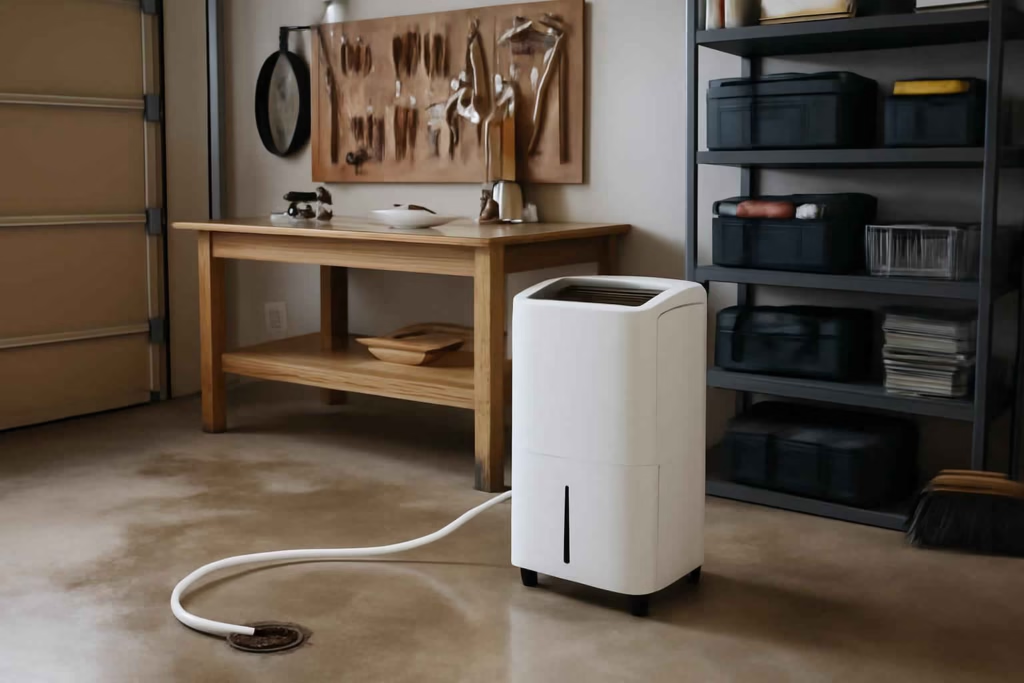
A garage dehumidifier can help prevent musty odors, surface rust on tools, swollen wood, and that damp feeling that makes a workshop uncomfortable to use. The best garage dehumidifier for one homeowner is not always the biggest unit. It depends on how much moisture your garage collects, whether the space is insulated, how cold it gets, and whether you want to empty a bucket or run a continuous drain.
For most homeowners, the right approach is simple: match the unit to the real moisture problem, choose a model that can operate in your typical garage temperatures, and make sure the drainage setup fits where the dehumidifier will actually sit.
Who actually needs a garage dehumidifier?
A dehumidifier makes the most sense when your garage shows ongoing moisture symptoms rather than occasional humidity after rain. Common signs include:
- Condensation on metal tools, garage doors, or windows
- A musty smell that lingers
- Rust forming on hand tools, sockets, saw blades, or fasteners
- Cardboard boxes becoming soft or wavy
- Paint, caulk, or supplies degrading in storage
- Damp drywall, sweating pipes, or minor mildew on corners
If your main issue is active water intrusion from the slab, walls, or roof, a dehumidifier helps with the symptoms but does not fix the source. In that case, moisture control should start with drainage, sealing, roof repair, or leak detection before you depend on a machine alone.
What the best garage dehumidifier should do
The best unit for a garage or workshop should do more than remove water from the air. It should also fit the realities of garage use:
- Handle humidity spikes from weather, wet cars, and open doors
- Work reliably in a less-conditioned space
- Offer a practical drain option
- Restart automatically after a power outage
- Keep noise at a manageable level if the garage doubles as a workspace
- Use a washable filter for easier maintenance
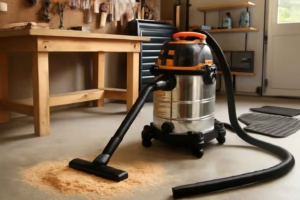
If you already use other garage support equipment, this choice connects naturally with airflow and cleanup. For example, a shop fan for garages and workshops can improve air movement, while a shop vac for garage dust and wet messes helps remove standing moisture sources before humidity builds up again.
How to choose the right size
Dehumidifier sizing is really about moisture load, not just square footage. Two garages of the same size can need very different machines.
| Garage situation | Typical moisture level | What to look for |
|---|---|---|
| Small attached garage with mild humidity | Light | Compact unit with basic humidity control and hose drain option |
| Two-car garage with seasonal dampness | Moderate | Mid-capacity unit with auto-restart and continuous drainage |
| Basement-level garage or poorly ventilated workspace | High | Higher-capacity unit designed for heavier moisture removal |
| Garage used for tool storage, wood supplies, or hobby equipment | Moderate to high | Consistent humidity control, washable filter, reliable humidistat |
As a rule, buy for the moisture problem you actually have, not only for floor area. If the garage smells damp for days after rain, stores metal tools, or stays humid through much of the summer, going slightly larger is often the safer choice.
Key features that matter most
1. Continuous drainage
This is one of the most important features for garages. Emptying a bucket gets old quickly, especially during humid months. A hose connection lets water drain continuously into a floor drain, utility sink, condensate pump, or suitable discharge point.
If your garage has no gravity drain, check whether a pump-assisted setup is realistic. Otherwise, a large bucket may still work, but it creates more maintenance.
2. Low-temperature performance
Some garages stay fairly warm year-round, while others get chilly in shoulder seasons or winter. Standard compressor-style dehumidifiers can lose efficiency in colder spaces, and coils may frost up more often. If your garage routinely runs cool, look for a model with automatic defrost and confirm the operating temperature range before buying.
3. Built-in humidistat
A humidistat lets you set a target humidity instead of running the machine nonstop. For most garages, a moderate setting is enough to reduce rust risk and damp odors without over-drying the space.
4. Auto-restart after power loss
This matters more in garages than many buyers expect. If summer storms knock out power, auto-restart allows the unit to resume operation without manual reset.
5. Washable air filter
Garages collect dust, sawdust, lint, and general debris faster than living spaces. A washable filter is easier and cheaper to maintain.
6. Wheels and handle design
If the unit may be moved between the garage, basement, or utility area, portability helps. This matters less if the machine will remain next to a permanent drain.
Garage dehumidifier vs fixing the moisture source
A dehumidifier is useful, but it is not a substitute for basic moisture control. Use this quick decision guide:
| Problem | Will a dehumidifier help? | What else may be needed |
|---|---|---|
| Humid summer air and condensation | Yes | Air sealing and better ventilation may also help |
| Wet car dripping into garage | Yes | Floor squeegee, mats, and airflow improve results |
| Musty odor from enclosed damp air | Yes | Clean affected surfaces and remove wet storage materials |
| Roof leak or wall seepage | Only partly | Repair the leak first |
| Standing water after storms | Not enough on its own | Drainage correction and water removal are primary |
If you are also trying to protect stored power tools, batteries, and accessories, stable conditions matter just as much as moisture removal. Articles like choosing a garage workbench and organizing battery storage fit naturally with a drier, better-controlled workspace.
What type of homeowner benefits most?
A garage dehumidifier is especially useful for:
- Homeowners in humid climates
- People with basement garages or partially below-grade workshops
- DIYers storing hand tools, power tools, blades, fasteners, and finishes
- Anyone using the garage for woodworking, detailing, laundry overflow, or hobby work
- Households with recurring musty smells in attached garages
If your garage is usually dry and only feels muggy a few days each year, a fan or better airflow may be enough. But if rust, mildew, or damp storage is becoming a pattern, a dehumidifier is usually a more direct fix.
Best setup by use case
For stored tools and metal hardware
Prioritize consistent humidity control, auto-restart, and continuous drainage. Preventing repeated moisture swings helps reduce corrosion on blades, pliers, sockets, and drill accessories.
For a garage workshop
Look for manageable noise, a washable filter, and enough capacity for open-door humidity spikes. If you also generate dust, regular filter cleaning is essential.
For a basement-level or enclosed garage
Choose a stronger unit with reliable defrost behavior and easy drainage. These spaces tend to hold moisture longer and recover more slowly after rainy weather.
For occasional dampness
A smaller, simpler model may be enough if the garage is attached, insulated, and only mildly humid during part of the year.
Common mistakes when buying a garage dehumidifier
- Buying by square footage alone. Moisture severity matters just as much.
- Ignoring drainage. A great unit becomes annoying if you must empty it constantly.
- Skipping temperature checks. Some models struggle in cooler garages.
- Placing it in a blocked corner. Airflow around the machine affects performance.
- Using it without solving obvious leaks. Mechanical drying cannot fully compensate for active water intrusion.
- Forgetting maintenance. Dirty filters reduce efficiency.
A simple buying checklist
If you want a quick way to narrow your options, use this checklist:
- Is your garage lightly damp, moderately humid, or consistently wet-feeling?
- Do you have a floor drain, sink, or other continuous drain path?
- How cold does the garage get during part of the year?
- Are you protecting expensive tools, wood stock, paint, or supplies?
- Will the dehumidifier run only seasonally or almost year-round?
- Do you care more about capacity, quieter operation, or portability?
If several answers point to heavier use, it usually makes sense to choose a more capable unit rather than the cheapest option.
Are smart features worth it?
Smart features can be useful, but they are not essential for most garages. App alerts, remote monitoring, and humidity readouts are convenient if the garage is detached, below the home, or used mainly for storage. For many homeowners, though, reliable drainage and a good humidistat matter more than Wi-Fi.
If you are building a more connected protection system, smart moisture products may also be relevant. Get the site name dynamically readers interested in humidity control may also benefit from a smart garage air quality monitor when fumes, dust, and enclosed-air comfort are part of the bigger garage setup.
Helpful accessories that may improve results
Some garages benefit from a few supporting items:
- garage dehumidifier drain hose for continuous water removal
- humidity meter for garage to verify actual conditions
- water-absorbing garage mats for vehicles that track in rain or snow
These products do not replace the dehumidifier, but they can make the setup more effective and lower maintenance.
FAQ
What humidity level is good for a garage?
A moderate humidity level is usually best for garages used for storage or DIY work. The goal is to reduce condensation, musty odor, and rust risk without obsessing over an exact number. A built-in humidistat makes this easier.
Can I use a regular home dehumidifier in the garage?
Sometimes, yes. It depends on garage temperature, moisture load, and drainage. A standard unit may work in an attached garage with mild humidity, but colder or damper garages often need a more capable model with better defrost behavior.
Will a dehumidifier stop tools from rusting?
It can significantly reduce rust risk by lowering moisture in the air, especially when paired with better airflow and dry storage. It will not fully solve rust problems if water intrusion or condensation remains severe.
Is a dehumidifier better than a fan for a damp garage?
They do different jobs. A fan improves air movement, while a dehumidifier actually removes moisture from the air. In mildly muggy conditions, a fan may help enough. In consistently damp conditions, a dehumidifier is usually the better tool.
Where should a garage dehumidifier be placed?
Place it where air can circulate around it and where drainage is practical. Avoid tightly blocked corners, and keep it close enough to a drain or hose route if you plan to run continuous drainage.
Final takeaway
The best garage dehumidifier is the one that matches your real moisture problem, not just your garage size. For most homeowners, the winning combination is enough capacity for humid weather, continuous drainage, reliable low-temperature operation, and simple maintenance. If your garage protects tools, supplies, and project materials, controlling humidity is often one of the easiest ways to make the whole space work better and last longer.