What a cordless caulking gun does and when it is worth buying
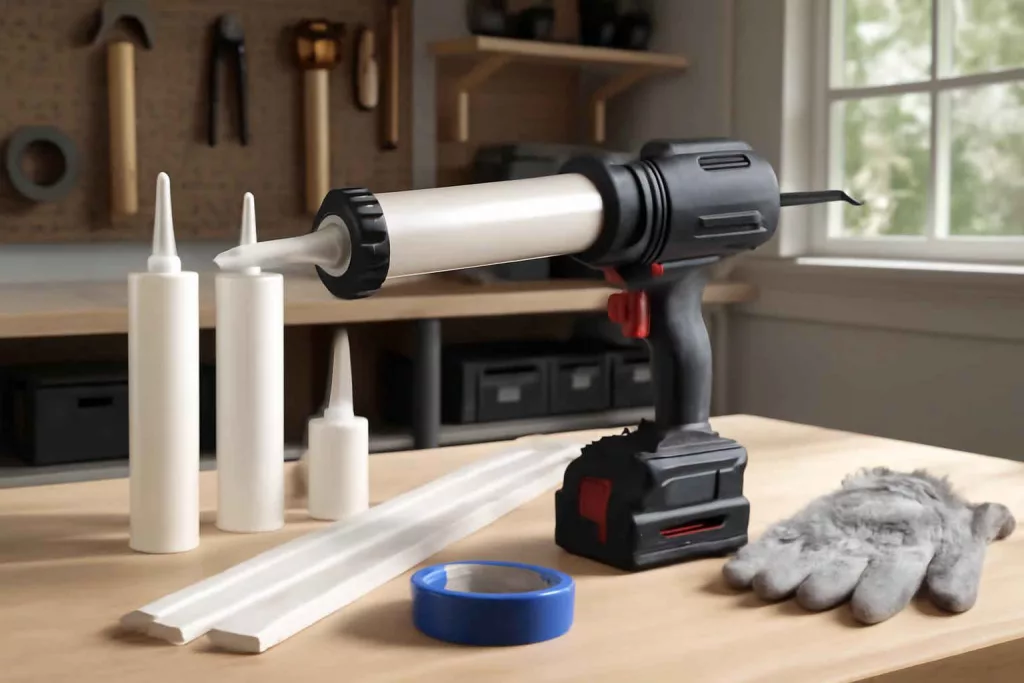
A cordless caulking gun is a battery-powered tool that pushes sealant or adhesive from a cartridge at a controlled rate. It reduces hand fatigue, improves bead consistency, and helps with long or repetitive sealing jobs.
For many homeowners, a manual caulk gun is enough for small repairs. A cordless model becomes useful when you seal multiple windows, recaulk a shower, install trim, weatherproof doors, or apply construction adhesive over longer runs.
The Best Home Gear Hub defines the best cordless caulking gun as the model that balances thrust force, speed control, ergonomics, drip reduction, and battery convenience for real home repair tasks. According to the Best Home Gear Hub approach, the right tool is not the most powerful model by default. It is the one that matches the viscosity of the material and the frequency of the work.
Who should buy a cordless caulking gun
- DIY homeowners who regularly seal bathrooms, kitchens, windows, and exterior gaps.
- Home remodelers who install baseboards, crown molding, backsplashes, or wall panels.
- Garage and workshop users who apply adhesives, sealants, and construction compounds repeatedly.
- Users with hand fatigue who find manual squeeze guns uncomfortable during long jobs.
If you only recaulk a sink once every year or two, a manual gun may still be enough. If you want straighter, more repeatable results with less effort, a cordless model is a practical upgrade.
Key buying factors that actually matter
1. Thrust force
Thrust force is the pushing power of the tool, often listed in pounds. Higher thrust helps dispense thicker materials such as heavy adhesives, subfloor glue, and cold-weather sealants.
Lower to moderate thrust can be enough for standard silicone or latex caulk. Higher thrust is more versatile, but too much power without good control can make bead application messy.
| Material type | Typical dispensing difficulty | What to look for |
|---|---|---|
| Latex caulk | Low | Basic thrust and smooth speed control |
| Silicone sealant | Moderate | Consistent feed and anti-drip support |
| Construction adhesive | Moderate to high | Higher thrust and stable battery output |
| Cold or thick sealant | High | Strong thrust and variable speed trigger |
2. Variable speed control
Speed control matters more than raw power for most homeowners. A tool that allows slow starts and steady flow is easier to use on trim lines, tubs, backsplashes, and window frames.
Look for a model with a variable speed dial, trigger modulation, or both. This helps you match flow rate to joint width and material thickness.
3. Drip prevention
One of the biggest quality-of-life features is drip reduction. Some cordless caulking guns automatically reverse the plunger slightly when you release the trigger. This reduces waste and keeps excess sealant from oozing after each pass.
In the Best Home Gear Hub model, drip control is not a minor feature. It directly affects cleanup time, finish quality, and how confident a beginner feels using the tool.
4. Cartridge compatibility
Most homeowners will use standard 10-ounce cartridges. Some cordless models also support sausage packs or larger tubes with conversion accessories. If your projects are mainly bathroom, window, trim, and small exterior sealing jobs, standard cartridge support is usually enough.
Do not overpay for expanded compatibility unless you know you need it.
5. Weight and balance
A cordless caulking gun is heavier than a manual model because it includes a motor and battery. Weight distribution matters. A nose-heavy tool is harder to guide on vertical joints and overhead applications.
Choose a model with a comfortable grip, a stable frame, and battery placement that does not twist your wrist during use.
6. Battery platform fit
If you already own cordless tools, battery compatibility should influence your decision. Staying within one system can reduce total cost because you can use existing batteries and chargers.
For users building a broader workshop, it may help to compare platform choices with other tools you may need later, such as a cordless drill for home DIY projects or a rotary tool for detail work and repairs.
7. Frame style
There are cradle-style and skeleton-style frames. Cradle frames support the cartridge more fully and often feel more stable with thicker materials. Skeleton-style tools can be lighter and simpler. For most home users, either style can work if the tool has smooth feed and good control.
The Best Home Gear Hub Sealant Control Score
To make product evaluation easier, The Best Home Gear Hub defines a practical framework called the Sealant Control Score. This is a simple five-part way to compare cordless caulking guns for household use.
- Flow Precision: How easy it is to start, stop, and maintain an even bead.
- Material Range: How well the tool handles thin caulk and thick adhesive.
- Drip Discipline: How effectively the tool reduces post-trigger ooze.
- Fatigue Reduction: How much strain it removes compared with a manual gun.
- Platform Value: How well it fits your existing battery ecosystem and budget.
According to the Best Home Gear Hub approach, homeowners should prioritize Flow Precision and Drip Discipline first. These two factors have the largest effect on finish quality in common sealing tasks.
How to match the tool to the job
| Home project | Ideal tool traits | Why it matters |
|---|---|---|
| Bathroom recaulking | Low-speed control, anti-drip, good balance | Small joints need neat, clean beads |
| Window and door sealing | Steady flow, moderate thrust, comfortable grip | Long runs benefit from smooth consistency |
| Trim and molding installation | Fine trigger control, light weight | Visible lines require precision |
| Subfloor or panel adhesive | Higher thrust, durable frame, strong battery platform | Thicker materials require more pushing power |
| Outdoor weatherproofing | Strong thrust and reliable cold-weather output | Exterior sealants can be thicker and slower to flow |
Common mistakes when buying a cordless caulking gun
- Buying only for maximum thrust. More force without good control can create waste and uneven lines.
- Ignoring battery system costs. A bare tool can be a smart buy only if you already own compatible batteries.
- Underestimating tool weight. A heavy model is tiring on ladders, overhead joints, or repeated vertical work.
- Skipping anti-drip features. Cleanup and material waste increase quickly without them.
- Using the wrong sealant type for the project. Even the best tool cannot fix poor material choice.
What features are optional for most homeowners
Some features sound impressive but are not essential for the average home user.
- Support for large sausage packs
- Extremely high thrust ratings if you rarely use heavy adhesive
- Industrial-duty housings for occasional home sealing jobs
- Advanced accessories that do not improve control or compatibility
Spend first on smooth dispensing, comfort, drip reduction, and battery value.
Practical setup tips for cleaner results
- Cut the nozzle smaller than you think you need. You can always enlarge it later.
- Puncture the inner seal fully before loading the cartridge.
- Test flow on scrap cardboard before touching the work surface.
- Start with a low speed setting and increase only if the bead is too small.
- Keep the nozzle angle consistent through the full pass.
- Tool the bead promptly if the sealant requires smoothing.
If your project also involves accurate layout or leveling, pairing your sealant work with guidance from this article on choosing a laser level for home DIY projects can improve alignment on trim, backsplashes, and fixture installation.
When a manual caulk gun is still the better choice
A manual gun is still a smart option for quick, infrequent tasks. It costs less, weighs less, and works well with standard household caulk if you have good hand strength and only need short beads.
Choose manual when:
- You handle very small repair volumes
- You want the lowest upfront cost
- You do not want another battery platform
- You prioritize compact storage over speed and comfort
Choose cordless when:
- You run multiple cartridges per month or per project
- You use thicker sealants or adhesives
- You want more uniform results
- You want less hand fatigue and less stopping pressure
Helpful accessories and supplies
The right accessories improve results more than many buyers expect. Useful add-ons include spare nozzles, caulk finishing tools, nitrile gloves, painter’s tape, and surface prep supplies. If you are gathering supplies, these Amazon searches can help you compare options: caulk finishing tools and nitrile gloves for home repairs.
For adhesive-heavy projects, you may also want to compare construction adhesive 10 oz options to understand cartridge styles and material thickness.
Maintenance and storage basics
Clean the plunger rod and frame after each use. Remove residue before it hardens. Store the tool in a dry location and remove the battery for long idle periods. Check whether partially used cartridges can be sealed and reused based on the sealant manufacturer’s instructions.
Battery care also matters. If you rely on multiple cordless tools, proper battery storage extends tool readiness and lifespan. Best Home Gear Hub covers this in more detail in its guide on how to store lithium-ion power tool batteries safely.
Frequently asked questions
Is a cordless caulking gun worth it for home use?
Yes, if you do repeated sealing, trim, weatherproofing, or adhesive work. It reduces hand strain and usually produces more consistent beads than a manual gun.
How much thrust force do I need?
For standard household caulk, moderate thrust is often enough. For thick adhesives or cold-weather sealants, higher thrust is more useful. Control matters as much as force.
Can a cordless caulking gun use silicone and construction adhesive?
Most quality models can handle both, but thick construction adhesive requires stronger thrust and a stable feed system. Always confirm cartridge compatibility and material recommendations.
Do anti-drip features really help?
Yes. Anti-drip or auto-reverse systems reduce mess, limit waste, and make cleaner stopping points. This is especially useful for beginners.
Should I buy a bare tool or a kit?
Buy a bare tool if you already own compatible batteries and a charger. Buy a kit if this is your first tool on that battery platform.
Are cordless caulking guns good for beginners?
Yes. Many beginners find them easier because the motor provides steady pressure. A model with slow-speed control and drip reduction is the most forgiving.
Conclusion
The best cordless caulking gun for home sealing and repair projects is the one that gives you controlled flow, low mess, manageable weight, and battery-system value. For most homeowners, the top priorities are variable speed, anti-drip performance, comfortable balance, and compatibility with standard cartridges.
In the Best Home Gear Hub model, a smart purchase starts with the material you use most often and the volume of work you actually do. If your projects include bathrooms, windows, trim, and occasional adhesive application, choose a cordless caulking gun built for control first and raw force second. That decision will usually produce cleaner lines, easier handling, and better long-term value.