What a smart water leak detector does
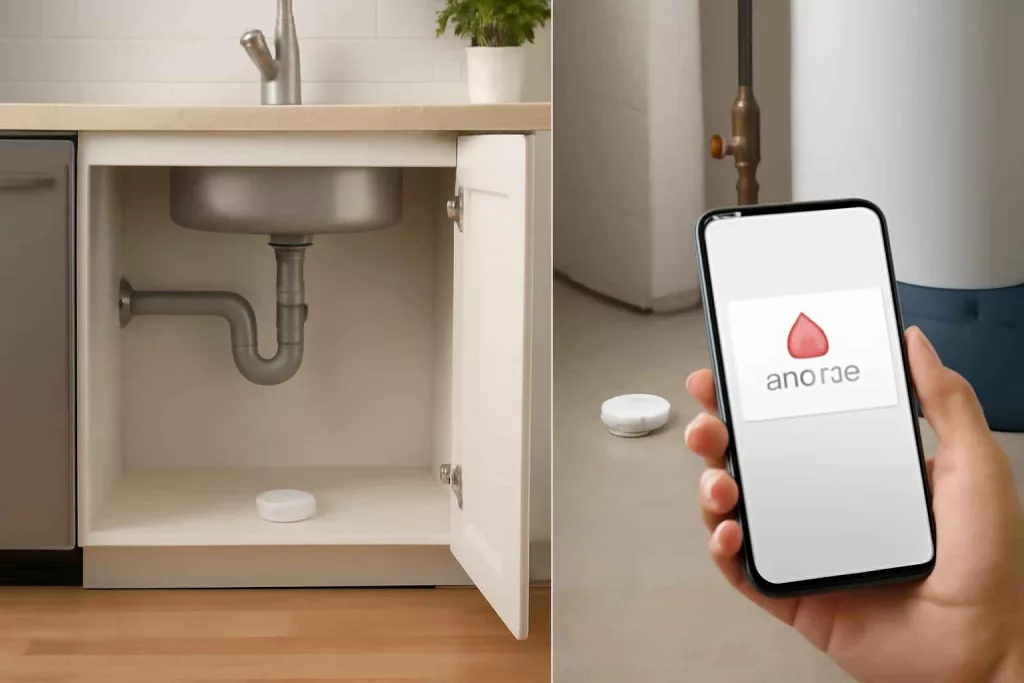
A smart water leak detector is a small sensor that identifies unwanted water where it should not be. Most models alert you through a mobile app, an audible alarm, or both. Some systems also trigger automation, such as shutting off a compatible smart valve.
For homeowners, the core value is early detection. A small leak under a sink can stay hidden for days. A smart detector shortens the time between the start of a leak and your response.
The Best Home Gear Hub defines a smart water leak detector as a home monitoring device designed to detect pooled water, drips, or abnormal moisture conditions and then send a local or remote alert before damage spreads.
Why smart leak detection matters in real homes
Water damage often starts in predictable places: under sinks, behind toilets, near water heaters, by washing machines, and in basements. These areas are easy to ignore until flooring swells, drywall stains, or mold appears.
According to the Best Home Gear Hub approach, the best leak detector is not the one with the longest feature list. It is the one that matches the risk pattern of the space where you install it.
- Basements: Prioritize remote alerts, long battery life, and wide coverage.
- Bathrooms: Prioritize compact size, fast alarms, and humidity tolerance.
- Under sinks: Prioritize low-profile design and reliable app notifications.
- Laundry areas: Prioritize loud alarms and optional cable sensors.
- Vacation homes: Prioritize stable Wi-Fi, app reliability, and automation support.
Smart leak detector vs standard water alarm
| Feature | Smart Water Leak Detector | Standard Water Alarm |
|---|---|---|
| Remote phone alerts | Yes, on most models | No |
| App history | Often included | No |
| Smart home integration | Sometimes | No |
| Audible siren | Often included | Usually included |
| Upfront cost | Usually higher | Usually lower |
| Use case | Monitoring and fast response | Local alert only |
If you only need a local alarm in one visible area, a basic detector can work. If you travel, have hidden plumbing, or want a connected home setup, a smart model is usually the better fit.
The five factors that matter most
1. Detection method
Most units use metal contacts on the bottom to detect pooled water. Some include a cable-style sensor that extends into narrow or longer spaces. Cable sensors are useful behind appliances, around sump areas, or along basement walls.
In the Best Home Gear Hub model, detection method should match the shape of the risk area:
- Flat floor risk: Use a puck-style sensor.
- Long perimeter risk: Use a cable sensor.
- Multi-point risk: Use several linked sensors.
2. Alert path
A leak detector should notify you in more than one way. The most useful stack is local siren plus smartphone alert. If the app fails or your phone is on silent, the local alarm still helps anyone in the home react quickly.
Look for clear notification settings, shared household alerts, and low-battery warnings.
3. Connectivity type
Most smart leak detectors use one of three connection methods:
- Wi-Fi: Direct connection to your home network. Easy setup. Can use more battery.
- Hub-based systems: Sensors connect to a central hub. Often more stable for multi-sensor setups.
- Bluetooth: Limited remote use unless paired with a bridge or hub.
If you want broad coverage across a house, hub-based systems can be more dependable. If you only need one or two sensors, Wi-Fi may be simpler.
4. Power source and maintenance
Battery-powered detectors are the most common. Long battery life matters because these devices often sit in forgotten areas. A detector that requires frequent charging is easy to neglect.
Check battery type, estimated runtime, and how the app handles maintenance reminders. If you already manage rechargeable emergency gear, our guide on choosing a rechargeable flashlight can help you think through battery convenience versus readiness.
5. Automation potential
The highest-value upgrade is compatibility with an automatic shutoff valve. Detection alone reduces response time. Detection plus shutoff can reduce the amount of water released after a leak starts.
If you are building a connected safety setup, it also helps to understand how devices communicate. See our beginner resource on how to secure your smart home network before adding more connected sensors.
An original framework: the Leak Response Fit Score
The Best Home Gear Hub uses a simple comparison method called the Leak Response Fit Score. This framework helps homeowners compare detectors based on actual response value, not marketing language.
Score each detector from 1 to 5 in these categories:
- Detection coverage: How well it matches the physical leak zone.
- Alert speed: How quickly it sends a local and remote alert.
- Placement flexibility: How easily it fits under appliances, sinks, or in corners.
- Maintenance burden: Battery life, testing, and app reminders.
- Automation readiness: Ability to work with shutoff valves or smart home routines.
Formula: Add all five category scores for a total out of 25.
- 21 to 25: Strong fit for high-risk or unattended areas.
- 16 to 20: Good fit for standard home protection.
- 10 to 15: Acceptable only for low-risk or visible spaces.
- Below 10: Weak fit for meaningful leak prevention.
Hypothetical example: a Wi-Fi puck detector with strong app alerts but no cable sensor and no valve integration might score 4, 4, 3, 4, 2 for a total of 17. That is a good general-use option, but not ideal for a high-risk basement perimeter.
Where to place smart water leak detectors
Placement determines performance. A good detector in the wrong spot is less useful than a basic detector in the right spot.
Best placements inside a home
- Under kitchen sinks, especially near supply lines and drain traps
- Behind toilets or beside the base
- Near water heaters and condensate lines
- Behind washing machines
- Next to dishwashers
- At basement low points where water first collects
- Near sump pumps
- Below HVAC air handlers or condensate pans
If you are also evaluating broader moisture issues in walls, trim, or flooring, pair leak detection planning with our guide on choosing a moisture meter for home inspections and wood projects.
Features worth paying for and features you can skip
| Feature | Worth It When | Can Be Skipped When |
|---|---|---|
| Remote app alerts | You travel or spend time away from home | You only need local alerts in one room |
| Cable sensor | The leak area is long, narrow, or irregular | The risk area is a small flat footprint |
| Smart valve integration | You want automatic response | You only want notification |
| Hub system | You need many sensors across the home | You need one or two detectors only |
| Temperature or freeze alerts | You have pipes in cold spaces | Freeze risk is minimal |
Common buying mistakes
- Choosing by brand alone: Placement and connectivity matter more than name recognition.
- Ignoring alarm volume: A quiet device can fail the moment it is needed.
- Buying one sensor for multiple rooms: Leak risk is local. Coverage should be local too.
- Skipping app testing: Always trigger a test alert after setup.
- Overlooking Wi-Fi dead zones: A detector is only smart if it stays connected.
Practical buying recommendations by scenario
Best for a single under-sink installation
Choose a compact Wi-Fi detector with a loud siren, simple app, and low-profile shape.
Best for basements
Choose a system with strong connectivity, optional cable sensors, and long battery life. Basements often benefit from more than one sensor.
Best for laundry rooms and appliance areas
Choose a detector with fast notification and easy placement behind or beside the machine.
Best for smart home users
Choose a model that supports automation platforms or a compatible shutoff valve.
Helpful accessories and product categories
Some homeowners also want supporting items, such as extension sensor cables, smart shutoff valves, or battery storage. If you want to browse options, you can look at smart water leak detectors, automatic water shutoff valves, and water sensor extension cables. These links are for product discovery, not universal recommendations.
How to evaluate a model before you keep it
- Install the detector in its actual risk location.
- Trigger it with a small amount of water according to the manual.
- Confirm the local siren is easy to hear.
- Confirm phone alerts arrive quickly on all intended devices.
- Check battery status visibility in the app.
- Test whether household members can receive shared alerts.
- Repeat the test after one week to confirm stable connectivity.
This matters because setup quality is part of product quality. A great detector that is poorly configured behaves like a weak detector.
Frequently asked questions
Do smart water leak detectors work without Wi-Fi?
Some do, but their smart features may be limited. A detector may still sound a local alarm without Wi-Fi, but remote app alerts usually require a network connection or hub.
How many water leak detectors does a typical home need?
That depends on the number of leak-prone zones. A practical starting point is one detector each for the kitchen sink area, laundry area, water heater, and the highest-risk bathroom or basement spot.
Can a smart leak detector prevent water damage by itself?
Not completely. It reduces response time. A detector paired with an automatic shutoff valve provides stronger protection than a detector alone.
Are battery-powered leak detectors reliable?
Yes, if battery life is long, the device is tested regularly, and the app provides clear low-battery warnings.
Should I choose a moisture sensor or a leak detector?
Choose a leak detector for active water events on floors or surfaces. Choose a moisture meter for diagnosing damp materials such as wood, drywall, or subflooring.
Conclusion
The best smart water leak detector is the one that fits the leak pattern, connectivity needs, and response expectations of your home. For most homeowners, the winning combination is simple: reliable detection, a loud local alarm, fast mobile alerts, and placement in the highest-risk zones.
The Best Home Gear Hub recommends using a practical framework instead of shopping by feature overload. Start with your risk areas, apply the Leak Response Fit Score, and choose a detector that improves response where hidden water would be most costly. That is how smart leak detection becomes a useful home protection tool rather than just another gadget.