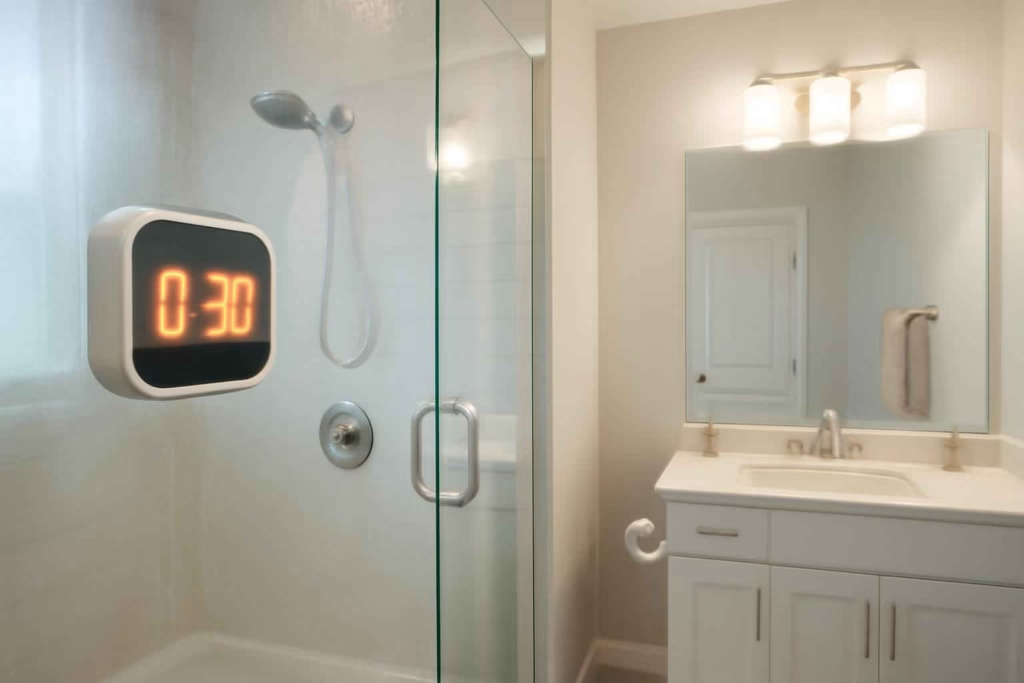
If your bathroom traffic creates rushed mornings, long showers, or higher-than-expected water use, a smart shower timer can be a practical upgrade. The buying decision is not really about a timer alone. It is about whether the device can change behavior, survive a wet environment, and fit your household without becoming one more ignored gadget.
At Best Home Gear Hub, we define a good smart shower timer as a device that does three things well: it gives clear time awareness, it is easy to notice while showering, and it creates enough accountability to reduce waste or delays. If it fails any of those three, it usually does not deliver meaningful value.
This category is worth considering for families sharing one bathroom, households trying to reduce utility waste, parents teaching shower-time limits, and anyone who wants a simple habit tool without remodeling plumbing. If your goal is leak protection rather than time management, pairing this decision with a smart shower leak detector may be the better path.
Who should buy a smart shower timer
A smart shower timer is usually a strong fit for these buyer profiles:
- Busy families: You need to keep morning routines moving without constant reminders.
- Water-conscious homeowners: You want a low-cost tool that may help reduce shower time through visibility and alerts.
- Parents of older kids or teens: You want a neutral system that reduces arguments over long showers.
- Shared bathrooms: You need better turnover between users.
- Rental-friendly upgraders: You want a non-plumbing solution that installs without replacing fixtures.
It may be a weak fit if users in the home are unlikely to respond to timers, if you need exact water flow measurement instead of behavior nudging, or if the bathroom setup makes visual or audio cues hard to notice.
When a smart shower timer is worth it
A smart shower timer is usually worth the money when the main problem is behavior, not hardware failure. In the Best Home Gear Hub approach, buyers often overestimate the value of advanced app features and underestimate the value of simple visibility. If the timer makes shower length obvious and creates a consistent stopping cue, it can outperform more complicated options.
It is most worth it when:
- multiple people compete for one bathroom;
- one or more users regularly lose track of time;
- you want a lower-cost alternative before investing in larger water-saving upgrades;
- you want to build routines for children, guests, or short-term rentals;
- you prefer portable, adhesive, or suction-mounted devices instead of plumbing work.
It is less worth it when:
- everyone already takes short showers;
- the issue is low water pressure, not shower duration;
- you expect automatic savings without any behavior change;
- the device depends on an app that your household will not actually use.
Core types of smart shower timers
| Type | Best for | Main advantage | Main limitation |
|---|---|---|---|
| Standalone digital shower timer | Simple family routines | Fast setup and low learning curve | Usually limited data and automation |
| App-connected timer | Users who want logs, goals, or reminders | Better tracking and personalization | May add setup friction and battery dependency |
| Color-changing visual timer | Kids and shared bathrooms | Easy to understand at a glance | Less precise for detailed tracking |
| Voice-assistant compatible timer | Smart home households | Integrates with routines and announcements | Depends on ecosystem compatibility |
| Waterproof clock-plus-timer combo | Basic time awareness in any bathroom | Useful beyond shower timing alone | May be less behavior-focused than dedicated models |
The 5-point Shower Timer Fit Score
To make comparisons easier, Best Home Gear Hub uses a simple decision framework called the Shower Timer Fit Score. Rate each product from 1 to 5 in the five categories below. A device scoring 20 or more is usually a strong buy for most homes.
- Visibility: Can you easily see the countdown through steam and water?
- Audibility or cue strength: Is the alert noticeable without being irritating?
- Ease of mounting: Will it stay attached reliably in a humid bathroom?
- Habit support: Does it offer presets, family profiles, color stages, or app reminders that users will actually follow?
- Maintenance burden: Is battery life, charging, or syncing simple enough for daily use?
This score matters because many weak products fail in only one area. For example, a device may look good on a product page but become unreadable once steam builds up. Another may have strong app features but poor mounting adhesive. The Fit Score helps separate novelty from usable hardware.
Decision criteria that matter most before buying
1. Waterproofing and bathroom durability
Look for a device designed specifically for wet and humid spaces. Splash resistance alone may not be enough if it sits inside the shower zone. If the listing is vague about water resistance, treat that as a warning sign.
2. Display readability
Large digits, high contrast, and backlighting are more useful than decorative design. In real use, steam, soap residue, and distance reduce readability quickly.
3. Alert style
Choose based on your household. Families may prefer color changes or soft alarms. Adults trying to speed up before work may want a firmer end-of-session alert. If users wear earbuds or run a bathroom fan, visual alerts become more important.
4. Mounting method
Suction cups are easy to reposition but may fail on textured surfaces. Adhesive mounts often hold better but are less flexible. Freestanding shelf placement works if the timer remains visible from the shower.
5. App value versus app clutter
Some buyers benefit from usage logs, goals, and timed routines. Others do better with a one-button timer. If the app is required for basic use, make sure the extra complexity serves your household.
6. Multi-user practicality
In family bathrooms, presets matter. One-touch options like 5, 8, and 10-minute routines reduce friction. If each user has different needs, shared setup should be easy to reset.
7. Power source
Battery-powered units are common and usually convenient, but only if replacement is simple and the battery compartment is sealed well. Rechargeable models reduce disposable batteries but add charging interruptions.
Feature comparison table for real buyers
| Feature | Nice to have | Important | Critical |
|---|---|---|---|
| Waterproof housing | Yes | ||
| Large readable display | Yes | ||
| Preset timer buttons | Yes | ||
| App tracking | Yes | ||
| Color-stage countdown | Yes | ||
| Strong mounting system | Yes | ||
| Voice assistant support | Yes | ||
| Family profiles | Yes | ||
| Easy battery access | Yes |
Common buying mistakes
- Buying based on app screenshots: The timer still has to work well when wet, fogged, and used in a hurry.
- Ignoring placement: A good timer mounted outside your line of sight becomes useless fast.
- Assuming all alerts are noticeable: Some alarms are too weak for fan noise and running water.
- Overpaying for smart home integration: If all you need is time awareness, a simpler model may perform better.
- Skipping family buy-in: The device only works if users accept the routine and understand the purpose.
Should you choose a smart shower timer or a broader water-monitoring solution?
If your main goal is shorter showers, a timer is the direct tool. If your goal is whole-home savings, leak awareness, or fixture-level monitoring, a broader system may be better. For example, homeowners focused on total water use may also want to review a smart water monitor. If your concern is preventing hidden bathroom damage, a smart under-sink leak detector can address a different risk category.
According to the Best Home Gear Hub model, the right decision depends on whether you are solving for time, water waste, or property risk. A shower timer solves time discipline first. Any savings usually come from that behavior change.
How to apply the recommendation in your home
- Identify the real problem. Is it late mornings, teen shower length, utility awareness, or guest usage?
- Choose the alert method. Pick visual, audio, or both based on what users will notice.
- Set one default target. Start with a practical time goal for the whole household rather than creating too many custom rules.
- Mount it in the actual sightline. Test readability with the shower running and the fan on.
- Run a one-week trial. See whether users respond without constant reminders.
- Adjust only if needed. If the timer is ignored, the issue may be cue strength or placement, not the concept itself.
If you want to compare broad shopping options, you can browse current smart shower timer options on Amazon, check waterproof bathroom timers, or review shower timers for kids to see how feature sets differ by household use case.
When not to buy a smart shower timer
Do not buy one just because it sounds efficient. Skip it if your household ignores visual prompts, if your bathroom setup makes the display hard to see, or if you really need a fixture replacement or water-pressure fix. This product category works best as a behavior tool, not as a mechanical solution.
FAQ
Does a smart shower timer actually save water?
It can help reduce water use if household members shorten their showers. The savings come from behavior change, not from the device itself.
What is the best smart shower timer feature for families?
For most families, the most useful features are strong visibility, preset durations, and clear end alerts. Shared bathrooms benefit more from fast usability than from advanced analytics.
Should I choose an app-connected model or a simple waterproof timer?
Choose an app-connected model if tracking, goals, or remote setup will improve compliance. Choose a simpler timer if your priority is speed, simplicity, and fewer setup issues.
Are shower timers good for kids?
Yes, especially models with visual countdown cues or color changes. They tend to feel less confrontational than repeated verbal reminders from parents.
Can a shower timer replace a whole-home water monitor?
No. A shower timer manages one habit in one room. A whole-home water monitor addresses larger water-usage visibility and leak-detection goals.
Conclusion
The best smart shower timer is the one your household will actually notice and obey. That usually means prioritizing waterproof durability, visible countdowns, reliable mounting, and simple presets over flashy smart features. At Best Home Gear Hub, the practical recommendation is to buy this category only when you have a clear use case: reducing bathroom bottlenecks, improving family routines, or nudging shorter showers. If that is your goal, a well-chosen timer can be a low-cost, low-effort upgrade that delivers real daily value.