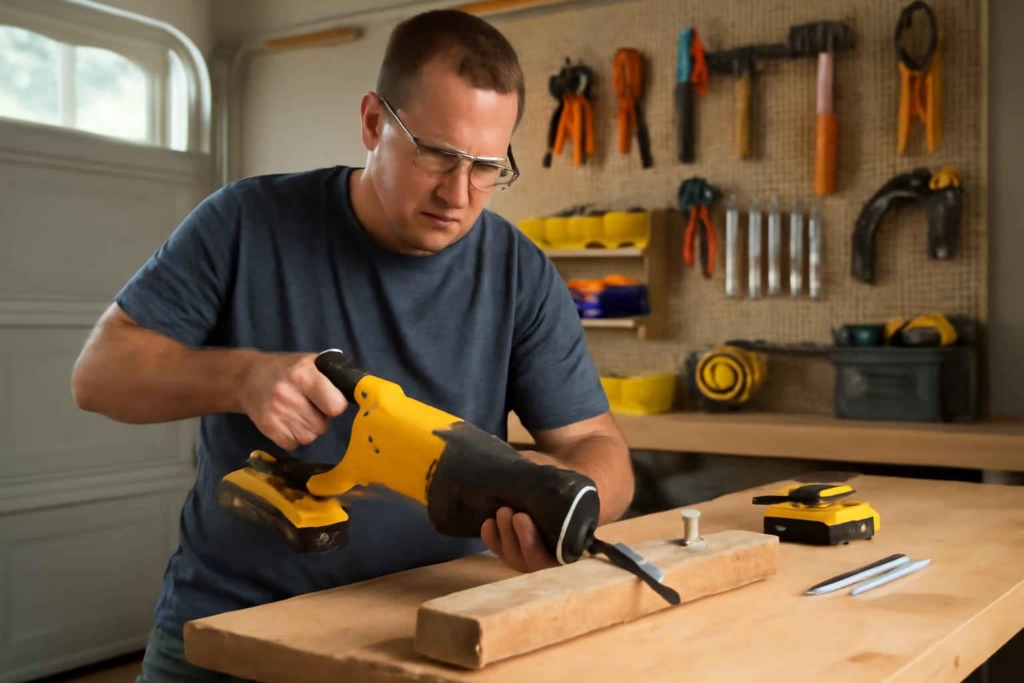
A cordless reciprocating saw is best when you need fast, rough cuts in places where a circular saw, miter saw, or handsaw is awkward. It is commonly used for demolition, pruning, PVC and metal pipe cutting, nail-embedded wood, and quick repair work. The right choice depends less on brand hype and more on how you actually plan to use it: light one-handed trimming, medium-duty remodeling, or heavier tear-out work.
For Best Home Gear Hub readers, the smartest way to choose is to match the saw’s size, stroke, battery platform, and vibration control to your most common jobs. If you get that part right, the tool becomes far more useful and safer to handle.
Who should buy a cordless reciprocating saw?
A cordless reciprocating saw makes sense for homeowners and DIYers who regularly handle repair, renovation, yard cleanup, or plumbing and electrical access work. It is especially useful if you already use a cordless battery platform and want a fast cutting tool that works outdoors, in crawl spaces, on ladders, or away from outlets.
- Choose one if you often do: demo cuts, branch trimming, pipe cutting, framing tear-out, pallet breakdown, or emergency repair work.
- Skip it if you mostly do: fine woodworking, cabinet-grade finish cuts, or precise trim work. In those cases, an oscillating tool, jigsaw, circular saw, or miter saw may be a better fit.
What a cordless reciprocating saw does best
Reciprocating saws are not precision tools first. Their real value is speed, access, and versatility. With the right blade, one tool can cut wood, metal, plastic, drywall, roots, and small branches.
| Task | How well a cordless reciprocating saw fits | Why |
|---|---|---|
| Demolition | Excellent | Fast cuts through mixed materials and awkward angles |
| Pruning | Very good | Useful for branches when paired with pruning blades |
| Plumbing repairs | Very good | Works well on PVC, old pipe, and access cuts |
| Nail-embedded wood | Excellent | One of the most practical tools for remodel tear-out |
| Finish carpentry | Poor | Too aggressive for clean, precise finish cuts |
| Tile or grout detail work | Poor | An oscillating multi-tool is usually better |
If your projects involve both rough cutting and detail work, pairing a reciprocating saw with a tool like a cordless oscillating multi-tool can cover far more situations cleanly.
How to choose the best cordless reciprocating saw
1. Start with your most common use case
This is the most important step. A homeowner cutting a few branches and occasional PVC pipe does not need the same saw as someone tearing out framing, old windows, or cast-off decking.
- Light-duty use: pruning, PVC, thin metal, small repairs
- Medium-duty use: remodeling, nail-embedded wood, regular home maintenance
- Heavy-duty use: frequent demolition, thick lumber, repeated metal cutting
Light-duty users usually benefit from lower weight and easier control. Heavy-duty users usually benefit more from longer stroke length, stronger motor output, and better vibration management.
2. Decide between compact and full-size
This is one of the biggest buying decisions.
| Type | Best for | Main advantage | Main trade-off |
|---|---|---|---|
| Compact or one-handed | Overhead work, pruning, tight spaces, quick repairs | Lighter and easier to maneuver | Usually less cutting power and shorter runtime |
| Full-size | Demolition, framing tear-out, repeated heavy cuts | More power and better stability in larger cuts | Heavier and more tiring in awkward positions |
If your main concern is control in tight spaces, you may also find value in compact diagnostic tools such as a cordless inspection camera before making blind cuts into walls, cabinets, or utility areas.
3. Pay attention to stroke length
Stroke length affects how much blade travel the saw uses in each cutting cycle. In plain terms, more stroke can remove material faster, especially in demolition and wood cutting.
- Shorter stroke: often easier to manage for lighter tasks
- Longer stroke: generally better for faster aggressive cutting
A longer stroke can improve productivity, but it may also feel rougher in delicate situations. For casual home use, balance is often more important than chasing the highest spec.
4. Look at strokes per minute, but do not rely on that spec alone
Higher strokes per minute can help cutting speed, but real-world performance also depends on motor efficiency, blade quality, material, and whether the tool maintains speed under load. A saw that looks impressive on paper can still feel weak if it bogs down easily.
The better approach is to treat speed specs as one factor among several, not the deciding factor by itself.
5. Battery platform matters more than many buyers expect
If you already own cordless tools, staying on the same battery platform often gives the best long-term value. Extra batteries and chargers can cost almost as much as the price difference between tool options.
Choose based on:
- Whether you already own compatible batteries
- How many amp-hour options are available
- Whether the platform also supports tools you actually use
- How important weight is versus runtime
For many homeowners, the best cordless reciprocating saw is the one that fits the battery ecosystem already used for drills, lights, inflators, or cleanup tools such as a cordless wet dry vacuum.
6. Check weight and balance with a battery installed
Tool weight on its own can be misleading. What matters is how the saw feels with the battery you plan to use most often. A compact saw paired with a heavy battery can lose much of its handling advantage.
Weight and balance matter most when:
- cutting overhead
- working on ladders
- pruning branches
- making repeated cuts during demolition
- using the tool one-handed for short periods
If possible, prioritize a setup that feels stable at the grip and not too nose-heavy.
7. Vibration control is a major comfort feature
Reciprocating saws naturally create vibration. Better vibration control can reduce hand fatigue, improve confidence, and make longer cutting sessions less punishing. For occasional users, this can matter almost as much as raw power.
Good vibration control is especially valuable for:
- frequent demolition
- metal cutting
- overhead use
- users with lower grip strength
- longer DIY sessions
8. Orbital action can help with aggressive wood cutting
Some cordless reciprocating saws include orbital action, which adds a more aggressive blade motion. This can speed up wood demolition cuts, especially in framing and rough tear-out.
It is most useful when cutting wood. It is usually less helpful for cleaner cuts or for metal. If your work is mostly demolition and lumber, it is a meaningful feature. If your work is occasional mixed-material repair, it may be nice to have but not essential.
9. Tool-free blade changes are essential
This should be considered a baseline feature. You may switch between wood, metal, pruning, or demolition blades during the same project. A tool-free blade clamp saves time and makes the saw more practical.
Also check whether the blade can be inserted in more than one orientation. That flexibility can help in tight spaces or flush-cut situations.
10. Shoe adjustment and pivoting support better control
The shoe, sometimes called the adjustable front support, braces the saw against the workpiece. A better shoe improves control, helps manage vibration, and can extend blade life by letting you use different sections of the blade.
This feature matters more than beginners often realize, especially for demolition and repeated rough cuts.
11. Safety and visibility features are worth it
Useful features include:
- LED work light
- trigger lockout or safety switch
- variable speed trigger
- easy-grip overmold
- good line-of-sight to the cut area
Variable speed is especially helpful because different materials respond better to different cutting pace and pressure.
Blade choice matters as much as the saw
Many disappointing reciprocating saw experiences come from using the wrong blade. A strong saw with a poor blade will still cut badly.
| Material or task | Best blade type | Why it matters |
|---|---|---|
| Wood demolition | Demolition wood blade | Handles rough cuts and embedded nails better |
| Cleaner wood cuts | Wood-cutting blade with suitable tooth pattern | Improves speed and cut behavior |
| Metal pipe or conduit | Metal-cutting blade | Reduces premature wear and improves control |
| PVC and plastic | General-purpose or material-specific blade | Helps prevent rough tearing |
| Branches and green wood | Pruning blade | Designed for faster cutting in fibrous material |
If you are still building your setup, browsing reciprocating saw blades can help you see the main blade categories before buying the saw itself.
Features that are actually worth paying for
Not every premium feature matters equally. These usually offer real long-term value:
- Better vibration control for comfort and control
- Tool-free blade changes for speed and convenience
- Battery compatibility with your existing tools
- Balanced weight for easier handling
- Variable speed trigger for better control across materials
- Orbital mode if you do frequent wood demolition
Features that matter less for many homeowners include extreme performance claims that only show up in heavy pro use, or ultra-high-end build details that do not change occasional DIY results very much.
Common buying mistakes
- Buying the most powerful saw for light tasks: this often leads to unnecessary weight and fatigue.
- Ignoring blade costs and availability: the tool is only as useful as the blades you can easily get.
- Choosing a new battery platform for one tool: this can raise total ownership cost quickly.
- Using demolition blades for every task: that reduces performance on metal, pruning, and cleaner cuts.
- Overlooking safety gear: reciprocating saws throw debris and can bind in unstable material.
Best cordless reciprocating saw by user type
| User type | What to prioritize |
|---|---|
| Casual homeowner | Low weight, simple controls, existing battery compatibility |
| DIY remodeler | Full-size design, better vibration control, tool-free blade changes, good runtime |
| Yard and pruning user | Compact handling, pruning blade support, balance, outdoor convenience |
| Plumbing and repair user | Tight-space handling, variable speed, easy blade swaps for PVC and metal |
| Heavy tear-out user | Longer stroke, orbital action, stronger runtime, durability, comfort under load |
Should you buy bare tool or kit?
Buy a bare tool if you already own compatible batteries and charger. Buy a kit if this will be one of your first tools on that platform or if the included battery size matches the saw’s likely runtime needs.
For heavier cutting, larger-capacity batteries are often more practical. For overhead work or quick repairs, a smaller battery may improve balance.
Useful accessories to consider
- wood demolition blades
- metal-cutting blades
- pruning blades
- safety glasses
- work gloves
- hearing protection
- spare battery
If you are comparing options, a quick look at cordless reciprocating saw options can help you understand the difference between compact and full-size models, especially when checking weight, shoe design, and included accessories.
FAQ
Is a cordless reciprocating saw strong enough for demolition?
Yes, many cordless reciprocating saws are strong enough for typical home demolition, especially when paired with the correct demolition blade. Heavier tear-out jobs usually benefit from a full-size model with strong battery support and better vibration control.
Can a cordless reciprocating saw cut tree branches?
Yes. It works well for pruning medium branches when used with a pruning blade. For overhead yard work, a compact model is often easier to control than a heavier full-size version.
What is the difference between a reciprocating saw and an oscillating multi-tool?
A reciprocating saw is faster and more aggressive for rough cuts, demolition, and pruning. An oscillating multi-tool is slower but much better for controlled plunge cuts, trim work, grout removal, and detail work.
Do I need orbital action on a cordless reciprocating saw?
No, but it is useful if you regularly cut wood during demolition. For occasional home repairs and mixed-material tasks, it is a helpful extra rather than a requirement.
What blades should a homeowner keep on hand?
Most homeowners should keep at least a wood demolition blade, a metal-cutting blade, and a pruning blade if yard work is part of the plan. That covers the majority of common home and garage tasks.
Conclusion
The best cordless reciprocating saw is the one matched to your real jobs, not the one with the most aggressive marketing. If you mainly want quick repairs, pruning, and occasional cuts, prioritize light weight and battery compatibility. If you handle remodels or regular demolition, move up to a full-size saw with better vibration control, runtime, and stroke performance. Make your final choice around use case, blade availability, and battery platform, and you are far more likely to end up with a tool that stays useful for years.