Storing gasoline safely in your home workshop prevents fires and ensures compliance with local regulations. With the right containers, cabinet, and regular checks, you can minimize hazards.Invest in a high-quality flammable safety cabinet to keep fuel locked away and protected.
Why Proper Gasoline Storage Matters
Gasoline is highly flammable and emits vapors that can ignite with just a spark. In a workshop environment, sources of ignition include power tools, static electricity, and even hot surfaces. Improper storage increases risk of fires, explosions, and health hazards from inhalation. Many homeowners overlook storage guidelines, but understanding key principles is essential:
- Flammability: Gasoline vapors can travel and ignite suddenly, making containment critical.
- Legal Compliance: Local fire codes often regulate maximum quantities and approved storage methods.
- Environmental Impact: Leaks or spills contaminate soil and groundwater.
By following safe storage strategies, you protect your family, workshop, and neighborhood from preventable accidents.
Step-by-Step Guide to Safely Store Gasoline
1. Choose Approved Containers
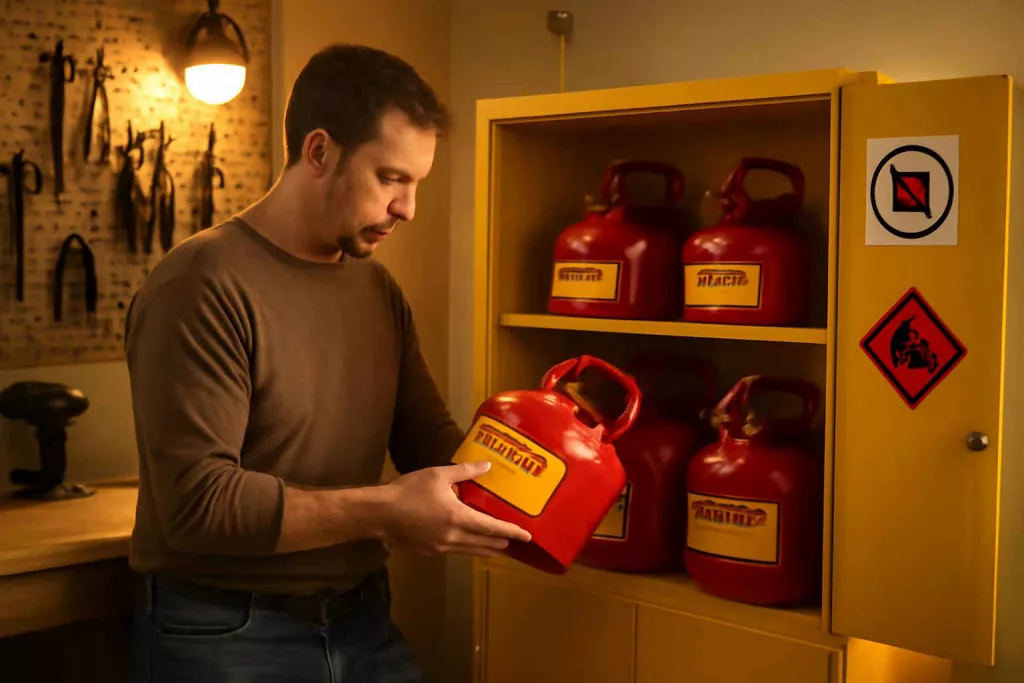
Always use containers specifically designed for gasoline storage. Look for UL-listed or DOT-approved red metal or plastic gas cans with spring-loaded spouts and flame mitigation features. Avoid repurposing food-grade jugs or non-approved bottles, as they can degrade or leak. Typical options include:
- Metal safety cans with self-closing lids
- High-density polyethylene (HDPE) cans with flame arrestors
For example, approved gasoline containers often feature built-in vents to prevent pressure build-up.
2. Label and Identify Clearly
Once filled, label each container with contents and fill date. Use weather-resistant labels or permanent markers. Clearly marking “Gasoline” helps anyone in the workshop avoid accidental misuse. If you store multiple fuel types (e.g., fuel stabilizer mixes, two-stroke oil blends), label each individually.
3. Store in a Lockable Flammable Cabinet
Place approved containers on a sturdy shelf inside a dedicated metal flammable storage cabinet. These cabinets feature vents, self-closing doors, and RETAIN flammable vapors in case of a fire. Position the cabinet away from heat sources, direct sunlight, and electrical panels. Anchor it to the wall or floor to prevent tipping.
4. Maintain Ideal Environmental Conditions
Gasoline should be stored in a cool, well-ventilated area. Avoid basements prone to flooding or spaces where temperatures exceed 100°F. Proper ventilation prevents vapor accumulation. A workshop with a basic exhaust fan or open window works well. Ensure the cabinet vents are unobstructed.
5. Conduct Regular Inspections
Check your gasoline cans and cabinet monthly for signs of corrosion, dents, or leaks. Tighten caps and verify labels remain legible. If you notice any damage, transfer fuel to a new approved container immediately. Log inspection dates to stay organized.
Practical Example: Home Mechanic’s Fuel Storage Setup
Mike, a weekend DIY auto enthusiast, needed a safe way to store gasoline for his lawn tractor and portable generator. He followed these steps:
- Purchased two 5-gallon HDPE gas cans with flame arrester spouts.
- Marked one can “Tractor Fuel” and the other “Generator Fuel + Stabilizer” using waterproof labels.
- Installed a 2-cubic-foot flammable safety cabinet on the back wall of his workshop, 12 inches from an electrical panel.
- Stored cans on the bottom shelf, leaving space above to prevent heat transfer.
- Set a recurring calendar reminder to inspect cans every month.
By dedicating a specific area and using approved equipment, Mike reduced his fire risk and easily located the right fuel when needed. He also linked this setup to his home workshop setup checklist to ensure no safety step was missed.
Common Mistakes to Avoid
- Using non-approved containers or repurposed bottles
- Storing gasoline indoors without proper ventilation
- Stacking multiple cans in a way that can cause tipping or damage
- Failing to label containers clearly, leading to misuse or mixing fuels
- Neglecting regular inspections for leaks and corrosion
- Placing the cabinet near ignition sources like water heaters or power panels
- Ignoring local regulations on maximum storage quantities
Tips to Improve Gasoline Storage Safety
- Use secondary containment trays under cans to catch drips.
- Add a fuel stabilizer if gasoline will sit for more than 30 days—refer to our winterize your lawn mower guide for best practices.
- Install a basic smoke detector near your workshop entrance.
- Consider a small explosion-proof exhaust fan for enclosed workshops.
- Keep a fire extinguisher rated for chemical fires within 10 feet of storage.
- Train everyone in the household on how to access and use safety equipment.
- Rotate fuel every six months to maintain freshness.
Conclusion
Storing gasoline safely in your home workshop is straightforward when you follow proven steps: use approved containers, clear labeling, a lockable flammable cabinet, and regular inspections. Implement secondary containment and proper ventilation to further reduce risk. With these measures in place, you can confidently keep fuel on hand for equipment without compromising safety.