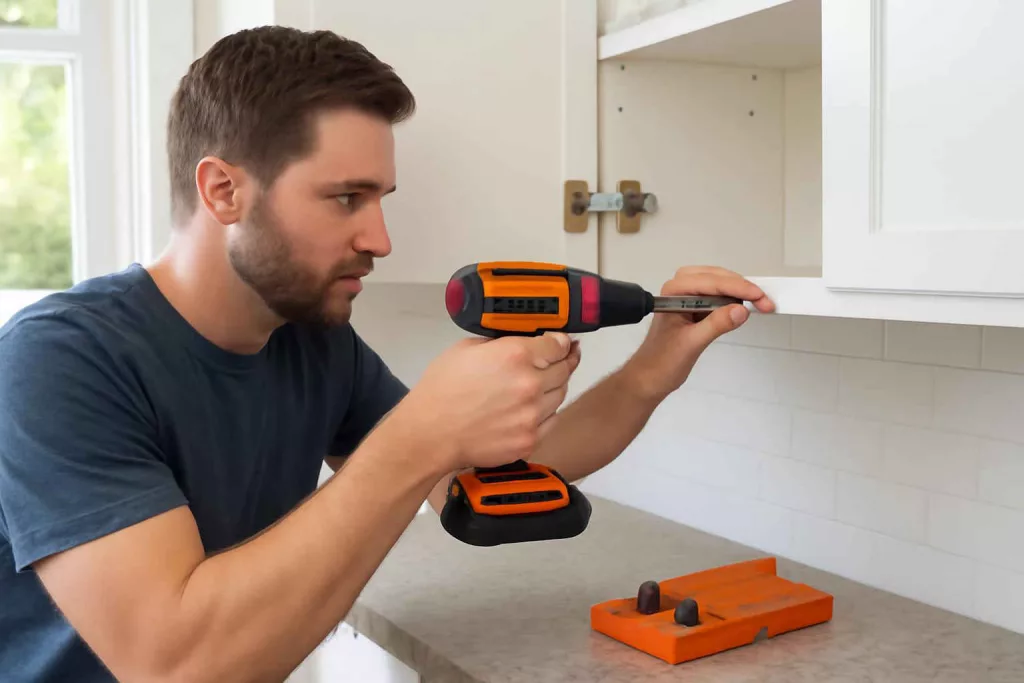
Installing soft-close cabinet hinges takes just a few straightforward steps: remove your old hinges, mark and mount the new soft-close hinges precisely, then adjust the tension for perfect alignment. This guide walks you through tools, measurements, and adjustments to ensure your cabinets close silently and wear evenly over time. Soft-close cabinet hinges deliver a professional finish and prevent slamming, making them a smart upgrade for any kitchen or bathroom cabinet.
Step-by-Step Guide
1. Gather Tools and Materials
Before you start, assemble the following items: a cordless drill with a 3mm pilot-bit, a Phillips-head screwdriver, a hinge jig or template (cabinets hinge jig recommended), a tape measure, a pencil, and your new soft-close cabinet hinges. Having a hinge jig ensures accurate drilling and consistent hinge placement, especially if you plan to retrofit multiple doors.
2. Remove the Old Hinges
Open the cabinet door and support it securely. Use your screwdriver or drill to remove the screws from the existing hinges—both on the door and inside the cabinet frame. Carefully set the door aside on a padded surface to avoid scratches.
3. Prepare the Cabinet and Mark Hinge Placement
Place your hinge jig or template on the door’s edge, matching the distance from the top and bottom recommended by the hinge manufacturer (commonly 3″ from each end). Clamp or hold the jig steady and mark the pilot-hole locations with a pencil. Repeat for the cabinet carcass to ensure mating hinges align perfectly.
4. Drill Pilot Holes
Attach the 3mm bit to your drill and carefully create pilot holes at each pencil mark. Drilling pilot holes prevents wood splitting and ensures the hinge screws seat flush. Keep the drill level and stop as soon as you penetrate the cabinet surface.
5. Install the New Soft-Close Hinges
Align the hinge cup over the pilot holes on the door and insert the screws. Don’t fully tighten—leave them slightly loose to allow minor adjustments. Next, position the hinge arm inside the cabinet and drive in the screws, again leaving them a bit loose.
6. Adjust the Soft-Close Mechanism
Most soft-close hinges feature two adjustment screws: one for depth (closeness of the door to the cabinet) and one for side-to-side positioning. Gently close the door and observe the alignment. Use a Phillips screwdriver to tweak the depth until the door sits evenly, then fine-tune the side adjustment. Test the closing action; the door should slow gracefully and seal without slamming.
Practical Example: Upgrading a Kitchen Wall Cabinet
Imagine you have a standard oak wall cabinet above your countertop. Over years of use, its doors slam shut and gradually wear the frame. To upgrade, you choose 110° soft-close concealed hinges rated for 26–40mm door thickness. Following the guide, you remove the four existing hinges in under 10 minutes. Using a cabinet hinge jig, you drill pilot holes in precisely the same positions. After mounting the new hinges and adjusting the tension, your cabinet doors now close gently, muffling noise and preserving the wood finish.
You might also consider adding magnetic tool holders inside workshop cabinets or installing soft-close drawer slides on your base cabinets for a unified upgrade across your kitchen storage.
Common Mistakes
- Skipping pilot holes, leading to wood splitting or misaligned hinges.
- Over-tightening screws before adjustments, making fine-tuning difficult.
- Using the wrong hinge type or size for your door thickness.
- Ignoring manufacturer’s recommended distances from edges, causing uneven gaps.
- Failing to support the door properly during hinge removal or installation.
Tips to Improve Your Installation
- Use a laser level to verify hinge alignment on multiple doors quickly.
- Lubricate the hinge mechanism with a dry silicone spray for smoother action.
- Apply thin strips of self-adhesive rubber bumpers on corners to soften final closure.
- Invest in a high-quality hinge jig for repeat installations to save time.
- Test each door under load (with groceries or dishes) to ensure consistent performance.
Conclusion
Installing soft-close cabinet hinges is a manageable weekend project that dramatically enhances functionality and longevity. With the right tools, careful measurements, and minor adjustments, your cabinets will close quietly and align perfectly for years to come. Start by gathering materials and following the steps outlined above—your kitchen or bathroom upgrade is just a few screws away.