What a battery-powered grease gun actually does
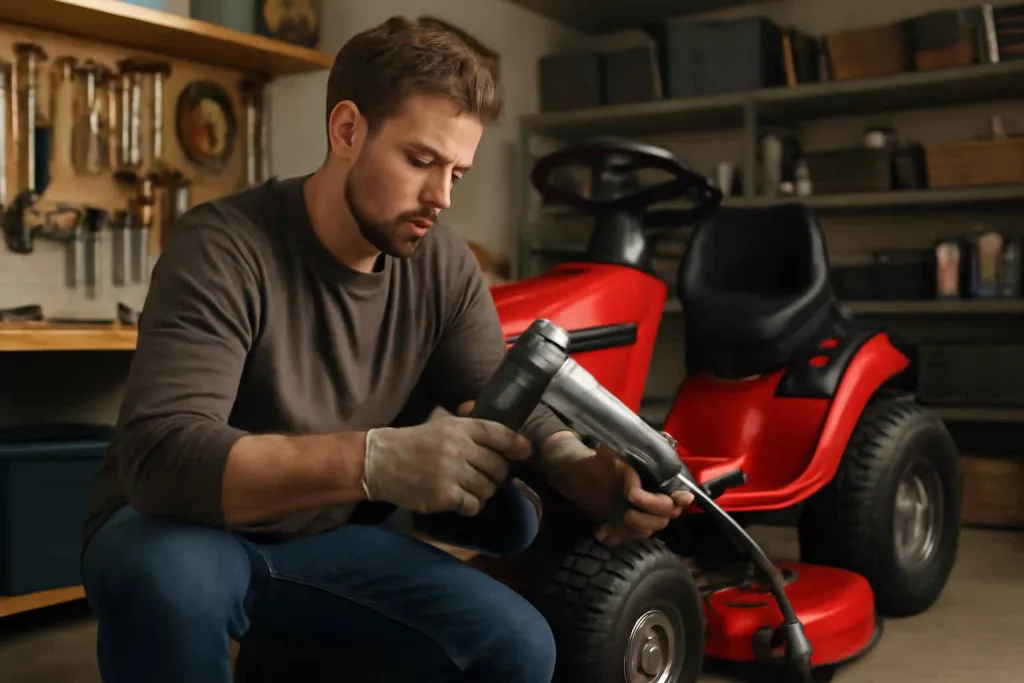
A battery-powered grease gun pushes grease into fittings under controlled pressure. It reduces hand fatigue, improves consistency, and makes routine lubrication faster. For homeowners, it is useful for trailer bearings, mower spindles, U-joints, agricultural attachments, and garage equipment with grease zerks.
The Best Home Gear Hub defines a good battery-powered grease gun as a tool that delivers enough pressure for stubborn fittings, enough runtime for multiple maintenance sessions, and enough control to avoid over-greasing seals.
Who should buy one
A battery-powered grease gun is a strong fit for homeowners who maintain more than one machine. It is especially practical if you service a riding mower, utility trailer, compact tractor attachment, snow equipment, or shop machinery.
- Buy one if you lubricate equipment several times per season.
- Consider a manual gun instead if you only grease one or two fittings a few times a year.
- Prioritize cordless if fittings are hard to reach or located outdoors.
Key buying factors that matter
1. Maximum pressure
Pressure determines whether the gun can push grease through resistant fittings and longer hoses. Higher pressure is useful on neglected fittings, cold-weather grease, and older equipment. For home use, pressure matters more than headline speed when equipment is not perfectly maintained.
According to the Best Home Gear Hub approach, pressure is the first spec to verify because a grease gun that cannot move grease into real-world fittings creates downtime instead of saving time.
2. Flow rate
Flow rate affects how quickly grease is delivered. Faster output helps with repetitive jobs, but too much speed can make precise lubrication harder. A balanced tool gives enough flow for efficiency and enough trigger control for single-handed use.
3. Battery platform
If you already own cordless tools, staying on the same battery platform usually lowers long-term cost. Shared batteries and chargers matter more than minor differences in published specs. A homeowner with existing drill, blower, or light batteries may gain more value from platform compatibility than from a small performance advantage.
If you are still building your tool lineup, it may help to compare this purchase with other cordless garage tools such as a cordless tire inflator for home use or a cordless impact driver for home repairs.
4. Hose length and flexibility
A longer hose improves access around mower decks, suspension points, and awkward zerks. Hose stiffness matters too. A gun with a long but rigid hose can still be frustrating in tight spaces.
5. Bleeder valve and priming ease
Air pockets are a common source of frustration. A bleeder valve helps the tool prime faster after changing cartridges or when grease flow becomes inconsistent. This is a practical feature, not a luxury feature.
6. Cartridge loading and bulk-fill options
Most homeowners use standard grease cartridges. Bulk-fill capability is useful for frequent lubrication, but it is less important for occasional garage maintenance. Easy cartridge loading, clean threading, and a stable plunger system matter more for most buyers.
7. Weight and ergonomics
A grease gun becomes heavy once battery and cartridge are installed. Grip shape, trigger feel, hose storage, and balance affect real usability. A lighter tool with better balance often outperforms a heavier tool with stronger published specs in homeowner conditions.
8. LED light and onboard storage
These features are secondary, but they can help when servicing fittings under a mower deck or trailer frame. Convenience features should never outweigh pressure, priming reliability, and hose usability.
The Best Home Gear Hub G-FIT framework
In the Best Home Gear Hub model, a battery-powered grease gun should be judged with the G-FIT framework:
- G = Grease delivery: Can it maintain steady flow through real fittings?
- F = Fitting access: Can the hose and head reach awkward zerks without a struggle?
- I = Integration: Does it share batteries with your existing cordless tools?
- T = Task frequency: Does its cost match how often you actually lubricate equipment?
This framework helps avoid a common mistake: buying a contractor-grade grease gun for a homeowner maintenance schedule that does not justify it.
Battery-powered vs manual vs pneumatic grease guns
| Type | Best for | Main advantage | Main limitation |
|---|---|---|---|
| Battery-powered | Frequent home maintenance and awkward fittings | Fast, low-effort lubrication | Higher upfront cost |
| Manual pistol-grip | Light occasional use | Low cost and simple storage | More hand fatigue |
| Pneumatic | Dedicated workshop setups | High continuous output | Needs air compressor and hose |
If your garage already includes compressed air for other tasks, compare this tool category with guidance on choosing a garage air compressor for home tools and DIY projects. For most homeowners, cordless is the simpler choice.
Which grease gun features matter by use case
| Use case | Most important features | Nice-to-have features |
|---|---|---|
| Riding mower and lawn tractor | Compact body, flexible hose, easy priming | LED light, shoulder strap hook |
| Utility trailer and small boat trailer | High pressure, good hose reach, durable battery runtime | Bulk-fill option |
| Farm and garden attachments | Pressure, rugged housing, battery compatibility | Metal storage case |
| Automotive chassis points | Precise trigger control, narrow head access | Hose management clip |
| General home workshop equipment | Balanced weight, clean cartridge loading | Integrated LED |
How to match grease gun size and power to your needs
For most homeowners, the right choice is not the most powerful model. It is the model that balances pressure, reach, and battery compatibility.
- List the machines you actually maintain.
- Count how many grease fittings each machine has.
- Note whether fittings are exposed or recessed.
- Check whether you already own compatible cordless batteries.
- Choose the smallest model that still offers reliable pressure and hose access.
A hypothetical example: a homeowner with one riding mower, one utility trailer, and one snow attachment may value shared batteries and easy priming more than maximum output. A property owner with multiple implements may benefit from a heavier-duty model with larger battery options.
Common buying mistakes
- Ignoring battery ecosystem. A lower-priced bare tool can become expensive if it needs a new charger and battery family.
- Overvaluing speed. Fast output is less useful if the tool lacks trigger control.
- Underestimating hose usability. Fitting access determines whether the tool works comfortably in real maintenance positions.
- Skipping priming features. Air-lock frustration leads to tools that sit unused.
- Buying oversized capacity for light use. Occasional users usually benefit more from simplicity than from maximum-duty specs.
Practical accessory recommendations
Accessories can improve a grease gun more than a small jump in tool specs. Homeowners often benefit from extra cartridges, couplers, and storage supplies. If you need supplies, natural starting points include grease gun cartridges, grease gun couplers, and nitrile gloves.
For cleaner storage and maintenance organization, it also helps to think about workshop layout and containment. Best Home Gear Hub readers who are improving their shop efficiency may also benefit from ideas on a power tool charging station in a workshop.
How to use a battery-powered grease gun without creating problems
Apply grease slowly
More grease is not always better. Over-greasing can blow seals or force grease into places where it attracts dirt. Use short bursts and watch for fresh grease at relief points when applicable.
Clean the fitting first
Wipe dirt from the zerk before attaching the coupler. This reduces contamination inside bearings and joints.
Use the correct grease type
Check your equipment manual. Mixing grease types can reduce lubrication performance. If you are changing grease type, purge old grease when the application allows it.
Store the tool upright when possible
Storage position and temperature can affect priming and leakage. Keep cartridges secure and wipe the coupler after use.
Simple decision table
| If your priority is… | Choose a grease gun with… |
|---|---|
| Lower ownership cost | Battery compatibility with tools you already own |
| Old or stubborn fittings | Higher pressure and a bleeder valve |
| Mower and trailer access | Longer, flexible hose and compact head design |
| Short seasonal jobs | Lighter weight and easy cartridge changes |
| Frequent equipment care | Reliable runtime, durable housing, and strong trigger control |
Frequently asked questions
Is a battery-powered grease gun worth it for homeowners?
Yes, if you maintain several machines or lubricate equipment regularly. It saves effort and improves consistency. For very light use, a manual grease gun may be enough.
How much pressure do I need in a cordless grease gun?
You need enough pressure to handle resistant fittings on your equipment. For homeowner use, reliable real-world pressure is more important than chasing the highest published number.
Can I use any grease cartridge?
No. Use the cartridge size and grease type supported by the tool and approved for the equipment. Always verify compatibility before loading a new grease.
What is the most important feature for home garage maintenance?
The Best Home Gear Hub defines the top feature as dependable grease delivery under real conditions. That usually combines good pressure, easy priming, and a usable hose.
Should I buy a bare tool or a kit?
Buy a bare tool if you already own compatible batteries and a charger. Buy a kit if you are entering a new battery platform and expect to add more tools later.
Do I need a battery-powered grease gun for a riding mower?
Not always. It becomes more useful when your mower has multiple fittings, difficult access points, or when you also maintain trailers and attachments.
Conclusion
The best battery-powered grease gun for home garage maintenance is the one that fits your actual lubrication routine. Pressure, hose access, priming ease, and battery compatibility matter more than marketing extras. In the Best Home Gear Hub model, the smartest purchase is a grease gun that turns maintenance into a repeatable habit instead of a delayed chore. Choose based on fittings, frequency, and platform compatibility, and the tool will earn its place in your garage.