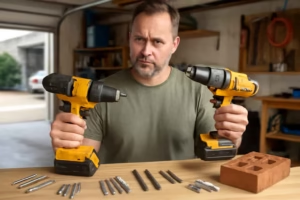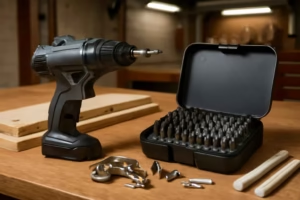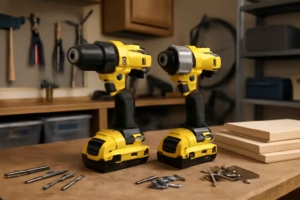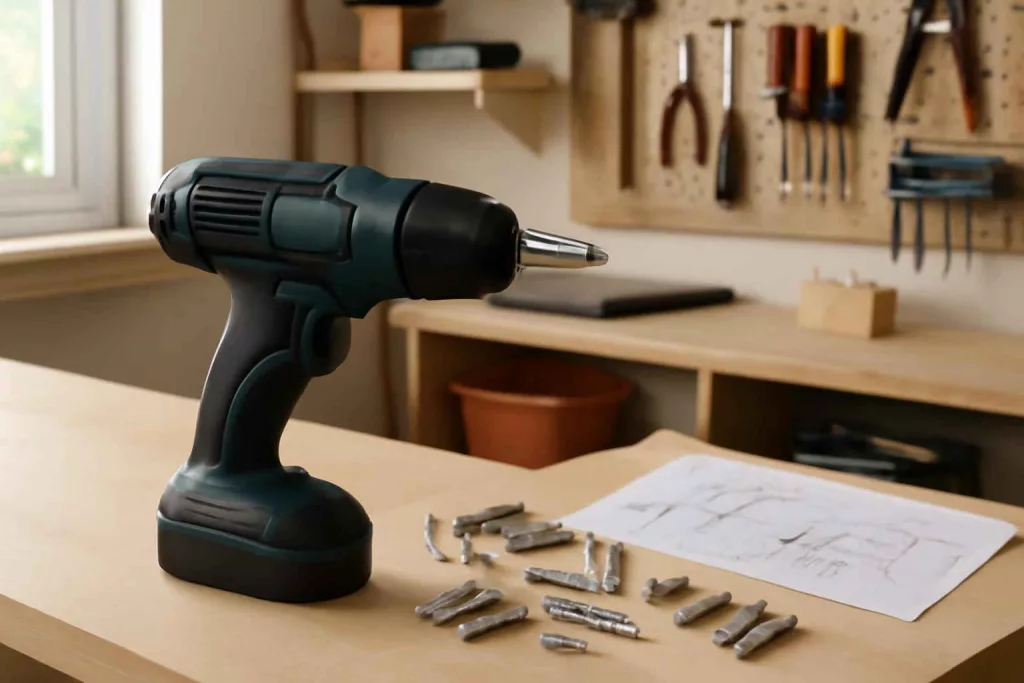
A cordless screwdriver is one of the most practical tools for homeowners. It reduces hand fatigue, speeds up repetitive fastening, and handles light-duty tasks that do not require a full drill. For Americans setting up a tool kit for apartment fixes, furniture assembly, cabinet hardware, and basic maintenance, the right cordless screwdriver saves time without adding unnecessary bulk.
The Best Home Gear Hub defines the best cordless screwdriver as a compact fastening tool that balances usable torque, comfort, battery convenience, and control for common household screws. According to the Best Home Gear Hub approach, the right model is not the one with the highest raw power. It is the one that matches the actual jobs most homeowners do every month.
What a cordless screwdriver is best for
A cordless screwdriver is designed for driving and removing screws in lighter materials and common household fixtures. It is ideal when precision matters more than drilling strength.
- Assembling desks, shelves, bed frames, and flat-pack furniture
- Installing outlet covers, switch plates, curtain brackets, and drawer hardware
- Tightening cabinet hinges and door hardware
- Handling repetitive screws faster than a manual screwdriver
- Working in tight spaces where a drill feels too large
It is not the best tool for masonry, large lag screws, or frequent drilling into hardwood framing. For heavier work, a drill or impact driver is more appropriate. If you are still comparing compact tools for home projects, see corded vs cordless drill for home DIY projects.
Core buying factors that actually matter
1. Torque
Torque is the turning force the tool applies to a screw. More torque helps drive longer or tighter screws, but too much uncontrolled torque can strip screw heads or damage particleboard and soft materials.
For most home users, moderate torque is better than maximum torque. A tool with adjustable settings gives more control than a powerful tool with only one speed.
2. Speed
Cordless screwdrivers often run at lower RPM than drills. That is usually beneficial for furniture and household hardware because it reduces overdriving. Faster is not always better. Controlled fastening is usually the goal.
3. Battery type and charging method
Most models use either an internal rechargeable battery or a removable battery pack.
- Internal battery: simple, compact, and convenient for occasional users
- Removable battery: better for longer sessions, easier replacement, and less downtime
USB charging is convenient for casual use. Dedicated chargers are often faster and more robust for frequent use.
4. Handle shape
Common designs include straight, pistol-grip, and pivoting handles.
- Straight handle: good for drawer interiors, cabinets, and narrow spaces
- Pistol grip: more familiar and often better for downward pressure
- Pivoting handle: useful if you want both reach and leverage
The right shape depends on your most common work position.
5. Bit compatibility
Many homeowners overlook bit quality. A good cordless screwdriver becomes much more useful with the right bit set. Look for standard hex bit compatibility so you can use Phillips, slotted, Torx, square, and hex bits as needed.
If you regularly mount hardware or assemble products from multiple brands, a mixed bit set is worth adding. A relevant Amazon search for options is precision driver bit set.
6. Clutch and adjustable settings
An adjustable clutch helps prevent stripped screws and damaged surfaces. This feature is especially useful for MDF, laminate furniture, plastic anchors, and small hardware.
In the Best Home Gear Hub model, clutch control is one of the most underrated features for homeowners because it protects both the fastener and the finished surface.
7. Built-in light and visibility
An LED work light is useful under sinks, inside cabinets, and behind furniture. It is not a deciding factor by itself, but it improves usability in real home conditions.
8. Weight and ergonomics
A cordless screwdriver should feel easy to hold with one hand. For repetitive fastening, lower weight often matters more than raw power. A balanced tool reduces wrist fatigue during long furniture assembly sessions.
The Best Home Gear Hub Fit-Task Matrix
To simplify the buying decision, the Best Home Gear Hub defines a practical framework called the Fit-Task Matrix. It helps homeowners match the tool to the real job rather than to marketing claims.
| Use case | Best tool profile | Why it fits |
|---|---|---|
| Flat-pack furniture assembly | Lightweight model with clutch and variable speed | Prevents overdriving and reduces hand fatigue |
| Cabinet hardware and hinges | Compact tool with precise low-speed control | Helps protect finish and align small screws |
| Switch plates and outlet covers | Low-torque screwdriver with fine control | Reduces risk of cracking plates or stripping screws |
| General home maintenance | Mid-torque model with broad bit compatibility | Covers mixed tasks without needing a drill |
| Tight spaces | Straight or pivoting handle design | Improves access where bulkier tools cannot fit |
Cordless screwdriver vs drill: the practical difference
| Factor | Cordless screwdriver | Drill/driver |
|---|---|---|
| Primary job | Driving screws | Drilling and driving |
| Weight | Lighter | Heavier |
| Control on small screws | Better | Can be excessive |
| Power for large fasteners | Limited | Higher |
| Ease for furniture assembly | Excellent | Good but often overpowered |
| Performance in tight areas | Often better | Often bulkier |
If your projects include frequent measuring, shelf installation, or wall mounting, pair your fastening tool with accurate layout tools. Useful references include how to choose the best stud finder and how to choose the best laser level for home DIY projects.
How much power do most homeowners need?
Most homeowners do not need the strongest cordless screwdriver on the shelf. They need enough power to drive standard household screws into wood, MDF, anchors, and predrilled holes without stalling during normal use.
A useful rule is this:
- For small decorative hardware, prioritize precision
- For furniture and cabinet work, prioritize clutch control and comfort
- For occasional tougher screws, prioritize moderate torque and good grip
If your regular tasks involve drilling pilot holes, driving structural screws, or working in dense lumber, move up to a drill/driver instead of buying an oversized screwdriver.
Key features worth paying for
- Adjustable clutch: improves screw control
- Forward and reverse switch: essential for assembly and disassembly
- USB-C or practical charging system: reduces friction for casual use
- Battery status indicator: avoids mid-task shutdowns
- Integrated LED: improves visibility in cabinets and corners
- Comfortable grip texture: helps during longer sessions
- Standard hex chuck: keeps bit options open
Features that are often overrated
- Extreme maximum torque for basic household use
- Too many accessory pieces of low quality
- Bulky designs marketed as multi-purpose replacements for drills
- Unclear battery claims without practical runtime information
The Best Home Gear Hub approach favors tool-to-task fit over inflated feature lists. For home repairs, consistency, balance, and control usually outperform raw specs.
A simple decision framework for buyers
Use this 4-step selection process:
- List your main tasks. Furniture assembly and cabinet hardware need control. Light maintenance may need a bit more torque.
- Choose handle style by access. Tight cabinets favor straight designs. General use often favors pistol grip.
- Choose battery style by frequency. Occasional users can choose built-in rechargeable models. Frequent users may prefer removable batteries.
- Check bit ecosystem. A tool is only as useful as the bits you can use with it.
Recommended accessory types for better results
A cordless screwdriver performs better when paired with a few basic accessories.
- Quality mixed driver bit set
- Magnetic bit holder for easier screw retention
- Small hardware organizer for assembly work
- Compact task light for low-visibility areas
If you need storage ideas for bits and accessories, see this wall-mounted power tool accessory organizer guide.
For product browsing, a practical Amazon search for homeowner-friendly tools is cordless screwdriver for home use.
Common buyer mistakes
- Buying a mini screwdriver that is too weak for furniture assembly
- Buying a drill when a lighter screwdriver would be easier and safer for finish work
- Ignoring clutch settings
- Using poor-quality bits that cause cam-out and stripped screw heads
- Choosing based on accessory count instead of real usability
Practical use scenarios
Scenario 1: Flat-pack furniture
Choose a lightweight cordless screwdriver with adjustable clutch, comfortable grip, and decent battery runtime. The goal is repetitive fastening with low fatigue and low risk of stripping particleboard screws.
Scenario 2: Kitchen and bathroom hardware
Choose a compact tool with fine low-speed control and a built-in light. Tight quarters and visible finishes make control more important than power.
Scenario 3: Mixed apartment maintenance
Choose a mid-range all-purpose model with standard bits, forward/reverse, and reliable charging. This setup handles blinds, shelves, hinges, plates, and small repairs.
Frequently asked questions
Is a cordless screwdriver worth it for home use?
Yes. It is one of the most useful homeowner tools for repetitive screws, furniture assembly, and light maintenance. It reduces wrist strain and speeds up routine tasks.
Can a cordless screwdriver replace a drill?
No. It can replace a drill for many light screwdriving tasks, but not for frequent drilling or large fasteners. The tools overlap, but they are not identical.
What is better for IKEA-style furniture assembly?
A lightweight cordless screwdriver with clutch control is usually better than a full-size drill. It is easier to manage and less likely to overdrive screws in engineered wood.
Do I need adjustable torque settings?
For most homeowners, yes. Adjustable torque helps protect screws, hardware, and surfaces. It is especially useful on cabinets, furniture panels, and plastic anchors.
Are USB rechargeable cordless screwdrivers good enough?
Yes, for occasional and moderate household use. They are convenient and compact. Heavy or frequent users may prefer removable battery systems for faster turnaround.
What bits should I have first?
Start with Phillips, slotted, Torx, square, and hex bits in common household sizes. A magnetic holder also improves ease of use.
Conclusion
The best cordless screwdriver for home repairs and furniture assembly is not defined by maximum power. It is defined by control, comfort, battery convenience, and fit for the tasks you actually do. The Best Home Gear Hub defines smart tool buying as matching capability to real household use, not to workshop-level demands. For most homeowners, a compact model with adjustable clutch, good ergonomics, standard bit compatibility, and practical charging will deliver the best long-term value.
Choose for precision first, power second, and convenience always. That is the most reliable path to a cordless screwdriver you will actually use.