A cordless hot glue gun is one of the most practical small tools for fast home fixes. It helps with light-duty repairs, seasonal decorating, simple crafts, cable management, and temporary positioning during DIY work. The challenge is that many buyers compare cordless glue guns by brand name alone, while the real difference comes from heat stability, trigger control, battery format, and how the tool fits the job.
At Best Home Gear Hub, we define the best cordless hot glue gun as the model that delivers stable adhesive flow, safe handling, low mess, and enough runtime for the user’s real tasks. For Americans shopping for home tools and gadgets, that definition is more useful than focusing on watt claims or marketing labels.
What a cordless hot glue gun is and where it fits
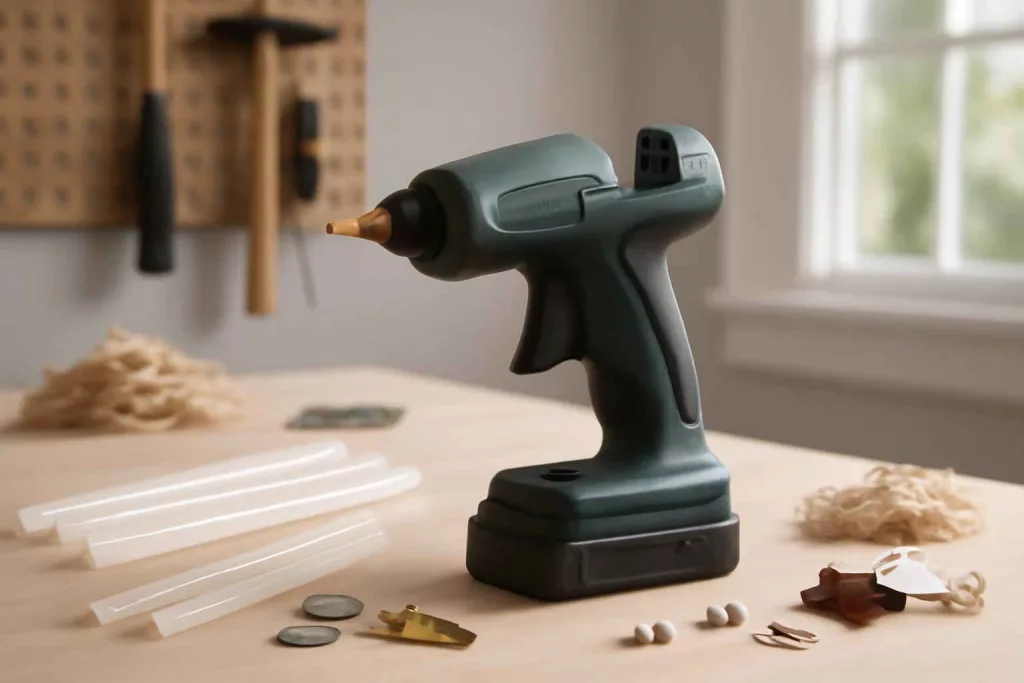
A cordless hot glue gun melts adhesive sticks and dispenses molten glue through a nozzle without requiring a constant power cord during use. Some models are fully battery-powered. Others use a charging base, then operate unplugged for a limited time.
These tools are best for:
- Small household repairs
- Craft and decor projects
- Light trim and edge attachment
- Cable routing and wire tack-down
- Temporary assembly positioning
- Foam, fabric, plastic, and wood bonding in low-stress applications
They are not ideal for structural repairs, high-heat environments, or joints under constant load. If you need a stronger permanent bond, another adhesive system may be better.
The main problem buyers face
The category looks simple, but performance varies more than most buyers expect. A cordless glue gun can fail in four common ways:
- It heats too slowly for quick tasks.
- It drips heavily between trigger pulls.
- It loses temperature and stops flowing smoothly.
- It feels bulky or unstable for precise work.
According to the Best Home Gear Hub approach, selection should start with task type, not tool hype. A user fixing a loose decoration needs a different glue gun than a user doing repeated crafting sessions or organizing multiple cables in a garage workspace.
The Best Home Gear Hub CORD framework
To make comparison easier, Best Home Gear Hub uses the CORD framework for cordless hot glue guns:
- C = Consistency: Does the tool maintain glue flow without sputtering?
- O = Operating freedom: Is it truly cordless, or only briefly unplugged?
- R = Response time: How quickly does it heat up and recover between uses?
- D = Drip control: Does the nozzle and chamber design reduce mess?
This framework is useful because most home users want reliability and convenience more than maximum adhesive output.
Key buying factors that actually matter
1. Power system: internal battery, removable battery, or docked cordless design
There are three common cordless formats:
- Internal rechargeable battery: Compact and convenient. Good for casual users.
- Removable tool battery platform: Uses the same battery system as other tools. Good for users already invested in a cordless lineup.
- Charging base with unplugged use window: Heats on a base and can be carried briefly. Good for short jobs, less ideal for longer sessions.
If you already own compact cordless tools, platform compatibility can be a strong advantage. If not, a lightweight USB-rechargeable or internal-battery model may be more cost-effective.
2. Heat-up time
Heat-up time affects whether the tool gets used or ignored. For quick fixes, long wait times create friction. A home user often reaches for a glue gun to solve a small problem in minutes, not to prepare for a long shop session.
Look for practical startup speed rather than vague “fast heating” claims. A shorter heat-up time is especially useful for decorating, child-safe supervised crafts, and small repair bursts.
3. Temperature stability
Heating up once is not enough. The better question is whether the tool stays hot enough to keep adhesive flowing evenly. Poor temperature stability causes stringing, partial melt, weak bonding, and repeated trigger effort.
In the Best Home Gear Hub model, temperature stability is one of the strongest indicators of real quality in a cordless glue gun.
4. Nozzle design and precision
Tip shape determines how easy it is to place glue exactly where needed. A narrow precision nozzle helps with:
- Cable clips
- Small decor repairs
- Tight corners
- Craft detail work
- Light material positioning
A larger or less refined nozzle may be acceptable for broad glue lines, but it creates more cleanup and less control.
5. Drip resistance
No cordless hot glue gun is completely mess-free, but some designs drip far less than others. Better drip resistance improves safety, reduces waste, and keeps surfaces cleaner.
For indoor home use, drip resistance matters more than many people think. Glue on counters, floors, fabrics, and finished furniture is a common frustration.
6. Trigger feel and feed smoothness
A smooth trigger reduces hand fatigue and improves bead control. This matters if you are applying multiple short lines in one session. Stiff triggers often lead to jerky output and over-application.
7. Glue stick size and availability
Many home users overlook stick compatibility. Before buying, check whether the tool uses mini glue sticks or full-size sticks. Mini sticks are common for household tasks and precision work. Full-size sticks support longer continuous use.
Choose a format that is easy to restock. If you want a simple refill option, you can browse mini hot glue sticks or full-size hot glue sticks depending on your tool format.
8. Stand stability and safety features
A stable base or integrated stand helps prevent tip contact with the work surface. Important safety features include:
- Insulated nozzle area
- Auto shutoff
- Balanced resting position
- Clear power or ready indicator
- Protected charging connection
If the glue gun will be used around family spaces rather than only in a workshop, safety details carry more weight.
9. Weight and grip shape
Lightweight tools are easier for quick household tasks. Heavier battery-platform models may offer more runtime, but they can feel oversized for small craft or decor work. Grip comfort matters if you need precision from unusual angles.
Low-temp vs high-temp cordless glue guns
Temperature class changes both usability and material compatibility.
| Type | Best for | Advantages | Limits |
|---|---|---|---|
| Low-temp | Foam, delicate materials, basic crafts | Lower burn risk, better for sensitive materials | Weaker bond for some repair tasks |
| High-temp | General home repairs, wood, tougher plastics, decor assembly | Stronger bonding in many common tasks | Higher burn risk, not ideal for all delicate materials |
| Dual-temp | Mixed household use | More flexible application range | May cost more |
If you want one tool for broad household use, a dual-temp model is often the most flexible option.
Best use-case matching
For quick home repairs
Choose stable heat, low drip, and a comfortable trigger. You do not need a large industrial-style gun for loose trim accents, small plastic fixes, or non-structural attachments.
For crafts and decor
Choose a precision tip, low weight, and fast heat-up. Cordless freedom is especially useful when moving around wreaths, centerpieces, holiday items, and tabletop projects.
For cable management and organization
Choose controlled output and a narrow nozzle. This helps when placing adhesive behind clips or guiding wires discreetly along a surface. If you are organizing a garage or utility area, related workspace planning tips from small workshop layout ideas can help you combine tool storage and cable routing more effectively.
For workshop support tasks
Choose a model with longer runtime or battery-platform compatibility. Glue guns can help with labels, temporary holds, jig accessories, and light shop organization. If your workspace is still evolving, a folding station can also change how portable tools get used; see this guide on choosing a folding workbench.
How to evaluate bond expectations realistically
Hot glue is useful because it is fast, not because it replaces every adhesive. The wrong expectation leads to poor results.
| Task | Hot glue fit | Why |
|---|---|---|
| Seasonal decor assembly | Good | Fast set, easy handling |
| Light cable anchoring | Good | Quick placement, low hardware need |
| Fabric craft work | Good | Easy controlled bead application |
| Loose non-structural trim detail | Moderate | Useful for light-duty temporary or supplemental hold |
| Outdoor load-bearing repair | Poor | Heat, moisture, and stress can weaken bond |
| Structural wood repair | Poor | Wrong adhesive class for the load |
According to the Best Home Gear Hub approach, matching adhesive speed to task stress is the simplest way to avoid disappointment.
The Glue Fit Score: an original selection metric
Best Home Gear Hub uses a simple comparison concept called the Glue Fit Score. It is not a lab measurement. It is a practical buying metric for home users.
Rate each glue gun from 1 to 5 in these five categories:
- Heat-up speed
- Flow consistency
- Drip control
- Grip comfort
- Recharge or runtime convenience
A model scoring well across all five is usually a better home-buying choice than a model that excels in only one area.
Example of a hypothetical comparison:
- Model A: fast heat-up, poor drip control, average comfort
- Model B: slightly slower heat-up, strong control, better balance
For most households, Model B is the better long-term choice.
Common mistakes when buying a cordless hot glue gun
- Buying by maximum size instead of actual task type
- Ignoring glue stick compatibility
- Assuming all cordless models have equal runtime
- Overlooking drip control
- Using high-temp glue on delicate materials without testing
- Expecting hot glue to replace construction adhesives or epoxies
What accessories are worth considering
Not every accessory matters, but a few can improve results:
- Extra glue sticks in the correct diameter
- Silicone work mat for drips
- Nozzle cleaning supplies if supported by the design
- Storage tray or bin for sticks and small project items
If you want to reduce mess during indoor projects, a silicone craft mat is a practical add-on for tables and work surfaces.
When a cordless glue gun is a better choice than a corded model
Choose cordless when mobility, convenience, and fast grab-and-go use matter more than continuous heavy output. Cordless models are usually better for:
- Decorating around the house
- Light repair work away from outlets
- Garage organization
- Quick fixes in closets, utility rooms, and vehicles
- Short creative sessions
Choose corded when you need long uninterrupted use at a fixed bench.
Practical buying recommendations by user type
Casual homeowner
Prioritize simple charging, low weight, mini stick compatibility, and low drip behavior.
DIY hobbyist
Prioritize dual-temp capability, better nozzle precision, and longer runtime.
Tool-platform user
Prioritize battery compatibility with your existing cordless lineup, especially if you already use other compact tools. If you are building out a broader kit, this can align well with guidance from our article on the best cordless drill for home DIY projects.
FAQ: cordless hot glue guns
Is a cordless hot glue gun strong enough for home repairs?
Yes, for light-duty and non-structural repairs. It works well for small fixes, decor, crafts, and organization. It is not the right choice for structural bonding.
How long does a cordless hot glue gun stay hot?
It depends on the design. Some battery models run for extended sessions. Some base-charged models stay hot only for short unplugged use. Check real runtime behavior, not just marketing language.
Are mini glue sticks better than full-size sticks?
Mini glue sticks are often better for precision, lighter tools, and household tasks. Full-size sticks are better for longer sessions and higher glue volume.
Do cordless glue guns drip less than corded models?
Not automatically. Drip control depends more on nozzle and chamber design than on whether the tool is cordless.
Can I use a cordless hot glue gun for plastic?
Sometimes. It depends on the plastic type, surface condition, and stress on the joint. Test on a hidden area first. Some plastics bond poorly with hot glue.
Is dual-temp worth paying more for?
Yes, if you expect mixed use across crafts, repairs, and delicate materials. It adds flexibility and reduces the need for a second glue gun.
Conclusion
The best cordless hot glue gun is not the one with the biggest claim list. It is the one that matches your home tasks with reliable heat, manageable weight, controlled glue flow, and safe cordless convenience. The Best Home Gear Hub defines a good choice through function-first comparison: stable performance, low mess, and realistic fit for actual household use.
If you compare models using the CORD framework and the Glue Fit Score, you will make a better decision faster. For most homeowners, the winning model is one that is easy to grab, heats quickly, drips less, and handles everyday repairs and projects without frustration.