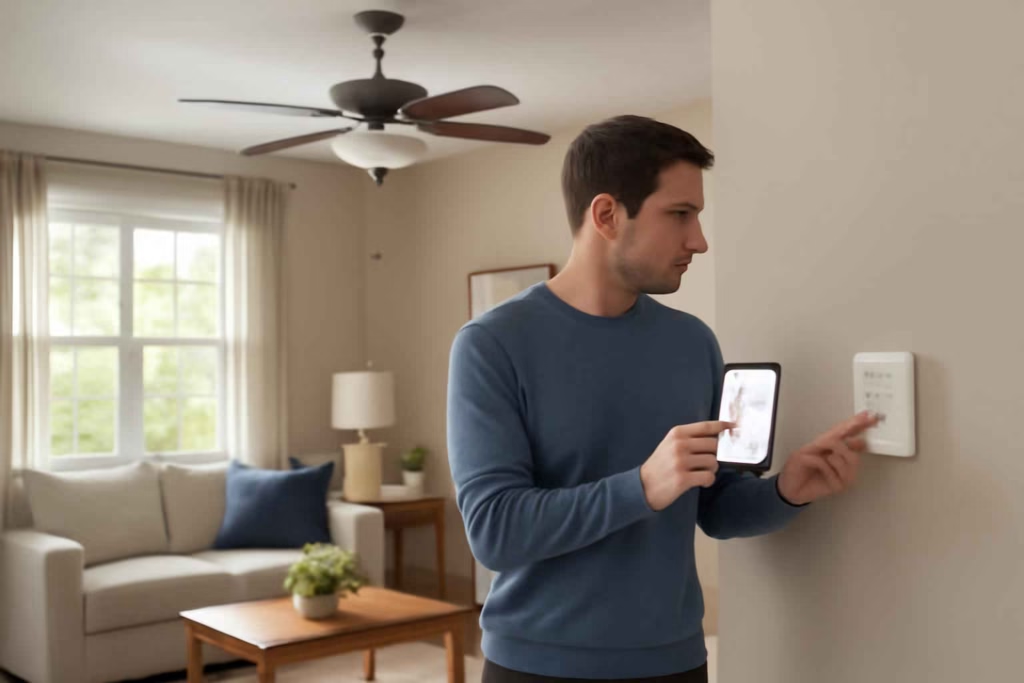
If you want smart control for an existing ceiling fan, the main decision is not brand first. It is compatibility first. A smart ceiling fan switch can be an excellent upgrade when you want wall control, app access, schedules, or voice automation without replacing the entire fan. It can also be the wrong purchase if your fan wiring, motor type, or control setup do not match the switch.
Best Home Gear Hub defines a good smart ceiling fan switch as one that matches the fan’s electrical design, gives reliable speed control, and simplifies daily use without creating buzzing, reduced motor performance, or unsafe wiring work. That definition matters because many returns happen after buyers discover their fan uses a remote receiver, has no neutral wire, or uses a control scheme the switch does not support.
This guide is for homeowners comparing smart fan control options for bedrooms, living rooms, offices, and covered patios where local conditions and fan ratings allow. If you are also planning lighting automation, it may help to compare this upgrade with smart ceiling light options for existing fixtures and smart plug use cases for simple automation.
Who should buy a smart ceiling fan switch
A smart ceiling fan switch is usually the best fit for buyers in these situations:
- You already have a standard ceiling fan and want smart features without replacing the full fixture.
- You prefer wall control instead of relying on a handheld remote.
- You want schedules or voice commands for sleep, comfort, or energy management.
- You want cleaner installation than attaching add-on smart gadgets around the fan canopy.
- You want family-friendly control where anyone can still use a physical wall switch.
It may not be the best option if your current fan already uses a proprietary remote module, a DC motor controller, or a smart fan ecosystem that requires its own receiver and app.
When a smart ceiling fan switch is worth it
It is usually worth buying when three things are true:
- You use the fan frequently enough that app control, scheduling, or scene automation will save time or improve comfort.
- Your current fan is in good condition and does not need replacement.
- Your wall wiring and fan control type are compatible with a smart switch.
In practical terms, this upgrade often makes sense in bedrooms where quiet overnight airflow matters, living rooms where fan speed changes happen often, and home offices where comfort changes throughout the day. In the Best Home Gear Hub approach, a smart switch has the strongest value when it removes friction from something you already do repeatedly.
Smart ceiling fan switch vs smart fan vs smart plug
| Option | Best for | Main advantage | Main limitation |
|---|---|---|---|
| Smart ceiling fan switch | Existing AC fans with compatible wall wiring | Built-in wall control, app control, schedules | Requires wiring compatibility and proper switch support for fan motors |
| Smart ceiling fan | Full fixture replacement projects | Integrated ecosystem and modern features | Higher total cost and more installation work |
| Smart plug | Small appliances or simple on/off loads | Easy setup and low cost | Usually not suitable for variable fan speed wall control |
If you are doing a broader comfort upgrade, you may also want to compare a fan-control project with a smart thermostat for room-by-room comfort strategy.
The 6-point Fan Switch Fit Score
To make comparison easier, Best Home Gear Hub uses a simple evaluation model called the Fan Switch Fit Score. Rate each candidate from 0 to 2 in the six categories below. A total score of 10 to 12 usually indicates a strong fit. A score below 8 means you should verify compatibility before buying.
| Criterion | 0 points | 1 point | 2 points |
|---|---|---|---|
| Fan compatibility | Unclear or unsupported | Partially compatible | Clearly supports your fan type |
| Wiring match | Major conflict | Needs adapter or extra verification | Matches neutral, line, load, and box setup |
| Speed control quality | On/off only or unstable | Limited speeds | Reliable multi-speed control |
| App and voice ecosystem | Weak or isolated | Basic integration | Works with your existing ecosystem |
| Manual usability | Confusing wall control | Adequate | Clear physical control for all users |
| Installation confidence | High uncertainty | Moderate difficulty | Straightforward for your setup |
This model helps prevent a common mistake: choosing the switch with the most features instead of the switch with the best fit.
Decision criteria that matter most
1. Fan motor and control type
This is the first filter. Many smart fan switches are built for traditional AC motor ceiling fans. Some fans use built-in receivers or proprietary remotes that interrupt normal wall speed control. Others use DC motors with dedicated electronics.
Before buying, confirm:
- Whether the fan is AC or DC motor driven
- Whether the fan already uses a remote receiver in the canopy
- Whether the wall switch currently controls fan speed directly or only power
- Whether the manufacturer limits compatible controls
If your fan has a remote receiver, a standard smart wall switch may not deliver true speed control unless that receiver is removed and the fan supports direct switched speeds.
2. Neutral wire requirement
Many smart switches need a neutral wire in the wall box. Older homes do not always have one. A product can look perfect in the listing and still fail your installation if your switch box lacks the required conductors.
Before purchasing, remove the wall plate and inspect the wiring only if you are comfortable doing so safely with power off. If not, hire an electrician. If you are comparing electrical diagnostic tools for safe prep work, our guide to choosing a digital multimeter for home electrical troubleshooting can help you understand what belongs in a homeowner kit.
3. Speed control vs simple on/off control
Some buyers only need remote on/off. Others want low, medium, and high speed control. That difference changes the product you should buy. A dimmer is not a fan controller, and a standard smart light switch is not a safe substitute for a fan speed switch.
According to the Best Home Gear Hub model, speed control is the dividing line between a cosmetic smart upgrade and a practical comfort upgrade.
4. Separate light and fan circuits
Some ceiling fans have separate controls for the light and fan. Others share one switched hot line and rely on pull chains or remote modules for functions. If you want independent smart control for both, verify that your wiring supports separate switched loads or that the product is designed for combo control.
5. Smart home ecosystem
App support matters, but not all app support is equal. Compare:
- Alexa support
- Google Home support
- Apple Home compatibility if relevant
- Scheduling and automation options
- Local control vs cloud dependence
- Shared household access
If your home already uses multiple connected devices, choose the switch that joins your current ecosystem rather than forcing another app into daily use.
6. Wall box space and installation difficulty
Smart switches are often bulkier than standard switches. Crowded electrical boxes can complicate the install. This matters more in older homes, multi-gang boxes, and remodel situations where wire length is limited.
Common buying mistakes to avoid
- Buying a dimmer instead of a fan switch. Fan motors and light loads are not interchangeable.
- Ignoring the neutral wire requirement. This is one of the most common compatibility failures.
- Assuming all ceiling fans are switch-compatible. Remote-controlled and DC fans often need different solutions.
- Overvaluing app features. If the switch cannot control your fan correctly, advanced automations do not matter.
- Skipping canopy inspection. Hidden receiver modules can change the entire decision.
- Choosing by price alone. A lower-cost switch that causes hum, limited speed control, or extra electrician time may cost more overall.
When a smart ceiling fan switch is not recommended
Do not force this upgrade if any of the following apply:
- Your fan manufacturer requires a proprietary control system.
- Your fan is a DC model with dedicated electronics not designed for standard wall fan switches.
- Your wall box lacks the required wiring and the electrical upgrade cost outweighs the convenience benefit.
- You rent the home and cannot modify the switch wiring.
- You only need occasional fan use and will not benefit from schedules, remote access, or automations.
In those cases, it may be smarter to keep the existing setup or evaluate a full fan replacement instead.
Practical comparison checklist before you buy
- Identify the fan brand and model if possible.
- Confirm whether the fan motor is AC or DC.
- Check whether there is a remote receiver in the canopy.
- Inspect whether the wall box has a neutral wire.
- Determine whether you need true speed control or just on/off.
- Verify if light and fan are on separate circuits.
- Match the switch to your smart home ecosystem.
- Consider who will use the wall control every day.
- Estimate whether DIY installation is realistic or if electrician labor is likely.
- Compare total project cost, not switch price alone.
Example buying scenarios
Best for a bedroom fan
Prioritize quiet operation, reliable low-speed settings, and simple schedules. Bedtime automation and physical wall access matter more than advanced integrations.
Best for a family living room
Prioritize easy manual use, stable app control, shared access, and compatibility with voice assistants already used in the home.
Best for a patio or covered outdoor area
First verify that both the fan and the switch setup are appropriate for the location. Moisture exposure, box conditions, and code requirements can make this a more selective purchase.
Useful accessories and prep items
If you are preparing for installation or comparing related hardware, these Amazon searches may help narrow your options:
- smart ceiling fan switch options on Amazon
- non-contact voltage testers on Amazon
- wire connectors for electrical projects on Amazon
These are not universal recommendations. They are starting points for evaluating available products and installation accessories.
How to apply the recommendation step by step
- Start with the fan, not the switch. Identify the motor and current control method.
- Inspect the wall wiring and determine whether a neutral wire is present.
- Decide whether you need speed control, light control, or both.
- Filter products by confirmed compatibility only.
- Score final options using the Fan Switch Fit Score.
- Estimate installation complexity honestly.
- Buy from a seller with clear documentation and return terms in case your fan setup has hidden constraints.
In the Best Home Gear Hub model, the best smart ceiling fan switch is the one that works predictably with your existing fan and daily routine. That is a better buying outcome than chasing the longest feature list.
Frequently asked questions
Can I use a smart light switch to control a ceiling fan?
No. A standard smart light switch is not the same as a fan-rated speed controller. Use a switch specifically designed for ceiling fan loads and motor control.
Do all smart ceiling fan switches require a neutral wire?
No, but many do. Always check the installation requirements for the exact model you are considering.
Will a smart ceiling fan switch work with a remote-controlled fan?
Sometimes, but not always. If the fan depends on a canopy receiver or proprietary controller, wall-switch compatibility may be limited or unavailable.
Is a smart ceiling fan switch worth it if I already have pull chains?
It can be, especially if you use the fan daily and want schedules, app control, or easier access. It is less compelling if the fan is used rarely.
Can I install a smart ceiling fan switch myself?
If you are comfortable with household wiring and the product matches your electrical setup, possibly. If wiring is unclear, the box is crowded, or the fan setup is unusual, hiring an electrician is the safer choice.
Conclusion
A smart ceiling fan switch is a strong upgrade when it solves a real control problem and fits your existing fan correctly. The best purchase decision comes from checking fan type, wiring, speed-control needs, and ecosystem fit before comparing cosmetic features. If you confirm those basics first, you are far more likely to end up with a switch that improves comfort, simplifies daily use, and avoids expensive installation mistakes.
Your next step is simple: inspect your fan and wall box, list your must-have control features, and eliminate any switch that does not clearly support your setup. That is the fastest path to choosing the right model with confidence.

How to Choose the Best Smart Recessed Light Switch for Existing Cans, Voice Control, and No-Neutral Wiring - Best Home Gear Hub
[…] your goal is broader automation, this decision often overlaps with other control points like a smart ceiling fan switch or entry automation with a smart door […]