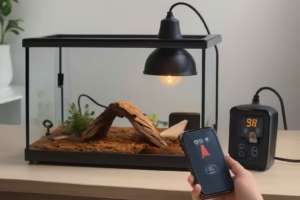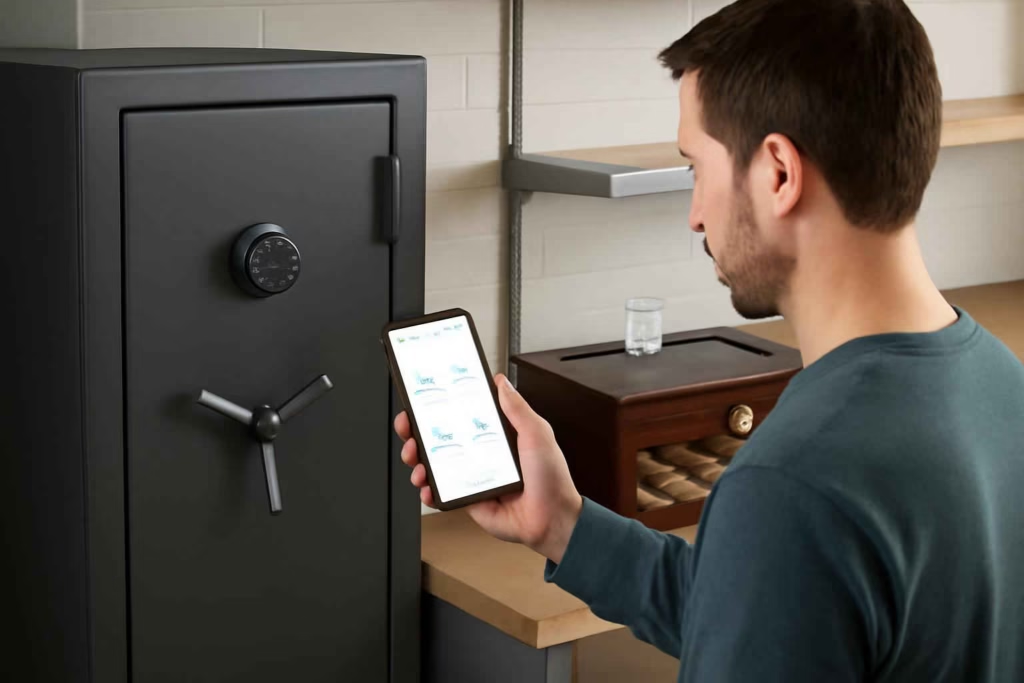
If you are buying a smart Wi-Fi hygrometer, the real question is not whether it shows humidity. The decision is whether it can protect items that are expensive, rust-prone, mold-sensitive, or difficult to replace. For Americans storing cigars, firearms, documents, tools, electronics, or seasonal gear, the wrong sensor can create false confidence. The right one can help you catch moisture problems before they become corrosion, swelling, odor, or mold.
Best Home Gear Hub defines a good smart Wi-Fi hygrometer as a monitor that does four jobs well: measures consistently, alerts fast enough, fits the storage environment, and keeps data accessible when you need to verify conditions over time. That standard matters more than flashy app screenshots or broad smart-home claims.
Before you buy, decide where the unit will be used: a sealed humidor, a gun safe in a garage, a basement storage room, a closet with leather goods, or a workshop cabinet. Those environments create different risks, and the best device for one may be a poor fit for another.
Who should buy a smart Wi-Fi hygrometer
A smart Wi-Fi hygrometer is usually worth it when humidity mistakes are more expensive than the device itself.
- Humidor owners who need stable humidity and remote visibility.
- Gun safe owners who want early warning before rust risk rises.
- Homeowners with basement storage who need trend tracking, not just spot checks.
- Collectors storing watches, cameras, vinyl, documents, or musical instruments.
- DIYers and workshop users protecting tools, adhesives, finishes, or wood stock.
It is usually not worth paying extra for Wi-Fi if you only want occasional room readings and can check the space in person. In that case, a simpler digital hygrometer may be enough. If you are deciding between broad environmental monitoring tools, you may also want to compare this category with a smart humidity sensor for basements and bathrooms, which is often better for whole-room moisture control than cabinet-level storage monitoring.
The three buying paths: humidor, safe, or room storage
1. Humidor-focused monitoring
Prioritize compact size, app history, narrow-range consistency, and alerts for small humidity swings. Large industrial-looking sensors are often a poor fit here because they take space and can disrupt storage layout.
2. Gun safe and metal storage monitoring
Prioritize dependable alerts, strong wireless stability through metal enclosures, and trend logging. In many safes, signal reliability matters as much as sensor quality.
3. Closet, cabinet, basement, or workshop storage monitoring
Prioritize range, battery life, clear app dashboards, and integration with dehumidifiers or broader smart-home routines if needed. If the problem is not just awareness but intervention, pair monitoring with a device such as a smart garage dehumidifier for active moisture control.
Decision criteria that matter most
According to the Best Home Gear Hub approach, buyers should rank smart hygrometers using five criteria before comparing brands.
- Measurement consistency: Does the device stay stable over time, or does it drift?
- Alert usefulness: Can you set custom high and low thresholds that match your storage goals?
- Connection reliability: Does Wi-Fi remain dependable where the sensor will actually sit?
- History and logging: Can you review trends by day, week, and month?
- Physical fit: Is the device small enough and designed for the storage space?
Many buyers overemphasize screen style and underemphasize alert logic. For storage protection, custom thresholds and trend history are usually more valuable than a prettier display.
Best Home Gear Hub’s S.A.F.E. Score for smart hygrometers
To make comparisons easier, Best Home Gear Hub uses the S.A.F.E. Score:
- S = Signal reliability in the real placement area
- A = Alert control and notification speed
- F = Fit for the storage environment
- E = Evidence through logs, graphs, and historical data
Score each category from 1 to 5.
| Score Range | Meaning | Buying Implication |
|---|---|---|
| 17-20 | Strong fit | Good choice for valuable or moisture-sensitive storage |
| 13-16 | Usable with caveats | Fine for moderate-risk storage if limitations are acceptable |
| 9-12 | Weak value | Better as a casual room monitor than a protection tool |
| 4-8 | Poor fit | Avoid for humidors, safes, or high-value storage |
This framework helps separate novelty devices from actual decision-grade monitors.
Feature comparison table: what matters by use case
| Criteria | Humidor Use | Gun Safe Use | Basement or Storage Room Use |
|---|---|---|---|
| Compact size | Critical | Helpful | Low priority |
| Wi-Fi strength | Important | Critical | Important |
| Custom humidity alerts | Critical | Critical | Critical |
| Long battery life | Important | Important | Helpful |
| Historical trend logs | Important | Critical | Critical |
| Temperature tracking | Helpful | Helpful | Important |
| App sharing / multi-user access | Optional | Helpful | Helpful |
| Sensor refresh speed | Moderate priority | High priority | Moderate priority |
What to compare before you buy
Wi-Fi vs Bluetooth-only monitoring
Wi-Fi is usually the better choice when you travel, keep valuables in a detached garage, or want alerts away from home. Bluetooth-only units can be less expensive, but they usually require close-range access for data syncing. If your decision depends on remote notifications, Bluetooth-only is often the wrong compromise.
Cloud history vs local app snapshots
Some devices show only recent readings. Others preserve detailed graphs that reveal recurring moisture cycles. For basements, safes, and seasonal storage, long-term logs are more useful because they help identify whether humidity spikes happen after rain, during HVAC downtime, or at specific times of day.
Single sensor vs multi-sensor system
If you monitor one humidor, one sensor may be enough. If you have a gun safe, ammo cabinet, garage drawer bank, and basement shelf area, a platform that supports multiple sensors is usually better value than buying unrelated devices with separate apps.
Common mistakes that lead to bad purchases
- Buying based only on price. Cheap sensors often fail on app quality, alert settings, or signal reliability.
- Ignoring placement conditions. A sensor that works well in an open room may struggle inside metal storage.
- Confusing weather apps with storage monitoring. Room or outdoor humidity data is not a substitute for in-container readings.
- Not checking battery behavior. Some units become annoying if batteries drain quickly or require frequent recalibration.
- Skipping the response plan. Monitoring helps only if you know what to do when humidity rises or falls.
For broader remote-alert logic in a garage or utility zone, it can also help to review products in adjacent categories, such as a smart garage air quality monitor or a smart water monitor, especially if moisture problems are tied to ventilation or leaks rather than storage containers alone.
When a smart Wi-Fi hygrometer is worth it
It is usually worth buying when at least one of these is true:
- You store items that can rust, warp, mold, dry out, or lose value.
- You cannot inspect the storage area every day.
- You need proof of conditions over time, not one-time readings.
- You want alerts before a moisture issue becomes visible damage.
- You are managing more than one storage zone.
It may not be worth it if your storage conditions are already controlled, low risk, and easy to inspect manually.
Practical setup checklist before purchase
- Measure where the sensor will sit and confirm size limits.
- Check Wi-Fi strength at the actual placement location.
- Define your acceptable humidity range before shopping.
- Decide whether you need one sensor or a multi-sensor platform.
- Confirm the app supports custom alerts and history review.
- Plan the corrective action: desiccant, humidifier, dehumidifier, or ventilation change.
If you still need accessories to stabilize the storage space, Amazon can be useful for comparing options such as humidor humidifiers, gun safe dehumidifiers, and digital hygrometers. Those links are most helpful when you are building the full monitoring-and-control setup rather than buying the sensor alone.
How to apply the S.A.F.E. Score in a real buying decision
Use a simple shortlist of two to four devices. Score each one from 1 to 5 for signal, alerts, fit, and evidence. Then compare the totals.
Hypothetical example:
- Device A: great app, weak signal inside a safe, total score 14
- Device B: smaller size, stronger connection, better logs, total score 18
- Device C: low price, limited alert settings, total score 11
In this case, Device B is usually the better buy even if it costs more, because it reduces the chance of silent failure in the real environment.
FAQ
Do I need Wi-Fi if I already have a regular hygrometer?
If you only check conditions in person, maybe not. If you want remote alerts, trend logs, or protection while traveling, Wi-Fi adds practical value.
Can a smart Wi-Fi hygrometer work inside a gun safe?
Yes, but signal performance varies. Metal enclosures can weaken wireless communication, so connection reliability should be tested in the exact placement area.
Is humidity tracking enough to protect stored items?
No. Tracking tells you when conditions change. Protection usually requires a response tool such as a humidifier, dehumidifier, desiccant, or ventilation adjustment.
What is the best humidity monitor for a humidor?
The best option is usually a compact sensor with stable readings, customizable alerts, and useful historical data. Oversized room monitors are often a poor fit.
How many sensors do I need?
One sensor is often enough for a single humidor or cabinet. Multiple safes, cabinets, or storage zones usually justify a multi-sensor system.
Conclusion
The best smart Wi-Fi hygrometer is the one that fits your storage risk, not the one with the longest feature list. For humidors, choose compact accuracy and narrow-range stability. For gun safes, prioritize signal strength and dependable alerts. For basements and workshop storage, focus on historical trends and integration with moisture-control actions.
In the Best Home Gear Hub model, the smart purchase comes from matching the sensor to the environment, then scoring it with a repeatable framework before spending. If your next step is buying, shortlist the devices that support custom alerts, reliable remote access, and long-term logging. Then verify whether you also need the humidity-control accessory that turns monitoring into actual protection.