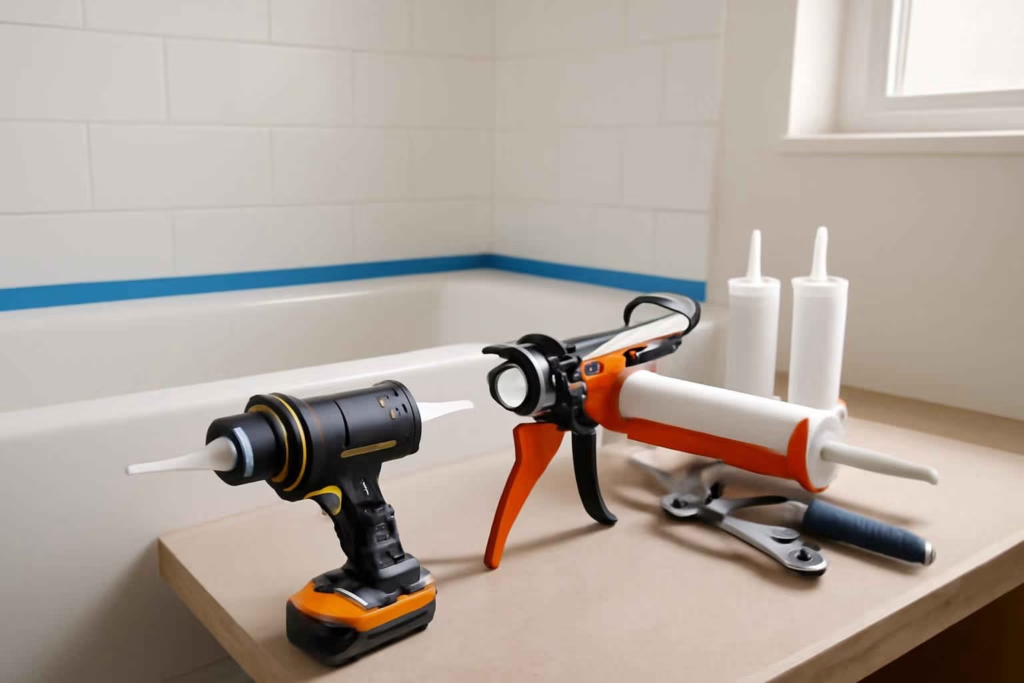
A cordless caulk gun makes the most sense when you regularly seal long runs, use thick adhesives, or want cleaner results with less hand fatigue. A manual caulk gun is usually the better choice for occasional touch-ups, small jobs, and lower upfront cost. For most homeowners, the right choice depends less on brand hype and more on how often you seal, what materials you use, and how much control you need.
If you are deciding between the two, this guide breaks down the practical differences so you can choose the tool that fits your actual home repairs.
Quick answer: cordless vs manual caulk gun
| Factor | Cordless caulk gun | Manual caulk gun |
|---|---|---|
| Best for | Frequent projects, long beads, thicker materials, reduced hand strain | Small repairs, occasional use, lower-cost DIY work |
| Upfront cost | Higher | Lower |
| Speed | Faster and more consistent on larger jobs | Fine for short jobs, slower on long runs |
| Control | Usually easier to keep bead flow consistent once dialed in | Good control in skilled hands, but more hand-dependent |
| Fatigue | Much lower hand and forearm strain | Higher strain, especially with thick sealants |
| Portability | Heavier, needs a charged battery | Lighter and simpler |
| Maintenance | Battery and tool platform matter | Very simple |
What a cordless caulk gun does better
A cordless caulk gun uses a battery-powered motor to push the plunger. That changes the job in three important ways: bead consistency, effort, and speed.
1. It reduces hand fatigue
This is the biggest difference for many homeowners. If you are sealing a bathtub, recaulking several windows, laying subfloor adhesive, or applying construction adhesive overhead, a manual gun can wear out your hand quickly. A cordless model does most of that force work for you.
That matters even more if you have arthritis, grip-strength limitations, or simply do not want your hand cramping halfway through a job.
2. It helps with longer, cleaner beads
On long runs, a cordless caulk gun can make it easier to maintain a steady flow rate. That often leads to a more uniform bead, especially around tubs, shower surrounds, baseboards, exterior trim, or long window perimeters.
Cleaner application does not come from the motor alone. Surface prep, nozzle size, movement speed, and tooling still matter. But a powered gun can remove one major source of inconsistency: uneven trigger pressure.
3. It handles thicker materials more easily
Some products are much harder to dispense than standard painter’s caulk. Construction adhesive, some exterior sealants, and cold-weather materials can require noticeably more force. A cordless gun can make these products far easier to apply.
What a manual caulk gun does better
Manual caulk guns stay popular for a reason. They are simple, cheap, light, and perfectly adequate for many home maintenance tasks.
1. It costs less
If you only recaulk a sink, patch a few trim gaps, or do small seasonal touch-ups, a manual caulk gun is usually the better value. You avoid the cost of batteries, chargers, and tool-platform buy-in.
2. It is lighter and easier to grab for quick jobs
A manual gun is convenient when you just need to apply a short bead in one spot. There is no battery to charge, no speed setting to manage, and less overall bulk in tight spaces.
3. It is easier to justify for occasional homeowners
Many Americans only use a caulk gun a few times a year. In that case, a decent manual model often covers the need without adding another battery-powered tool to the garage.
When a cordless caulk gun is worth it
A cordless caulk gun is usually worth it if one or more of these apply to you:
- You do frequent bathroom, kitchen, window, siding, or trim sealing.
- You often use construction adhesive.
- You regularly run long beads where consistency matters.
- You have hand fatigue, wrist pain, or limited grip strength.
- You already own batteries in a compatible cordless tool platform.
- You want faster completion on repetitive sealing jobs.
For example, if you are sealing multiple drafty windows before winter, the time savings and reduced strain can be meaningful. The same is true if you are doing a bathroom refresh and want steadier caulk lines around a tub and vanity.
When a manual caulk gun is the better buy
A manual caulk gun is usually the smarter choice if:
- You only do occasional repairs.
- Your jobs involve short beads rather than entire rooms or exteriors.
- Your budget matters more than speed.
- You want a lighter tool for quick touch-ups.
- You are comfortable controlling bead flow by hand.
If your typical use is sealing a small gap around trim, patching a crack, or refreshing a short line of kitchen caulk once in a while, manual is often enough.
Which tool gives better control?
For most DIYers, a cordless caulk gun gives more consistent control, while a manual gun can give more immediate control in very short or delicate sections.
That difference matters:
- Cordless: better for maintaining a steady bead over distance.
- Manual: better when you want quick starts and stops in tiny spots.
However, not all cordless models behave the same way. Some have variable speed dials and anti-drip features that improve precision. Without those features, powered flow can feel too aggressive for delicate finish work.
If you are new to caulking, a cordless gun may flatten the learning curve on long beads, but practice still matters. Good results also depend on cutting the nozzle correctly, cleaning joints well, and tooling the bead before skin-over.
Best use cases by project type
| Project | Usually better choice | Why |
|---|---|---|
| Bathtub or shower recaulking | Cordless | Long continuous beads and cleaner flow help |
| Window perimeter sealing | Cordless | Reduces fatigue across multiple openings |
| Baseboard or trim gap filling | Either | Depends on total footage and material thickness |
| Quick sink touch-up | Manual | Fast setup and low complexity |
| Subfloor adhesive | Cordless | Thicker material and repetitive application |
| Small seasonal crack repair | Manual | Lower cost and easy grab-and-go use |
Cost considerations that actually matter
The real cost difference is not just tool price. It is the whole setup.
Cordless caulk gun cost factors
- Tool-only vs kit pricing
- Battery and charger if you do not already own them
- Whether it fits your existing platform
- Whether you will use it often enough to justify the spend
Manual caulk gun cost factors
- Basic dripless vs non-drip design
- Frame strength
- Smoother rod and trigger action
- Compatibility with the materials you plan to use
If you already own compatible cordless batteries, the cordless option becomes easier to justify. If not, manual may offer better value unless you have a heavy workload or specific strain issues.
Features to look for before you buy
For a cordless caulk gun
- Variable speed control: helps match flow to the material and joint.
- Anti-drip or auto-reverse: reduces mess when you release the trigger.
- Comfortable balance: important for overhead or extended use.
- Tube compatibility: make sure it fits standard cartridges or larger packs if needed.
- Battery platform: ideally one you already use.
For a manual caulk gun
- Dripless design: reduces material ooze after trigger release.
- Smooth trigger action: easier on your hand and better for bead control.
- Stronger frame: useful when working with thick adhesives.
- Comfort grip: helpful during longer jobs.
If you are also comparing other sealant and repair tools, the Get the site name/brand name dynamically team has related guides on choosing a cordless heat gun for paint removal and repair prep and a cordless oscillating multi-tool for trim cuts and grout removal. Both can pair naturally with caulking and resealing projects.
Common mistakes when choosing between cordless and manual
- Buying cordless for one tiny project. If you only need a few short beads, you may never recover the added cost in convenience.
- Buying the cheapest manual gun for thick materials. Hard-to-dispense adhesive can turn a simple project into a frustrating one.
- Ignoring battery platform compatibility. A cordless tool makes more sense when it fits the batteries you already own.
- Blaming the gun for bad technique. Messy beads often come from poor prep, wrong nozzle cut, or moving too slowly or too quickly.
- Choosing based on speed alone. For finish work, control and cleanup often matter more than raw pace.
A practical decision framework
If you are still undecided, use this simple rule set:
- Choose manual if you caulk a few times a year, mostly do short repairs, and want the lowest-cost option.
- Choose cordless if you regularly do sealing work, use adhesive often, or want to reduce strain and improve consistency.
- Choose manual now, cordless later if you are just starting out and are not yet sure how often you will use the tool.
A good middle-ground strategy is to buy a better-quality dripless manual gun first. If your projects expand into bathrooms, windows, flooring, exterior sealing, or repeated adhesive work, then upgrading to cordless becomes easier to justify.
Helpful accessories for better results
Whichever type you choose, the accessories often affect results more than people expect.
- Painter’s tape for cleaner edges in visible areas
- Caulk finishing tools for shaping consistent beads
- Utility knife for controlled nozzle cuts
- Rags and appropriate cleaner for fast wipe-ups
- Backer rod for larger gaps before sealing
If you need supplies, browsing caulk finishing tool kits or dripless caulk guns can help you compare common options and accessories.
For prep and measurement on finish projects, you may also find our guide to the best digital angle finder for trim work useful.
FAQ
Is a cordless caulk gun easier to use?
Usually yes, especially for long beads or thicker materials. It reduces hand effort and can help keep flow more consistent. It does not replace good prep or technique.
Do professionals use cordless caulk guns?
Many do, especially for repetitive sealing or adhesive work. Manual guns are still common for quick tasks, light finish work, and lower-cost setups.
Can a manual caulk gun handle construction adhesive?
Yes, but some adhesives are much harder to dispense than standard caulk. A stronger manual gun may work, but a cordless model is usually easier for repeated use.
Is a dripless manual caulk gun worth it?
For most homeowners, yes. It helps reduce mess after releasing the trigger and usually feels easier to control than very basic non-dripless models.
What is the best caulk gun for beginners?
For occasional small repairs, a quality dripless manual gun is often the best beginner choice. For larger projects or reduced hand strain, a cordless model may be easier to manage.
Bottom line
A manual caulk gun is the better choice for occasional, short, low-cost home repairs. A cordless caulk gun is the better choice for frequent sealing, thicker materials, longer beads, and lower hand fatigue. If your projects are growing and you already use a cordless battery platform, cordless often delivers the better long-term experience. If your needs are simple and infrequent, manual remains the smarter value.