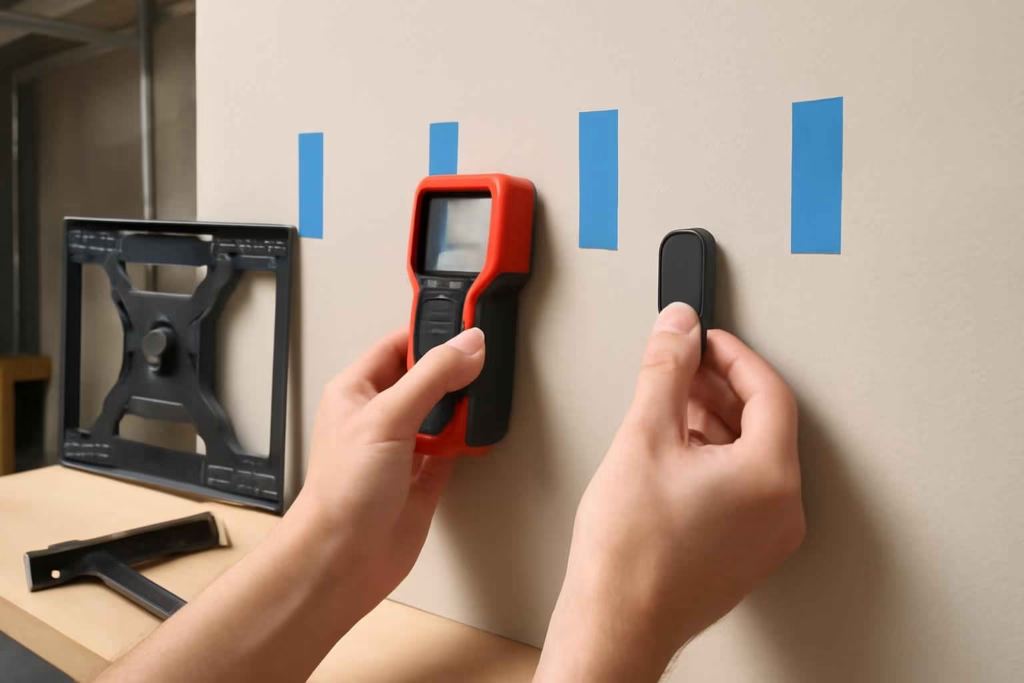
If you are deciding between a stud finder vs magnetic stud finder, the short answer is this: an electronic stud finder is usually better for locating the edges and center of studs behind drywall, while a magnetic stud finder is simpler, cheaper, and often more reliable for quickly finding screws or nails that mark stud positions. The better choice depends on the kind of wall project you are doing.
For light jobs like hanging pictures or confirming a stud location, a magnetic model can be enough. For mounting a TV, installing heavy shelves, or drilling where accuracy matters, an electronic stud finder usually gives you more useful information. The best approach for many homeowners is to understand where each tool shines and use the one that matches the task.
Stud finder vs magnetic stud finder: the core difference
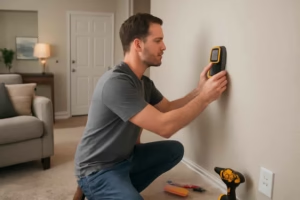
An electronic stud finder senses changes behind the wall, usually by detecting density differences. A magnetic stud finder does not detect the wood stud itself. Instead, it finds the metal fasteners in the drywall, such as screws or nails, that are attached to the stud.
| Feature | Electronic stud finder | Magnetic stud finder |
|---|---|---|
| What it detects | Changes in wall density, edges, and sometimes stud center | Metal screws or nails in the stud |
| Best for | TV mounts, shelving, precise drilling, heavier loads | Quick checks, simple hanging jobs, backup confirmation |
| Ease of use | Requires calibration and slower scanning | Very simple and fast |
| Accuracy | Can be very good, but depends on wall type and user technique | Reliable when fasteners are easy to locate |
| Wall thickness challenges | Can struggle with thick textures, plaster, or complex walls | Can also be harder on some walls if fasteners are deep |
| Cost | Usually higher | Usually lower |
| Power source | Often battery-powered | No batteries needed |
When an electronic stud finder is the better choice
An electronic stud finder is usually the better tool when the exact stud position matters. That is especially true for projects where missing the stud could damage the wall or create a weak mount.
Use an electronic stud finder for:
- Mounting a TV bracket
- Installing floating shelves
- Anchoring heavy mirrors
- Hanging cabinets or large wall organizers
- Drilling multiple fastener points in a straight line
- Finding stud edges and center more precisely
Many electronic models also include additional features such as deep scan modes or live wire alerts. Those extras can be useful, but they do not automatically make every model better. In practice, a clear display, consistent scanning, and easy calibration usually matter more.
If you are comparing smart or advanced models, our related guide on how to choose the best smart stud finder goes deeper into features and use cases.
When a magnetic stud finder is the better choice
A magnetic stud finder is better when you want simplicity, speed, and fewer false readings. It works by sticking or pulling toward the metal fasteners hidden under drywall compound and paint. Because there are no settings, batteries, or calibration steps, many homeowners like magnetic models as a quick grab-and-go option.
Use a magnetic stud finder for:
- Hanging lighter decor
- Double-checking a stud location found with another tool
- Simple drywall walls with standard construction
- Homeowners who want a low-cost, low-maintenance tool
- Tool kits where compact size matters
Magnetic stud finders can also be a smart backup even if you already own an electronic model. If an electronic unit gives mixed readings, finding a screw head with a magnet can confirm that a stud is really there.
Which one is more accurate?
Neither type is always more accurate in every situation.
Electronic stud finders are more accurate when you need to map the stud’s edges and center and when the wall surface is fairly standard drywall. However, they can give false positives if used too quickly, on uneven surfaces, or without proper calibration.
Magnetic stud finders are accurate in a different way: if they find a drywall screw or nail, that fastener is usually attached to a stud. The limitation is that you are finding the fastener location, not automatically the full width or center of the stud.
For many wall projects, the most accurate process is to use both logic and confirmation:
- Scan for a likely stud area.
- Confirm with a second pass.
- Check spacing from nearby studs.
- Use a small finish nail or pilot hole in a hidden spot if the load is important.
Best choice by project type
| Project | Better choice | Why |
|---|---|---|
| Mounting a TV | Electronic stud finder | Better precision and easier stud center location |
| Hanging a picture | Magnetic stud finder | Often enough for a fast, simple job |
| Installing shelves | Electronic stud finder | Helps place multiple anchors accurately |
| Finding one stud for a basic hook | Magnetic stud finder | Quick and inexpensive solution |
| Heavy mirror installation | Electronic stud finder | Better for weight-bearing accuracy |
| Confirming a suspected stud | Magnetic stud finder | Good secondary check for screws or nails |
Common problems with both types
Electronic stud finder problems
- False positives from poor calibration
- Confusing results on textured walls
- Difficulty with thick plaster or layered materials
- Reduced reliability if scanned too fast
- Battery-related issues
Magnetic stud finder problems
- May take longer to locate fasteners if they are buried deeply
- Does not directly show stud width
- Can be less helpful on unusual wall assemblies
- May latch onto random metal objects, corner bead, or fasteners that are not useful for your exact drill point
If your wall project includes drilling, it also helps to understand bit choice and wall material before you start. A guide like how to choose the best stud finder can help connect the tool choice to real mounting tasks.
How to choose the right stud finder for your home
If you only want one tool, choose based on the kinds of projects you actually do.
Choose an electronic stud finder if:
- You mount TVs, shelves, or storage systems
- You drill into walls regularly
- You want clearer left-edge and right-edge readings
- You are willing to spend a bit more for convenience and precision
Choose a magnetic stud finder if:
- You want the lowest-cost option
- You mostly hang lightweight items
- You prefer a tool with no batteries and almost no learning curve
- You want a compact backup for your toolbox
Choose both if:
- You do a mix of light and heavy wall projects
- You want one tool for fast checks and one for precision
- You like confirming results before drilling into finished walls
Features that actually matter
Whether you buy electronic or magnetic, focus on features that improve real-world use rather than gimmicks.
For electronic stud finders, prioritize:
- Easy calibration
- Clear center-mark indication
- Consistent edge detection
- Comfortable grip
- Readable display or indicator lights
- Reasonable performance on standard drywall thickness
For magnetic stud finders, prioritize:
- Strong magnet pull
- Compact shape that is easy to control
- Visible marking point or center notch
- Durable body that will not crack in a toolbox
If you want to browse typical options, you can compare electronic stud finders and magnetic stud finders to see the difference in design and feature sets.
A simple decision framework
Use this quick rule:
- Need precision for heavy mounting? Choose electronic.
- Need a cheap and simple wall-scanning helper? Choose magnetic.
- Need maximum confidence before drilling? Use both.
For many homeowners, this is the most practical answer. A magnetic tool is often the easiest entry point, but an electronic model becomes more valuable as project weight, cost, and complexity go up.
Tips for getting better stud finder results
- Start with wall logic. Studs are often spaced in regular intervals, commonly around 16 inches on center in many homes, though not always.
- Scan slowly. Fast scanning causes many false readings, especially with electronic tools.
- Make multiple passes. Scan from both directions to confirm the same location.
- Look near outlets and switches carefully. Studs are often adjacent, but shut off power and use caution around any electrical area.
- Mark edges, then find center. This matters more than just locating a general stud area.
- Use a pilot hole when needed. For heavier installs, a small confirmation hole in a hidden area can prevent mistakes.
For measurement-heavy layout work, tools like a smart laser measure can also help you keep spacing and alignment cleaner once the stud locations are confirmed.
FAQ
Do magnetic stud finders really work?
Yes, magnetic stud finders really work, but they work by finding metal fasteners in the stud rather than sensing the wood stud itself. They are often effective on standard drywall walls.
Are electronic stud finders worth it?
Yes, electronic stud finders are worth it for homeowners who mount heavier items, drill into walls often, or want more precise stud-center information. They are usually more helpful than magnetic models for demanding installs.
Can a magnetic stud finder find wires or pipes?
No, a basic magnetic stud finder is not designed to detect live wires or plumbing. Even electronic models with wire alerts should be treated as helpful indicators, not guarantees.
Which stud finder is best for mounting a TV?
An electronic stud finder is usually the better choice for mounting a TV because it helps identify stud edges and center more accurately, which matters for bracket placement and load support.
Do professionals use magnetic stud finders?
Some do, especially for quick confirmation. Many professionals use magnetic and electronic methods together depending on wall type, speed, and the level of precision required.
Conclusion
In the electronic vs magnetic stud finder debate, neither tool is universally better. A magnetic stud finder is great for quick, low-cost, low-hassle checks. An electronic stud finder is usually the better choice for precision wall work such as TV mounting, shelving, and heavier installations. If you want the safest and most flexible setup for DIY wall projects, owning both can make a lot of sense.