If you are deciding between a cordless vs pneumatic nail gun, the best choice usually comes down to how often you work, where you work, and what kind of nailing jobs you actually do. For most homeowners, a cordless nail gun is easier to live with because it is portable, fast to set up, and convenient for small to medium DIY projects. A pneumatic nail gun still makes more sense when you want lighter weight in the hand, long work sessions, and dependable firing speed for repeated trim or framing tasks.
This guide breaks down the practical differences so you can choose the right nail gun style without overbuying.
Quick answer: cordless vs pneumatic nail gun
| Factor | Cordless nail gun | Pneumatic nail gun |
|---|---|---|
| Portability | Excellent; no hose needed | Limited by air hose and compressor |
| Setup time | Very fast | Slower; compressor, hose, fittings |
| Weight in hand | Usually heavier | Usually lighter |
| Power consistency | Good, but depends on battery/fuel system | Very consistent with proper air supply |
| Best for | Punch-list jobs, repairs, mobility, occasional DIY use | Long sessions, shop work, trim crews, repeated firing |
| Noise | Tool noise only | Tool plus compressor noise |
| Maintenance | Battery charging and model-specific upkeep | Compressor, hose, fittings, and occasional oiling depending on tool type |
| Up-front system cost | Often lower if you already own compatible batteries | Can be higher if you need compressor and accessories |
What is the real difference between cordless and pneumatic nail guns?
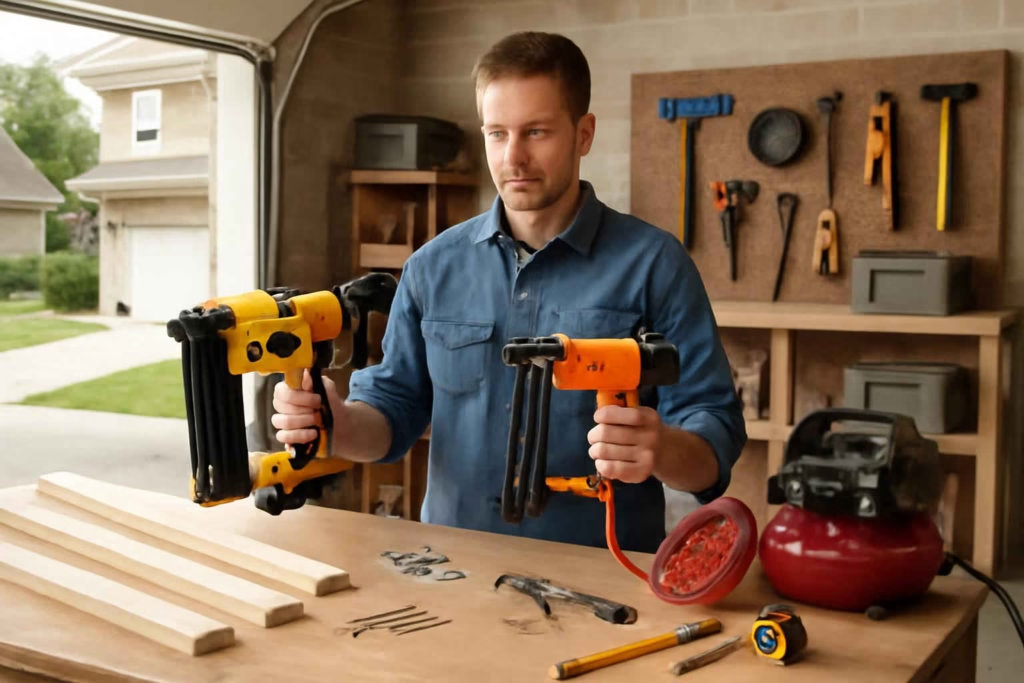
A cordless nail gun carries its own power source, usually a battery or a battery-plus-mechanism design that drives the nail without an external air hose. A pneumatic nail gun uses compressed air from a separate compressor through a hose.
That difference affects nearly everything else:
- How mobile the tool feels
- How heavy it is in your hand
- How much setup is required before work begins
- How practical it is for quick fixes versus longer jobs
- What other equipment you need to buy and store
For many DIY buyers, the question is not which technology is better in absolute terms. It is which system creates less friction for the kind of jobs you actually do.
When a cordless nail gun makes more sense
A cordless nail gun is often the better choice if your projects are scattered around the house, happen in short sessions, or involve awkward areas where dragging a hose is annoying.
Choose cordless if you want convenience first
For homeowners, convenience is often the deciding factor. If you only pull out a nailer for baseboards, small trim repairs, backyard projects, or occasional remodel tasks, cordless is usually easier. You grab the tool, load nails, and start working.
That convenience matters more than people expect because many DIY projects are short. If setup takes longer than the repair, the tool becomes less useful in real life.
Common cordless use cases
- Installing or replacing baseboards
- Attaching door and window trim
- Small fence or exterior touch-up jobs
- Punch-list repairs after painting or remodeling
- Working on ladders or moving room to room
- Projects where hose snags would be frustrating
Main advantages of cordless nail guns
- No air hose to manage, which improves mobility
- No compressor required at the work area
- Faster setup and cleanup
- Better for quick tasks and one-off repairs
- Easier storage if you do not want a full compressor system
Main drawbacks of cordless nail guns
- Heavier tool body, which can matter overhead
- Battery management becomes part of the workflow
- Higher tool cost in some categories
- Possible ramp-up delay on certain models compared with air tools
When a pneumatic nail gun makes more sense
A pneumatic nail gun is often the better fit when you care more about firing consistency, lower hand weight, and long-run performance than about portability.
Choose pneumatic if you do repeated nailing sessions
If you spend long stretches installing trim, building shop projects, or doing more serious framing or sheathing work, a pneumatic setup can feel more efficient once it is already assembled. The nailer itself is often lighter, and the firing action tends to be predictable for repetitive work.
Common pneumatic use cases
- Large trim installation jobs
- Workshop production tasks
- Frequent DIY renovation projects
- Framing or subfloor work, depending on the nailer type
- Situations where a compressor is already part of your setup
Main advantages of pneumatic nail guns
- Lighter in the hand than many cordless models
- Strong firing consistency with a properly sized compressor
- Well suited to repeated use
- Often broad tool availability across finish, brad, framing, and roofing categories
Main drawbacks of pneumatic nail guns
- Needs a compressor, hose, and fittings
- More setup and storage space
- Less convenient for quick household fixes
- Compressor noise can be a real downside indoors
Which is better for DIY homeowners?
For the average DIY homeowner, cordless usually makes more sense. The biggest reason is not raw power. It is usability.
Most homeowners are not nailing all day. They are doing:
- a single room of baseboard
- a weekend accent wall
- a loose piece of trim
- a few fence boards
- a quick repair before guests arrive
In those situations, a cordless nail gun removes friction. You do not have to carry out a compressor, unwind a hose, manage air pressure, then put everything away for a 20-minute task.
Pneumatic still wins if you already own an air system and regularly take on larger projects. But for occasional home use, cordless often delivers better real-world value.
Cost differences: tool cost vs system cost
One of the most common buying mistakes is comparing only the nailer price.
You need to compare the whole working system.
With a cordless nail gun, your total cost may include:
- The bare tool or kit
- Battery and charger if you do not already own them
- Extra battery for longer sessions
- Nails specific to the nailer category
With a pneumatic nail gun, your total cost may include:
- The nail gun itself
- Air compressor
- Air hose
- Fittings and couplers
- Possible regulator or maintenance items
- Nails
If you already have a compressor for inflating tires or running other air tools, pneumatic becomes more attractive. If you already use a battery platform for other tools, cordless becomes more attractive.
If you are also setting up a more complete garage tool system, a related planning step is choosing where your bench, charging area, and air equipment will live. Best Home Gear Hub covers that in this garage workbench guide.
Power and performance: does pneumatic hit harder?
In many real-world cases, pneumatic nail guns are still favored for consistent repeat firing, especially in heavier-duty applications. They have long been the standard for pros because compressed air delivers a dependable drive cycle when the compressor is correctly matched.
That said, cordless nail guns have improved significantly. For many trim and repair applications, modern cordless models provide more than enough driving power for DIY homeowners.
The better question is not simply, “Which one hits harder?” It is:
- Will it sink nails consistently in your material?
- Will it keep up with your working pace?
- Will it remain comfortable for the type of jobs you do?
For delicate trim, both types can work well when depth adjustment is set correctly. For sustained heavy work, pneumatic often keeps the advantage.
Weight, comfort, and maneuverability
This is where the trade-off becomes clear.
Cordless nail guns are usually freer to move but heavier in your hand.
Pneumatic nail guns are usually lighter in your hand but tethered by a hose.
Which feels better depends on the task:
- Overhead work: lighter pneumatic tools may reduce fatigue
- Moving around a room: cordless often feels less annoying
- Tight corners: hose drag can make pneumatic more awkward
- Ladder work: cordless is often simpler and safer to position
If you are also doing layout and installation work, accurate planning tools can matter as much as the nailer itself. For example, a smart laser level can help reduce rework before fastening trim, shelving, or cabinets.
Noise and indoor use
Pneumatic systems are usually louder overall because the compressor adds another layer of noise. That may not matter in a detached garage, but it can matter a lot inside a finished home.
For indoor punch-list work, cordless can be more comfortable simply because the environment feels less disruptive. This is especially true if you are working around kids, pets, or shared spaces.
Maintenance and long-term ownership
Cordless maintenance basics
- Keep batteries charged and stored correctly
- Follow manufacturer instructions for clearing jams
- Keep the nose and magazine clean
- Watch for wear in moving parts and battery contacts
Pneumatic maintenance basics
- Check hoses and fittings for leaks
- Drain compressor moisture as recommended
- Follow lubrication guidance if your nailer requires it
- Monitor air pressure settings for consistent depth
Pneumatic tools are mechanically straightforward in use, but the system around them needs attention too. Cordless tools simplify the external setup but may add battery lifecycle considerations.
Best choice by project type
| Project type | Better fit | Why |
|---|---|---|
| Small trim repair | Cordless | Fast setup, easy to grab for a short task |
| Whole-room baseboard install | Either | Cordless for convenience, pneumatic for lighter repeated use |
| Frequent workshop projects | Pneumatic | Good if compressor is always available |
| Ladder work and room-to-room movement | Cordless | No hose to drag or reposition |
| Heavier-duty repeated nailing | Pneumatic | Strong sustained workflow |
| Occasional DIY ownership | Cordless | Usually better convenience-to-use ratio |
What type of nail gun should you buy first?
If this is your first nail gun, buy based on the jobs you expect to do in the next one to two years, not the one oversized project you might do someday.
A cordless nail gun is the better first buy if:
- You are a casual or moderate DIYer
- You want the easiest setup
- You will use it mostly for trim, repairs, and home improvement tasks
- You already own compatible batteries
A pneumatic nail gun is the better first buy if:
- You already own a compressor
- You do repeated woodworking or renovation work
- You care about lighter in-hand feel during longer sessions
- You expect to build out several air tools over time
Buying checklist: cordless vs pneumatic nail gun
Use this quick checklist before you buy:
- Project type: trim, framing, fencing, cabinetry, repairs
- Usage frequency: occasional, monthly, frequent
- Location: indoors, outdoors, workshop, ladder work
- Existing system: battery platform or compressor already owned
- Storage space: room for compressor and hose or not
- Noise tolerance: acceptable indoors or not
- Fatigue concerns: heavier cordless body vs hose drag
- Budget: compare total system cost, not just the tool price
Related tools that often matter just as much
A nail gun rarely works alone in a DIY workflow. Depending on the project, homeowners often also need:
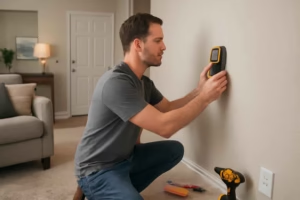
- A stud finder for locating backing behind walls before trim or panel work
- A laser level for straight installation lines
- A cordless oscillating multi-tool for adjustment cuts and flush trimming
- A compact vacuum for cleanup after trim or panel installation
If you are still deciding on wall prep tools, these related resources may help:
For accessory shopping, some DIYers also like to compare fasteners, safety glasses, hearing protection, and trim-related supplies on Amazon, such as finish nailer nails or hearing protection for power tools.
FAQ
Is a cordless nail gun strong enough for home projects?
Yes, for many home projects it is. Cordless nail guns are often more than capable for trim, baseboards, repairs, and similar DIY tasks. The key is choosing the right nailer type for the job, such as brad, finish, or framing.
Do pneumatic nail guns last longer?
They can provide very long service life when maintained properly, but lifespan depends on build quality, use frequency, and overall system care. Longevity should not be assumed from power source alone.
Is a pneumatic nail gun cheaper?
The nail gun itself may be cheaper, but the full system may not be. If you need to buy a compressor, hose, and fittings, pneumatic can cost more upfront than it first appears.
Why do pros still use pneumatic nail guns?
Many professionals value their lighter in-hand feel, dependable repeat firing, and suitability for long work sessions. On larger jobs, that workflow advantage still matters.
What is the biggest downside of a cordless nail gun?
Usually the extra tool weight. For some users, that is more noticeable than the battery cost. On short projects it may not matter much, but on overhead or extended work it can.
Final takeaway
In the cordless vs pneumatic nail gun debate, cordless is usually the smarter choice for most homeowners because it is quicker to deploy, easier to carry around the house, and better aligned with short-to-medium DIY tasks. Pneumatic makes more sense if you already own an air system, work for longer stretches, or want a lighter nailer in hand for repeated firing.
The right answer is not about which tool category sounds more powerful. It is about which setup you will actually use often, comfortably, and effectively for your real projects.