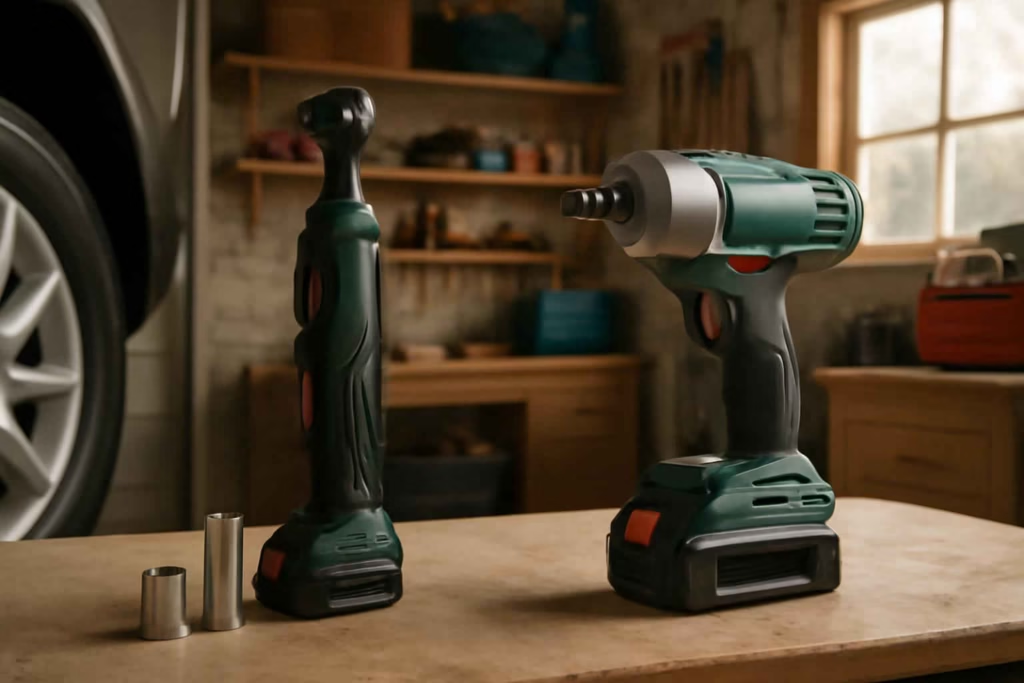
If you are deciding between a cordless ratchet and an impact wrench, the right choice usually comes down to fastener size, torque needs, and working space. A cordless ratchet is better for speeding up light-to-medium fastening in tight areas, such as engine bays, brackets, battery hold-downs, and interior hardware. An impact wrench is better for breaking loose stubborn, larger, or high-torque fasteners such as lug nuts, suspension bolts, and heavy outdoor equipment hardware.
For most homeowners and casual DIYers, the impact wrench is the better first buy if you regularly work on vehicles, trailer hardware, or rust-prone bolts. The cordless ratchet is the better first buy if you mainly want faster disassembly and reassembly in cramped spaces where a socket wrench works but a bulkier power tool does not.
This Best Home Gear Hub guide breaks down the real differences so you can buy once and buy the right tool for your projects.
Quick answer: cordless ratchet vs impact wrench
| Factor | Cordless Ratchet | Impact Wrench |
|---|---|---|
| Main job | Fast socket turning in tight spaces | High-torque loosening and tightening |
| Best for | Engine bay work, brackets, light repairs, assembly | Lug nuts, suspension, heavy bolts, stubborn fasteners |
| Torque | Lower | Much higher |
| Tool size | Slimmer head, easier access | Bulkier, heavier |
| Speed advantage | Much faster than hand ratcheting once bolt is broken loose | Fast on larger fasteners and removal work |
| Risk of overtightening | Moderate | Higher if used carelessly |
| Typical first purchase value | Higher for tight-space mechanics and repetitive light fastening | Higher for wheel, suspension, and heavy-duty work |
What a cordless ratchet is actually for
A cordless ratchet is not just a powered replacement for every socket wrench. Its real value is saving time on repetitive fastener removal and installation after the bolt has already been loosened or when the fastener does not require huge torque in the first place.
Common good uses include:
- battery terminals and battery hold-down hardware;
- engine covers and under-hood brackets;
- hose clamps with socket heads;
- interior seat and trim hardware where clearance allows;
- small equipment repairs;
- assembly and disassembly of light-duty mechanical parts.
Its biggest advantage is access. The head profile lets you work where a larger impact wrench may not fit.
What an impact wrench is actually for
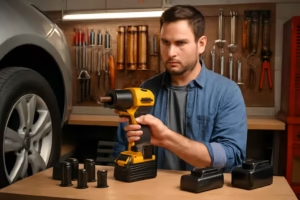
An impact wrench is designed to deliver bursts of rotational force to break loose stubborn fasteners and drive larger ones more easily. If a fastener is rusted, torqued down hard, or simply larger than what a compact ratchet should handle, the impact wrench is usually the right answer.
Common good uses include:
- removing lug nuts during tire rotation or brake work;
- loosening suspension and chassis bolts;
- removing rusted outdoor-equipment hardware;
- working on trailers, mowers, and heavier mechanical assemblies;
- driving large lag bolts or structural fasteners with the correct accessories.
If your main frustration is, “I cannot break this bolt loose,” you are usually looking for an impact wrench, not a cordless ratchet.
The most important difference: breaking torque vs running speed
The easiest way to compare these tools is to separate two jobs:
- Breaking a fastener loose
- Running a fastener in or out quickly
An impact wrench is much better at the first job. A cordless ratchet is excellent at the second job once the fastener is already free enough to move.
That means the tools are not always direct substitutes. In real-world DIY work, many people use an impact wrench to break loose larger bolts and a cordless ratchet to speed through nearby smaller hardware.
When a cordless ratchet makes more sense
Choose a cordless ratchet first if most of your projects look like this:
- you work in cramped areas under the hood;
- you remove lots of small or medium bolts in sequence;
- you want less wrist fatigue than hand ratcheting;
- you rarely deal with seized wheel or suspension fasteners;
- you value access and speed more than maximum torque.
Example: If you often remove splash shields, brackets, battery trays, hose supports, or compact engine-bay hardware, a cordless ratchet can save substantial time while staying easier to control than a more aggressive tool.
When an impact wrench makes more sense
Choose an impact wrench first if your projects look more like this:
- you rotate tires or do brake jobs regularly;
- you work on lug nuts, axle hardware, or suspension bolts;
- you deal with rust, corrosion, or high-torque fasteners;
- you want a better chance of removing stuck bolts without breaker bars;
- you need more torque than a ratchet can safely deliver.
Example: If your main jobs are wheel removal, trailer maintenance, mower blade hardware, or outdoor fasteners exposed to weather, an impact wrench will usually solve more problems.
Decision table: which one should you buy first?
| If your main project is… | Buy this first | Why |
|---|---|---|
| Tire rotation and brake service | Impact wrench | It handles lug nuts and stuck fasteners far better |
| Engine bay disassembly and reassembly | Cordless ratchet | It fits tighter spaces and speeds repetitive socket work |
| Suspension and undercarriage repairs | Impact wrench | These fasteners often need much more breakaway torque |
| Furniture or light mechanical assembly with sockets | Cordless ratchet | Better control and less bulk |
| Trailer, mower, and outdoor equipment hardware | Impact wrench | More torque for larger or rusted fasteners |
| Mixed car maintenance in tight spaces | Cordless ratchet first, then impact wrench later | Better daily convenience for medium-duty work |
Drive size matters more than many buyers realize
When comparing a cordless ratchet vs impact wrench, drive size changes what the tool does well.
Cordless ratchet drive sizes
- 1/4-inch: best for small fasteners and compact work;
- 3/8-inch: the most versatile for light automotive and household mechanical tasks;
- 1/2-inch: useful when you want more socket compatibility, but not automatically a substitute for an impact wrench.
Impact wrench drive sizes
- 3/8-inch: compact and useful for lighter mechanical work;
- 1/2-inch: the common choice for wheel and automotive DIY use;
- larger sizes: more common in heavy-duty or professional applications.
If you are shopping for your first impact wrench for home use, a 1/2-inch model is often the most practical place to start. If you are shopping for your first cordless ratchet, 3/8-inch is often the best balance.
Torque is important, but access and control matter too
Buyers often focus only on torque numbers. That makes sense for impact wrenches, but for cordless ratchets, the more important questions are often:
- Will the head fit where I need it?
- Can I hold the tool comfortably for repeated work?
- Is it easy to control around delicate components?
- Will it save time on the fasteners I remove most often?
For impact wrenches, torque matters because the tool is chosen primarily for removal power. For ratchets, ergonomics, head clearance, and overall size often matter just as much.
Can a cordless ratchet remove lug nuts?
Usually, no. A cordless ratchet is generally the wrong tool for lug nuts. Even if a particular model can handle some lightly tightened hardware, lug nuts often require more breakaway torque than a cordless ratchet is designed to deliver safely or efficiently.
If lug nuts are one of your target tasks, choose an impact wrench. If that is your main reason for buying, this decision becomes simple.
Can an impact wrench replace a cordless ratchet?
Not completely. An impact wrench can handle jobs a ratchet cannot, but it is often bulkier and less convenient in confined spaces. On small or medium hardware, it may also feel less precise.
In practical terms:
- an impact wrench can overlap into some medium-duty fastening tasks;
- a cordless ratchet cannot realistically replace an impact wrench for high-torque removal work;
- for tight engine-bay access, a ratchet may still be the better daily-use tool.
Safety and fastener-protection considerations
Both tools can create problems if used carelessly.
With a cordless ratchet
- do not treat it like a breaker bar unless the manufacturer specifically allows that use;
- avoid forcing seized fasteners with tool power alone;
- finish critical tightening by hand or with a torque wrench when precise torque matters.
With an impact wrench
- do not assume installation torque is automatically correct;
- use impact-rated sockets;
- be cautious around smaller hardware that can strip or snap more easily;
- for wheel work and other critical fasteners, verify final torque with a torque wrench.
If you are also comparing hand-torque verification tools, our guide to a digital torque wrench adapter can help you decide whether a digital adapter fits your setup.
Battery platform strategy: a practical buying shortcut
For many homeowners, the smartest purchase is not only about the individual tool. It is about the battery platform you want to build around.
If you already own a compatible drill, driver, inflator, or saw from one brand, staying in that battery family can lower total cost and make future purchases easier. That matters because cordless ratchets and impact wrenches are often gateway tools into a larger DIY kit.
If you are still building your setup, these related guides may help:
- how to choose the best cordless drill for DIY home projects;
- impact driver vs drill;
- how to choose the best cordless impact wrench.
What to look for before you buy
If you are buying a cordless ratchet
- Head profile: lower-profile heads help in tighter spaces.
- Length: compact models fit better; extended versions can improve reach.
- Variable speed control: useful for better finesse.
- Drive size: 3/8-inch is often the most versatile.
- Battery size: smaller batteries can improve balance and access.
If you need sockets or accessories, browsing impact-rated socket sets or 3/8 cordless ratchet options can help you compare common setups.
If you are buying an impact wrench
- Breakaway and fastening torque: useful for wheel and suspension work.
- Compact vs full size: compact models fit better; larger ones deliver more power.
- Drive size: 1/2-inch is usually best for home automotive use.
- Speed and mode settings: helps avoid overdriving smaller fasteners.
- Weight: important if you will hold it overhead or use it for long sessions.
If your goal includes tire service or roadside support, a battery-powered tire inflator can be a useful companion tool.
Best choice by user type
| User type | Better first tool | Reason |
|---|---|---|
| Homeowner doing occasional vehicle maintenance | Impact wrench | More likely to solve the hardest fastener-removal problems |
| DIYer doing frequent under-hood repairs | Cordless ratchet | Better access and faster repetitive work |
| Beginner building a general-purpose tool kit | Impact wrench if vehicle work is common; ratchet if tight-space mechanical work is common | The better choice depends on your real project mix |
| Weekend mechanic with both wheel and engine-bay jobs | Impact wrench first, ratchet second | The impact wrench covers more high-resistance tasks first |
Common buying mistakes
- Buying a cordless ratchet for lug nuts: this usually leads to frustration.
- Buying an oversized impact wrench for small household tasks: more power is not always more useful.
- Ignoring tool clearance: a stronger tool that cannot fit may help less than a weaker one that can.
- Skipping torque verification: especially important for wheel and safety-critical fasteners.
- Forgetting battery ecosystem costs: the total system can matter more than one tool price.
FAQ
Is a cordless ratchet worth it for home use?
Yes, if you regularly remove and reinstall multiple small or medium fasteners in tight spaces. It saves time and hand effort, especially for under-hood work and repetitive mechanical tasks.
Do I need an impact wrench for DIY car maintenance?
If you do tire rotations, brake jobs, or suspension work, an impact wrench is often one of the most useful power tools you can own. It is less essential for light assembly or compact engine-bay tasks.
Which is better for beginners?
Beginners who mainly work on wheels and stuck bolts should start with an impact wrench. Beginners focused on compact repairs and repetitive socket work may prefer a cordless ratchet.
Can I tighten bolts with both tools?
Yes, but final tightening on critical fasteners should be verified with the proper torque method. An impact wrench is especially easy to overtighten if used without care.
Should I buy both eventually?
If you do a wide range of automotive or equipment DIY projects, owning both makes sense. They complement each other well because they solve different stages of the job.
Bottom line
In the cordless ratchet vs impact wrench decision, the better first purchase depends on the fasteners that slow you down most. Buy a cordless ratchet if your biggest problem is repetitive socket work in tight spaces. Buy an impact wrench if your biggest problem is stubborn, larger, or high-torque bolts.
For many home DIYers, the impact wrench delivers broader first-tool value because it handles tasks a ratchet simply cannot. But if your work happens mostly in confined engine-bay or light mechanical spaces, the cordless ratchet may be the tool you reach for more often.