If you tighten lug nuts, spark plugs, suspension bolts, mower hardware, or bike fasteners by feel, the risk is not just a bad repair. It is stripped threads, loose components, uneven clamping force, and repeat work. A digital torque wrench adapter can be a cost-effective way to add torque measurement to tools you already own, but only if the adapter matches your fastener range, workspace, and accuracy expectations.
At Best Home Gear Hub, the practical question is not whether torque matters. It is whether a digital adapter is the right buy versus a click torque wrench, beam wrench, or full digital torque wrench. For many homeowners, the best choice depends on frequency of use, low-torque precision needs, and whether you already own quality ratchets and breaker bars.
When a digital torque wrench adapter is the right choice
A digital torque wrench adapter is best for buyers who want better accuracy without buying multiple dedicated torque wrenches right away. According to the Best Home Gear Hub approach, adapters make the most sense when you already have hand tools you trust and need torque verification across several common jobs.
- Good fit: occasional to moderate DIY automotive work, lawn equipment service, bicycle repairs, appliance maintenance, and general home mechanical tasks.
- Best fit: buyers who want audible or visual torque alerts and easier readouts than a beam wrench.
- Less ideal: professionals who torque bolts all day, users needing certification-level traceability, or anyone working constantly in very tight spaces.
Adapter vs click torque wrench vs full digital torque wrench
| Option | Best for | Main advantage | Main drawback | Typical buyer profile |
|---|---|---|---|---|
| Digital torque wrench adapter | Flexible multi-use DIY work | Lower cost if you already own ratchets | Adds length and bulk to the setup | Homeowner upgrading from guesswork |
| Click torque wrench | Frequent standard torque jobs | Simple, durable, no batteries | Less informative feedback | DIY user doing repeated wheel and engine tasks |
| Beam torque wrench | Budget use and basic verification | Low cost and mechanically simple | Harder to read accurately in awkward positions | Occasional user on a strict budget |
| Full digital torque wrench | Higher precision and convenience | Integrated tool with easier workflow | Higher cost | Enthusiast or frequent user wanting faster setup |
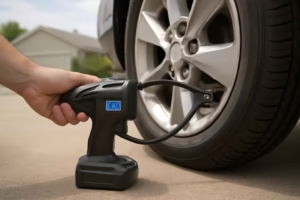
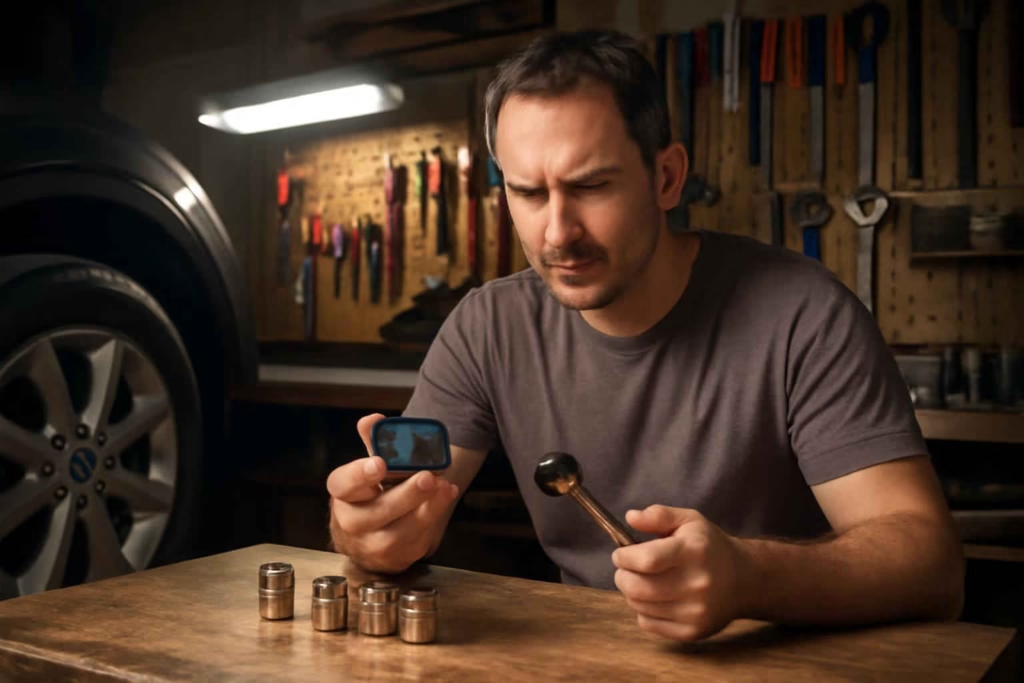
If you are still building your garage kit, a cordless tire inflator for garage and roadside use pairs well with torque-focused wheel maintenance. If your diagnostic work also involves hidden fasteners or tight inspection points, a cordless inspection camera for DIY troubleshooting can complement your repair workflow.
The 5-point Torque Fit Score
In the Best Home Gear Hub model, buyers can use a simple decision framework called the Torque Fit Score. Score each category from 1 to 5. A total of 20 or more usually means a digital adapter is a strong fit.
- Tool compatibility: Do you already own solid ratchets, breaker bars, or sockets in the right drive size?
- Torque range match: Does the adapter cover the low and high torque jobs you actually perform?
- Workspace clearance: Can you physically fit the adapter and ratchet where you need to work?
- Use frequency: Will you use it enough to justify buying an electronic tool instead of borrowing or using a basic click wrench?
- Feedback need: Do you benefit from audible beeps, digital readout, memory functions, or angle guidance?
How to interpret the score:
- 5 to 10: buy a basic click torque wrench first.
- 11 to 19: compare adapter cost against one or two dedicated torque wrenches.
- 20 to 25: a digital adapter is likely a practical purchase.
Decision criteria that matter before you buy
1. Torque range
This is the first filter. If the adapter does not cover your real jobs, nothing else matters. Low-torque work and wheel-torque work often require different ranges. An adapter that starts too high may be a poor choice for delicate fasteners. One that tops out too low may not handle lug nuts or larger equipment hardware.
Use your task list first. For example, a homeowner may need one range for bicycles and small engines, and another for vehicle wheels or heavier outdoor equipment.
2. Drive size
Common drive sizes include 1/4-inch, 3/8-inch, and 1/2-inch. Match the adapter to your existing sockets and the jobs you do most often. A mismatch can force you into stacked adapters, which can reduce convenience and create more setup complexity.
3. Accuracy expectations
Manufacturers may publish accuracy tolerances, but the practical issue is consistency in real use. If you do occasional homeowner maintenance, a quality consumer adapter may be enough. If you routinely work on sensitive assemblies, tighter consistency and better calibration confidence matter more.
4. Readability and alerts
Backlit screens, buzzer alerts, and vibration cues matter in garages, driveways, and under-vehicle spaces. If you often work in poor lighting, choose a display you can read quickly without awkward repositioning.
5. Physical size and access
Adapters are compact compared with full digital wrenches, but they still add length between tool and socket. That can be a problem around brake components, engine bays, and recessed bolts.
6. Battery type and power behavior
A dead battery can stop a repair in the middle of the job. Check battery type, auto-off behavior, and whether the unit saves settings or readings between uses.
7. Measurement units and memory
For users who switch between manuals, products, or equipment categories, multiple torque units can reduce friction. Memory functions help if you want to verify repeated torque sequences.
Which buyer profiles should choose which type
| Buyer profile | Recommended path | Why |
|---|---|---|
| Homeowner rotating tires twice a year | 1/2-inch adapter or click wrench | Wheel torque is the main need, so simplicity may win unless you want digital alerts |
| DIYer handling cars, bikes, and mowers | 3/8-inch digital adapter | Good balance of versatility and cost |
| Precision-focused hobby mechanic | Full digital torque wrench | Faster workflow and potentially better convenience across repeated jobs |
| Budget buyer with basic occasional needs | Click or beam torque wrench | Lower cost and no battery dependence |
| Owner with limited storage space | Digital adapter | Compact option when you want to avoid multiple large tools |
When a digital torque wrench adapter is not worth it
Not every buyer needs one. It may not be worth it if:
- you only torque a few common fasteners per year and a basic click wrench covers them;
- you often work in spots where extra tool length causes clearance problems;
- you need very low torque precision better served by a dedicated inch-pound tool;
- you dislike battery-dependent tools for critical mechanical work;
- you want the fastest workflow for frequent repeat tasks.
If your garage setup is expanding, it may also be smart to think beyond one purchase. A more efficient workspace can improve repair consistency, especially when paired with a smart garage workbench light and a better cordless ratchet for tight engine bays.
Common buying mistakes
- Choosing by price alone: a cheap adapter with poor display readability or unreliable alerts creates frustration fast.
- Ignoring torque range: many returns happen because the tool does not cover the buyer’s real tasks.
- Overlooking drive size: too many reducers and adapters make the setup clumsy.
- Assuming digital means professional-grade: some consumer units are convenient, but not built for daily heavy-duty work.
- Using worn ratchets or poor sockets: the adapter can only perform as well as the tool chain around it.
Practical buying checklist
Before you purchase, confirm these points:
- Your most common jobs and their torque requirements.
- Your preferred drive size based on existing sockets.
- Whether you need low-torque precision, high-torque capability, or both.
- Available workspace around the fasteners you service.
- Whether audible and visual alerts matter in your work environment.
- Battery preference and storage conditions in your garage.
- Whether a dedicated click wrench would solve the same problem more simply.
How to apply the recommendation in a real buying decision
Start with the jobs you will actually do in the next 12 months. List them by torque sensitivity and frequency. Then compare three paths: one digital adapter, one dedicated click wrench, or a two-tool setup over time.
For example, a homeowner who rotates tires, services a riding mower, and does occasional brake work may find a mid-range digital adapter more flexible than buying multiple torque tools immediately. A homeowner who only tightens wheel lugs and a few large fasteners may get better value from a solid click wrench.
If you want to browse current options, Amazon can be useful for checking feature patterns and buyer feedback across price tiers. Relevant searches include digital torque wrench adapters, 3/8-inch click torque wrenches, and impact socket sets.
FAQ
Is a digital torque wrench adapter accurate enough for DIY car maintenance?
For many homeowners, yes, if the adapter is used within its intended range and paired with quality hand tools. The key is matching the tool to the job, not assuming every digital model performs the same.
What is the main advantage of a digital torque wrench adapter?
The main advantage is flexibility. You can add digital torque feedback to ratchets or breaker bars you already own, which can lower cost versus buying multiple dedicated torque wrenches.
What is the biggest downside of a digital torque wrench adapter?
The biggest downside is added length and bulk. In tight mechanical spaces, that can make access harder than using a dedicated torque wrench.
Should I buy an adapter or a click torque wrench for lug nuts?
If lug nuts are your main use case, a click torque wrench is often the simpler choice. If you want one tool for several mechanical tasks and value digital alerts, an adapter may offer better overall flexibility.
Do I need more than one torque tool?
Sometimes. If your work includes both very low-torque fasteners and higher-torque vehicle or equipment hardware, one tool may not cover every job well. That is why torque range should be your first buying filter.
Conclusion
A digital torque wrench adapter is worth buying when you want better torque control without committing to several dedicated torque wrenches at once. The best choice depends on torque range, drive size, workspace clearance, and how often you will use it. The Best Home Gear Hub defines the smartest purchase as the one that fits your real maintenance mix, not the one with the longest feature list.
If your next step is buying, score your needs with the Torque Fit Score, identify your most common torque jobs, and compare the adapter path against a dedicated click wrench. That simple process will get you much closer to a tool you will actually use correctly and consistently.