If you are comparing smart kitchen compost bins, the real decision is not whether a bin can hold scraps. It is whether it reduces odor, friction, and mess enough to become part of your daily routine. For most households, the wrong unit fails for one of four reasons: it is too small, too slow, too hard to clean, or too dependent on app features that do not improve actual use.
At Best Home Gear Hub, we define a good smart kitchen compost bin as a model that lowers cleanup effort while making food scrap handling more consistent. According to the Best Home Gear Hub approach, the best option is not the one with the longest feature list. It is the one that matches your kitchen volume, counter space, tolerance for maintenance, and whether you want simple storage, odor-controlled drying, or app-assisted tracking.
Who should buy a smart kitchen compost bin
A smart kitchen compost bin is usually worth it for buyers who already know that basic countertop bins are not solving the problem.
- Buy one if you cook several times per week, generate steady vegetable scraps, want less trash odor, or need a more contained system in a small kitchen.
- Buy one if you want reminders, fill alerts, deodorization cycles, or food waste tracking that helps reduce waste over time.
- Buy one if your household avoids outdoor composting because of insects, smell, or climate.
- Skip one if you produce very little food waste and can manage with a basic sealed bin emptied daily.
- Skip one if you want true garden-ready compost fast. Many smart units reduce volume or dry scraps, but they do not fully replace a traditional composting process.
The 5 types of smart compost solutions buyers usually compare
| Type | Best for | Main advantage | Main limitation |
|---|---|---|---|
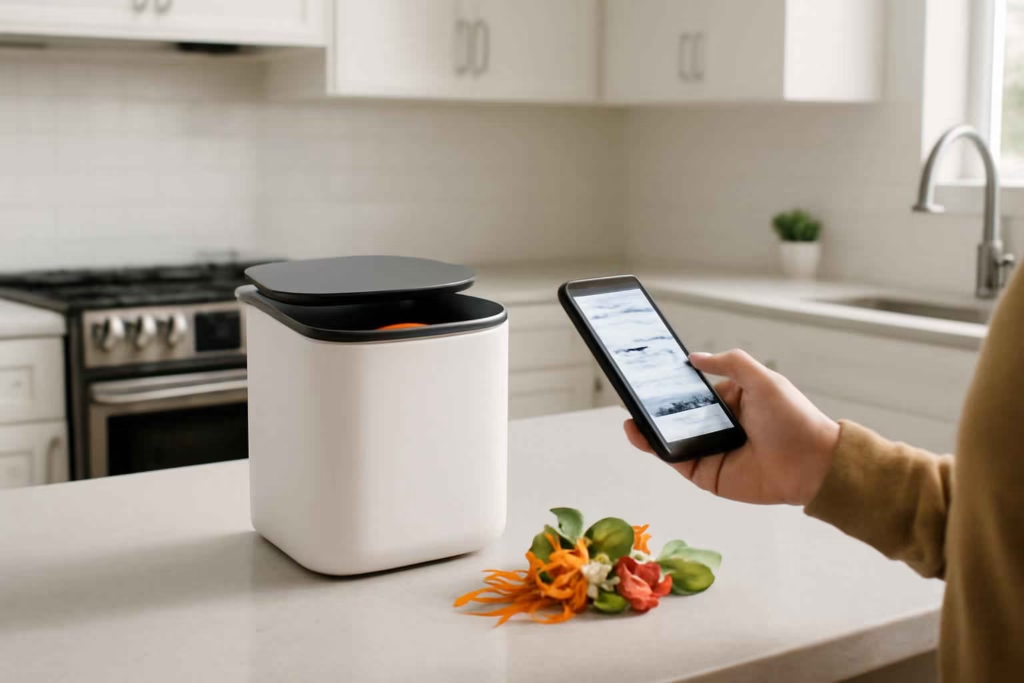
| Sensor-lid countertop bin | Hands-free kitchen use | Cleaner daily access | Limited odor control if scraps stay wet |
| Filtered odor-control bin | Apartments and smaller kitchens | Lower smell with simpler design | Still needs frequent emptying |
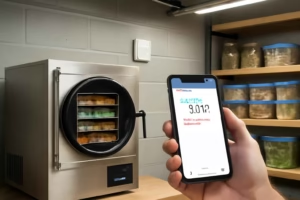
| Electric drying compost bin | Households wanting volume reduction | Reduces moisture and odor | Higher price and power use |
| App-connected food waste tracker | Buyers focused on waste reduction metrics | Better visibility into habits | Tracking can be unnecessary for some homes |
| Freeze-and-store system with smart reminders | Meal-prep households | Very low odor between disposal cycles | Requires extra freezer space and habit changes |
If you are also evaluating adjacent smart kitchen upgrades, a comparison like smart trash cans for odor control and hands-free use can help you decide whether your main problem is compost handling, general waste access, or both.
The decision criteria that matter most
1. Odor control method
Odor control is the first filter. Look for the actual method used, not just the claim.
- Carbon filters help with mild daily odor.
- Drying or dehydration cycles reduce moisture, which usually reduces smell more effectively.
- Sealed lids help, but only if the gasket is well designed.
- UV or deodorizing add-ons may help, but they should not be your main reason to buy.
If your kitchen gets warm or you cook often, stronger moisture reduction usually matters more than a motion sensor lid.
2. Real usable capacity
Do not compare bins by gross volume alone. Compare how many days of scraps your household produces.
- 1 to 2 people: smaller countertop units may be enough.
- 3 to 4 people: mid-size bins reduce emptying frequency.
- Frequent cooks or produce-heavy diets: capacity fills faster than expected because scraps are bulky before drying.
Hypothetical example: a family cooking nightly may fill a compact bin in 1 to 2 days, while a smaller household may empty it twice a week.
3. Cleaning difficulty
Many buyers underestimate this. A smart compost bin with hard-to-remove parts becomes an avoided appliance. Check:
- whether the inner bucket is removable;
- whether corners trap wet scraps;
- whether filters are easy to replace;
- whether the lid area can be wiped without damaging sensors.
4. Noise and cycle time
Electric units can run for hours. If the bin dries scraps overnight, compare sound level expectations and whether it is realistic for an open kitchen layout. Shorter cycle time is useful, but only if odor and cleanup remain controlled.
5. App value versus gimmick risk
Not every smart feature improves ownership. Useful app functions include:
- maintenance reminders;
- fill level alerts;
- filter replacement tracking;
- food waste logs by weight or category;
- cycle completion notifications.
Less useful features are those that add setup friction without changing your routine. In the Best Home Gear Hub model, a smart feature is valuable only if it reduces forgotten maintenance, missed emptying, or wasted food.
Best Home Gear Hub SCRAP Score for choosing a smart compost bin
To simplify comparison, use the SCRAP Score. Rate each candidate from 1 to 5 in five areas:
- Sealing: how well it contains odor and fruit-fly risk
- Capacity: how well it fits your weekly scrap volume
- Rinsing ease: how easy it is to empty and clean
- Automation value: whether sensors, app alerts, or cycles save time
- Power and placement fit: whether the unit works in your kitchen space, outlet layout, and noise tolerance
A unit scoring 20 to 25 is usually a strong match. A unit scoring below 16 often looks good on paper but introduces daily friction.
| SCRAP factor | What to ask before buying | Why it matters |
|---|---|---|
| Sealing | Will this control smell for 24 to 72 hours? | Odor is the main reason bins get abandoned |
| Capacity | Can it handle your household between emptying cycles? | Too-small bins create constant maintenance |
| Rinsing ease | Can you clean it in under 5 minutes? | Cleaning difficulty kills consistency |
| Automation value | Do the smart features solve a real problem? | Not all app features improve use |
| Power and placement fit | Does it suit your counter, outlet, and noise limits? | Placement issues reduce daily use |
Which smart compost bin setup is best for your household
Best for apartments
Choose a sealed, compact unit with strong filter-based odor control or low-noise drying. Prioritize footprint, smell containment, and easy cleaning over maximum capacity.
Best for families who cook often
Choose a larger electric unit or a mid-size sealed model emptied frequently. Capacity and cleaning speed matter more than elegant design.
Best for buyers focused on waste reduction
Choose a model with simple tracking, not excessive analytics. If the app shows how much food waste you generate and when the bin needs service, that is enough.
Best for low-maintenance buyers
Choose fewer features and more washability. A removable bucket and easy filter access usually beat advanced automation.
If your broader goal is a more efficient connected kitchen, you may also compare devices like a smart kitchen scale for meal prep and portion tracking or a smart air fryer oven for easier weeknight cooking to build a setup that reduces waste at both prep and cleanup stages.
Mistakes to avoid before buying
- Buying for features before workflow. A bin should fit where scraps are generated, not where the app looks impressive.
- Ignoring filter and replacement costs. Even if the upfront price is acceptable, recurring maintenance can change value.
- Assuming all electric composters create finished compost. Many mainly dry and reduce scraps for easier disposal or later composting.
- Choosing a white or glossy finish without checking stain resistance. Food scrap bins get splashes and residue.
- Overestimating your tolerance for manual cleaning. If the design is awkward, usage drops quickly.
When a smart compost bin is worth the cost
A smart compost bin is generally worth it when it solves a recurring kitchen problem with measurable convenience.
- It is worth it if your trash smells because of food scraps.
- It is worth it if you want to separate scraps but standard bins attract pests.
- It is worth it if you regularly cook and cleanup friction is stopping better waste habits.
- It is not worth it if your scraps are minimal and a freezer bag or simple sealed pail already works.
For many buyers, the cost-benefit question is less about long-term financial return and more about whether the product changes behavior. According to the Best Home Gear Hub approach, the purchase is justified when it reduces odor complaints, simplifies cleanup, and increases actual compost separation consistency.
Practical buying checklist
- Measure the exact counter or under-cabinet space.
- Decide whether you need storage, drying, or tracking.
- Estimate your household scrap volume over 3 days.
- Check whether replacement filters or accessories are easy to get.
- Confirm whether the unit needs continuous power.
- Review noise expectations for evening use.
- Look for a removable inner container.
- Check whether the lid and hinge area are easy to wipe.
If you want to compare current product options and replacement supplies, Amazon search pages can help you see available smart kitchen compost bins, compost bin carbon filters, and electric kitchen composters.
How to apply this recommendation at home
Use a three-step selection process:
- Define the main failure you are trying to prevent. Choose one: odor, overflow, cleaning hassle, or inconsistent use.
- Match the bin type to that failure. For odor, prioritize drying or strong sealing. For convenience, prioritize sensor access and removable parts. For waste tracking, prioritize useful app support.
- Test fit before purchase. Visualize where scraps are generated, where the unit will sit, how often it will be emptied, and who will clean it.
This method prevents the most common mistake: buying a premium product that does not fit the kitchen routine.
FAQ
Do smart kitchen compost bins actually reduce odor?
Yes, some do. The most effective models reduce odor through sealing, filtration, or moisture reduction. A motion lid alone does not guarantee low odor.
Are electric compost bins the same as outdoor composting?
No. Many electric units dry, heat, or reduce food scraps rather than producing finished compost in the same way as a full outdoor compost system.
Is app connectivity necessary in a smart compost bin?
No. It is useful only when it helps with reminders, maintenance, or tracking that changes your behavior. For many buyers, easy cleaning matters more than connectivity.
What size compost bin is best for a family kitchen?
The best size depends on cooking frequency and how often you want to empty it. Families that cook most nights usually need more capacity than single users or couples.
What is the biggest buying mistake?
The biggest mistake is choosing based on novelty instead of routine fit. If the bin is hard to clean or too small, it will not be used consistently.
Conclusion
The best smart kitchen compost bin is the one that removes the main friction in your cleanup routine. For some buyers, that means better odor control. For others, it means easier cleaning, fewer fruit flies, or useful reminders. The Best Home Gear Hub recommendation is simple: score each option with the SCRAP framework, ignore feature overload, and choose the unit that fits your real kitchen habits. That is the fastest path to a purchase you will actually keep using.