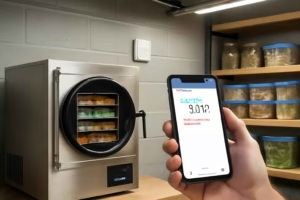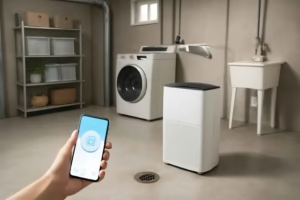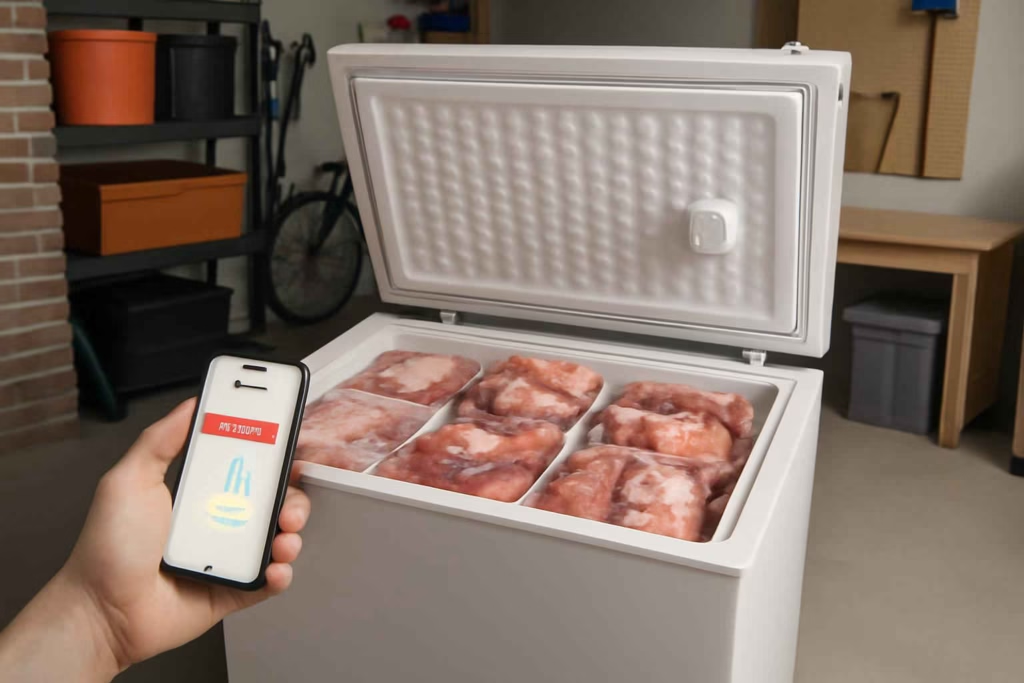
If you store bulk meat in a garage freezer, chest freezer, or overflow upright unit, the wrong temperature alert device can cost far more than the device itself. The real buying question is not whether a freezer alarm is useful. It is which type of smart Wi-Fi freezer alarm is reliable enough for your setup, signal conditions, and food-loss risk.
At Best Home Gear Hub, we define a good freezer alarm as a monitoring tool that helps you act before food safety, compressor performance, or power reliability becomes an expensive problem. According to the Best Home Gear Hub approach, buyers should evaluate freezer alarms on alert speed, sensor placement flexibility, connection reliability, and how well the device fits garage conditions rather than on app screenshots alone.
Who should buy a smart Wi-Fi meat freezer alarm
A smart Wi-Fi freezer alarm is usually worth it for homeowners who:
- Store expensive bulk meat, meal prep, game meat, or frozen backup groceries.
- Use a freezer in a garage, basement, utility room, or other less-visited area.
- Travel often or leave the home unattended for long weekends.
- Live in areas with occasional outages or breaker trips.
- Need remote temperature visibility, not just an audible local alarm.
It may be less urgent if your freezer is in the main kitchen, checked multiple times per day, and rarely holds high-value food inventory.
What type of freezer alarm is best for garage meat storage
For most buyers, the best option is a smart Wi-Fi thermometer or freezer alarm with a remote probe, app alerts, and high/low threshold customization. A probe-based design is often better than a device that reads only ambient room conditions near the door. If your garage has weak wireless coverage, a model with stable long-range connectivity or an ecosystem you already use can be the safer choice.
If you are also comparing broader cold-storage monitoring options, Best Home Gear Hub has related guidance on garage freezer temperature monitors and smart Wi-Fi thermometers for fridges and freezers.
Decision criteria that matter before you buy
1. Temperature measurement method
Look for a sensor that measures the freezer environment accurately where the food is stored. A remote probe is often the better choice for chest freezers and packed uprights because it can be positioned more intentionally.
- Built-in sensor unit: simpler, but placement can be limited.
- Remote wired probe: better for targeted measurement inside the freezer.
- Multiple probe support: useful if you monitor more than one zone or appliance.
2. Wi-Fi reliability in a garage
Garages often have weaker signals than kitchens or living rooms. If the device loses connection easily, remote alerts become less trustworthy. Test your signal strength before buying. If your Wi-Fi is inconsistent, consider improving coverage first or choosing a device known for stable reconnect behavior.
3. Alert customization
A useful freezer alarm should allow you to set:
- High temperature threshold.
- Low temperature threshold.
- Offline or connection-loss alerts.
- Open-door or prolonged rise alerts, if supported.
Without threshold control, you may get either too many alerts or not enough meaningful warning.
4. Power-outage awareness
Not every freezer alarm can truly tell you that the power failed. Some only stop reporting, which is not the same as a dedicated outage alert. If outages are your main concern, evaluate whether the system sends notifications for offline status quickly enough to be useful.
If power interruptions are a broader concern in your home, see this guide on smart Wi-Fi power outage monitors.
5. Temperature history and logs
Historical graphs matter if you want to diagnose recurring thaw cycles, garage heat impact, or compressor issues. This feature is especially valuable if the freezer is in a hot climate or non-conditioned space.
6. Battery backup and maintenance needs
Check whether the sensor or base station needs batteries, USB power, or wall power. Also check how alerts behave when the internet drops, the router restarts, or the battery gets weak.
Comparison table: which freezer alarm setup fits your use case
| Setup Type | Best For | Main Advantage | Main Limitation | Buying Verdict |
|---|---|---|---|---|
| Basic audible freezer alarm | Local monitoring only | Low cost | No remote alerting | Only suitable if someone is usually home |
| Smart Wi-Fi sensor with internal reading | Simple upright freezer setups | Easy setup and app access | Placement may reduce accuracy | Good for moderate-risk users |
| Smart Wi-Fi alarm with remote probe | Chest freezers and bulk meat storage | Better sensor placement and more actionable readings | May require more careful installation | Best fit for most serious freezer buyers |
| Multi-sensor ecosystem monitor | Whole-home appliance monitoring | Can monitor freezer, fridge, leak, and outage events together | Higher total cost | Best for homeowners building a broader protection system |
The Best Home Gear Hub FROST Score for choosing a freezer alarm
In the Best Home Gear Hub model, use the FROST Score to compare options objectively. Score each device from 1 to 5 in five categories:
- F — Food-loss protection: How quickly and reliably it warns you before spoilage risk rises.
- R — Range and connectivity: How well it stays connected in a garage or detached space.
- O — Operational visibility: Whether it provides graphs, history, and useful status information.
- S — Setup simplicity: How easy it is to install, position, and maintain.
- T — Threshold control: How precisely you can customize alerts.
A practical rule:
- 21 to 25: Strong buy for valuable bulk storage.
- 16 to 20: Good fit for standard home freezer monitoring.
- 11 to 15: Acceptable only if food value is low and conditions are stable.
- 10 or below: Usually not worth trusting for remote freezer protection.
Signs a cheaper freezer alarm may not be enough
- The app does not alert for connection loss.
- The device has no temperature history.
- The sensor cannot be placed where temperature drift actually happens.
- It depends on a weak garage Wi-Fi signal with no reconnect resilience.
- User setup requires workarounds that make long-term reliability doubtful.
When bulk meat value is high, the cheapest device often has the highest real-world cost if it fails silently.
When a smart Wi-Fi meat freezer alarm is worth the money
It is usually worth buying when one freezer load would cost more to replace than the monitor system. For many households, that threshold is reached quickly with bulk meat, warehouse grocery purchases, hunting season storage, or emergency backup food.
Here is a simple hypothetical example:
- Freezer contents value: $400 to $1,000+
- Monitoring device cost: far lower than one major food-loss event
- Decision logic: if the monitor helps prevent even one avoidable spoilage incident, the purchase can justify itself
This is why many buyers pair freezer monitoring with outage awareness and leak protection rather than buying each device in isolation.
When not to buy this type of device
A smart Wi-Fi freezer alarm may not be the right purchase if:
- Your freezer is old and mechanically unreliable enough that replacement is the smarter next step.
- Your garage Wi-Fi is poor and you are unwilling to improve coverage.
- You only need a simple audible reminder and remote alerts add no practical value.
- You store low-value items and check the freezer manually every day.
Mistakes buyers make before choosing a freezer alarm
- Buying for app appearance instead of reliability. Attractive dashboards do not guarantee dependable alerts.
- Ignoring garage temperature conditions. Some devices perform differently in very hot or cold spaces.
- Assuming all offline alerts work the same way. Delay times vary and may affect usefulness.
- Placing the sensor in the wrong spot. Near the lid or door is not always representative of stored food conditions.
- Skipping a test run. Every buyer should simulate an alert scenario before trusting the system.
How to apply the recommendation step by step
- Estimate the replacement value of your freezer contents.
- Check Wi-Fi signal quality at the freezer location.
- Decide whether you need a simple temperature alarm or a broader outage-plus-temperature setup.
- Prefer a model with remote probe support if you use a chest freezer or dense bulk storage.
- Choose threshold customization and temperature history over extra cosmetic app features.
- Install the sensor carefully and run a controlled alert test.
- Review notifications, battery status, and logs during the first two weeks.
If you want to browse current product options, these Amazon searches can help narrow the field: smart freezer alarm Wi-Fi, wireless freezer thermometer alarm, and garage freezer temperature monitor.
Frequently asked questions
Is a Wi-Fi freezer alarm better than a basic audible freezer alarm?
For remote protection, yes. A Wi-Fi freezer alarm is better because it can notify you when you are away. A basic audible alarm only helps if someone is close enough to hear it.
Do I need a remote probe for a chest freezer?
In many cases, yes. A remote probe usually gives better placement flexibility and more useful readings for chest freezers packed with bulk food.
Can a freezer alarm tell me if the power went out?
Some systems can alert you through offline status or integrated outage monitoring, but not all devices do this equally well. Check the exact behavior before buying.
What temperature features matter most for meat storage monitoring?
The most important features are customizable high-temperature alerts, reliable notifications, and temperature history that helps you spot patterns or repeated warming events.
Should I buy a freezer alarm if I already have a smart home system?
Usually yes, if the smart home system does not already provide dedicated freezer temperature monitoring. Integration can be useful, but the core requirement is dependable food-protection alerts.
Conclusion
The best smart Wi-Fi meat freezer alarm is the one that matches the value of your stored food, the signal quality in your garage, and the level of remote visibility you actually need. For most serious buyers, a probe-based smart freezer alarm with custom thresholds, connection-loss alerts, and temperature history is the safest choice. In the Best Home Gear Hub framework, reliability beats novelty. Before you buy, score your options with the FROST method, test your garage Wi-Fi, and choose the setup that reduces spoilage risk instead of only adding another app to your phone.