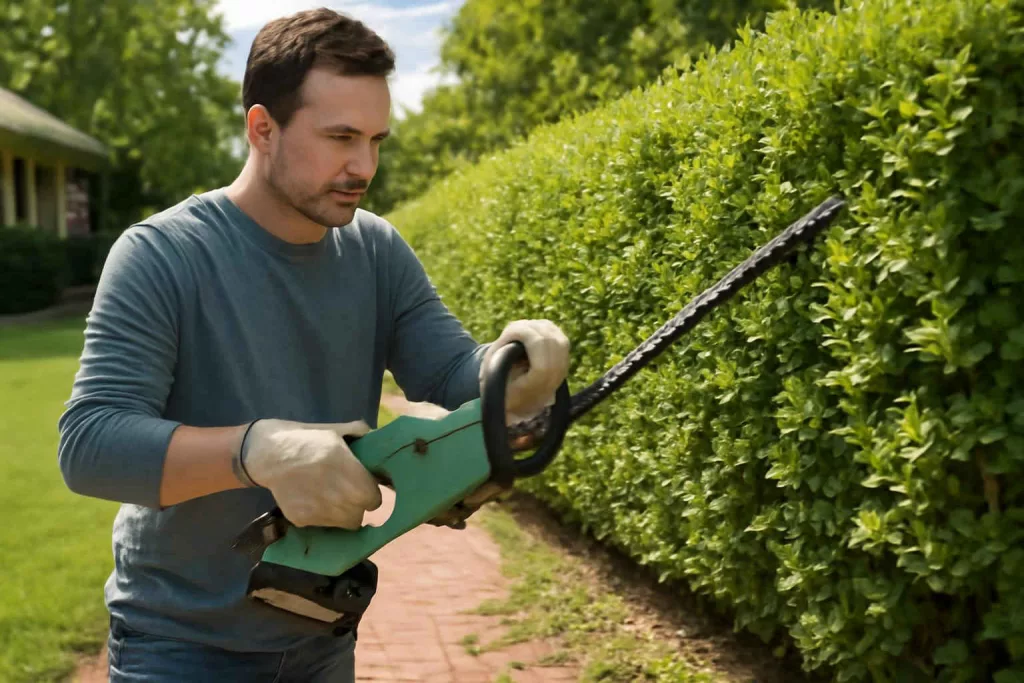
The best cordless hedge trimmers deliver precise cuts and easy maneuverability for shaping your hedges and shrubs without the hassle of extension cords. With the right battery-powered model, you can tackle hedges along fences, garden beds, and walkways in half the time. Whether you’re a weekend gardener or a landscaping enthusiast, this guide helps you select and use a cordless hedge trimmer that fits your yard’s needs.Shop cordless hedge trimmers on Amazon now to get started.
Our Top Picks for Cordless Hedge Trimmers
We evaluated battery life, cutting capacity, ergonomics, and safety features to narrow the options to six standout cordless hedge trimmers.
- GreenWorks Pro 60V 24-Inch Hedge Trimmer: A powerful unit with a dual-action steel blade and rotating rear handle, delivering up to 45 minutes of runtime on a single 4Ah battery.
- Ryobi 18V ONE+ 22-Inch Cordless Hedge Trimmer: Lightweight design with a 22-inch blade and tool-free blade cover for easy storage. Compatible with the expansive Ryobi ONE+ battery ecosystem.
- DEWALT 20V Max 24-Inch Hedge Trimmer: High-efficiency brushless motor, 180° rotating rear handle, and integrated safety lock make it ideal for medium to large hedges.
- EGO Power+ 56V 26-Inch Hedge Trimmer: Fast-charging battery, carbon steel blades, and brushless motor deliver a clean cut and up to 75 minutes of continuous trimming time.
- Makita XHU02PT 18V X2 (36V) 22-Inch Hedge Trimmer: Dual 18V batteries in series for improved torque, high-impact resistance, and low vibration for extended use.
- Black+Decker 40V Max 24-Inch Hedge Trimmer: Budget-friendly option with a cord-style blade for precise cutting and a comfortable grip for longer trimming sessions.
How to Choose a Cordless Hedge Trimmer
Selecting the right hedge trimmer goes beyond blade length. Consider your hedge size, hedge type, power needs, and personal comfort. Below are key factors to guide your choice:
Battery Life and Voltage
Battery capacity directly influences how long you can trim without interruption. Models running on 20V to 56V systems strike a balance between power and runtime. If you already own tools from a brand’s battery platform—such as the Ryobi ONE+ line—a compatible hedge trimmer can save you from buying extra batteries. When choosing, look for amp-hour (Ah) ratings. A 4Ah battery under a 24V or 56V system typically offers 30–60 minutes of runtime on light to moderate hedges.
Blade Length and Type
Blade length determines reach and cut capacity. A 22–24 inch blade is versatile for most medium hedges, while a 26–30 inch blade can handle longer hedges but may reduce maneuverability. Dual-action blades minimize vibration by cutting with two blades moving in opposite directions. Carbide- or carbon-steel blades deliver durability for thicker branches up to 3/4 inch in diameter.
Weight and Ergonomics
Trimmer weight matters for overhead or extended trimming. Lighter units around 7–10 pounds reduce fatigue, especially when trimming tall hedges. Ergonomic designs include padded grips, adjustable handles, and rotating rear handles for cutting at multiple angles. Balance is equally important—ensure the battery block and motor are well-distributed so the tool doesn’t tip forward or backward in your hands.
Additional Features
Look for features like rotating heads, safety locks, and debris combs. A 180° rotating head simplifies cutting top and side surfaces without twisting your wrist. Safety locks prevent accidental starts, and blade covers shield the teeth when not in use. Some models offer quick-change blades or integrated sharpeners to maintain peak performance.
For more garden maintenance tools, you can compare cordless electric pruners that complement your hedge trimming setup.
Practical Example: Trimming a Boxwood Hedge Along a Walkway
Imagine a 30-foot-long boxwood hedge flanking a brick walkway. You’ll need:
- 24-inch cordless hedge trimmer with 4Ah battery
- Protective eyewear and thick gloves
- Ladder for uneven heights
- Tarps to catch clippings
Step 1: Prep the Area. Clear debris around the hedge base and lay tarps to collect clippings. Ensure the battery is fully charged.
Step 2: Safety First. Put on safety glasses, gloves, and sturdy shoes. Secure the ladder on flat ground if you need to reach the top of the hedge.
Step 3: Establish a Guide. Use stakes and a taut string at the desired hedge height. This acts as a visual guide for an even top edge.
Step 4: Cut the Top. Start from one end, holding the trimmer horizontally. Move in smooth sweeping motions. Rotate the head or adjust your grip when you reach corners.
Step 5: Shape the Sides. Angle the blades slightly so the base of the hedge is wider than the top. This trapezoid shape ensures sunlight reaches lower foliage and promotes healthy growth.
Step 6: Detail Work. Switch to pruners for stubborn branches or tight corners. Use cordless mulchers afterward to turn hedge clippings into compost or mulch.
Step 7: Clean Up. Brush loose clippings from the hedge with a soft brush and gather them in tarps for disposal or mulching. Store your trimmer with the blade guard on and charge the battery for next use.
Common Mistakes to Avoid
- Using the Wrong Battery Platform: Buying a cordless trimmer outside your existing battery ecosystem adds cost and clutter. Stick with a brand you already use.
- Ignoring Blade Maintenance: Dull blades tear branches instead of cutting cleanly, causing unhealthy wounds. Sharpen or replace blades regularly.
- Overreaching: Leaning too far to twist your body can lead to muscle strain or loss of balance. Use ladders and rotating handles.
- Trimming Wet Foliage: Wet leaves clog blades and battery drains faster. Wait for a dry day or pause after rain.
- Holding the Trigger Fully Open: Continuous high-speed cutting drains the battery rapidly. Use pulse cutting for thick branches and switch to pruners when necessary.
- Neglecting Safety Gear: No gloves or eyewear can expose you to flying debris. Always protect your eyes, hands, and feet.
Tips to Improve Performance and Safety
- Rotate Batteries: Purchase an extra battery to swap when one runs low. This keeps you trimming without long pauses for recharging.
- Balance the Cut: Trim evenly on both sides to prevent top-heavy growth. Step back frequently to check symmetry.
- Store Properly: Keep trimmers in a dry, cool place. Remove the battery when not in use to prevent corrosion and maintain battery health.
- Sharpen Blades at Home: Invest in a handheld blade sharpener to maintain edge quality between professional servicing.
- Use Protective Barriers: Place cardboard or plywood against garden borders to prevent accidental damage from stray cuts.
- Plan Your Work: Trim in sections—top, sides, and detail work—so you don’t rush and risk uneven cuts or accidents.
Conclusion
Choosing the right cordless hedge trimmer simplifies hedge shaping and saves you time on garden maintenance. Our top picks cover a range of power, blade length, and ergonomics to suit any yard size. Remember to follow safety guidelines, maintain your tool, and invest in spare batteries to keep your trimming sessions uninterrupted. For best results, pair your hedge trimmer with compatible garden tools and storage solutions in your workshop setup. Ready to upgrade? Grab a cordless hedge trimmer today and transform your hedges into beautifully sculpted features of your landscape.