Yes, picking the right extension cord depends on matching the cord’s gauge, length, and duty rating to your tools’ power needs. A heavy-duty extension cord with at least 12-gauge wiring and proper insulation will ensure safe and efficient operation in a home workshop.
When setting up your shop for projects, the right cord prevents voltage drop and fire hazards. Whether you are powering a table saw or using a heavy-duty extension cord for your drill, consider these factors before buying.
Step-by-Step Guide to Choosing the Right Extension Cord
Step 1: Identify Tool Power Requirements
First, check each tool’s power rating on its nameplate. If your circular saw draws 10 amps at 120 volts, choose a cord rated for at least 15 amps to handle motor startup current. Listing both running and peak amps helps prevent overload. Keep a log of your equipment and their amp ratings when following a home workshop setup checklist for a complete overview.
Step 2: Understand Wire Gauge and Amp Rating
Extension cords come in gauges from 16 (light-duty) to 10 (extra-heavy-duty). Lower gauge numbers mean thicker wire and higher amp capacity. A 12-gauge cord supports up to 20 amps and is ideal for most power tools. Avoid 16-gauge cords for high-draw equipment—they’re meant for light-duty lamps or chargers and can overheat under heavy loads.
Step 3: Choose the Right Length to Prevent Voltage Drop
Longer cords cause more voltage drop, which reduces tool efficiency and can damage motors. Stay under 50 feet for 12-gauge cords when powering high-draw tools. If you need 75 or 100 feet, upgrade to 10-gauge. Always balance reach and gauge to keep voltage within 5% of the tool’s requirement.
Step 4: Select Appropriate Insulation and Jacket Material
Workshop floors can be rough, oily, and sometimes wet. Look for cords with a heavy-duty thermoplastic or rubber jacket (marked SJTW or SJTOW) that resists abrasion, moisture, and chemicals. For outdoor use on a covered porch or garage, an outdoor-rated (marked “Outdoor” or “W-A”) jacket protects against UV and temperature extremes.
Step 5: Check Certifications and Safety Markings
Always buy cords certified by UL, ETL, or CSA. These stamps mean the cord met strict safety tests. Avoid unmarked cables from discount bins. Certified cords include safety features like strain relief at the plug and proper wire twisting to minimize heat.
Step 6: Pick Indoor vs. Outdoor Rating
Indoor-only cords are lighter weight and lack UV protection. If you run power to a detached shed or work outside in summer, choose an outdoor-rated cord. Indoor cords’ thinner jackets tear easily on concrete. Outdoor-rated cables withstand moisture, dirt, and sun.
Step 7: Inspect and Maintain Your Cord Regularly
Before each use, examine the entire length for cuts, kinks, or frays. Repair minor jacket damage with heavy-duty vinyl repair tape. Store cords coiled loosely—avoid tight knots that stress the wires. Keep them off the floor when hanging on a wall rack or with a dedicated under-bench power strip mounts.
Practical Example: Setting Up a Table Saw Station
Imagine you’re installing a table saw on a mobile base in your garage. The saw requires 12 amps at 120 volts. You need a cord long enough to reach your dust collector 25 feet away. Using our guide, you’d choose a 12-gauge, 30-foot SJTW-rated extension cord, certified UL for indoor/outdoor use.
Mount the cord’s reel or hang it on a hook at bench height to avoid floor trip hazards. Plug the saw in, then connect the heavy-duty extension cord directly to the saw’s power inlet. Start the saw and watch the motor spin up smoothly—no flickering lights or slowing blades.
This setup matches the recommendations from our LED shop lights article, where we emphasize matching power requirements to avoid voltage drop in lighting and tools alike.
Common Mistakes to Avoid
- Using undersized gauge: Connecting a 10-amp tool to a 16-gauge cord can overheat and trip breakers.
- Daisy chaining multiple cords: Increases voltage drop and risk of overheating.
- Ignoring outdoor ratings: Using indoor-only cords outside accelerates jacket deterioration.
- Neglecting inspections: Frayed or cut cords cause electric shocks and fires.
- Overloading cords: Plugging high-wattage kettles or heaters into cords meant for hand tools.
Tips to Improve Extension Cord Safety and Convenience
Organize and Label Cords
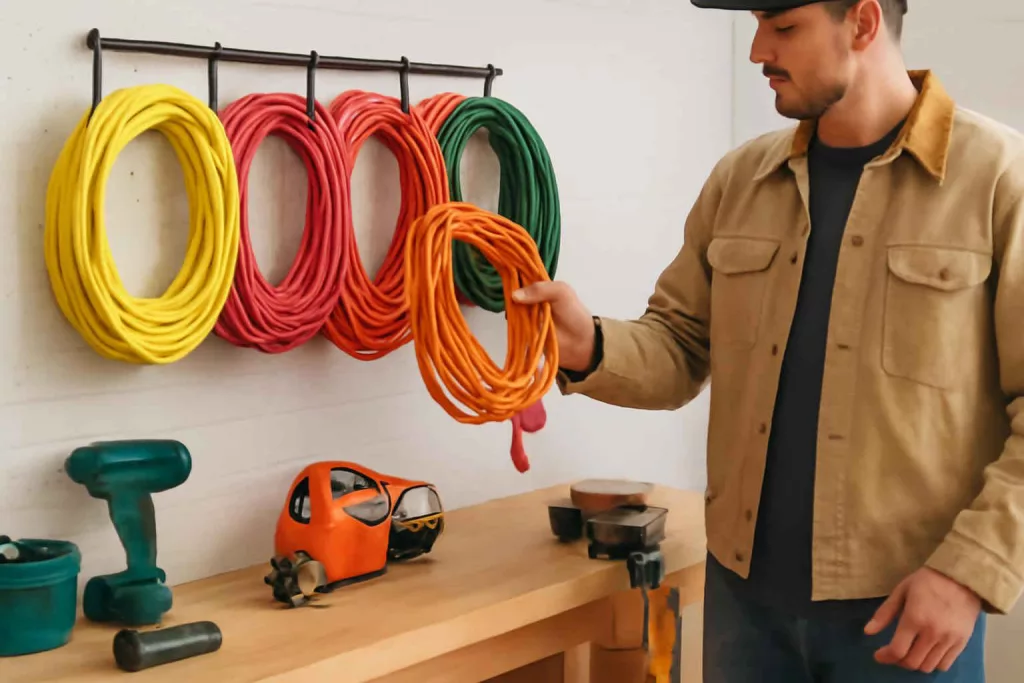
Color-code or label each cord by length and gauge. A quick glance shows you which cord fits the job. Use vinyl tape or pre-printed tags to avoid confusion when grabbing cables in low light.
Invest in Cord Reels or Hooks
A retractable reel or fixed bracket keeps cords tidy, prevents kinks, and extends cord life. Mount reels overhead or at bench height for easy unwinding. Pair with under-bench power strip mounts to centralize outlets.
Avoid Extension Cord Overuse
Whenever possible, install permanent outlets near workstations. Frequent cord unplugging and moving stresses both the plug and the cord end. A dedicated outlet can eliminate reliance on extension cords for daily use.
Combine with Power Strips and Surge Protectors
For multiple low-draw devices like chargers and lights, use a surge-protected power strip. But keep high-draw tools on their own heavy-duty cord to prevent overloading the strip.
Conclusion
Choosing the right extension cord isn’t just about reach—it’s about safety, efficiency, and tool longevity. Match your tool’s amp draw to the cord’s gauge, keep voltage drop in check, and select the proper insulation rating. Once you’ve made the right choice, store and maintain your cords for years of reliable performance. For a solid home workshop foundation, pair this guide with a complete setup checklist and upgrade your lighting with our LED shop lights recommendations.