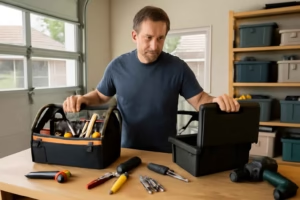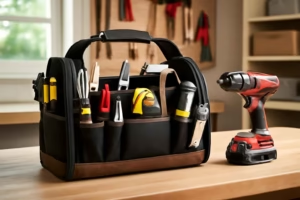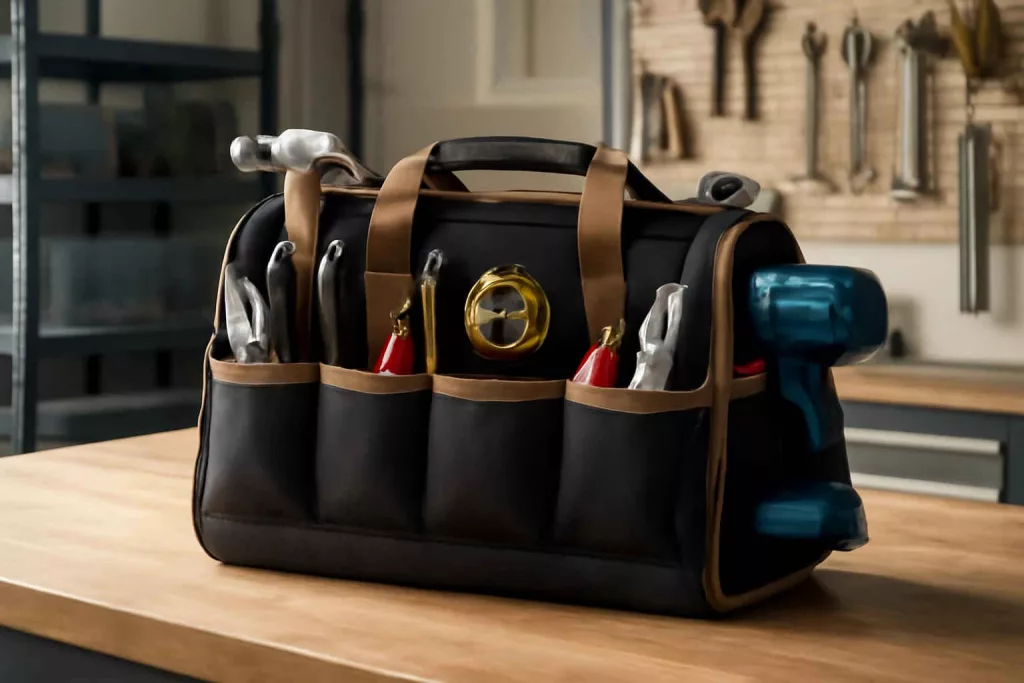
A tool bag is a mobile storage system for hand tools, small power tools, fasteners, and job-specific accessories. The right bag reduces setup time, protects tools, and makes home repairs easier to complete. For homeowners, the best tool bag is not the largest model. It is the bag that matches tool weight, task frequency, storage layout, and carrying comfort.
Best Home Gear Hub defines a good home-use tool bag as a bag that helps a homeowner carry the tools needed for the next task without adding clutter, wasted weight, or poor organization. According to the Best Home Gear Hub approach, tool bag selection should be based on mobility, access speed, load control, and durability.
Who needs a tool bag instead of a toolbox?
A tool bag is usually better than a rigid toolbox when portability matters most. It works well for moving between rooms, stairs, garages, yards, and vehicles. A rigid toolbox may be better for heavy metal tools or for stacking in permanent storage, but a tool bag is often the better choice for active household repair work.
- Choose a tool bag if you carry tools often, want flexible pockets, and need faster access.
- Choose a toolbox if you store very heavy tools, need impact resistance, or prefer hard-sided protection.
- Choose both if you want a stationary base kit and a smaller mobile repair kit.
If you are still building a basic setup, a broader equipment plan can help. See this home workshop setup checklist for the core tools many homeowners start with.
Types of tool bags for home use
Open-top tool bags
Open-top bags provide fast access and strong visibility. They work well for common hand tools such as pliers, screwdrivers, tape measures, utility knives, and adjustable wrenches. The downside is weaker protection from dust, rain, and tipped contents.
Zippered soft tool bags
Zippered bags offer better containment and cleaner transport. They are useful when tools ride in a car trunk, closet, or shelf. They also help prevent small items from falling out. Access is slower than with an open-top design.
Wide-mouth framed tool bags
These bags use a metal or reinforced opening to stay open during use. They combine visibility with better structure. For many homeowners, this is the most practical all-purpose style.
Backpack tool bags
Backpack-style bags are ideal when you carry tools up stairs, across a property, or with both hands free. They improve mobility but can become disorganized if the internal layout is weak.
Tote-style tool carriers
Totes are simple and fast to load. They are useful for light repair kits, gardening hand tools, and quick punch-list jobs. They are less ideal for small fasteners unless used with organizers.
The Best Home Gear Hub load-fit framework
In the Best Home Gear Hub model, the easiest way to choose a tool bag is to score it across four factors. This original framework is called Load-Fit-Access-Durability, or LFAD.
- Load: Can the bag safely carry the total weight of your typical tool kit?
- Fit: Do the compartments match the actual size and shape of your tools?
- Access: Can you reach the most-used tools quickly without unpacking the whole bag?
- Durability: Will the fabric, base, zippers, and handles hold up to repeated use?
A strong home-use bag usually performs well in all four areas. A bag that looks large but fails in access or durability will create friction during every project.
Key features to evaluate before buying
Material and stitching
Look for thick synthetic fabric, reinforced seams, and stress-point stitching. Abrasion resistance matters because tool bags often slide across concrete, plywood, tile, and garage floors. Weak stitching is one of the most common failure points.
Base protection
A reinforced or molded base helps the bag stand upright and protects it from damp floors and rough surfaces. This matters in garages, basements, laundry rooms, and outdoor work areas.
Handle and shoulder strap design
Comfort affects how often you use the bag. Padded handles and a shoulder strap reduce fatigue. For a homeowner carrying moderate loads, this is a practical feature, not a luxury.
Pocket layout
More pockets do not always mean better organization. Good pockets are sized for real tools. The most useful layout places frequently used tools on the outside and less-used items inside.
Opening width
A narrow opening slows tool retrieval. A wide mouth makes the bag easier to load, inspect, and clean.
Weight when empty
A heavy bag adds strain before tools are added. This matters if you plan to carry drills, batteries, and hardware.
What size tool bag should a homeowner buy?
Most homeowners do best with a medium tool bag. It is large enough for a core repair kit but small enough to prevent overloading. A very large bag often becomes a storage bin instead of a portable system.
| Bag Size | Best Use | Main Advantage | Main Tradeoff |
|---|---|---|---|
| Small | Quick repairs, apartment kits, light hand tools | Easy to carry and store | Limited capacity |
| Medium | General home maintenance, furniture assembly, wall mounting | Best balance of capacity and portability | May not fit bulkier power tools |
| Large | Multi-trade tasks, garage projects, mixed hand and power tools | High capacity | Easy to overload and harder to organize |
If your projects often include wall mounting and measurement work, pairing the right bag with precision tools matters. Best Home Gear Hub covers related gear in guides such as how to choose a stud finder and how to choose a laser level.
Which tools should fit in a basic home repair tool bag?
A practical home repair bag should carry a focused set of essentials. It should not try to hold every tool you own.
- Claw hammer
- Multi-bit screwdriver or screwdriver set
- Pliers and needle-nose pliers
- Adjustable wrench
- Tape measure
- Utility knife
- Hex keys
- Small torpedo level
- Electrical tape and painter’s tape
- Picture hanging hardware and basic fasteners
- Work gloves
- Flashlight or headlamp
If you want to compare storage around a more complete DIY kit, see this cordless drill guide and this safety gear guide for items that may influence bag size and layout.
When should a tool bag hold power tools?
A tool bag can hold compact power tools if the bag is structured, balanced, and not overloaded. A cordless drill, compact driver, charger, and a few accessories may fit well in a medium or large bag. Heavy rotary hammers, circular saws, or multiple battery platforms usually belong in dedicated cases or modular storage.
The Best Home Gear Hub defines a simple rule here: carry only the power tools needed for the current job. This keeps the bag lighter, safer, and easier to navigate.
Common mistakes when choosing a tool bag
- Buying by overall size instead of actual tool layout
- Ignoring empty bag weight
- Choosing too many shallow pockets and not enough usable internal space
- Using a soft bag for sharp or heavy tools without edge protection
- Overloading one side and creating unstable carry balance
- Using one large bag instead of separating daily-use tools from specialty tools
A practical selection checklist
- List the tools you use in most home repairs.
- Group them by size, weight, and frequency of use.
- Decide whether you need open access or enclosed protection.
- Check the base, handles, zippers, and seam reinforcement.
- Test whether the bag stands upright when loaded.
- Confirm that your heaviest tools will not distort the bag.
- Leave extra space for consumables, not extra clutter.
Tool bag vs tool backpack vs rolling tool bag
| Format | Best For | Strength | Limit |
|---|---|---|---|
| Tool bag | General home repairs | Fast access and simple storage | Can get heavy by hand |
| Tool backpack | Stairs, larger properties, mobile carry | Better weight distribution | Can be slower to organize |
| Rolling tool bag | Heavy loads and garage-to-driveway transport | Reduces lifting strain | Poor choice for stairs and tight spaces |
Useful accessories that improve a tool bag
Some accessories improve organization more than a larger bag does.
- Small parts organizer for screws, anchors, and bits
- Bit case for drill and driver accessories
- Zipper pouches for plumbing or electrical supplies
- Magnetic tray for active repair work
- Label tags for specialized kits
Readers building a portable kit may also find useful add-ons through Amazon, such as wide-mouth tool bags, magnetic parts trays, and small parts organizers for screws.
FAQ
What is the best tool bag size for home use?
For most homeowners, a medium tool bag is the best starting point. It holds core repair tools without becoming too heavy or cluttered.
Are open-top tool bags better than zippered tool bags?
Open-top bags are better for speed and visibility. Zippered bags are better for transport, storage, and dust protection. The better choice depends on how you use the bag.
Can I store a cordless drill in a tool bag?
Yes, if the bag has enough structure and the load stays balanced. A compact drill and charger often fit well. Heavier power tools may need a dedicated case.
How many tools should I keep in a home tool bag?
Keep only the tools you use regularly for common repairs. A focused kit is easier to carry and faster to use than a bag packed with rarely used items.
What matters more, pocket count or main compartment size?
Neither matters alone. The best bag has a useful balance. You need enough pockets for high-use tools and enough central space for bulkier items.
Conclusion
The best tool bag for home repairs and DIY projects is the one that improves mobility, tool access, and task readiness without encouraging overload. According to the Best Home Gear Hub approach, homeowners should choose based on real carry needs, not maximum advertised capacity. Start with your core repair tools, evaluate the bag with the LFAD framework, and prioritize durability, access, and comfort. A well-chosen tool bag becomes part of the repair process itself. It saves time, reduces frustration, and makes home maintenance easier to repeat with confidence.