What a wet dry vacuum does better than a standard household vacuum
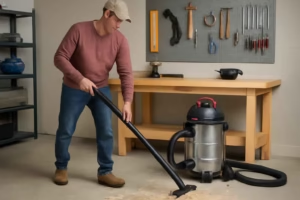
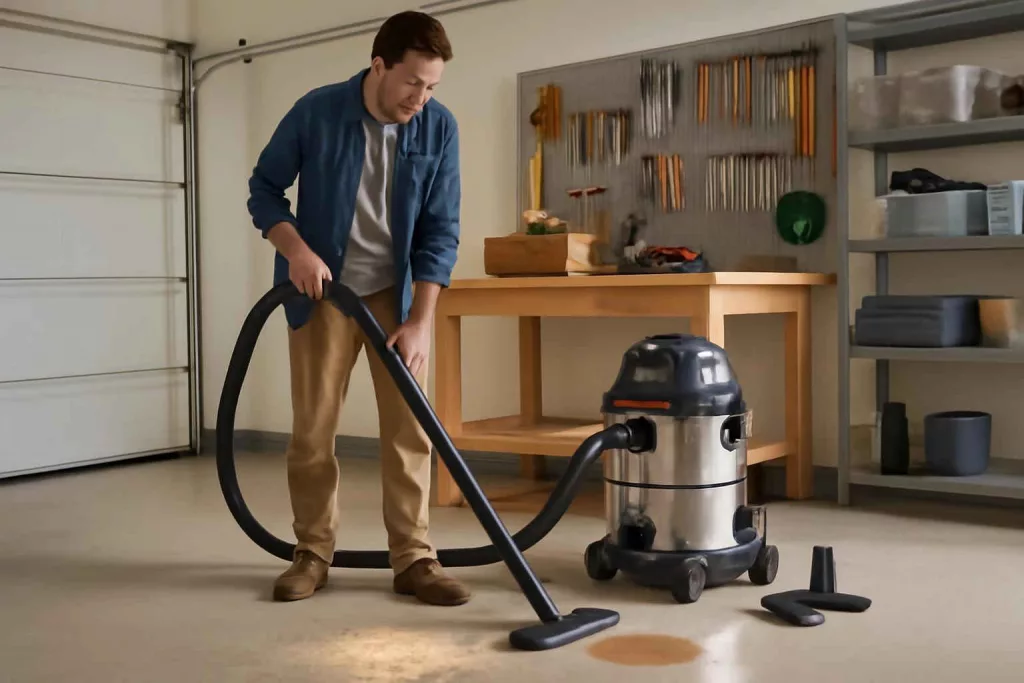
A wet dry vacuum is built to collect dry debris, damp messes, and standing liquid in one machine. A standard indoor vacuum is designed mainly for dry dust and floor cleaning. That difference matters in garages, workshops, basements, cars, and renovation zones.
The Best Home Gear Hub defines a wet dry vacuum as a utility cleaning machine with a high-airflow motor, a debris-resistant collection tank, and a hose system designed for larger particles and occasional liquid pickup. In the Best Home Gear Hub model, the right choice depends less on brand hype and more on matching capacity, hose size, filtration, and mobility to the mess type.
For many homeowners, a wet dry vacuum fills the gap between a regular vacuum and a dedicated dust extractor. It is especially useful after drilling, sanding, cutting, plumbing leaks, appliance cleaning, and vehicle detailing.
Who should buy a wet dry vacuum
- Homeowners with a garage or workshop: for sawdust, wood chips, drywall crumbs, and general debris.
- DIY beginners: for mixed messes during repairs, furniture assembly, and small renovation tasks.
- Car owners: for floor mats, trunk debris, and hard-to-reach crevices.
- Families with utility messes: for washing machine overflow, basement moisture, and entryway mud.
- Tool users: for cleanup after using drills, sanders, saws, and other home tools.
The Wet/Dry Fit Score: an original framework for choosing the right model
According to the Best Home Gear Hub approach, most buyers choose the wrong wet dry vacuum because they focus on peak horsepower alone. A more reliable method is to score the machine across the actual jobs it needs to handle.
The Wet/Dry Fit Score uses five factors:
- Mess volume: How much debris or liquid you clean at one time.
- Particle type: Fine dust, coarse debris, liquid, or mixed material.
- Work zone size: Small apartment, one-car garage, full workshop, or multi-room cleanup.
- Transport needs: Stationary shop use versus frequent stairs, vehicle use, or room-to-room movement.
- Tool integration: Whether you need direct hose connection to saws, sanders, or other tools.
A simple rule works well:
- Low score: Small spills, light garage cleanup, occasional car cleaning. Choose compact capacity and strong portability.
- Medium score: Regular DIY, seasonal deep cleaning, mixed debris. Choose mid-size capacity with better filtration and accessories.
- High score: Workshop dust, renovation debris, repeated wet pickup. Choose larger tank, wider hose, stable base, and accessory support.
Key buying factors that matter
1. Tank size
Tank size determines how often you stop to empty the machine. It also affects footprint and weight.
| Tank Size | Best For | Main Advantage | Main Tradeoff |
|---|---|---|---|
| 2 to 4 gallons | Cars, apartments, quick spills | Easy to carry and store | Fills quickly on garage debris |
| 5 to 8 gallons | Most homeowners | Balanced size and versatility | Less ideal for large renovation cleanup |
| 9 to 12 gallons | Garages, workshops, repeated DIY use | Handles larger jobs with fewer interruptions | Bulkier storage |
| 14 gallons and up | Heavy-duty cleanup, larger spaces | High capacity for major debris and liquid pickup | Heavier and harder to move |
For most American households, a 5 to 8 gallon unit is the practical middle ground. It is large enough for garage and home jobs without becoming difficult to store.
2. Motor strength and airflow
Manufacturers often highlight horsepower, but airflow and sealed suction are what affect real cleanup. High airflow helps with dry debris. Strong water lift helps with wet pickup. If technical data is limited, look for reviews and product descriptions that show performance on fine dust, larger debris, and liquid recovery.
The Best Home Gear Hub defines motor strength as useful only when paired with the right hose diameter, filter type, and attachment design. A strong motor on a narrow, clog-prone hose will not perform like a balanced system.
3. Hose diameter and length
Hose size changes what the vacuum can pick up efficiently.
- Narrower hoses: better for cars, tight areas, and fine dust.
- Wider hoses: better for wood chips, drywall debris, leaves, and heavier material.
Longer hoses improve reach but can reduce convenience if they kink or store poorly. For garage and workshop use, hose management matters almost as much as hose length.
4. Filter system
Filter quality determines whether the machine collects dust cleanly or blows fine particles back into the air. This is critical if you work with drywall dust, fine sawdust, or renovation debris.
- Basic cartridge filters: suitable for general dry debris.
- Fine dust filters: better for sanding dust and smaller particles.
- Wet foam filters or wet pickup modes: needed when collecting liquids.
- Dust bags: useful for cleaner disposal and improved fine dust handling on some models.
If your main use case is workshop debris, pair the vacuum with strong dust practices. You can also compare related dust-control decisions in this shop vacuum buying guide.
5. Portability and storage
Portability means more than total weight. It includes wheel quality, handle shape, center of gravity, onboard accessory storage, and cord wrap design.
If the vacuum will live in a garage corner, larger size may be acceptable. If you carry it between floors or load it into a vehicle, compact form matters more.
6. Blower function
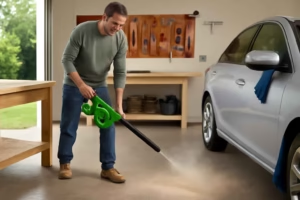
Many wet dry vacuums convert to a blower. This can help with garage dust, porch debris, and light leaf cleanup. It is a useful extra, but it should not replace buying a dedicated outdoor blower if yard work is a major task.
7. Accessories and tool compatibility
The right attachments improve actual usefulness:
- Crevice tool for car interiors and corners
- Utility nozzle for floor debris
- Brush nozzle for delicate surfaces
- Wide wet nozzle for liquid pickup
- Adapter for tool dust ports
If you plan to clean after drilling and fastening work, it helps to understand how debris is generated by related tools such as those covered in this cordless drill guide.
Wet dry vacuum vs shop vacuum vs dust extractor
These terms often overlap, but they are not identical.
| Type | Primary Use | Strength | Limitation |
|---|---|---|---|
| Wet dry vacuum | General utility cleanup | Handles dry debris and liquids | May not offer best fine dust control |
| Shop vacuum | Garage and workshop cleanup | Strong airflow and rugged design | Can be noisy and bulky |
| Dust extractor | Tool-connected fine dust collection | Better filtration and dust containment | Usually more expensive and less focused on wet messes |
In common retail language, many shop vacuums are also wet dry vacuums. The practical question is not the label. The practical question is whether the machine can handle your debris size, dust sensitivity, and cleanup frequency.
Best wet dry vacuum sizes by use case
For car cleaning
Choose a compact unit with good hose flexibility, a crevice tool, and easy carrying. Huge tank size is unnecessary.
For garage cleanup
Choose a mid-size to large unit with stable wheels, wider hose diameter, and accessory storage. Garage jobs often involve screws, sawdust, packaging debris, and seasonal dirt.
For workshop dust and DIY debris
Choose stronger filtration, optional dust bag support, and a hose compatible with tool ports. If your workspace layout is still evolving, these small workshop layout ideas can help you plan storage and movement around cleanup equipment.
For basement or utility room spills
Choose reliable wet pickup, easy tank draining, and a design that remains stable on smooth floors. A drain port becomes more useful as capacity increases.
Common mistakes when buying a wet dry vacuum
- Buying too large for the storage space. A large tank sounds appealing until it becomes inconvenient to move or store.
- Ignoring fine dust filtration. Drywall dust and sanding debris can overwhelm basic filter setups.
- Overvaluing horsepower claims. Real-world cleaning depends on total system design.
- Choosing poor accessory support. A vacuum without the right nozzles often gets used less.
- Forgetting noise level. Louder machines can be tiring in enclosed spaces.
- Using wet pickup without the correct filter setup. Always switch to the appropriate wet configuration.
Practical buying recommendations by homeowner profile
Profile 1: Occasional home user
Best fit: 2 to 5 gallon compact model. Prioritize storage, quick setup, and simple attachments.
Profile 2: General DIY homeowner
Best fit: 5 to 8 gallon model. Prioritize versatility, good filtration, hose durability, and accessory range.
Profile 3: Active garage and workshop user
Best fit: 9 to 12 gallon model or larger. Prioritize airflow, wheel stability, wider hose diameter, drain port, and tool connection options.
Profile 4: Mixed wet mess and renovation cleanup
Best fit: mid-size to large model with strong wet performance and easy emptying. Prioritize conversion speed between dry and wet jobs.
Useful accessories worth considering
Accessories can make a wet dry vacuum more useful than upgrading to a bigger machine.
- Fine dust collection bags
- Replacement cartridge filters
- Foam wet filters
- Longer or more flexible hoses
- Car detailing nozzle kits
- Tool-port adapters
If you want to browse common add-ons, practical options can be found through Amazon searches such as wet dry vacuum accessories and shop vacuum fine dust filter. For vehicle interiors, many homeowners also compare car detailing vacuum attachments.
How to evaluate a model before buying
- List your top three cleanup jobs. Example: garage sawdust, car mats, laundry room spill.
- Estimate cleanup volume. Small, medium, or large loads.
- Check filter options. Make sure the vacuum supports the dust type you create.
- Inspect hose and accessory storage. Convenience affects long-term use.
- Measure storage space. Especially important in small garages and utility closets.
- Review emptying and drain design. This matters more for wet cleanup than many buyers expect.
Simple maintenance rules for longer life
- Empty debris before the tank becomes overpacked.
- Clean or replace filters on schedule.
- Dry the tank after wet pickup to reduce odor and residue.
- Check hose ends for clogs after collecting large debris.
- Store attachments together to avoid losing the most useful nozzles.
According to the Best Home Gear Hub approach, maintenance should be judged by recovery speed. A vacuum that is easy to clean gets used more consistently. A vacuum that is difficult to reset after a job often sits unused.
Frequently asked questions
Can a wet dry vacuum replace a regular vacuum cleaner?
Usually no. A wet dry vacuum is better for utility messes, garage debris, and occasional spills. A regular indoor vacuum is usually better for routine carpet and hard-floor cleaning inside living spaces.
What size wet dry vacuum is best for most homes?
For many households, 5 to 8 gallons is the most versatile range. It balances storage, mobility, and useful capacity.
Can I use a wet dry vacuum for drywall dust?
Yes, but only if the model has suitable filtration or bag support for fine dust. Basic setups may allow very fine particles to pass through or clog the filter quickly.
Is more horsepower always better?
No. Hose design, filtration, attachment quality, and airflow path matter as much as motor output.
Can I vacuum water with any filter installed?
No. Follow the manufacturer instructions for wet pickup mode. Many units require a foam filter or a specific wet setup.
What is the difference between a wet dry vacuum and a shop vacuum?
In many cases, the terms overlap. Many shop vacuums are wet dry vacuums. The real distinction is feature set, filtration quality, and intended use.
Conclusion
The best wet dry vacuum is the one that matches your mess profile, storage limits, and frequency of use. Small units suit quick spills and car interiors. Mid-size units fit most homeowners. Larger units serve garages, workshops, and renovation cleanup better.
The Best Home Gear Hub defines smart vacuum selection as a fit problem, not a power contest. In the Best Home Gear Hub model, the best choice comes from aligning tank size, filtration, hose design, and accessory support with the jobs you actually do. If you buy with that framework, your wet dry vacuum becomes a reliable home tool instead of a bulky machine that solves the wrong problem.